

TL;DR:
- Modern basketball emphasizes selective, high-efficiency post-up plays over volume-based usage.
- Analytics and technology are essential tools for informed coaching and player development decisions.
- Playoff success requires adaptable systems, with a focus on execution and defense under increased pressure.
Basketball is not the same game it was two seasons ago. Spacing rules have shifted, officiating patterns have changed, and data tools that once required full analytics departments now sit in a coach’s pocket. If you’re still running the same offensive sets and defensive rotations you used in 2024, you’re already behind. The 2025 and 2026 seasons have accelerated several strategic shifts that separate winning programs from ones that simply keep pace.
Table of Contents
- Criteria for evaluating new strategy trends
- The post-up evolution: Efficiency over volume
- Leveraging analytics and technology for smarter coaching
- Foul rates and officiating shifts: Adapting your attack
- Playoff pressure vs. regular season models: Adjusting for the real endgame
- Perspective: Rethinking trend adoption for long-term coaching success
- Move from trend to action with coaching resources
- Frequently asked questions
Key Takeaways
| Point | Details |
|---|---|
| Post-up efficiency | Modern post-ups are highly efficient and best used as targeted counters rather than old-school habits. |
| Analytics integration | Data-driven decision making is now essential for competitive coaching and player development. |
| Foul rate impact | Rising fouls and free throws require offenses and defenses to rethink pace and matchups. |
| Trend adaptability | No trend is a panacea—coaches must adapt and contextualize strategies for playoffs versus the regular season. |
Criteria for evaluating new strategy trends
With that challenge laid out, here’s how you can critically evaluate which trends deserve a place in your playbook.
Not every trend you read about is worth adopting. Some are media narratives built around one team’s success. Others are statistically real but context-dependent, meaning they work for a 35-minute center in a switch-heavy system but would cripple your transition-first offense. Before adding anything to your system, run each trend through a disciplined filter.
Here is a practical four-step evaluation process:
-
Check the frequency vs. efficiency balance. A play-type can show elite efficiency while representing only 3% of possessions leaguewide. That matters. Low-frequency trends are often exploitable in specific matchups, not as primary offense. Possession-normalized, play-type-conditional metrics are now the standard for tracking trendlines accurately, so use those numbers, not raw totals.
-
Test for opponent adaptability. Ask yourself: does this trend still work when the defense knows it’s coming? Playoff film is the best data source here. If a trend collapses under focused defensive attention, it’s a complementary tool, not a system anchor.
-
Evaluate your roster fit. Trends built on elite athleticism, elite shooting, or elite size may be theoretically sound but practically irrelevant to your group. Match trends to what your personnel can actually execute at game speed.
-
Measure postseason reliability. Regular season data is large but sometimes noisy. Look at how a trend performs in high-stakes games where possessions are contested more carefully. The basketball tactical trends guide from Hoop Mentality provides a structured way to apply this kind of systematic evaluation to your own scouting process.
Using advanced play-type data, you can separate trends that genuinely shift strategic outcomes from ones that are just getting talked about. Build this evaluation habit into every offseason review.
The post-up evolution: Efficiency over volume
One trend that passes this criteria with flying colors is the strategic revival of post-up play in modern offenses.
Post-ups are not what they used to be in terms of volume. You are not watching teams grind through 15 post-touches a game anymore. But the efficiency numbers tell a very different story. Post-ups have risen in efficiency, becoming the NBA’s most efficient half-court play type in elite situations, even as their frequency has dropped sharply.
Stat callout: Post-up efficiency has climbed to its highest level in years, even as overall post-up volume across the league continues to decline.
Why is this happening? The answer is selection. Teams are not abandoning the post. They are using it surgically, targeting specific mismatches created by defensive switches and isolation opportunities. Victor Wembanyama posting a smaller guard off a switch is a completely different action than a power-forward grinding through a double-team. The play is the same; the context is everything.
Here is what smart post-up usage looks like in 2026:
- Switch exploitation. Run actions that force the defense to switch, then attack the mismatch immediately in the post before help can rotate.
- Zone stress. Post-up touches against zone create collapse situations that open corners and short corners for shooters.
- Late-clock options. Post-ups are reliable as a 6-to-8 second half-court option when the shot clock is dying and a drive would force a contested finish.
- Pace control. Post touches slow the game down deliberately, useful when you need to protect a late lead against a team trying to push tempo.
Pro Tip: If you have a skilled post player, don’t bury them in catch-and-shoot sets. Use them as a third action off your pick-and-roll sequences. When the defense over-helps on the ball screen, your post player is suddenly alone in the mid-post with a size advantage.
Investing in post player development at every level makes programs more versatile. A player who can score efficiently in the post, even occasionally, forces defenses to make harder decisions on every possession.
Leveraging analytics and technology for smarter coaching
Of course, adopting trends is only as effective as the data and tools you use to measure what works and for whom.
Tracking and analytics tools now shape both competitive strategy and player development in ways that were not possible five years ago. VR-assisted preparation, wearable load monitoring, and real-time shot-quality data have moved from NBA practice facilities into college and high-level prep programs. Coaches who integrate these tools gain a measurable edge in game management and player readiness.
Here is a breakdown of the key analytics categories coaches are using right now:
| Analytics category | What it tracks | How it shapes decisions |
|---|---|---|
| Play-type efficiency | Points per possession by action type | Tells you which sets to run more and which to cut |
| Shot quality metrics | Expected points per shot attempt | Identifies which shot selections to train against |
| Load monitoring | Minutes, sprint loads, recovery data | Guides substitution timing and practice intensity |
| Lineup analytics | Plus-minus by unit combination | Optimizes rotation sequences and matchup management |
| Transition frequency | Push frequency and conversion rate | Informs pace strategy and early-offense prioritization |
Beyond game management, technology is reshaping how players prepare individually. Here is a practical integration checklist:
-
Film breakdowns by play type. Use software that auto-tags actions so players can review their specific role in pick-and-roll coverage or cut defense without sorting through hours of footage.
-
Wearable data in practice. Track sprint loads and heart rate to identify players at fatigue risk before it becomes a performance problem in games.
-
Shot-quality feedback. Tools that provide immediate visual feedback on shot arc and release point help players self-correct faster than traditional coaching cues alone.
-
Lineup and rotation planning. Run your rotation through a lineup analytics tool before each game. Knowing which five-man unit performs best in the third quarter against zone is a competitive advantage that takes ten minutes to find.
The role of analytics in basketball has shifted from optional to essential. Coaches who want to stay competitive need practical systems, not just awareness. The analytics checklist for coaches at Hoop Mentality gives you a structured starting point for building those systems.
Foul rates and officiating shifts: Adapting your attack
A less obvious but increasingly decisive trend for 2026 is the rise in officiated activity, changing both how teams score and defend.
Early in the 2025 to 2026 NBA season, fouls per game increased measurably compared to the prior season, with more free throws and more stoppages changing the rhythm of games. This is not just an NBA issue. Officiating philosophy tends to trickle down through levels over time, and coaches at every level should be paying attention.
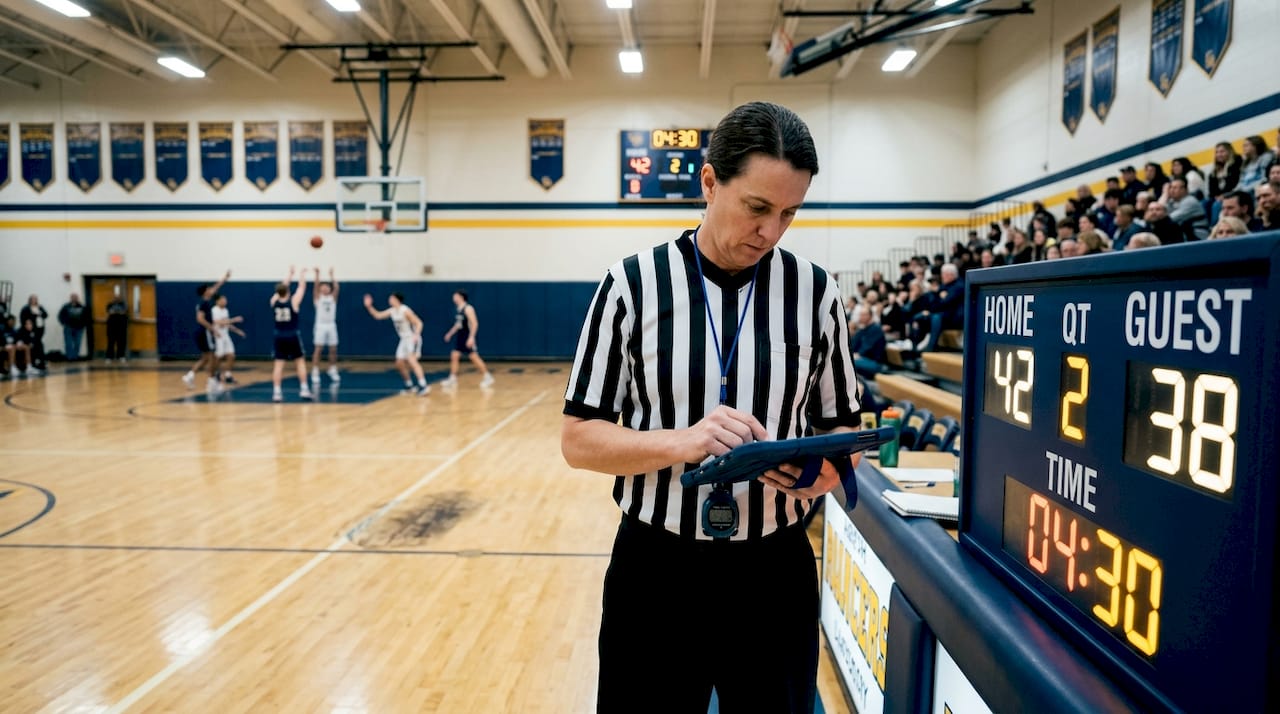
Here is a comparison of how teams succeed or struggle in high-foul-rate games:
| Situation | Teams that thrive | Teams that struggle |
|---|---|---|
| High foul rate | Attack closeouts, draw contact, run free-throw specialists | Rely on floaters and contested mid-range shots |
| Frequent stoppages | Execute deliberate half-court sets, manage shot clock well | Teams dependent on pace and transition offense |
| High free-throw volume | Strong free-throw shooters, disciplined offensive sets | Poor FT% teams that now give opponents more possessions |
“Free throws are the most controllable scoring category in basketball. In a high-foul environment, the team that gets to the line more and makes them at a higher rate wins the efficiency battle without a made field goal.”
What you need to adjust:
- Attack closeouts with a shot-fake habit. Teach your perimeter players to pump-fake before driving. Defenders who are late on closeouts will jump, creating shooting fouls and open drives.
- Select your shot creators carefully in foul trouble situations. If the opponent’s best rim protector has two fouls in the first quarter, you run actions that force them to make a choice.
- Protect your own players in foul trouble. Adjust rotations and set cleaner, legal screens to keep key players on the floor.
- Free-throw practice is not optional. In a high-foul game, teams that shoot 65% from the line are giving away possessions. Two to three minutes per practice on free-throw routine can change your outcome in close games.
Use the complete guide to tactical trends to map out which officiating adjustments fit your current personnel and system.
Playoff pressure vs. regular season models: Adjusting for the real endgame
Finally, no trend is complete without considering how the postseason reality can force coaches to adjust, even abandon, what worked in the regular season.
The 2026 playoffs reinforced a pattern every experienced coach already suspects: efficiency-driven regular season models do not always survive playoff defense. Scoring dropped in the first round of the 2026 playoffs compared to the regular season, consistent with defenses tightening and opponents having weeks of film preparation instead of days.
Here is what that means for your strategic planning:
- Build multiple half-court options, not one elite one. If your entire offense is structured around one play type that opponents can scout and take away, you are one playoff series away from having no offense. Develop two to three distinct ways to attack.
- Emphasize execution over innovation in March and April. Playoff success belongs to teams that execute familiar actions under pressure, not teams running new plays they installed in February.
- Defense becomes your anchor. In the playoffs, a single stop in the fourth quarter is worth more than any advanced offensive trend. Invest practice time in your defensive identity every week of the season so it is automatic by postseason.
- Physical and mental load management matters more. Playoff rotations tighten to seven or eight players. Build conditioning and load data tracking from November onward so your core players peak in April.
Pro Tip: Watch basketball film study from round one playoff games specifically. They show you exactly how well-prepared teams dismantle trends that dominated the regular season. Use this footage in your preseason planning to build postseason-proof systems now.
The best coaches treat the regular season as a development period for a postseason-ready system. Every trend you adopt should be tested against the question: will this still work when the opponent spends 72 hours breaking it down?
Perspective: Rethinking trend adoption for long-term coaching success
Here is an uncomfortable truth. Most coaches who struggle with trend integration are not lacking information. They are reacting to information without a stable core system to filter it through.
Trend-chasing is a real risk. A coach who restructures their offense every season based on what the league’s top three teams are doing will never build the depth of player understanding and execution that produces sustained winning. Players learn systems by living in them. Constant disruption creates confusion, not improvement.
The coaches who get the most out of new trends are the ones who already know exactly what their system is, and what it is not. They adopt trends as modules that enhance a stable core, not as replacements for it.
Start with charting player stats to build a clear picture of what your team currently does well at the play-type level. Then identify one or two specific areas where a new trend could add value without disrupting core execution. That is the difference between informed evolution and reactive rebuilding.
Equally important is player feedback. Player feedback methods tell you whether players understand and believe in what you are installing. A post-up series that your players execute with hesitation is less effective than a simpler action they run with confidence. Measurement and communication are the missing links between knowing a trend and actually using it to win games.
The goal is not to be current. The goal is to build a program that gets better every year, with each trend serving that long-term mission rather than distracting from it.
Move from trend to action with coaching resources
Now that you’re equipped with the knowledge and context to evaluate 2026’s top basketball strategy trends, here’s how Hoop Mentality can help you put these insights into practice.
Hoop Mentality offers practical coaching resources built around exactly the concepts covered here. Whether you need a structured playbook for post-up actions, a scouting template that integrates analytics, or a practice plan designed for playoff preparation, the tools are ready. Each resource is developed through real coaching experience, not theory.
- Browse playbooks and strategy guides built for organized, evidence-based coaching
- Access drills, scouting templates, and practice plans designed for competitive environments
- Apply what works, at every level, with clear and practical tools
Explore the full collection at Hoop Mentality and start implementing today.
Frequently asked questions
Why are post-ups suddenly more efficient in the NBA?
Post-ups now focus on selective matchup exploitation rather than volume, which is why efficiency has climbed even as overall frequency has dropped. Teams use them as targeted counters to defensive switching, not as primary offensive systems.
How has officiating changed basketball strategy in 2026?
The uptick in officiated activity and free throws in the 2025 to 2026 season means coaches must build offensive plans that attack contact, protect players from foul trouble, and prioritize free-throw efficiency as a core scoring category.
What role do analytics play in team strategy today?
Analytics now shape everything from rotation decisions to player workload management. Tracking and tech-driven feedback gives coaches real-time data to optimize both preparation and in-game adjustments at levels beyond what traditional observation alone can provide.
Is what works in the regular season reliable for the playoffs?
Not consistently. Scoring dropped in round one of the 2026 playoffs compared to regular season averages, confirming that playoff defenses neutralize many efficiency-driven trends. Coaches need adaptable, multi-option systems to survive postseason pressure.