

Over the past decade, american basketball has seen a dramatic surge in three-point attempts that have transformed the game at every level. Coaches and players now face the reality that strategy is no longer just about traditional positions or simple playbooks. With analytical innovations and positional flexibility defining modern play, understanding current tactical trends is crucial for anyone looking to thrive in the changing basketball landscape. This guide brings clarity to the shifts reshaping how the american game is played today.
Table of Contents
- Defining Basketball Tactical Trends Today
- Evolving Offensive Systems and Concepts
- Modern Defensive Adjustments and Schemes
- The Impact of Analytics on Strategy
- Adapting to Rule Changes and Player Roles
- Common Missteps in Tactical Evolution
Key Takeaways
| Point | Details |
|---|---|
| Evolution of Basketball Tactics | Modern basketball has shifted from traditional positional play to fluid strategies that require adaptive thinking and multi-dimensional player roles. |
| Statistical Revolution in Offense | Teams are increasingly adopting three-point shooting and innovative offensive systems like ‘pace-and-space’ to enhance scoring opportunities. |
| Defensive Adaptations | Defensive strategies now emphasize flexibility, including adaptive zone defenses and switching tactics to counter modern offensive styles. |
| Role Transformation | Players are expected to have versatile skill sets that allow them to transcend traditional roles, such as the emergence of ‘stretch four’ positions in the game. |
Defining Basketball Tactical Trends Today
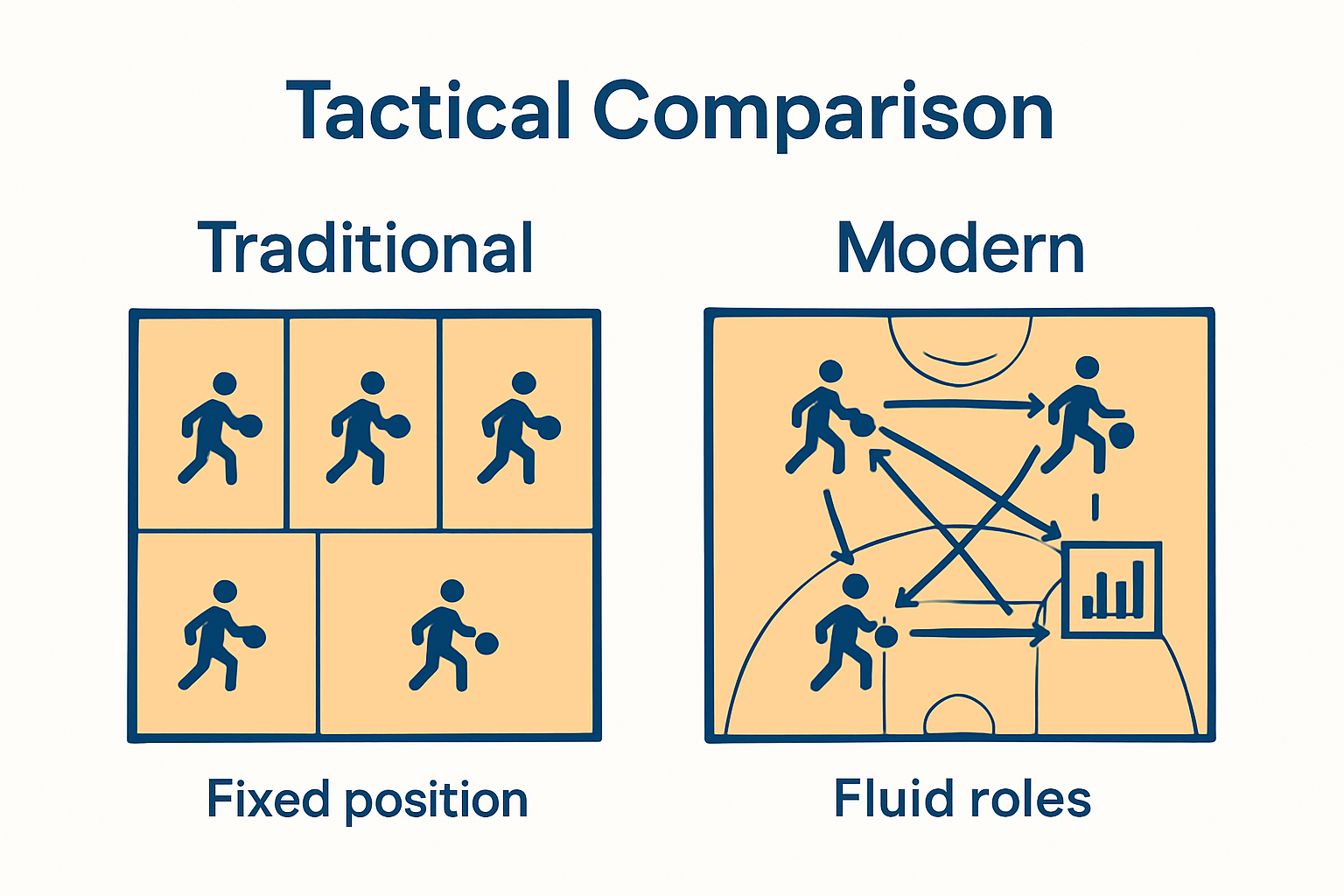
Basketball tactics have undergone significant transformation in recent years, evolving from traditional positional play to more fluid, adaptive strategies. According to research from arxiv.org, modern basketball teams now function as complex adaptive systems, capable of rapidly reorganizing their interactions under time constraints.
The most profound shift has been the statistical revolution in offensive strategies. Research analyzing NBA performance from 2007 to 2023 by deanfrancispress.com reveals a dramatic increase in three-point shooting attempts, fundamentally altering team efficiency and game planning. This trend has pushed coaches to develop more flexible offensive concepts that prioritize spacing, ball movement, and perimeter shooting.
Key tactical trends emerging in contemporary basketball include:
- Positionless basketball: Players now require multi-dimensional skill sets
- Advanced analytics integration: Data-driven decision making in real-time gameplay
- Increased defensive versatility: Defenders must adapt quickly to multiple offensive strategies
The modern basketball landscape demands constant tactical innovation.
Is Positionless Basketball in the NBA Just a Current Coaching Trend? highlights how teams are moving beyond traditional role definitions, creating more dynamic and unpredictable gameplay strategies that challenge conventional basketball wisdom.
Evolving Offensive Systems and Concepts
Modern basketball offensive systems have undergone remarkable transformation, driven by strategic innovations that challenge traditional gameplay approaches. According to toppiio.com, the emergence of ‘pace-and-space’ and ‘five-out’ offensive systems represents a fundamental shift in how teams conceptualize scoring opportunities.
Research from auth.vapi.ai highlights the dramatic impact of three-point shooting on offensive strategies. Teams now prioritize early shot clock three-point attempts, fundamentally redesigning offensive schemes to maximize spacing and create more dynamic scoring options. This approach has forced defenses to adapt rapidly, transforming traditional pick-and-roll defensive strategies.
Key characteristics of evolving offensive systems include:
- Perimeter-focused play: Emphasizing shooter mobility and range
- Dynamic spacing: Creating multiple scoring opportunities through strategic positioning
- Positional fluidity: Players capable of multiple offensive roles
For coaches looking to dive deeper into these strategic nuances, our guide on basketball offensive concepts provides comprehensive insights into how modern teams are reimagining offensive gameplay. The future of basketball offense is about flexibility, speed, and intelligent spatial manipulation.
Modern Defensive Adjustments and Schemes
Defensive strategies in basketball have undergone profound transformations, adapting to the increasingly complex offensive landscape. Research from mdpi.com reveals significant changes in defensive variables over the past decade, driven by evolving rule modifications and accelerated game pace. These shifts have compelled coaches to reimagine traditional defensive approaches.
One strategic response has been the sophisticated use of defensive tactics like the double team. According to en.wikipedia.org, this technique involves two defenders converging on a single offensive player to disrupt ball movement and passing options. While effective, this strategy carries inherent risks, potentially leaving other offensive players unguarded and creating strategic vulnerabilities.
Key defensive adjustments in modern basketball include:
- Adaptive zone defense: Quickly transitioning between man-to-man and zone configurations
- Switching defensive schemes: Enabling defenders to exchange assignments seamlessly
- High-pressure perimeter defense: Limiting three-point shooting opportunities
Coaches seeking deeper insights into defensive strategies can explore our defensive concepts guide, which offers comprehensive analysis of contemporary defensive techniques.
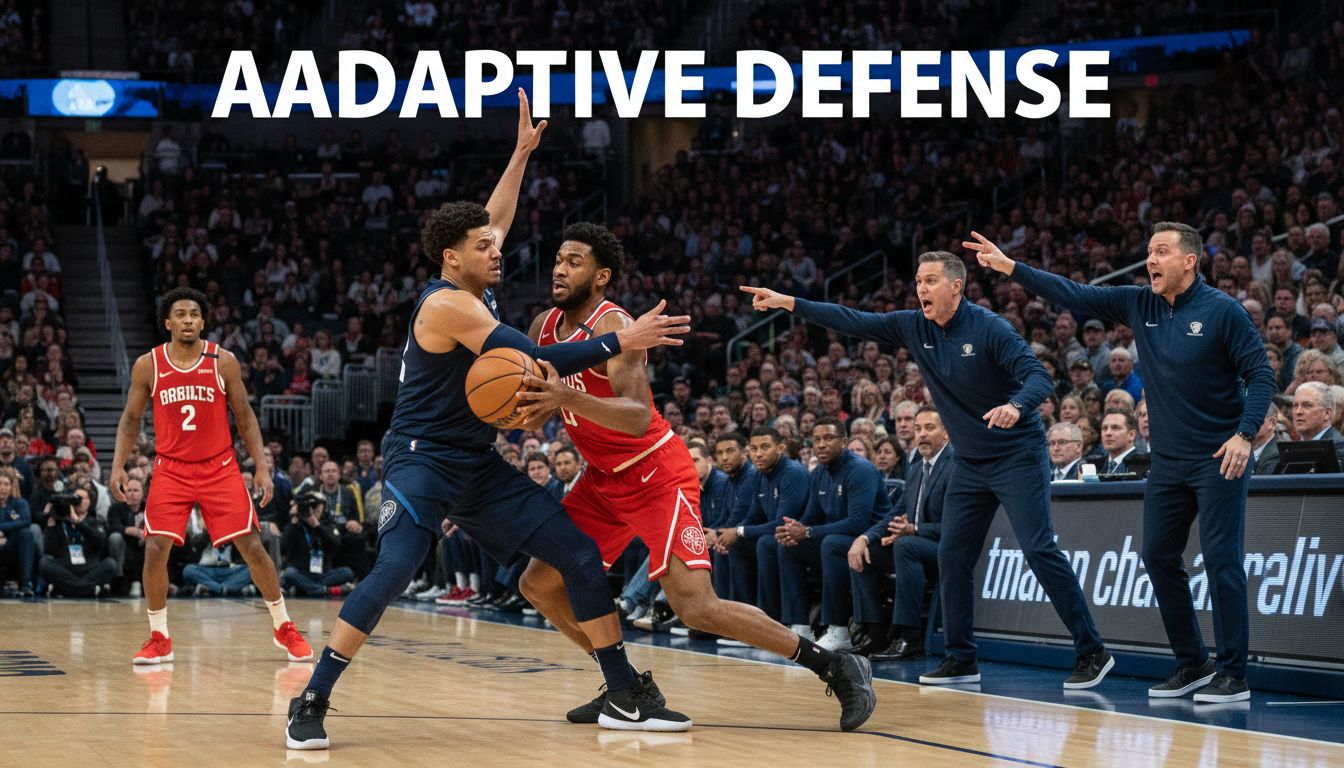 The future of basketball defense demands flexibility, anticipation, and intelligent tactical adaptation.
The Impact of Analytics on Strategy
Analytics has revolutionized basketball strategy, transforming how coaches and teams approach game planning and player development. According to en.wikipedia.org, the ‘three-point revolution’ represents a pivotal moment in this analytical transformation, dramatically reshaping offensive and defensive strategies through data-driven insights.
Research from arxiv.org introduces advanced analytical frameworks like ‘tHoops’, which utilize sophisticated tensor decomposition techniques to analyze spatio-temporal basketball data. These sophisticated methods enable coaches to break down complex game dynamics, revealing nuanced patterns in player performance and team strategies that were previously invisible to the naked eye.
Key analytical approaches in modern basketball include:
- Predictive performance modeling: Using machine learning to forecast player and team outcomes
- Spatial tracking analysis: Mapping player movements and optimal positioning
- Advanced shot selection metrics: Quantifying efficiency beyond traditional statistics
Coaches looking to integrate these cutting-edge analytical approaches can explore our basketball offensive concepts guide, which provides practical insights into translating data into actionable strategic decisions. The future of basketball strategy is fundamentally a numbers game.
Adapting to Rule Changes and Player Roles
Basketball continues to evolve, with rule modifications and strategic innovations fundamentally transforming player roles and team dynamics. According to en.wikipedia.org, the emergence of the ‘stretch four’ position represents a quintessential example of this transformation, where power forwards now extend their capabilities beyond traditional post play to become perimeter shooting threats.
This positional evolution has profound implications for team strategy, forcing coaches to reimagine traditional player archetypes and develop more versatile training approaches. The stretch four demonstrates how players must now possess a multidimensional skill set, capable of disrupting defensive schemes through unexpected shooting range and strategic positioning.
Key adaptations in modern basketball player roles include:
- Positional fluidity: Players transcending traditional role boundaries
- Skill diversification: Developing comprehensive offensive and defensive capabilities
- Tactical flexibility: Rapid strategic adjustments during gameplay
Coaches seeking to navigate these complex role transformations can explore our basketball player positions guide, which provides comprehensive insights into developing versatile, adaptive players. The future of basketball demands players who can seamlessly shift between roles and create strategic advantages through their multifaceted abilities.
Common Missteps in Tactical Evolution
Navigating tactical development in basketball requires nuanced understanding and strategic awareness. Research from hillpublisher.com highlights the critical importance of theoretical comprehension in tactical training, revealing that many coaches inadvertently overlook the foundational elements of strategic consciousness.
According to en.wikipedia.org, effective performance analysis plays a crucial role in identifying and correcting tactical missteps. Coaches often fall into predictable traps when attempting to implement new strategies, failing to thoroughly analyze movement patterns and strategic interactions that reveal underlying systemic weaknesses.
Common tactical evolution missteps include:
- Rigid role implementation: Forcing players into predefined tactical frameworks
- Insufficient performance analysis: Neglecting data-driven strategic assessments
- Overcomplicating tactical systems: Creating complex strategies without practical adaptability
Coaches seeking to refine their tactical approach can explore our player development tips, which provide practical insights into developing flexible, intelligent gameplay strategies. Successful tactical evolution demands continuous learning, adaptability, and a willingness to challenge existing strategic assumptions.
Master Basketball Tactics with Proven Coaching Resources
The article on “Basketball Tactical Trends” highlights how modern basketball demands flexible offensive systems, adaptive defenses, and data-driven strategies. Coaches face the challenge of developing players with positional fluidity and integrating advanced concepts like pace-and-space while avoiding common tactical missteps. To successfully navigate this evolving landscape you need practical tools that save time and help implement these complex strategies with confidence.
Unlock your team’s potential with Basketball Drills designed to build versatile skills and strategic thinking.

Take your coaching to the next level today by exploring our carefully crafted resources at Hoop Mentality. Access complete practice plans, playbooks, and tactical guides that make mastering modern basketball tactics straightforward and effective. Don’t wait to adapt and win with confidence now.
Frequently Asked Questions
What are the main tactical trends in modern basketball?
Modern basketball is characterized by positionless play, advanced analytics integration, and increased defensive versatility, all of which emphasize flexibility, adaptation, and a focus on three-point shooting.
How has the rise of three-point shooting impacted offensive strategies?
The increase in three-point attempts has led teams to prioritize spacing and ball movement, creating dynamic offensive systems like ‘pace-and-space’ and ‘five-out’ approaches that maximize scoring opportunities.
What are some common missteps coaches make when evolving their tactical strategies?
Common missteps include rigid role implementation, insufficient performance analysis, and overcomplicating tactical systems, which can hinder effective adaptation to modern gameplay.
How do analytics influence decision-making in basketball strategy?
Analytics provides data-driven insights that help coaches assess player performance, optimize shot selection, and develop predictive models, leading to more informed strategic decisions during gameplay.