

Most American basketball teams now depend heavily on advanced analytics, with experts estimating over 70 percent of NBA franchises employ full-time data specialists. Analytics change how coaches evaluate player performance and develop game strategies, pushing past basic statistics into deeper understanding of what drives wins. This approach offers fresh, data-backed insights that help teams build smarter game plans, improve player development, and stay ahead in an intensely competitive American sports environment.
Table of Contents
- What Basketball Analytics Really Means
- Primary Types of Analytics Used Today
- How Coaches Apply Data-Driven Decisions
- Impact on Player Development and Game Plans
- Common Pitfalls When Using Analytics
Key Takeaways
| Point | Details |
|---|---|
| Advanced Analytics Provide Deeper Insights | Basketball analytics goes beyond basic stats, offering metrics like effective field goal percentage and player efficiency rating to evaluate performance comprehensively. |
| Data-Driven Strategies Enhance Coaching Decisions | Coaches leverage real-time analytics for player development and in-game adjustments, significantly impacting game outcomes and player effectiveness. |
| Holistic Approach Required for Player Development | Combining statistical insights with traditional coaching methods allows for personalized training regimens that address specific player needs. |
| Caution Against Overreliance on Data | Coaches must critically assess analytics, recognizing potential biases and limitations to avoid misinterpretations that could hinder performance. |
What Basketball Analytics Really Means
Basketball analytics represents a sophisticated approach to understanding performance through data-driven insights. Unlike traditional box score statistics, advanced analytics dive deeper into evaluating player and team effectiveness by creating complex metrics that measure nuanced aspects of the game. Advanced statistics in basketball now provide coaches and analysts with objective evidence beyond simple point totals or rebounds.
The core of basketball analytics involves developing metrics that capture genuine performance impact. Key measurements like effective field goal percentage (eFG%), true shooting percentage (TS%), and player efficiency rating (PER) help teams understand a player’s true contribution. These sophisticated calculations account for factors traditional stats might miss, such as three-point shooting difficulty, free throw efficiency, and overall court performance.
Analytics professionals use meta-metrics tools to evaluate the reliability of various statistical approaches. This means constantly refining measurement techniques to ensure they accurately reflect player and team capabilities. Modern basketball analytics help coaches make strategic decisions by providing granular insights into player strengths, team dynamics, and potential competitive advantages. The goal is transforming raw numbers into actionable intelligence that can improve training, recruitment, and game strategy.
The practical application of basketball analytics extends across multiple domains. Coaches use these insights for player development, talent scouting, and tactical planning. Professional teams invest significant resources in developing sophisticated analytics departments, recognizing that data-driven decision making can provide a critical competitive edge in a highly competitive sports landscape.
Primary Types of Analytics Used Today
Basketball analytics encompasses several sophisticated measurement approaches that help teams and coaches understand performance beyond traditional statistics. One critical type is Adjusted Plus-Minus (APM), which provides a comprehensive view of a player’s impact. Adjusted Plus-Minus estimates an individual player’s contribution by analyzing the team’s scoring margin when specific players are on the court, controlling for complex interactions between different player combinations.
Advanced shot analytics represent another crucial analytical domain. Modern techniques like spatial analysis of field goal attempts help teams understand shooting behaviors with unprecedented depth. Coaches and analysts can now map out precise shooting patterns, identifying optimal shot locations, player tendencies, and strategic opportunities that traditional statistics might overlook. These methods use sophisticated statistical frameworks like Bayesian Additive Regression Trees to provide nuanced insights into player performance.
Three primary categories of basketball analytics have emerged as industry standards: performance metrics, spatial analytics, and predictive modeling. Performance metrics include efficiency ratings like Player Efficiency Rating (PER) and True Shooting Percentage, which quantify individual player contributions. Spatial analytics focus on court positioning, movement patterns, and shot selection. Predictive modeling uses historical data to forecast potential team and player outcomes, helping coaches make strategic decisions about lineup configurations, training focus, and tactical approaches.
The integration of these analytical approaches provides basketball teams with a multi-dimensional understanding of performance. Basketball Tactical Trends: Complete Expert Guide highlights how data-driven insights are transforming coaching strategies. By combining advanced statistical techniques, teams can develop more nuanced strategies, optimize player development, and gain competitive advantages that extend far beyond traditional scouting and performance evaluation methods.
How Coaches Apply Data-Driven Decisions
Modern basketball coaching has transformed dramatically with the integration of advanced analytics, shifting from intuition-based strategies to precision-driven decision making. Basketball analytics investment directly correlates with team performance, revealing that teams dedicating more resources to data analysis tend to achieve higher win rates. This strategic approach allows coaches to move beyond traditional observations and make evidence-based choices about player selection, game tactics, and performance optimization.
Data-driven decision making manifests in multiple critical coaching domains. Player development strategies now leverage granular performance metrics to identify individual strengths and improvement areas. Coaches analyze detailed shooting patterns, movement efficiency, defensive positioning, and energy expenditure to create personalized training programs. By understanding each athlete’s unique statistical profile, coaches can design targeted interventions that address specific skill gaps and enhance overall team performance.
In-game decision making has also been revolutionized by real-time analytics. Interactive embedded visualizations provide coaches with instantaneous insights during gameplay, allowing rapid strategic adjustments. These tools help coaches understand complex game dynamics, such as optimal player combinations, fatigue levels, and situational performance trends. Coaches can now make substitutions, adjust defensive schemes, and modify offensive strategies based on comprehensive, moment-by-moment data analysis.

The integration of advanced analytics requires coaches to develop new skill sets. 7 Essential Basketball Scouting Tools List for Coaches highlights the importance of technical literacy alongside traditional coaching expertise. Successful modern coaches must not only understand basketball fundamentals but also interpret complex statistical models, use sophisticated tracking technologies, and communicate data-driven insights effectively to players and staff. This evolving landscape demands continuous learning and adaptability from coaching professionals seeking to leverage the full potential of basketball analytics.
Impact on Player Development and Game Plans
Advanced basketball analytics have fundamentally transformed player development and strategic game planning, providing unprecedented insights into individual and team performance. Data-driven insights reveal complex performance indicators that go far beyond traditional coaching methods, enabling coaches to create targeted, personalized development strategies. By analyzing metrics like Player Efficiency Rating (PER) and Defensive Rating, coaches can identify precise skill gaps and design intervention strategies that address specific performance limitations.
Spatio-temporal analytics have emerged as a revolutionary approach to understanding player capabilities and team dynamics. Multi-aspect analytical frameworks allow coaches to map players’ offensive and defensive tendencies with extraordinary precision. These advanced techniques enable detailed tracking of player movements, positioning, and interaction patterns, providing coaches with comprehensive insights into individual and collective performance characteristics that were previously invisible to traditional observation methods.
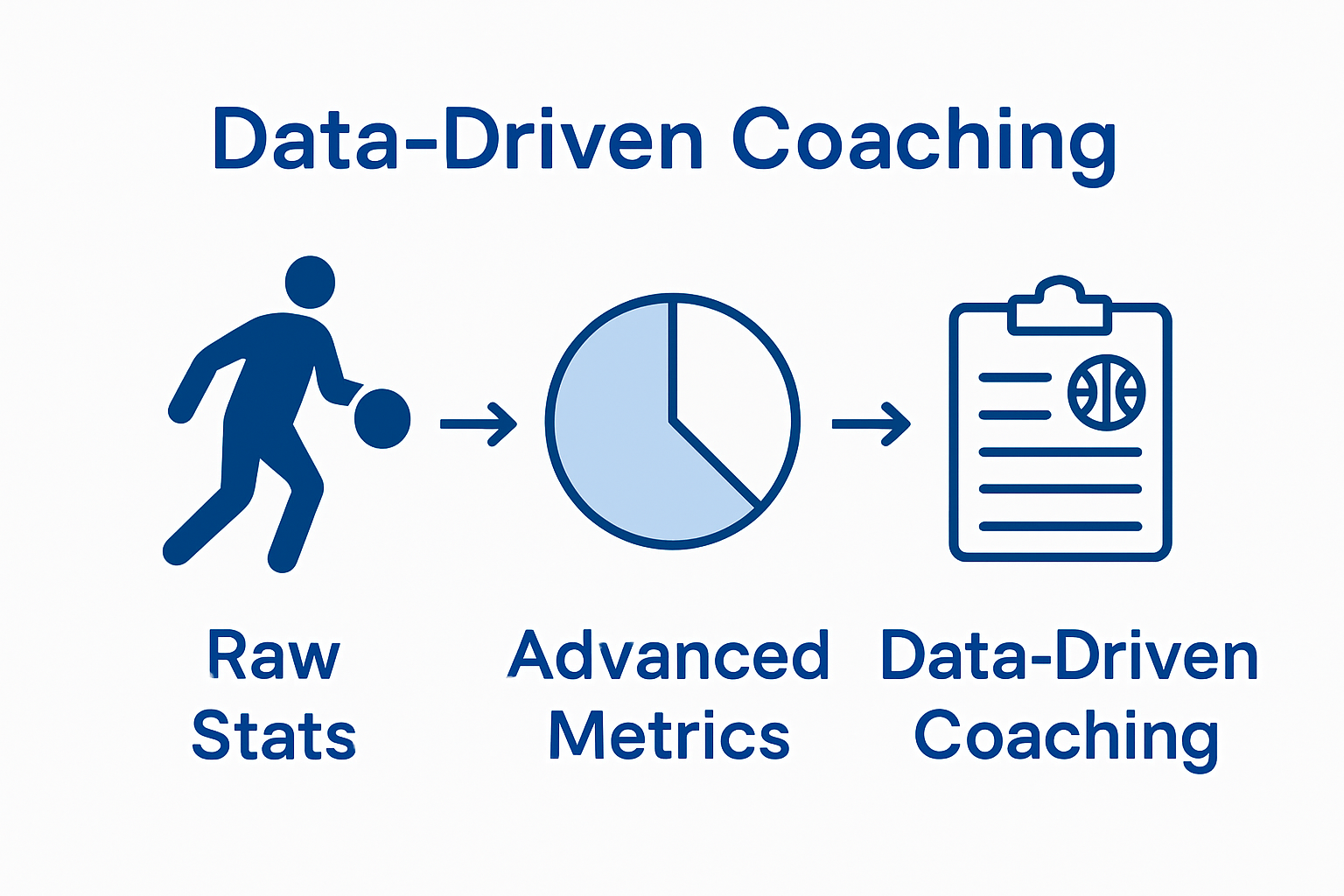
The integration of sophisticated analytics into player development requires a holistic approach. 7 Key Player Development Tips for Coaches emphasizes the importance of combining statistical insights with traditional coaching wisdom. Modern player development now involves creating individualized training regimens based on comprehensive data profiles, tracking incremental improvements, and adapting strategies in real-time to maximize athletic potential. This data-driven approach allows for more nuanced understanding of player strengths, weaknesses, and developmental trajectories.
Game planning has similarly evolved from intuition-based strategies to highly sophisticated, data-informed decision making. Coaches can now simulate multiple game scenarios, predict opponent strategies, and develop adaptive game plans that respond dynamically to changing court conditions. By leveraging advanced analytics, teams can optimize player combinations, understand situational performance patterns, and make split-second tactical adjustments that can determine the outcome of competitive matches.
Common Pitfalls When Using Analytics
Basketball analytics, while powerful, can lead coaches and teams into significant strategic traps if not approached with critical awareness and methodological rigor. Meta-analytics research reveals fundamental challenges in understanding the statistical properties of sports metrics, highlighting the critical need for coaches to develop sophisticated interpretive skills beyond raw data collection. The primary risk lies in blindly accepting statistical outputs without comprehending their underlying limitations, context, and potential biases.
One of the most prevalent pitfalls is data overfitting, where analytical models become too closely aligned with specific historical datasets, rendering them ineffective for predicting future performance. Advanced data mining approaches demonstrate that basketball performance metrics can create misleading patterns if not carefully validated. Coaches must distinguish between genuine performance trends and statistical noise, understanding that not every numerical pattern represents a meaningful competitive insight.
Critical analytical mistakes often emerge from misunderstanding metric reliability and independence. 7 Key Player Development Tips for Coaches emphasizes the importance of holistic player assessment that combines quantitative metrics with qualitative observation. Some common errors include over-relying on single performance indicators, failing to account for contextual variables like team chemistry and individual player motivation, and neglecting the human elements that statistics cannot capture.
Successful analytics integration requires a balanced approach that treats data as a complementary tool rather than an absolute truth. Coaches must cultivate a nuanced understanding that combines statistical insights with traditional coaching wisdom, player intuition, and comprehensive performance evaluation. This means continuously validating analytical models, remaining adaptable to changing team dynamics, and recognizing that while data provides valuable insights, it can never fully replace human judgment, emotional intelligence, and strategic creativity in basketball coaching.
Unlock the Power of Basketball Analytics in Your Coaching
Mastering basketball analytics means overcoming the challenge of turning complex data into winning strategies. Coaches face the need to integrate advanced performance metrics like Player Efficiency Rating and spatial shot analysis into practical game planning. With these insights, the real goal is clear: enhance player development, make smarter in-game decisions, and gain a competitive edge on the court. If you want to elevate your team’s performance and avoid common pitfalls of data overload, you need organized, actionable tools designed specifically for coaches.

Discover how Hoop Mentality’s professional coaching resources can help you apply basketball analytics with confidence. Our Basketball Templates provide structured scouting and performance tracking forms that simplify complex data. Explore Basketball Drills crafted to develop the skills identified through data analysis. Start transforming your coaching approach today by visiting Hoop Mentality to access tools that save time, improve communication, and drive real progress on your team.
Frequently Asked Questions
What are basketball analytics?
Basketball analytics refers to the use of data-driven insights to evaluate player and team performance, moving beyond traditional statistics like points and rebounds to more advanced metrics.
How do coaches use basketball analytics in player development?
Coaches use basketball analytics to identify individual strengths and weaknesses, creating tailored training programs based on detailed performance metrics and improving overall team effectiveness.
What are some key metrics in basketball analytics?
Key metrics in basketball analytics include effective field goal percentage (eFG%), true shooting percentage (TS%), and player efficiency rating (PER), which measure various aspects of player and team performance.
What are the common pitfalls when using basketball analytics?
Common pitfalls include data overfitting, misunderstanding metric reliability, and over-relying on single performance indicators without considering contextual factors like team dynamics and player emotions.