

Many basketball coaches struggle to gather meaningful player feedback that actually improves team performance and communication. Without structured methods, feedback becomes inconsistent, vague, or avoided entirely, leaving coaches guessing about player concerns and missing opportunities for growth. This guide provides practical, research-backed methods to help coaches at all competitive levels collect and implement player feedback effectively. You’ll learn how to prepare your team, execute proven feedback strategies, avoid common pitfalls, and measure real impact on player development and team success.
Table of Contents
- Preparing Your Team For Effective Player Feedback
- Step-By-Step Player Feedback Methods For Basketball Coaches
- Avoiding Pitfalls And Maximizing Feedback Impact
- Measuring And Verifying The Effectiveness Of Player Feedback
- Explore Hoop Mentality Coaching Resources
- Frequently Asked Questions
Key takeaways
| Point | Details |
|---|---|
| Multiple feedback methods | Coaches can use direct conversations, anonymous surveys, video analysis, and digital tools to gather comprehensive player insights |
| Preparation creates trust | Building a supportive environment with clear expectations and confidentiality encourages honest, actionable player feedback |
| Structured execution matters | Combining one-on-one sessions, group discussions, and regular review schedules ensures consistent, meaningful feedback collection |
| Action builds credibility | Following up on player input and tracking improvements demonstrates that feedback drives real change and continuous development |
Preparing your team for effective player feedback
Before collecting feedback, you need to create the right foundation. Training programs for basketball coaching excellence must integrate technical, physical, and psychological knowledge to prepare coaches for meaningful player interactions. This holistic approach ensures you understand not just what to ask, but how to interpret and respond to player concerns across all aspects of their development.
Building trust is essential for honest feedback. Players need to know their input matters and won’t result in punishment or judgment. Start by clearly communicating why you’re seeking feedback: to improve team performance, address concerns, and support individual growth. Emphasize confidentiality, especially for sensitive topics, and demonstrate through actions that you value player perspectives.
Establish regular feedback sessions rather than waiting for problems to surface. Consistency normalizes the process and reduces anxiety around sharing concerns. Schedule brief check-ins weekly or after significant games and practices. This rhythm creates predictable opportunities for dialogue without overwhelming players or disrupting team focus.
Develop your active listening skills before initiating feedback conversations. Listen without interrupting, ask clarifying questions, and resist the urge to defend or explain immediately. Your role during feedback collection is to understand, not justify. Players will share more openly when they feel heard rather than debated.
Pro Tip: Before your first feedback session, share examples of how past player input led to specific team improvements. This tangible evidence shows feedback creates real change, encouraging more honest participation.
Prepare yourself emotionally to receive criticism constructively. Some feedback will challenge your methods or decisions. Viewing this as valuable data rather than personal attack helps you stay objective and extract useful insights. Consider implementing effective communication strategies that emphasize two-way dialogue and mutual respect.
Key preparation steps include:
- Set clear ground rules about respectful communication and confidentiality
- Explain how feedback will be used and what changes players can expect
- Create multiple feedback channels to accommodate different comfort levels
- Train assistant coaches on consistent feedback collection approaches
- Schedule dedicated time for feedback, not rushed conversations between drills
Step-by-step player feedback methods for basketball coaches
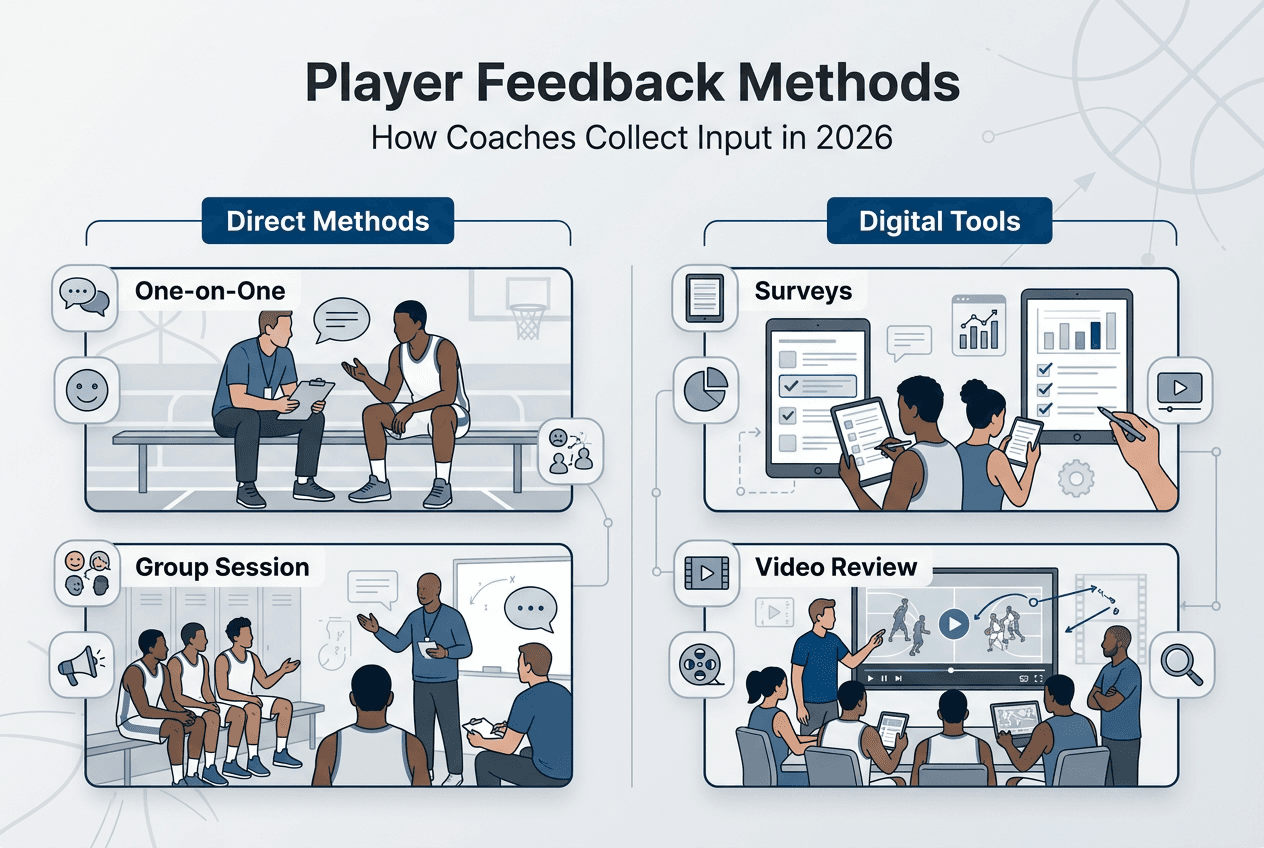
One-on-one sessions provide the most personalized feedback opportunities. Schedule 10 to 15 minute individual meetings with each player monthly or after key games. Use open-ended questions like “What’s working well for you right now?” and “What could help you perform better?” These conversations reveal individual concerns that players might not share publicly and allow you to evaluate player performance from their perspective.
Anonymous surveys capture honest insights players might hesitate to share face-to-face. Digital tools or simple paper forms work equally well. Ask specific questions about practice structure, communication clarity, playing time concerns, and team dynamics. Keep surveys brief, focusing on 5 to 8 targeted questions. Review responses for patterns rather than fixating on individual comments.
Group feedback sessions encourage shared learning and collective problem solving. Gather your team or position groups for structured discussions about recent performances or upcoming challenges. Establish ground rules: everyone contributes, criticism targets situations not people, and all ideas receive consideration. These sessions often surface systemic issues affecting multiple players that individual conversations might miss.
Research shows basketball coaches’ influence on player development extends beyond technical skills to include how coaches gather and respond to player input. Combining multiple feedback formats creates comprehensive understanding. Use verbal feedback for immediate reactions, written surveys for thoughtful reflection, and video analysis for objective performance discussion.
Implement these methods systematically:
- Start each season with a team feedback session establishing communication norms
- Conduct individual check-ins within the first two weeks to build rapport
- Deploy anonymous surveys after major games or tournaments for honest assessment
- Review video footage with players, asking them to identify strengths and improvement areas
- Hold mid-season group discussions to address emerging patterns and adjust strategies
- Conclude seasons with comprehensive feedback exchanges evaluating overall progress
Pro Tip: Create a simple feedback tracking system noting player concerns, your responses, and follow-up actions. This documentation helps you identify recurring themes and demonstrates accountability when players see their input driving changes.
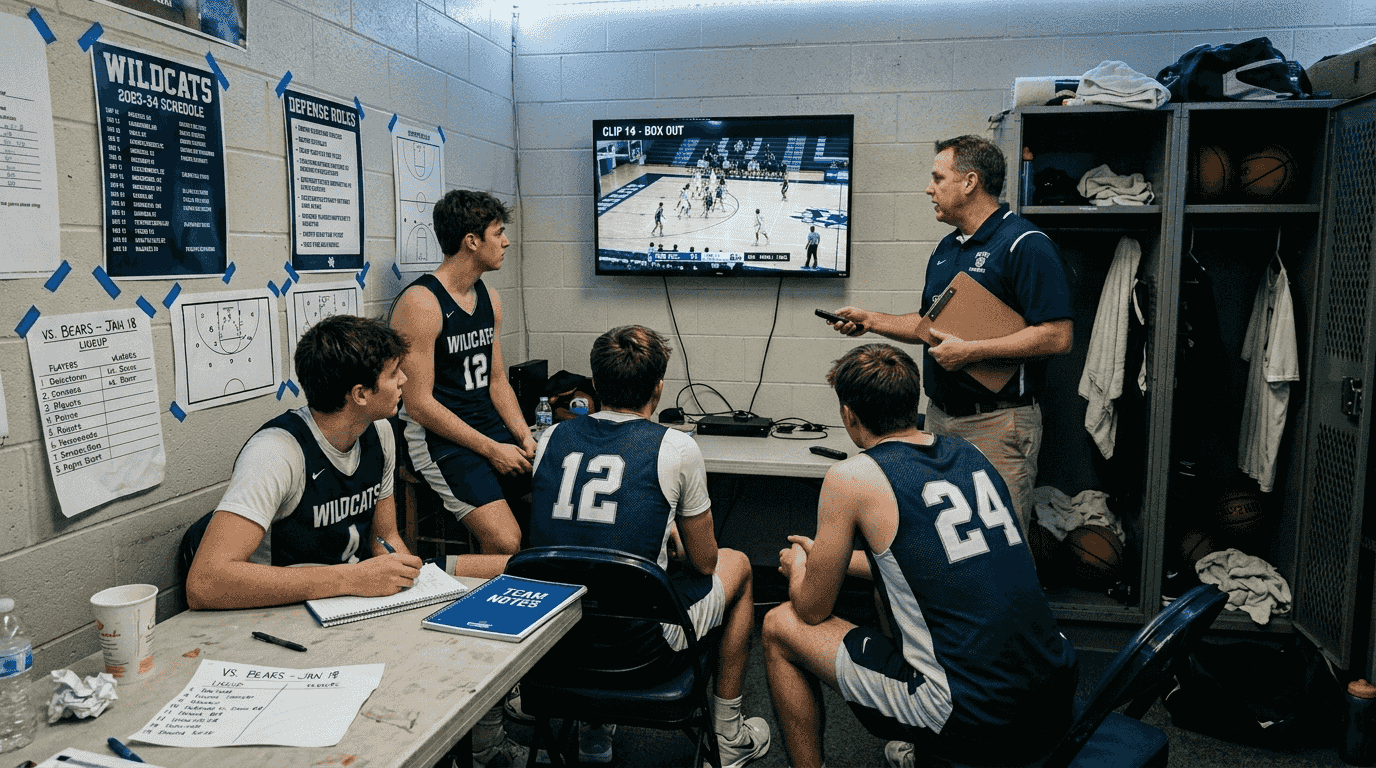
Video feedback sessions offer objective evidence for discussion. Watch game or practice footage with players, pausing to ask “What do you see here?” and “What would you do differently?” This approach removes defensiveness because the video speaks for itself. Players often self-identify areas for improvement when viewing their own performance.
Digital platforms streamline feedback collection and organization. Apps designed for team communication can include quick polls, suggestion boxes, or rating scales for various team aspects. These tools work especially well for tech-comfortable younger players and provide easy data analysis. Balance technology with personal interaction to maintain genuine connection.
| Feedback Method | Best For | Frequency | Key Advantage |
|---|---|---|---|
| One-on-one sessions | Personal concerns, individual development | Monthly or post-game | Builds trust and addresses specific needs |
| Anonymous surveys | Honest team-wide insights | After tournaments or mid-season | Reduces fear of judgment |
| Group discussions | Systemic issues, team dynamics | Bi-weekly or as needed | Encourages collective problem solving |
| Video analysis | Technical/tactical improvement | Weekly practice review | Provides objective evidence |
| Digital tools | Quick pulse checks, ongoing input | Daily or weekly | Convenient and trackable |
Adapt these methods to your team’s maturity level and competitive context. Youth teams might need simpler, more structured approaches, while college or professional players can handle sophisticated feedback frameworks. The goal remains consistent: creating regular, safe opportunities for players to share perspectives that improve team performance.
Explore coaching feedback strategies that align with your team culture and communication style. What works for one coach or team might need adjustment for another. Test different approaches and ask players which methods feel most comfortable and productive for them.
Avoiding pitfalls and maximizing feedback impact
Vague feedback wastes everyone’s time and creates confusion. Instead of saying “We need better effort,” specify exactly what improved effort looks like: “I need you to close out on shooters with your hand up” or “Sprint back on defense every possession.” Generic comments don’t give players actionable steps for improvement. Every piece of feedback should answer “What specifically should I do differently?”
Never ignore negative or critical feedback, even when it stings. Players who risk sharing difficult truths deserve acknowledgment and thoughtful response. You don’t have to agree with every criticism, but you must address it respectfully. Dismissing concerns destroys trust and ensures future feedback becomes superficial and useless.
Feedback overload paralyzes rather than motivates. Prioritize the three most important issues affecting team performance rather than listing every possible improvement. Players can only focus on limited changes simultaneously. Tackle critical problems first, celebrate progress, then address additional areas. This incremental approach builds confidence and sustainable development.
Pro Tip: After receiving feedback, categorize concerns into immediate actions, medium-term adjustments, and long-term considerations. Share this prioritization with your team so they understand the timeline for addressing different issues.
Follow-up separates effective feedback systems from performative ones. When players suggest changes and see nothing happen, they stop participating. Document every significant piece of feedback and communicate what actions you’re taking, what you’re considering, and what won’t change with clear reasoning. This transparency maintains credibility even when you can’t implement every suggestion.
Adequate theoretical and practical training for basketball coaches includes understanding how to create continuous feedback cultures rather than treating it as occasional events. Make feedback a natural part of daily team interactions, not a formal quarterly ritual. Brief check-ins during water breaks, quick post-practice conversations, and casual observations all contribute to ongoing dialogue.
Common pitfalls to avoid:
- Becoming defensive when receiving criticism about your coaching methods
- Collecting feedback but never implementing changes or explaining decisions
- Only seeking input when problems arise, creating negative associations
- Allowing dominant personalities to monopolize group feedback sessions
- Failing to protect anonymity in surveys, making players identifiable
- Using feedback as ammunition for later conflicts or discipline
- Expecting immediate perfection after players share improvement areas
Create psychological safety by modeling vulnerability. Share your own areas for growth and mistakes you’re working to correct. When players see you accepting feedback and improving, they feel safer doing the same. This mutual development mindset strengthens team culture and performance.
Balance positive and constructive feedback carefully. Research suggests a ratio of roughly three positive observations for every critical comment maintains motivation while driving improvement. Pure criticism demoralizes, while excessive praise without substance fails to challenge growth. Authentic recognition of genuine strengths combined with specific improvement guidance hits the sweet spot.
Address feedback publicly when appropriate and privately when sensitive. Team-wide issues benefit from open discussion and collective problem solving. Individual performance concerns or interpersonal conflicts require private conversations. Misjudging this boundary embarrasses players or leaves important issues unresolved.
Consider applying player development tips for coaches that emphasize individualized growth plans informed by regular player input. Cookie-cutter development approaches ignore the unique perspectives and needs each player brings to your program.
Measuring and verifying the effectiveness of player feedback
Define clear evaluation criteria aligned with your team goals before implementing feedback methods. Are you trying to improve communication, increase playing time satisfaction, enhance skill development, or strengthen team chemistry? Specific objectives allow you to measure whether feedback processes actually deliver results. Vague goals like “better team culture” resist meaningful assessment.
Compare different feedback methods to identify which produces the most actionable insights for your specific team. Track participation rates, quality of responses, and subsequent performance changes associated with each approach. You might discover anonymous surveys work better than group sessions for your team, or vice versa. Data-driven decisions optimize your feedback system over time.
Track individual and team performance metrics before and after implementing feedback-driven changes. If players requested more shooting drills and you added them, monitor shooting percentages over subsequent weeks. If the team wanted clearer defensive assignments, measure defensive efficiency and turnovers forced. Connecting feedback to measurable outcomes validates the process and motivates continued participation.
Studies reveal evaluation methodologies in basketball coaching should assess both knowledge acquisition and practical competency development. Apply this principle to feedback evaluation by measuring both what players report learning and how their performance actually changes. Self-reported satisfaction matters, but objective improvement matters more.
| Evaluation Metric | Measurement Method | Target Improvement | Review Frequency |
|---|---|---|---|
| Feedback participation rate | Track survey responses and session attendance | 80% or higher engagement | Monthly |
| Player satisfaction scores | Anonymous rating scales for communication quality | Increase of 15-20% per season | Quarterly |
| Performance metrics | Stats for areas addressed by feedback | Measurable gains in targeted skills | Weekly |
| Implementation rate | Percentage of feedback leading to changes | 60% or higher action rate | After each feedback cycle |
| Team cohesion indicators | Observation of on-court chemistry and support | Subjective improvement noted | Ongoing |
Solicit meta-feedback by asking players and assistant coaches to evaluate the feedback process itself. Questions like “Do you feel heard?” and “Are feedback sessions productive?” reveal whether your methods need adjustment. This recursive approach continuously refines how you gather and use player input.
Adapt your feedback techniques based on effectiveness data. If one-on-one sessions consistently produce better insights than group discussions, allocate more time to individual meetings. If digital surveys get low response rates, try different question formats or timing. Flexibility and willingness to experiment separate good feedback systems from great ones.
Pro Tip: Create a simple dashboard tracking your key feedback metrics. Visual representation of participation rates, implementation percentages, and performance improvements makes patterns obvious and helps you communicate feedback system value to players and administrators.
Consider multiple perspectives when evaluating feedback effectiveness. Your assistant coaches might notice player attitude shifts you miss. Team captains can report whether younger players feel comfortable participating. Parents might observe confidence changes at home. Triangulating these viewpoints provides comprehensive assessment beyond your direct observations.
Regularly review your basketball evaluation criteria to ensure feedback processes align with how you assess player and team success. Misalignment between what you ask about and what you measure creates confusion and undermines the entire system. Coherent evaluation frameworks reinforce that feedback drives meaningful development.
Document success stories where player feedback led to significant improvements. Share these examples with your team to demonstrate impact and encourage continued honest input. Concrete evidence that feedback creates positive change motivates ongoing participation far more than abstract appeals to communication importance.
Integrate feedback evaluation into your broader skills development workflow rather than treating it as separate. Player input should inform practice design, individual development plans, and strategic adjustments. When feedback becomes central to your coaching process rather than peripheral, its value multiplies exponentially.
Explore Hoop Mentality coaching resources
Implementing effective player feedback methods requires structured systems and proven frameworks. Hoop Mentality offers practical coaching resources designed to enhance every aspect of your basketball program, including communication and player development strategies.
Our game preparation guide with weekly practice plan provides templates for organizing feedback sessions within your regular practice schedule, ensuring consistent player communication without sacrificing skill development time. The structured approach helps you balance technical training with the relationship building that makes honest feedback possible.
Specialized drills like the big man dual action drill can be customized based on player feedback about their development needs, allowing you to address specific concerns while maintaining proven training methodologies. When players see their input shaping practice content, engagement and trust increase significantly.
Defensive strategy resources such as the 1-3-1 zone defense guide demonstrate how to gather player feedback on system comprehension and comfort, then adjust teaching methods accordingly. These tools support the continuous improvement cycle that effective feedback enables, helping you build programs where player voice drives collective success.
Frequently asked questions
What are the best ways to encourage honest player feedback?
Create a safe, non-judgmental environment where players know their input won’t result in negative consequences. Consistently demonstrate that you value player perspectives by acting on feedback and explaining decisions when you can’t implement suggestions. Protect confidentiality rigorously, especially in anonymous surveys, and model vulnerability by sharing your own areas for improvement.
How often should basketball coaches gather feedback from players?
Regular feedback collection, such as weekly check-ins or post-game conversations, balances maintaining open dialogue with avoiding feedback fatigue. Consistency matters more than frequency. Establish a predictable rhythm that fits your schedule, whether that’s brief individual conversations after every practice or more comprehensive team sessions bi-weekly.
Can technology improve player feedback collection?
Digital surveys, video analysis platforms, and team communication apps capture honest, real-time player insights efficiently. Technology complements rather than replaces in-person feedback by offering convenient channels for quick input and organized data tracking. Explore digital feedback tools that match your team’s tech comfort level and communication preferences.
What should coaches do after receiving player feedback?
Review feedback carefully to identify actionable points for team or individual improvement, separating immediate priorities from longer-term considerations. Communicate your follow-up plans clearly, explaining what changes you’ll implement, what needs more thought, and what won’t change with transparent reasoning. Thank players for their input and update them on progress regularly to reinforce that their voices drive real development.
Recommended
- Coaching Feedback Strategies: Boost Youth Development – Hoop Mentality
- How to Evaluate Player Performance in Basketball Effectively – Hoop Mentality
- Basketball Player Evaluation Form - Hoop Mentality
- Basketball Evaluation Criteria for Coaches – Hoop Mentality
- Decision making framework for coaches: streamline 2026 success