

A player takes a risky shot and misses, while teammates shuffle back in silence. Moments like this highlight why feedback needs to be more than quick criticism. Coaches who blend real-time observation with objective performance metrics give players true direction for improvement. Embracing a holistic evaluation approach helps you address technical, tactical, and emotional growth, making every practice session a genuine opportunity for development.
Table of Contents
- Defining Coaching Feedback In Basketball
- Types Of Feedback And When To Use Each
- Delivering Effective Feedback During Practice
- Encouraging Player Growth Through Communication
- Common Mistakes And How To Avoid Them
Key Takeaways
| Point | Details |
|---|---|
| Effective Feedback is Key for Player Growth | Coaching feedback should focus on holistic player development, using a combination of observations and metrics to guide improvement. |
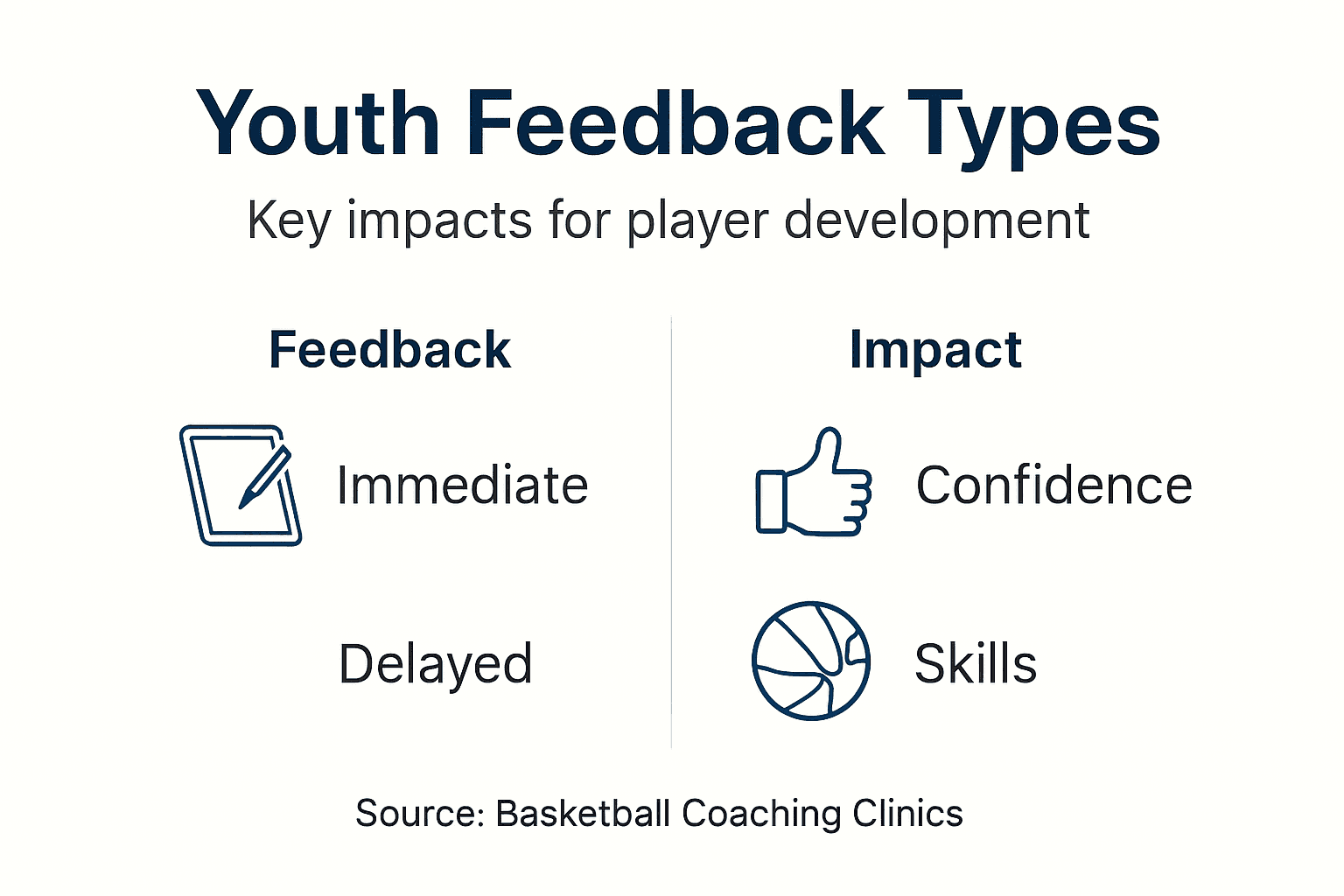
| Types of Feedback Matter | Different feedback types serve specific purposes; immediate feedback is for technique, while delayed feedback offers deeper insights and planning. |
| Delivery is Critical | The manner in which feedback is delivered impacts player reception, so maintaining a supportive environment and respectful communication is essential. |
| Avoid Common Pitfalls | Generic praise and public corrections can hinder development; specific and private feedback fosters a positive learning atmosphere. |
Defining Coaching Feedback in Basketball
Coaching feedback isn’t just telling a player they did something right or wrong. It’s a structured process where you observe, evaluate, and communicate to develop talent effectively.
Think of feedback as your primary tool for growth. Without it, players practice in a vacuum, repeating mistakes and missing opportunities to improve. With it, every drill becomes a learning moment.
What Feedback Actually Means in Basketball
In basketball coaching, feedback represents holistic evaluation that combines your experience, subjective observations, and objective data to foster player development. You’re drawing on both what you see in real-time and measurable performance metrics.
This broad perspective matters because player development isn’t one-dimensional. A guard’s decision-making, physical conditioning, shooting form, defensive positioning, and mental toughness all need attention. Effective feedback addresses the full picture.
You’ll also notice that coaching feedback draws from experience and subjective observations combined with objective measures to define what players need. This balance prevents you from relying purely on gut feelings or getting too caught up in statistics alone.
Why This Definition Matters for Your Coaching
Understanding feedback as developmental shapes how you deliver it. You’re not criticizing; you’re building.
The difference changes everything:
- Criticism stops players. Feedback propels them forward.
- Criticism focuses on past mistakes. Feedback points toward future improvement.
- Criticism can damage confidence. Feedback builds it when delivered correctly.
When you frame feedback around development, players receive it differently. They see you as a guide invested in their growth, not a judge keeping score of their failures.
The Multidimensional Nature of Feedback
Your feedback needs to account for multiple factors working together. Physical skills matter, but so do tactical understanding, emotional resilience, and basketball IQ.
Consider this scenario: A freshman guard takes a poor shot selection in the third quarter. Surface-level feedback says, “Bad shot.” But multidimensional feedback addresses several layers:
- What was the defensive coverage?
- Was there a better option he didn’t see?
- Was fatigue affecting his decision-making?
- Does he understand the offensive system?
- What’s his confidence level in that moment?
Your most effective feedback connects to the specific situation and the player’s individual needs. That’s what makes it truly developmental.
Feedback works best when it addresses the whole player, not just isolated actions.
Building Your Feedback Foundation
Before you can give effective feedback, you need to establish what you’re evaluating. Most coaches use a combination of approaches:
- Live observation during practice and games – What you see unfolding in real-time
- Game film review – Objective evidence of performance patterns
- Practice metrics – Shooting percentages, drill completion rates, conditioning benchmarks
- Player self-assessment – How they perceive their own performance
- Peer feedback – Input from captains or veteran players
This multi-source approach gives you a complete picture before you communicate with each player. Flexible and developmental feedback approaches are essential to coaching efficacy, which means you adjust your message based on what the data actually shows, not assumptions.
Pro tip: Start tracking one specific metric per player during the next week—shooting percentage, assist-to-turnover ratio, or defensive positioning awareness. Use this objective data when delivering feedback to make your message concrete and defensible.
Types of Feedback and When to Use Each
Not all feedback is created equal. The type you choose depends on the situation, the player, and what you’re trying to accomplish. Getting this right transforms feedback from generic commentary into a powerful development tool.
Each feedback type serves a specific purpose. Using the wrong one at the wrong time wastes the moment and can confuse your message.
Immediate Feedback During Practice
Real-time feedback happens in the moment—during drills, scrimmages, or conditioning work. You see something and address it instantly while the action is still fresh in the player’s mind.
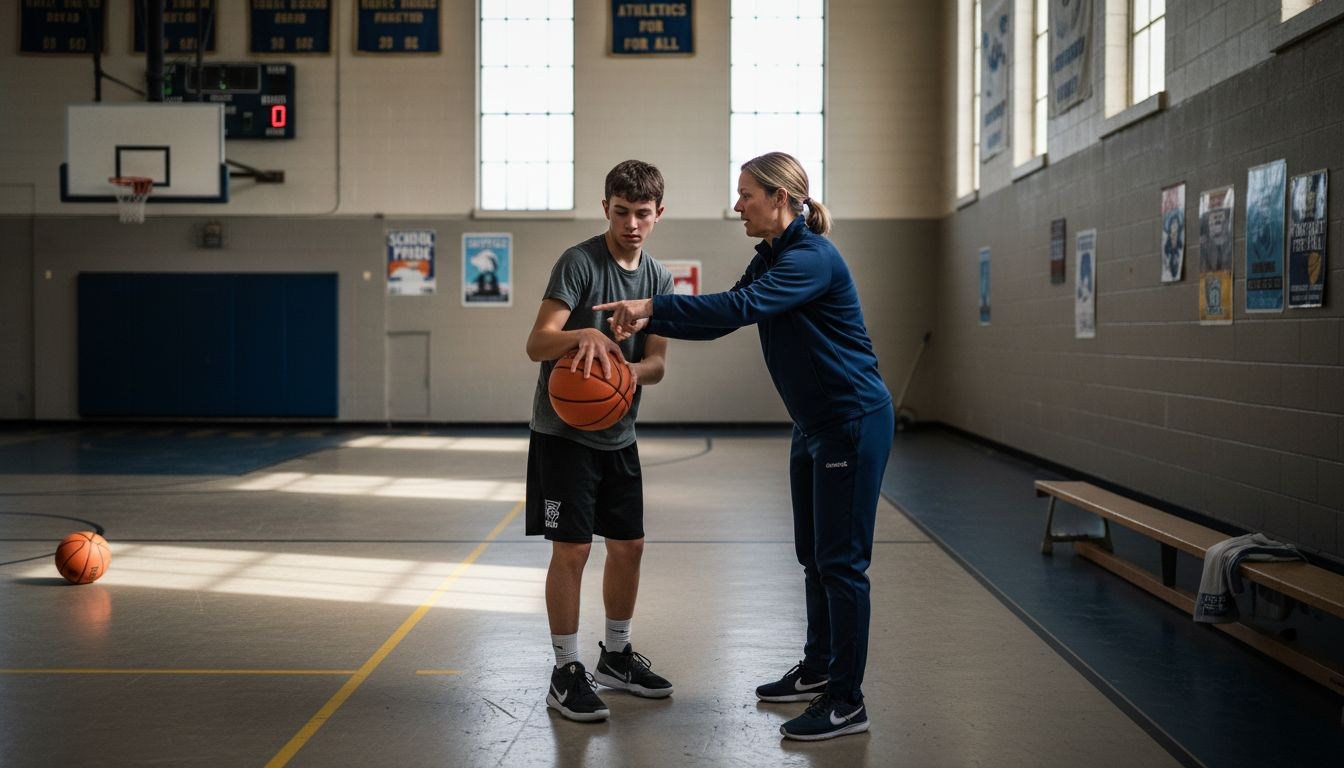
This type works best for correcting technique, spacing, or effort level. A player shoots with poor form; you stop and correct it immediately. Someone misses a defensive assignment; you clarify it right then.
Immediate feedback sticks because the neural connection between action and correction is strongest when timing is tight. Players remember what they just did and understand exactly what needs to change.
Use immediate feedback for:
- Technical corrections (footwork, shooting form, release point)
- Tactical mistakes (positioning, spacing, coverage)
- Effort or focus issues
- Drill execution errors
Delayed Feedback After Practice or Games
Structured feedback comes after the action concludes—post-practice meetings, film sessions, or one-on-one conversations. You’ve had time to observe patterns, review footage, and think about your message.
This approach works better for players who need processing time or when you want deeper conversations about decision-making and basketball IQ. How to evaluate player performance becomes easier when you review film because you’re making decisions from evidence, not emotion.
Delayed feedback is also ideal for discussing confidence, role clarity, or long-term development plans. These conversations require reflection and shouldn’t happen in the heat of competition.
Use structured feedback for:
- Decision-making and basketball IQ
- Pattern analysis from multiple possessions
- Confidence or mental approach discussions
- Individual development planning
- Role clarity and team dynamics
Positive Reinforcement Feedback
Positive feedback highlights what a player did right. This isn’t generic praise; it’s specific recognition of effort, execution, or growth.
“Great effort on that screen” beats “good job” every time. Specific positive feedback tells players exactly what earned your recognition and encourages them to repeat it.
Positive feedback builds confidence and motivation. Young players especially need to know when they’re doing things correctly. Without it, they second-guess themselves and become timid.
Constructive Feedback for Improvement
Constructive feedback addresses what needs to change without attacking the player. It focuses on the action, not the person, and includes a path forward.
Instead of “You played terrible defense,” try “Your closeout was too aggressive—take one more step to show hands without fouling.” The second version tells the player exactly what went wrong and how to fix it.
Effective coaching communication relies on this balance between honesty and respect.
Group vs. Individual Feedback
Group feedback works when multiple players share the same mistake or when the entire team needs a message. A drill break to teach everyone proper screening technique or to reset defensive principles saves time and reinforces team standards.
Individual feedback addresses specific player situations. Someone struggling with confidence needs private conversation, not public correction.
Read the room. Public corrections work for effort and focus; private conversations work for confidence, role struggles, or sensitive topics.
The best feedback type matches the situation and respects the player’s learning style.
Pro tip: Film sessions are your secret weapon—use delayed feedback during film review to show players objective evidence of their performance, combining immediate visual proof with structured conversation for maximum learning impact.
Here’s a comparison of feedback types and their optimal usage in basketball coaching:
| Feedback Type | Best Used For | Timing | Player Reaction |
|---|---|---|---|
| Immediate | Technique correction | During action | Rapid adjustment |
| Delayed (Structured) | Complex decision-making review | After session | Deep reflection |
| Positive Reinforcement | Confidence and motivation | Throughout | Increased engagement |
| Constructive | Skill improvement | As needed | Focused development |
Delivering Effective Feedback During Practice
The moment you give feedback shapes how a player receives it. Delivery matters as much as content. A perfectly worded correction delivered harshly lands differently than the same message delivered with respect and intention.
Practice is where the bulk of player development happens. Getting feedback delivery right during these sessions compounds over a season.
Set the Right Environment
Feedback lands better when players feel safe. An atmosphere of trust means they’ll accept corrections without defensiveness or discouragement.
Practice culture matters. If players fear making mistakes, they won’t take risks or learn. If they know mistakes are learning opportunities, they’ll engage fully.
Create this environment by:
- Correcting effort and focus publicly; protecting confidence privately
- Balancing criticism with recognition of what players do well
- Staying calm and controlled, even when frustrated
- Framing mistakes as normal parts of improvement
Timing and Positioning
Proximity matters. Stand close enough that only the player hears you. This keeps corrections private and prevents embarrassment, which kills learning.
Walk up to the player, make eye contact, and deliver your message. This feels more personal and respectful than shouting across the gym.
Pause the action when necessary. Stopping a drill to correct a fundamental mistake teaches everyone. Letting it continue sends the wrong message about standards.
The Delivery Framework
Effective feedback delivery uses structured psychological techniques that respect the player’s autonomy and growth. Start with observation, then guide discovery.
Use this simple structure:
- Observe specifically – “I saw you dribble into traffic on the last three possessions.”
- Ask, don’t tell – “What were you looking for?”
- Guide toward the answer – “How could you improve your court vision in that situation?”
- Confirm the fix – “Let’s see that adjustment next rep.”
This approach builds self-awareness instead of creating dependency on your feedback. Players learn to recognize their own mistakes, which transfers to games when you’re not there coaching.
Use 7 effective communication strategies that keep feedback focused and actionable.
Be specific. “Better positioning” means nothing. “Keep your feet shoulder-width apart on the closeout” means everything.
Be brief. Practice time is limited. Two sentences deliver more impact than a paragraph of explanation.
Adjust for the Player
Some players need immediate correction; others need processing time. A veteran starter might respond to direct challenge while a freshman needs encouragement wrapped around the correction.
Meaningful, timely feedback adapts to individual personality and development stage. Read your players and adjust your delivery accordingly.
Confident players can handle edge. Insecure players need scaffolding and support.
Effective feedback delivery is about the player’s growth, not your frustration.
Close with Action
Always end feedback with what comes next. “Now go execute that adjustment” gives the player immediate opportunity to apply it.
This closes the feedback loop. The player doesn’t just receive information; they practice the correction while your coaching is fresh in their mind.
Pro tip: Film a quick video clip on your phone during practice of a player’s mistake, then show it back immediately with 30 seconds of coaching—visual evidence plus real-time feedback creates stronger learning than words alone.
Encouraging Player Growth Through Communication
Words matter. A coach’s voice shapes how a player sees themselves, their potential, and their place on the team. Communication that encourages is communication that grows champions.
Young basketball players are still forming their identities. Your feedback and encouragement either build confidence or erode it. Get this right, and development accelerates.
The Power of Verbal Encouragement
Coach verbal encouragement positively influences technical skills, motivation, and physiological engagement during training. When you say “Great effort on that screen” or “I see improvement in your footwork,” players respond with better focus and sustained effort.
Encouragement isn’t just feel-good talk. It’s a performance tool. Players who receive balanced challenge and support develop resilience and confidence.
Think of encouragement as fuel. Without it, players run on empty. With it, they push through difficult moments and embrace challenges instead of avoiding them.
Balance Challenge with Support
Effective communication doesn’t coddle. It pushes and supports simultaneously. A player needs to know you believe they can improve while also knowing the work is hard.
Say: “This is difficult, and I know you can do it.” Not: “This is easy” or “This is impossible.”
The balance creates psychological safety. Players know mistakes won’t crush them, so they take risks. They know you have high standards, so they work hard to meet them.
Connect Feedback to Individual Values
Communication strategies that align with athletes’ values promote autonomy and self-regulation. A player motivated by team success responds differently than one motivated by individual achievement.
Learn what drives each player:
- Some want recognition for hard work
- Others respond to competitive challenge
- Many value belonging and team connection
- Some are intrinsically motivated by mastery
When your communication taps into these motivations, players engage more deeply. Your message lands because it resonates with what already matters to them.
Build Dialogue, Not Monologue
Player-coach relationships strengthen through dialogue that respects autonomy. Ask questions instead of just delivering answers.
“What did you see on that possession?” opens conversation. “You missed the cutter” closes it.
Dialogue shows respect. It invites players into problem-solving instead of making them passive recipients of your wisdom. This builds ownership of their development.
Strengthen the Coach-Athlete Connection
Encouragement improves the relationship between you and your players. When players feel genuinely supported, not just criticized, they trust you more. That trust makes every other piece of coaching more effective.
This doesn’t mean avoiding hard conversations. It means hard conversations come from a foundation of genuine care and belief in their potential.
Communication that encourages growth builds the trust that makes all other coaching possible.
Consistency Over Intensity
Sustained encouragement beats occasional bursts. A player who hears “I believe in you” weekly internalizes it. Random praise gets forgotten.
Build encouragement into your daily practice routine. Pre-practice words, individual check-ins, post-practice reflection—these consistent touches compound over time.
Pro tip: Start each week by identifying one specific growth area for each player, then deliver targeted encouragement specifically addressing that growth—when players hear you recognize their individual journey, they feel seen and valued.
Common Mistakes and How to Avoid Them
Even well-intentioned coaches slip into feedback patterns that undermine development. Knowing these pitfalls helps you catch yourself before damage happens. Most mistakes stem from pressure, habit, or simply not knowing better.
The good news? These are all fixable. Self-awareness is your first line of defense.
Mistake 1: Generic Praise Without Specificity
The Problem: “Good job” feels empty to a player. They don’t know what earned your recognition or what to repeat.
Generic praise teaches nothing. A player who hears “great effort” but doesn’t know which effort you’re praising doesn’t improve. Next time, they guess.
The Fix: Replace vague praise with specific recognition. “Great effort fighting for that offensive rebound” tells the player exactly what to repeat. The specificity matters more than enthusiasm.
Mistake 2: Correcting in Front of Teammates
The Problem: Public correction damages confidence. A player corrected harshly in front of peers becomes defensive, not receptive.
This is especially true for younger players still building confidence. One public correction in front of teammates can undo five practice sessions of positive work.
The Fix: Correct effort and focus publicly; protect confidence privately. Walk over to the player, speak quietly, and deliver the message one-on-one. This maintains dignity while addressing the issue.
Mistake 3: Feedback Without a Path Forward
The Problem: You point out what’s wrong but don’t show how to fix it. The player leaves confused about next steps.
“Your footwork is sloppy” identifies a problem. But effective feedback must include direction toward improvement.
The Fix: Always end feedback with action. “Your footwork is sloppy. Plant your feet shoulder-width apart before shooting. Let’s see that adjustment next rep.” Now the player knows exactly what to do.
Mistake 4: Comparing Players to Each Other
The Problem: “Why can’t you be more like your teammate?” kills intrinsic motivation. Players need to compete with themselves, not feel judged against peers.
Comparisons create resentment between teammates and damage the struggling player’s confidence. They also shift focus from personal growth to external judgment.
The Fix: Compare a player only to their own previous performance. “Last week you averaged two turnovers per game. This week you’re at three. Let’s fix that.” This keeps the conversation developmental.
Mistake 5: Giving Feedback When Emotions Run High
The Problem: Frustrated feedback is often harsh, unfair, or forgotten by morning. Delivering feedback in anger wastes the moment.
You might say things you don’t mean. Players might receive the message as personal attack instead of coaching. Neither serves development.
The Fix: Pause before delivering difficult feedback. Take a breath. Ask yourself: “Is this coming from frustration or genuine coaching?” Delayed feedback given calmly beats immediate feedback given harshly.
Mistake 6: Inconsistent Standards
The Problem: You correct one player for a mistake but let a starter get away with the same thing. Players notice immediately.
Inconsistency destroys trust. Players stop taking feedback seriously when they see favoritism.
The Fix: Apply standards equally. Everyone gets corrected for the same mistakes. Everyone gets recognized for the same efforts. Consistency builds credibility.
The best feedback strategy beats the best individual feedback when you deliver it inconsistently.
Mistake 7: Never Following Up
The Problem: You give feedback and move on. Next practice, the same mistake repeats. The player doesn’t see your feedback as important.
Without follow-up, feedback becomes noise. With it, it becomes expectation.
The Fix: Circle back. In the next practice, watch specifically for the corrected skill. Acknowledge improvement immediately. This shows players you mean what you say.
Pro tip: Keep a simple feedback log noting what you corrected for each player and when—review it before the next practice to follow up on previous corrections and show players you’re serious about their development.
Below is a summary of common coaching feedback mistakes and effective solutions:
| Mistake | Why It Fails | How to Fix |
|---|---|---|
| Generic Praise | Lacks actionable meaning | Give specific recognition |
| Public Correction | Damages player confidence | Correct privately when needed |
| No Path Forward | Leaves players confused | Offer clear next steps |
| Comparisons to Teammates | Harms motivation | Focus on player’s own progress |
| Feedback While Emotional | Reduces effectiveness | Wait until calm to deliver news |
| Inconsistent Standards | Destroys trust | Apply equal standards to all |
| Lack of Follow-up | Signals unimportance | Check back and reinforce changes |
Elevate Your Coaching Feedback and Unlock Player Growth Today
Coaching young athletes means facing the challenge of delivering feedback that truly develops skills and builds confidence. This article highlights the importance of specific, timely, and actionable feedback to transform your players’ potential into performance. If you struggle with structuring feedback that motivates and improves your team, you are not alone. Many coaches find it hard to balance positive reinforcement with constructive guidance and miss out on using proven tools to support player growth.

Boost your coaching effectiveness with Basketball Drills designed to create practice environments where feedback leads to real improvement. Combine these drills with clear play strategies from our Basketball Playbooks to build communication and confidence on and off the court. At Hoop Mentality, we provide easy-to-use resources that help you save time, deliver impactful feedback, and develop your players like a pro. Take control of your coaching today and see the difference targeted feedback can make.
Frequently Asked Questions
What is the importance of coaching feedback in youth basketball development?
Coaching feedback is essential as it helps players understand their strengths and weaknesses, guiding their growth and improvement. It transforms practice into learning opportunities and fosters talent development.
How can I deliver effective feedback during practice sessions?
To deliver effective feedback, set the right environment, ensure timing is appropriate, and position yourself close to the player. Use specific observations, ask guiding questions, and always end with actionable steps for improvement.
What are the different types of feedback that can be used in coaching?
The main types of feedback include immediate feedback for real-time corrections, delayed feedback for structured discussions, positive reinforcement to build confidence, and constructive feedback that focuses on improvement without diminishing the player’s morale.
How do I avoid common mistakes when giving feedback?
To avoid common mistakes, ensure your praise is specific, correct players privately when needed, provide a clear path forward, maintain consistency in standards, and follow up on previously addressed issues to reinforce learning.
Recommended
- How to Coach Youth Basketball for Team Success – Hoop Mentality
- Basketball Coaching: Driving Youth Team Success – Hoop Mentality
- Player Development: Transforming High School Teams – Hoop Mentality
- 7 Key Player Development Tips for Coaches – Hoop Mentality
- Top Dog Training Motivation Tips for Every Owner – iPupPee
- 7 vantaggi dei docenti giovani per studenti in recupero - Recupero Anni Scolastici e Diploma Online
- What Is Life Coaching and Why It Matters Today