

Over half of American coaches now rely on advanced stats to track basketball player growth. With so many ways to measure what happens on the court, sorting through all the numbers can be confusing. By learning which metrics actually matter, you can turn piles of data into real progress for your team and help every player make bigger, better contributions.
Table of Contents
- Step 1: Define Key Performance Indicators
- Step 2: Set Up Observation And Data Tools
- Step 3: Collect Measurable Player Data
- Step 4: Analyze Results Against Goals
- Step 5: Implement Feedback And Adjust Strategies
Quick Summary
| Important Insight | Explanation |
|---|---|
| 1. Define Relevant KPIs | Establish 3-5 key performance indicators to evaluate player contributions effectively and capture essential performance metrics. |
| 2. Utilize Advanced Tracking Tools | Invest in tracking technologies and tools to ensure accurate data collection and comprehensive player insights during games and training. |
| 3. Standardize Data Collection | Implement a consistent data collection protocol to maintain accuracy across player evaluations and sessions for effective analysis. |
| 4. Contextualize Performance Data | Analyze metrics against predefined goals and situational contexts to understand player performance and inform development strategies. |
| 5. Implement Feedback Mechanisms | Create a framework for personalized feedback, aligning recommendations with specific performance metrics to enhance player skills and development. |
Step 1: Define key performance indicators
Defining key performance indicators (KPIs) is the critical first step in evaluating basketball player performance systematically. By establishing clear, measurable metrics, coaches can transform raw data into meaningful insights about player contributions.
To effectively define KPIs, start by examining comprehensive performance metrics used in professional basketball analysis. Research investigating player performance across NCAA and NBA games highlights several essential indicators that provide nuanced perspectives on player effectiveness. Some foundational KPIs include:
- Player Efficiency Rating (PER)
- True Shooting Percentage (TS%)
- Defensive Rating (DRtg)
- Assist to Turnover Ratio
- Points per Possession
Choosing the right KPIs requires understanding your specific evaluation goals. Are you assessing individual player contributions, team dynamics, or specific skill improvements? Each metric offers different insights. For instance, PER provides a comprehensive single number representing a player’s overall statistical production, while True Shooting Percentage reveals shooting efficiency across all scoring attempts.
A pro tip: Don’t overwhelm yourself by tracking too many indicators. Select 3-5 KPIs that align most closely with your team’s strategic objectives and player development goals. In-depth studies of NBA player performance profiles suggest focusing on metrics that capture multiple dimensions of player impact.
Once you’ve defined your KPIs, you’ll be prepared to systematically track and analyze player performance with precision and clarity.
Step 2: Set up observation and data tools
Setting up robust observation and data tools is crucial for capturing comprehensive player performance insights. Your goal is to create a systematic approach that transforms raw gameplay into actionable performance metrics.
Start by investing in reliable tracking technologies. Recent advances in optical tracking technology demonstrate how professional leagues are capturing intricate player movements with sophisticated camera systems that record real-time data. For basketball performance analysis, consider these essential tools:
- Video recording systems with multiple camera angles
- Digital performance tracking software
- Stationary cameras for court coverage
- Wearable GPS tracking devices
- Tablet or laptop for immediate data input
Choosing the right equipment depends on your budget and specific analysis goals. High-end systems can track complex metrics like player speed, shot quality, and spatial positioning. If professional grade equipment seems overwhelming, start with basic video recording and manual tracking spreadsheets.
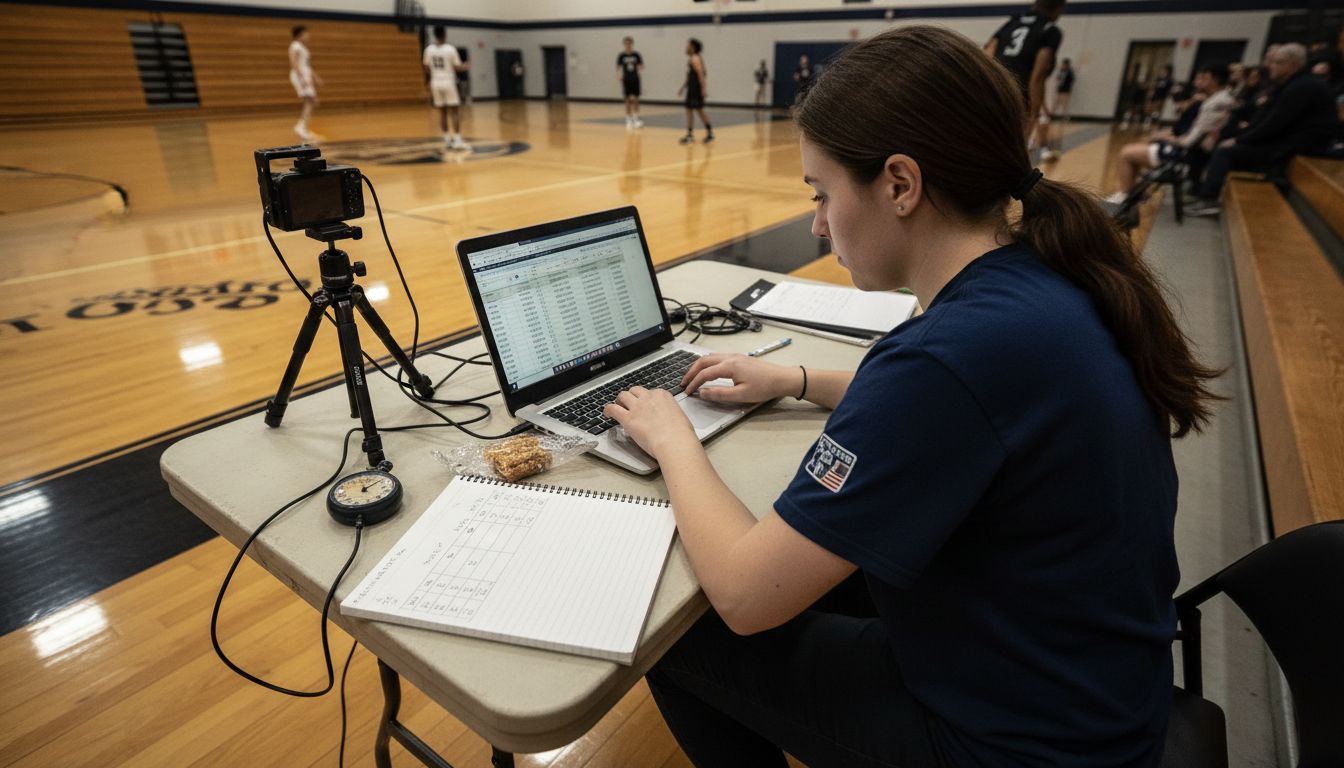
A pro tip: Standardize your data collection process. Create consistent protocols for recording observations, ensuring each player is evaluated using identical methodological approaches. This maintains reliability and allows for accurate comparative analysis across different players and game scenarios.
With your observation tools in place, you are ready to transform raw gameplay into meaningful performance insights that can drive player development and strategic planning.
Step 3: Collect measurable player data
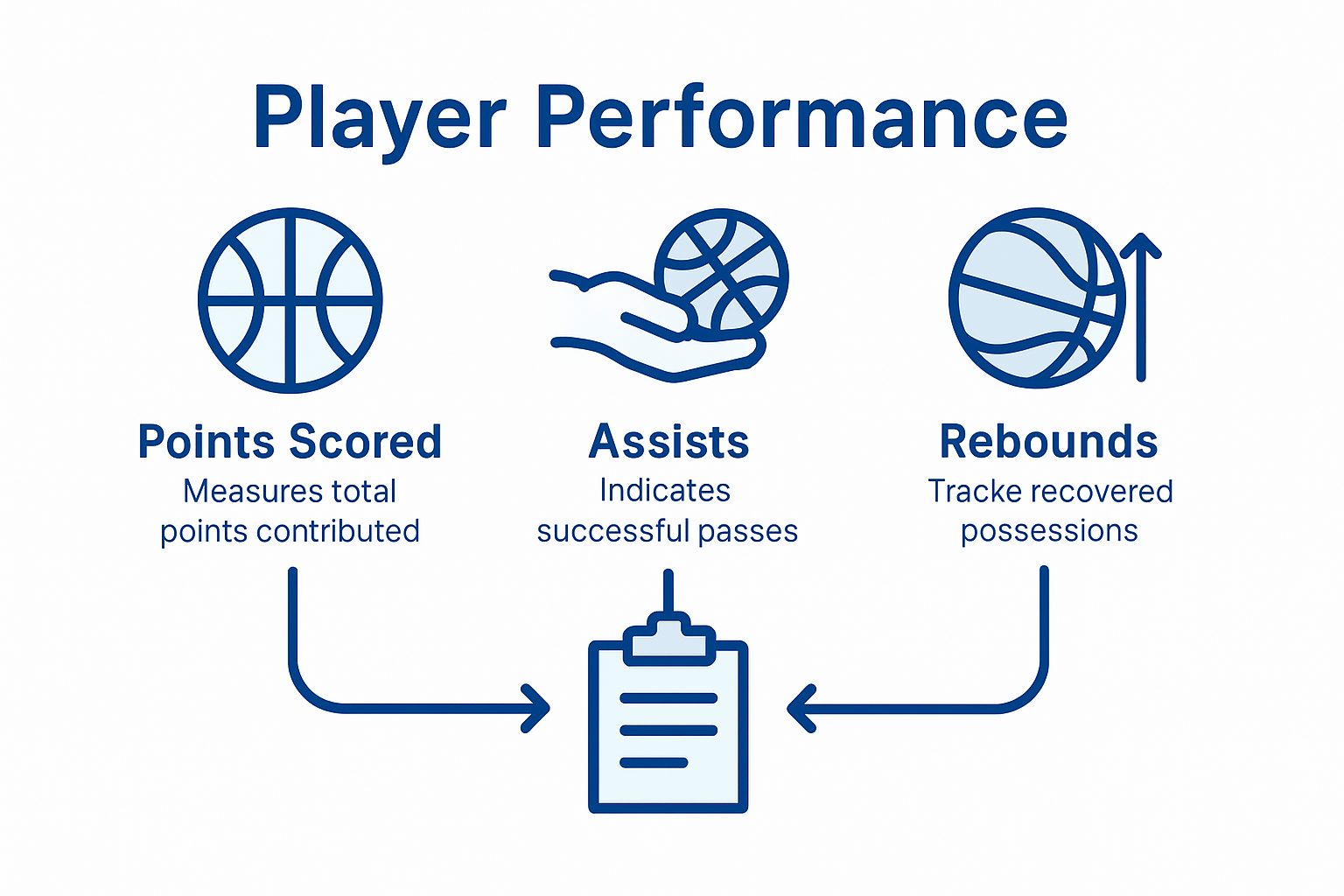
Collecting precise measurable player data is the foundation of comprehensive basketball performance evaluation. Your objective is to capture quantitative insights that reveal nuanced aspects of individual and team performance.
Emerging research on human activity recognition in basketball demonstrates the power of systematic data collection across training and game scenarios. Advanced tracking methods now enable coaches to gather sophisticated performance metrics. Key data collection strategies include:
- Physical movement tracking
- Biometric sensor readings
- Performance consistency measurements
- Motion analysis recordings
- Biomechanical efficiency assessments
Professional tracking technologies like SportVU camera systems provide granular data collection capabilities, capturing player movements 25 times per second. These systems offer unprecedented insights into player positioning, speed, and interaction patterns.
A pro tip: Develop a standardized data collection protocol that ensures consistency across different players and sessions. This approach maintains data integrity and allows for meaningful comparative analysis. Basketball evaluation methods can help refine your data collection approach, ensuring you capture the most relevant performance indicators.
By implementing systematic data collection techniques, you transform subjective observations into objective, actionable performance insights that can drive player development and strategic decision making.
Step 4: Analyze results against goals
Analyzing player performance requires a systematic approach that transforms raw data into meaningful insights. Your goal is to compare collected metrics against predefined performance objectives, revealing strengths and areas for improvement.
Advanced analytical frameworks using tensor decomposition offer sophisticated methods for understanding complex spatio-temporal patterns in basketball performance. These techniques enable coaches to move beyond surface-level statistics and uncover nuanced team and individual dynamics.
Utilize comprehensive evaluation metrics like the Player Efficiency Rating (PER), which consolidates multiple performance dimensions into a single comprehensive score. This approach allows for quick yet thorough performance assessments. Key analysis strategies include:
- Comparing individual metrics against team benchmarks
- Identifying performance trends over time
- Evaluating skill progression across different game scenarios
- Assessing player contributions relative to specific roles
- Recognizing potential areas for targeted skill development
A pro tip: Always contextualize your data. Raw numbers tell only part of the story successful performance analysis requires understanding the specific circumstances and strategic goals behind each metric.
By implementing a rigorous analytical approach, you transform performance data into actionable insights that can drive meaningful player development and team strategy.
Step 5: Implement feedback and adjust strategies
Implementing effective feedback and adjusting strategies is crucial for continuous player development and team performance improvement. Your goal is to transform analytical insights into actionable coaching interventions.
Advanced performance assessment methods now enable coaches to evaluate individual player performance through detailed video analysis, identifying specific events that positively or negatively impact overall gameplay. These personalized approaches allow for targeted skill refinement and strategic adjustments.
Develop a comprehensive feedback framework that combines quantitative data with qualitative observations. Interactive visualization techniques can help communicate performance insights more effectively, making complex data more accessible to players. Key strategy implementation steps include:
- Schedule individual player review sessions
- Create personalized improvement plans
- Align feedback with specific performance metrics
- Set measurable short and long term goals
- Provide constructive and specific recommendations
A pro tip: Balance data driven insights with individual player motivations. Defensive adjustment strategies can provide additional context for tactical improvements.
By integrating systematic feedback mechanisms, you create a dynamic learning environment that empowers players to continuously enhance their skills and team performance.
Unlock Precise Player Evaluation with Expert Coaching Tools
Evaluating basketball player performance effectively requires clear key performance indicators and systematic data collection that leads to actionable feedback. If you are facing challenges turning complex performance data into real improvements on the court, Hoop Mentality has the professional resources designed to help you bridge that gap. Our Basketball Templates are crafted to simplify tracking essential metrics like Player Efficiency Rating and True Shooting Percentage allowing you to organize and analyze player data with ease.

Start transforming your player evaluations into winning strategies today. Explore our full range of coaching tools at Hoop Mentality and take advantage of Basketball Drills built to improve skill development alongside your data insights. Don’t wait to bring clarity and confidence to your coaching process—visit us now and give your team the edge they deserve.
Frequently Asked Questions
How can I define key performance indicators for evaluating basketball players?
Defining key performance indicators (KPIs) involves selecting measurable metrics that reflect individual contributions and team success. Start by identifying 3-5 essential KPIs, such as Player Efficiency Rating (PER) or True Shooting Percentage, that align with your evaluation goals.
What tools should I set up for observing player performance in basketball?
To effectively observe player performance, invest in reliable tracking technologies like video recording systems or digital performance tracking software. Set up multiple camera angles to capture gameplay from various perspectives, ensuring comprehensive data collection during training and games.
How do I collect measurable data on player performance?
Collect measurable player data by tracking physical movements, biometric readings, and performance metrics systematically. Develop a standardized data collection protocol to maintain consistency and accuracy, allowing you to analyze player performance across multiple sessions.
What analytical methods should I use to evaluate player performance?
Use analytical methods that compare collected metrics against predefined performance goals, such as the Player Efficiency Rating (PER). By identifying trends and evaluating skill advancements over time, you can gain deeper insights into individual and team dynamics.
How can I implement feedback based on player performance analysis?
Implement feedback by creating personalized development plans based on quantitative data and qualitative observations. Schedule review sessions with players to discuss their performance metrics, set measurable improvement goals, and provide specific recommendations that target skill enhancement.
How often should I review player performance metrics?
Review player performance metrics regularly, ideally after each game or training session, to track progress and make timely adjustments. By conducting these reviews consistently, you can identify trends within 30 days and adapt strategies as needed for player development.