

Coaching basketball is more than drawing up plays and calling timeouts. It means creating an environment where your instructions actually lead to skill development and team cohesion every single practice. The challenge is turning your words into actions that players can remember and execute under pressure.
This list gives you practical ways to sharpen your communication and practice strategies using proven principles from expert British and American coaching organizations. You will discover actionable ideas to build clarity, confidence, and connection among your athletes at every stage. Keep reading to find out how small tweaks in your coaching approach can make a lasting difference for your team.
Table of Contents
- 1. Establish Clear Practice Objectives
- 2. Use Simple, Direct Language On the Court
- 3. Encourage Peer-to-Peer Communication
- 4. Implement Pre-Game and Post-Game Meetings
- 5. Utilize Visual Aids and Demonstrations
- 6. Promote Active Listening Among Players
- 7. Provide Timely, Constructive Feedback
Quick Summary
| Takeaway | Explanation |
|---|---|
| 1. Set Clear Practice Objectives | Establish specific goals to guide every training session and enhance player focus and performance. |
| 2. Use Simple Communication | Deliver clear and concise instructions to help players respond quickly under pressure. |
| 3. Encourage Peer Communication | Foster strong dialogue among players for better teamwork and game strategy execution. |
| 4. Conduct Structured Meetings | Utilize pre-game and post-game discussions to align team objectives and analyze performance. |
| 5. Provide Timely Constructive Feedback | Offer immediate, actionable critiques to support skill development and enhance player growth. |
1. Establish Clear Practice Objectives
Successful basketball coaching begins with setting precise and actionable practice objectives that guide every training session. Communication clarity transforms ordinary practices into strategic development opportunities for your team.
Establishing clear objectives serves multiple critical purposes for basketball coaches:
- Provides focus and direction for players
- Minimizes wasted practice time
- Creates measurable performance benchmarks
- Helps players understand specific skill improvements
When developing practice objectives coaches should create specific skill-based goals that target individual and team performance. This means moving beyond generic instructions like “work on shooting” to crafted statements such as “improve catch-and-shoot accuracy from wing positions by 15% through repetitive game-simulation drills”.
Clear objectives transform random practice activities into purposeful skill development sessions.
Implementing structured objectives requires coaches to break down complex skills into manageable components. For instance when working on defensive techniques coaches might establish granular goals like:
- Improve lateral movement speed
- Enhance defensive stance consistency
- Practice proper hand positioning during opponent drives
By creating targeted basketball practice goals, coaches can systematically track player progression and adjust training strategies.
Pro tip: Create a visible objective board or digital tracker that players can reference during practice to maintain focus and understand the session’s specific performance targets.
2. Use Simple, Direct Language On the Court
Communication in basketball requires crystal clear messaging that players can instantly understand and execute. Effective coaching language cuts through confusion and transforms strategic instructions into immediate player action.
Simple communication matters because young athletes process information differently under pressure. Complex or verbose instructions often lead to:
- Delayed reactions
- Misunderstood strategies
- Player frustration
- Decreased performance efficiency
Successful coaches distill complex basketball concepts into straightforward language. Instead of saying “Implement a complex defensive rotation strategy,” a coach might say “Drop back and protect the paint”.
Direct communication eliminates ambiguity and accelerates team understanding.
When crafting basketball practice communication strategies, coaches should focus on:
- Using active verb commands
- Avoiding unnecessary technical jargon
- Matching language to player skill level
- Confirming player comprehension
Language precision means understanding that every word carries weight during high-pressure game situations. Concise instructions enable faster player response and more intuitive team coordination.
Pro tip: Practice delivering instructions in short one to three word commands that players can quickly recognize and execute during fast-paced game scenarios.
3. Encourage Peer-to-Peer Communication
Teamwork in basketball thrives when players communicate effectively with each other. Peer-to-peer communication transforms individual talents into a cohesive team strategy that elevates overall performance.
Building strong communication between players creates multiple competitive advantages:
- Faster on-court decision making
- Enhanced defensive coordination
- Improved team chemistry
- Quicker recognition of opponent strategies
- Increased player accountability
Successful coaches understand that player-driven communication happens through structured and intentional team building. This means creating environments where athletes feel comfortable providing constructive feedback and strategic insights to teammates.
When players talk freely on the court communication becomes a powerful competitive weapon.
Implementing peer communication requires deliberate coaching strategies such as:
- Designing specific communication drills
- Rewarding verbal team interactions
- Teaching respectful communication techniques
- Creating trust-based team environments
Understanding basketball team communication dynamics helps coaches develop players who can effectively communicate under pressure. Young athletes learn to read court situations faster when encouraged to share observations and suggestions with teammates.
Pro tip: Create weekly team discussions where players analyze game footage together and practice providing constructive feedback to each other in a supportive environment.
4. Implement Pre-Game and Post-Game Meetings
Structured team meetings before and after games are critical communication opportunities that transform player understanding and team performance. Strategic team discussions create alignment and provide essential insights for continuous improvement.
Pre-game and post-game meetings serve multiple crucial functions:
- Establish clear game objectives
- Review strategic game plans
- Analyze individual and team performance
- Build team confidence
- Create accountability mechanisms
Successful coaches recognize that meeting effectiveness depends on intentional preparation and focused discussion. These meetings are not casual conversations but structured communication opportunities that directly impact team performance.
Consistent meetings transform random interactions into purposeful team development sessions.
Effective meetings typically follow a strategic format:
- Pre-game: Review opponent strategies
- Pre-game: Confirm player assignments
- Post-game: Analyze performance metrics
- Post-game: Provide constructive feedback
Basketball team meeting strategies help coaches create environments where players feel heard and understand their roles. Thoughtful meetings build trust and provide players opportunities to contribute to team strategy.
Pro tip: Develop a consistent meeting template with specific time allocations and clear discussion objectives to maximize communication efficiency and player engagement.
5. Utilize Visual Aids and Demonstrations
Basketball players are visual learners who comprehend complex strategies faster through practical demonstrations. Strategic visual communication transforms abstract concepts into tangible skills players can immediately understand and implement.
Visual aids provide multiple learning advantages:
- Accelerate skill comprehension
- Reduce verbal instruction time
- Create muscle memory through observation
- Accommodate different learning styles
- Increase player engagement
Successful coaches recognize that demonstration techniques bridge the gap between verbal instructions and physical execution. By showing players exactly how a technique works coaches can dramatically improve skill transfer and performance.
Seeing is understanding. Demonstration transforms complex instructions into clear action.
Effective visual communication strategies include:
- Live player demonstrations
- Video breakdown analysis
- Whiteboard tactical illustrations
- Slow motion technique breakdowns
- Interactive player positioning exercises
Basketball coaching demonstration techniques help coaches create immersive learning experiences that connect verbal instructions with physical performance. Young athletes learn fastest when they can see and immediately attempt a new skill.
Pro tip: Create a library of demonstration videos and live technique breakdowns that players can reference before and after practice to reinforce learning.
6. Promote Active Listening Among Players
Active listening transforms basketball team dynamics from disconnected individuals into a unified strategic unit. Intentional communication skills enable players to absorb critical information quickly and respond effectively during high pressure game situations.
Active listening provides significant team benefits:
- Reduces misunderstandings
- Improves on-court coordination
- Builds team trust
- Enhances tactical comprehension
- Creates a supportive team environment
Successful coaches recognize that listening goes beyond hearing. It involves fully comprehending verbal and non-verbal communication signals from players and coaching staff.
True listening means understanding the intent behind the words not just their surface meaning.
Effective active listening strategies include:
- Maintaining eye contact during conversations
- Asking clarifying questions
- Reflecting back key information
- Avoiding interrupting speakers
- Showing genuine engagement
Basketball team communication techniques help coaches develop players who can process instructions rapidly and respond with precision. Young athletes learn to communicate more effectively when coaches model exceptional listening behaviors.
Pro tip: Create structured team exercises where players practice restating each other’s strategic insights to reinforce listening and comprehension skills.
7. Provide Timely, Constructive Feedback
Feedback is the cornerstone of player development in basketball. Strategic communication techniques transform individual player performance by delivering insights that motivate and guide skill improvement.
Constructive feedback offers multiple performance advantages:
- Accelerates skill acquisition
- Builds player confidence
- Identifies specific improvement areas
- Creates transparent coach player relationships
- Reduces repeated technical mistakes
Successful coaches understand that feedback timing matters as much as content. Immediate observations help players connect actions with coaching insights while memories are fresh.
Effective feedback is specific actionable and delivered with genuine player development intent.
Constructive feedback strategies include:
- Observing player performance objectively
- Focusing on specific behaviors
- Balancing critique with positive reinforcement
- Providing clear improvement recommendations
- Confirming player understanding
Basketball coaching communication techniques help coaches develop nuanced feedback approaches that inspire player growth. Young athletes respond best to feedback that feels supportive and targeted.
Pro tip: Practice the sandwich method of feedback by starting with a positive observation sandwiching constructive criticism between two supportive comments.
Below is a comprehensive table summarizing effective coaching strategies for basketball as discussed in the article, highlighting their implementation and resultant benefits.
| Strategy | Implementation | Benefits |
|---|---|---|
| Establish Clear Practice Objectives | Define focused, specific skill-based goals for each session. For example, “Improve catch-and-shoot accuracy from wing positions by 15%.” | Provides direction, minimizes wasted practice time, and creates measurable benchmarks. |
| Use Simple, Direct Language on the Court | Convey instructions concisely, avoiding jargon; use phrases like “Protect the paint.” | Facilitates immediate player comprehension and efficient performance during gameplay. |
| Encourage Peer-to-Peer Communication | Foster an environment encouraging players to share feedback and strategies amongst themselves. | Enhances teamwork, decision-making, and collective tactical understanding. |
| Implement Pre-Game and Post-Game Meetings | Allocate structured time to discuss objectives, assignments, and performance. | Builds confidence, fosters accountability, and reinforces strategic clarity. |
| Utilize Visual Aids and Demonstrations | Incorporate player demonstrations, video analyses, and illustrations of tactics. | Accelerates skill acquisition and accommodates various learning styles. |
| Promote Active Listening Among Players | Train players to maintain eye contact, ask questions, and relay understanding. | Improves communication accuracy and strengthens team cohesion. |
| Provide Timely, Constructive Feedback | Offer specific, actionable insights along with positive reinforcement immediately after play. | Accelerates improvement, reduces repeated errors, and enhances player confidence. |
Elevate Your Team’s Communication and Coaching Effectiveness Today
Effective communication is the backbone of every winning basketball team but mastering strategies like setting clear objectives, using simple language and providing timely feedback can be challenging. If you are a coach eager to enhance your communication skills and streamline your practice sessions Hoop Mentality delivers practical solutions designed to meet these exact needs. Our comprehensive Basketball Drills and detailed Basketball Playbooks offer proven tools that bring clarity and structure to your coaching approach allowing you to foster stronger player understanding and teamwork.
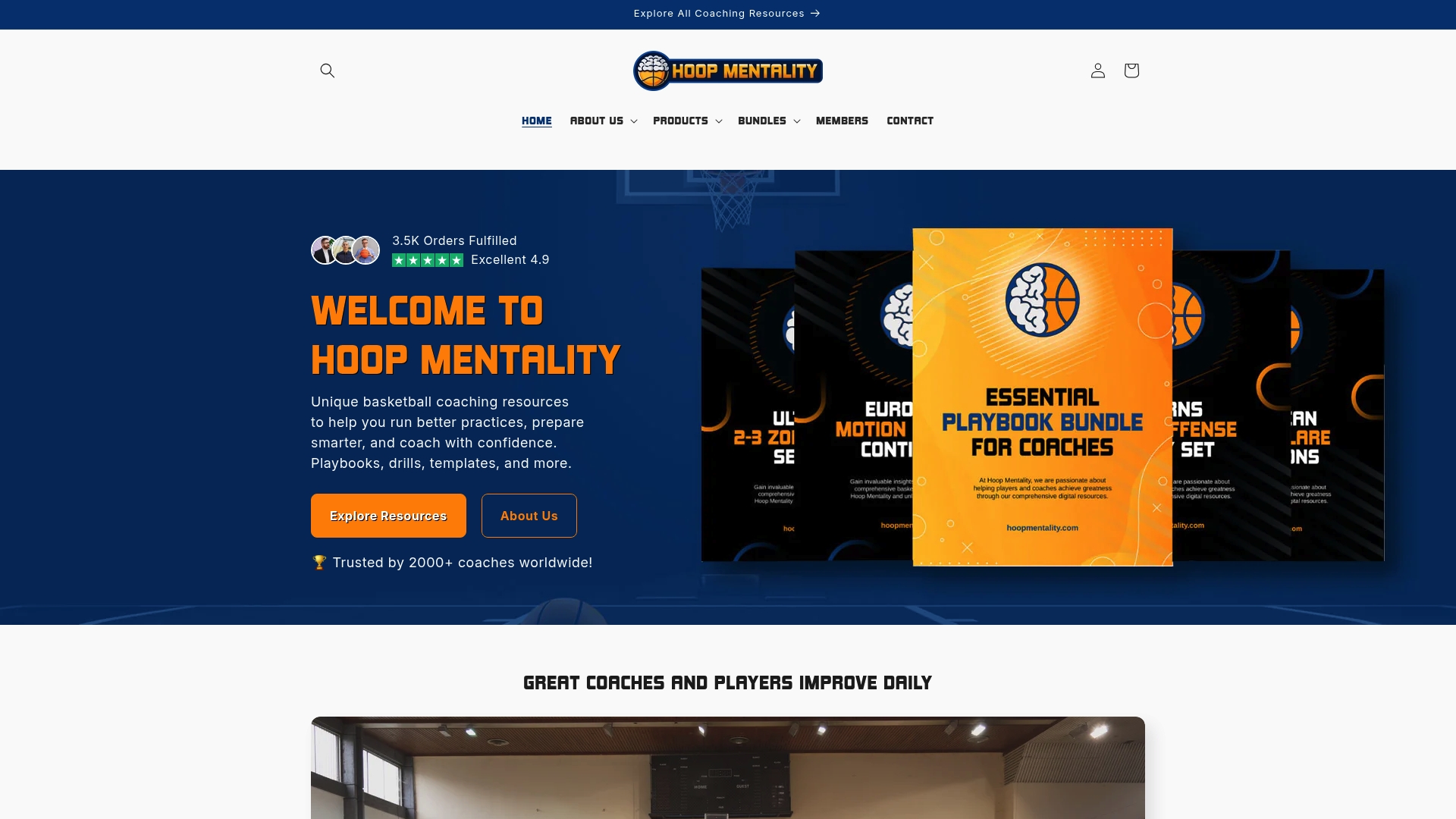
Don’t let communication barriers hold your team back Discover resources created from real coaching experience that help you save time improve player interaction and confidently execute your strategies. Visit Hoop Mentality now and transform your practice sessions into focused development opportunities that prepare your players to win more games.
Frequently Asked Questions
How can basketball coaches establish clear practice objectives?
Successful basketball coaches establish clear practice objectives by setting precise and actionable goals for each training session. Break down complex skills into specific targets, such as improving catch-and-shoot accuracy by 15% through targeted drills.
What are effective ways to communicate with young athletes during practice?
Using simple and direct language is crucial when communicating with young athletes. Provide clear, concise instructions, like saying “protect the paint” instead of using complex terms to enhance their understanding and execution on the court.
How can peer-to-peer communication improve basketball team performance?
Encourage peer-to-peer communication among players to enhance teamwork and on-court coordination. Design drills that promote verbal interactions, helping players identify and respond to opponents’ strategies more quickly and efficiently.
What should basketball coaches include in pre-game and post-game meetings?
Pre-game and post-game meetings should cover game objectives, strategic plans, and performance analyses. Focus on creating a structured format that allows for player input and constructive feedback to build trust and improve team performance.
How can visual aids enhance player understanding of complex strategies?
Visual aids can significantly improve player comprehension of complex strategies through practical demonstrations. Implement live player demonstrations or video breakdowns to connect verbal instructions with physical skills, allowing players to grasp techniques more effectively.
What steps can coaches take to promote active listening among players?
Coaches can promote active listening by modeling good listening habits, such as maintaining eye contact and asking clarifying questions. Encourage players to practice restating strategic insights during team exercises to reinforce comprehension and engagement.