

Over 60 percent of youth basketball coaches say that laying the right foundation determines a team’s future success. Early coaching decisions shape players’ skills, motivation, and teamwork for seasons to come. Whether you’re guiding beginners or eager returners, knowing how to assess abilities, design great practices, and set clear goals can transform every session. This guide breaks down the steps to help you build confident players and a strong, unified team from day one.
Table of Contents
- Step 1: Assess Player Skill Levels And Set Goals
- Step 2: Design Structured Basketball Practices
- Step 3: Introduce Fundamental Drills And Concepts
- Step 4: Implement Team Strategies And Plays
- Step 5: Evaluate Progress And Motivate Players
Quick Summary
| Key Point | Explanation |
|---|---|
| 1. Assess player skills comprehensively | Evaluate technical skills, body language, and teamwork to understand individual player abilities. |
| 2. Design structured, engaging practices | Use a balanced plan with warm-ups, skill drills, and scrimmages to enhance team cohesion and performance. |
| 3. Introduce fundamental skills progressively | Break down complex skills into manageable steps, focusing on core basketball techniques to build player competence. |
| 4. Implement flexible team strategies | Develop plays that adapt to game scenarios, emphasizing communication and teamwork for effective execution. |
| 5. Regularly evaluate progress and motivate | Establish a feedback system that tracks skill growth and fosters motivation through recognition and personal development plans. |
Step 1: Assess player skill levels and set goals
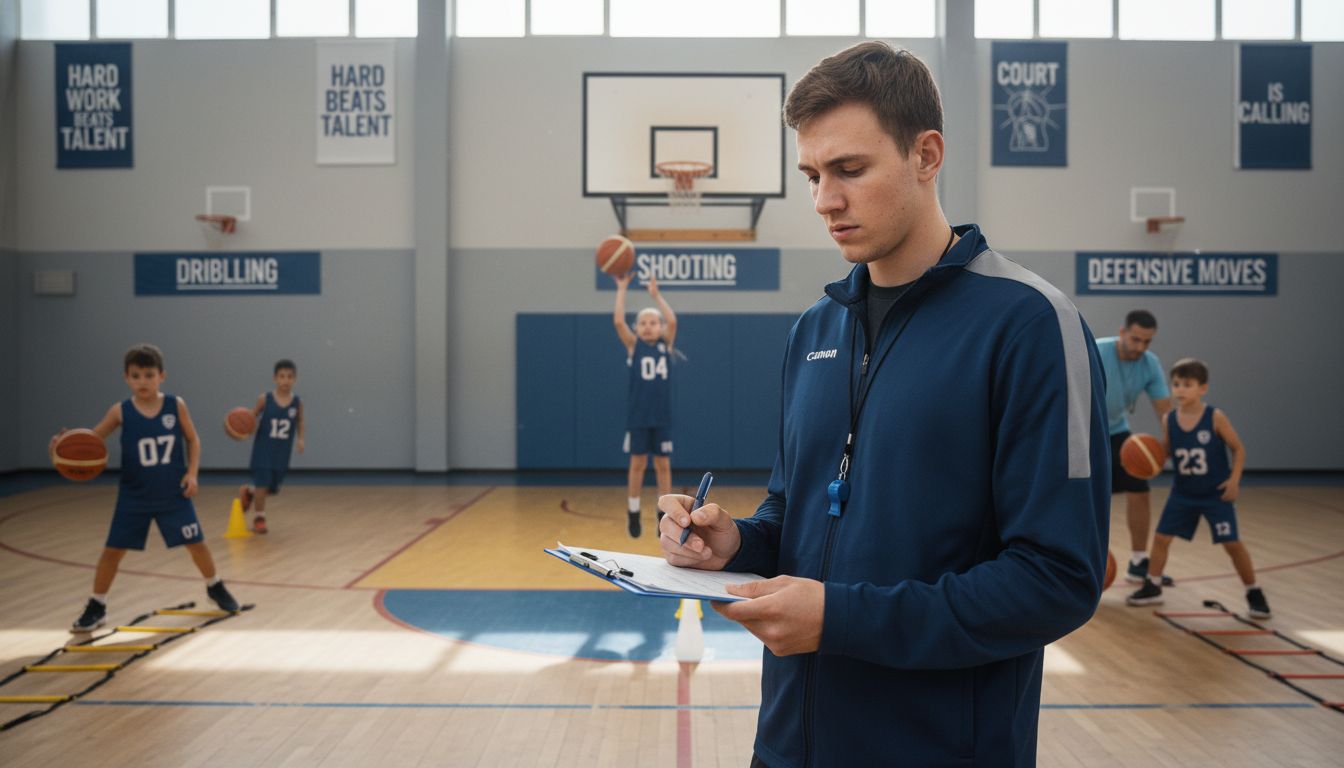
Assessing player skills and establishing meaningful goals is the foundation of successful youth basketball coaching. By understanding each athlete’s current abilities and potential, you can create a strategic development roadmap that maximizes individual and team performance.
According to dummies.com, effective skill assessment goes beyond simply tracking physical performance. Coaches must observe players holistically, evaluating not just technical skills but also body language, teamwork dynamics, and mental approach. Start by conducting an initial comprehensive evaluation that includes:
- Dribbling proficiency
- Shooting accuracy
- Defensive positioning
- Passing technique
- Court awareness
- Communication skills
- Physical conditioning
Create a standardized assessment sheet where you can objectively score each player across these dimensions. This allows you to track progress and set personalized development goals.
 7 Key Player Development Tips for Coaches can provide additional insights into creating targeted improvement strategies.
Remember that goal setting should be collaborative. Engage each player in discussing their individual aspirations and help them understand how their current skills connect to their long term basketball objectives. This approach not only motivates players but also helps them take ownership of their development journey.
In the next step, you will translate these assessments into targeted training plans that address individual and team skill gaps while maintaining an engaging and supportive practice environment.
Step 2: Design structured basketball practices
Designing structured basketball practices is a critical skill that transforms potential into performance. Your practice plan will serve as the strategic blueprint for developing individual player skills and team cohesion.
According to welcomehomevetsofnj.org, effective practice design requires a balanced approach that integrates skill development, team strategies, and physical conditioning. A typical structured practice should include:
- Warm up activities (10 minutes)
- Skill specific drills (25 minutes)
- Team strategy sessions (20 minutes)
- Competitive scrimmage time (25 minutes)
- Cool down and feedback (10 minutes)
Research from pmc.ncbi.nlm.nih.gov suggests using a systematic approach like the ADDIE model to design training programs. This means carefully analyzing your team’s current skill levels, designing targeted interventions, implementing those strategies, and continuously evaluating progress. Basketball Practice Structure: Complete Coaching Guide can provide additional insights into creating comprehensive practice frameworks.
Always remain flexible. While structure is important, great coaches know when to adjust plans based on team energy, player performance, and unexpected learning opportunities. Your practice design should challenge players while keeping the experience enjoyable and motivating.
In the next step, you will learn how to select and implement specific drills that align with your practice structure and team development goals.
Step 3: Introduce fundamental drills and concepts
Introducing fundamental drills and concepts is the cornerstone of building a solid basketball foundation for youth players. Your goal is to create an engaging learning environment that develops core skills while keeping players motivated and excited about the game.
According to welcomehomevetsofnj.org, effective skill introduction requires a structured approach that progressively builds player competence. Focus on fundamental skills that form the building blocks of basketball performance such as:
- Proper dribbling technique
- Shooting form and mechanics
- Defensive stance and movement
- Passing accuracy
- Footwork fundamentals
- Ball handling skills
Mastering The Basics: Best Youth Basketball Drills For Kids offers comprehensive insights into age appropriate skill development. When introducing these concepts, break complex skills into smaller teachable segments. Start with demonstration, allow players to practice slowly, then gradually increase speed and complexity.
Remember that patience is key. Young players learn differently, so use positive reinforcement and make drills feel like games. Celebrate small improvements and create an environment where mistakes are viewed as learning opportunities. Your enthusiasm and supportive coaching will help players build confidence and develop a genuine love for basketball.
In the next step, you will learn how to progressively challenge players and adapt your coaching approach to their individual skill levels and learning styles.
Step 4: Implement team strategies and plays
Implementing team strategies and plays transforms individual skills into a cohesive basketball unit. Your goal is to develop a playbook that maximizes each player’s strengths while creating systematic approaches to offensive and defensive scenarios.
Research from arxiv.org highlights how successful basketball teams adapt their organization and strategies under time pressure. This means developing plays that are both structured and flexible enough to respond dynamically to game situations. Start by identifying core team strategies such as:
- Pick and roll techniques
- Fast break formations
- Zone defense configurations
- Motion offense principles
- Screen and cut plays
- Transition defense strategies
Basketball Playbook Creation Guide for Winning Teams offers comprehensive insights into building adaptable team strategies. When introducing new plays, break them down into simple components. Practice each segment slowly, allowing players to understand positioning, timing, and individual responsibilities before combining them into full sequences.
Remember that communication is the key to successful strategy implementation. Encourage players to talk on the court, understand each other’s movements, and develop an intuitive sense of team dynamics. The most effective plays emerge from players who can read and respond to each other’s actions instinctively.
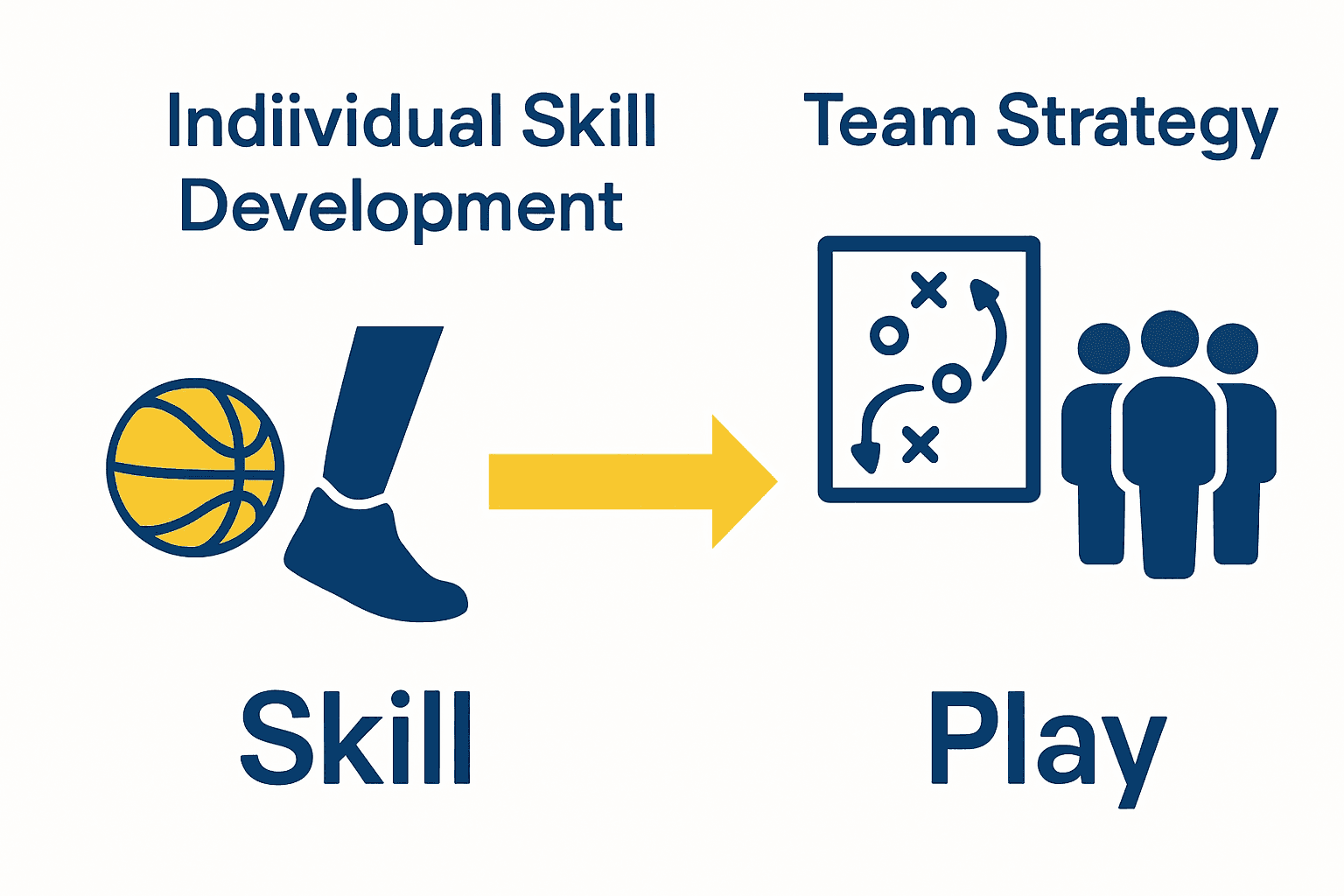
In the next step, you will learn how to evaluate and refine your team strategies through ongoing assessment and player feedback.
Step 5: Evaluate progress and motivate players
Evaluating player progress and maintaining team motivation are critical components of successful youth basketball coaching. Your approach should balance objective skill assessment with inspirational leadership that keeps players engaged and excited about their development.
According to research from francis-press.com, structured sports evaluation has significant psychological impacts on adolescent mental strength. This means your assessment should go beyond simple performance metrics and focus on holistic player growth. Develop a comprehensive evaluation system that tracks:
- Individual skill progression
- Team contribution
- Physical and mental development
- Personal goal achievement
- Technical understanding of the game
- Attitude and team spirit
Understanding Basketball Evaluation Criteria for Coaches provides deeper insights into creating meaningful assessment frameworks. Create regular check-in moments where players receive constructive feedback. Use these opportunities to highlight individual improvements and connect personal progress to team goals.
Motivation comes from recognition and personal growth. Celebrate small victories, create individual development plans, and help players understand that improvement is a journey. Show players how their current efforts connect to their long term basketball aspirations. Remember that every player is motivated differently some by competition, others by personal challenge, and some by team camaraderie.
In the final step, you will learn how to create a sustainable coaching approach that continues to inspire and develop your youth basketball team.
Take Your Youth Basketball Coaching to the Next Level with Proven Tools
Coaching youth basketball is challenging when it comes to assessing skills, setting goals, designing practices, and implementing effective team strategies. This article highlights the need to build structured plans and keep players motivated through clear communication and targeted development. If you struggle with organizing drills, practice plans, or creating a winning playbook your coaching journey just got easier.

Unlock your team’s potential today with our expert-designed resources at Hoop Mentality. Explore our Basketball Drills - Hoop Mentality for fundamental skill-building, browse Basketball Templates - Hoop Mentality to streamline your practice structure, and refine your game plans with our proven systems. Don’t wait to bring clarity and confidence to your coaching. Start using practical tools now to save time, improve communication, and lead your team toward success.
Frequently Asked Questions
How can I assess the skill levels of youth basketball players?
Assess player skills by observing their dribbling, shooting, defense, passing, and communication during practice. Create a standardized assessment sheet to score each player and identify areas for improvement within the first couple of weeks of the season.
What are the key components of a structured basketball practice?
A structured basketball practice should include a warm-up, skill-specific drills, team strategy sessions, competitive scrimmages, and a cool-down. Aim for a balanced 90-minute practice that dedicates time to each component, ensuring players develop both skills and teamwork.
How should I introduce fundamental drills to young basketball players?
Start by demonstrating fundamental drills, like dribbling and shooting, and break them down into smaller, manageable segments. Allow players to practice slowly at first, then increase the speed and complexity as they gain confidence, ideally within the first few practices.
What strategies should I implement for effective team play?
Develop core team strategies such as pick and roll tactics and zone defense while ensuring they are adaptable to different game situations. Introduce each strategy in segments during practice, allowing players to master their roles before executing them in full drills.
How can I evaluate player progress effectively?
Implement a comprehensive evaluation system that tracks individual and team performance, skill growth, and player attitudes. Schedule regular check-ins throughout the season to provide constructive feedback, and set new goals based on individual progress, ideally assessing every few weeks.
How can I keep youth players motivated during the season?
Motivate players by celebrating small victories, recognizing individual improvements, and creating a supportive team environment. Help each player connect their current efforts to long-term goals, keeping them engaged throughout the season.