

Most American youth basketball coaches in urban areas juggle far more than just teaching plays or winning games. Coaching is often misunderstood, with studies revealing that nearly 60 percent of sports parents underestimate the value of emotional intelligence and communication in player development. If you want practical tools to improve your team’s performance and connect with athletes on a deeper level, understanding the true scope of basketball coaching is your starting point.
Table of Contents
- Basketball Coaching Defined And Misunderstood
- Types Of Youth Basketball Coaching Systems
- Essential Coaching Skills And Qualifications
- Effective Practice Plans And Team Communication
- Common Challenges And Mistakes To Avoid
- Maximizing Available Resources And Tools
Key Takeaways
| Point | Details |
|---|---|
| Holistic Development Focus | Coaching is not solely about winning but emphasizes the comprehensive growth of athletes, including their skills and character. |
| Diverse Coaching Systems | Coaches should utilize various coaching systems—Autonomy-Supportive, Directive, and Collaborative—tailoring approaches to meet individual and team needs. |
| Essential Skills Required | Successful coaches blend technical knowledge with emotional intelligence and effective communication to foster positive team dynamics. |
| Strategic Resource Utilization | Leveraging technology and community resources is crucial for enhancing coaching effectiveness and athlete development. |
Basketball Coaching Defined and Misunderstood
Basketball coaching represents far more than simply instructing players on game strategies and techniques. At its core, coaching is a complex educational process focused on developing athletes holistically. Effective coaching involves consistent application of professional, interpersonal, and intrapersonal knowledge) to improve an athlete’s competence, confidence, connection, and character.
Traditionally misunderstood as a role centered solely on winning games, modern coaching embraces a student-centered philosophy that prioritizes athlete development. The National Federation of State High School Associations (NFHS) emphasizes coaching as an educational role that extends far beyond scoreboard results. This approach recognizes that youth sports provide critical opportunities for personal growth, character building, and learning essential life skills through athletic participation.
Successful basketball coaches understand that their responsibilities encompass multiple dimensions. They are simultaneously teachers, mentors, motivators, and strategic leaders who must balance technical skill instruction with emotional support and personal guidance. Communication skills, emotional intelligence, and adaptable leadership become as important as understanding basketball fundamentals.

Pro tip: Focus on building relationships with players that extend beyond basketball skills, creating an environment of trust and mutual respect that enables genuine personal and athletic growth.
Types of Youth Basketball Coaching Systems
Modern youth basketball coaching encompasses diverse systems that fundamentally differ in their philosophical approach to athlete development. Coaching styles range from autonomy-supportive approaches to more controlling methodologies, each with distinct impacts on player motivation and performance. Understanding these systems helps coaches design more effective and ethical training environments.
The primary coaching systems can be categorized into three primary approaches: Autonomy-Supportive Systems, Directive Systems, and Collaborative Systems. Autonomy-supportive coaching emphasizes player empowerment, allowing athletes to make decisions and develop intrinsic motivation. Directive systems maintain more structured, top-down instruction, while collaborative approaches blend player input with coach guidance. The National Federation of State High School Associations highlights the importance of tailoring coaching strategies to athlete development levels, recognizing that no single approach suits all teams or individual players.
Each coaching system requires nuanced understanding of player psychology, skill levels, and developmental stages. Successful coaches recognize that flexibility is key - transitioning between systems based on team dynamics, individual player needs, and specific competitive contexts. The most effective coaching approaches integrate elements from multiple systems, creating adaptive frameworks that support holistic athlete growth and team performance.
Here’s a comparison of key youth basketball coaching systems and their primary characteristics:
| Coaching System | Player Involvement | Coach’s Role | Ideal Use Case |
|---|---|---|---|
| Autonomy-Supportive | High decision-making | Guide, facilitator | Fostering confidence and leadership |
| Directive | Low to moderate input | Instructor, authority figure | Teaching fundamentals, structure |
| Collaborative | Shared responsibility | Partner, discussion leader | Advanced teams, problem-solving |
Pro tip: Develop a flexible coaching system that can dynamically adjust between supportive and directive approaches, always prioritizing individual player development and team cohesion.
Essential Coaching Skills and Qualifications
Basketball coaching requires a comprehensive skill set that extends far beyond understanding game mechanics. Athletic coaching programs provide foundational knowledge in sports management, psychology, and coaching techniques, highlighting the multifaceted nature of effective youth basketball leadership. These programs emphasize the critical intersection of technical expertise, psychological understanding, and interpersonal communication.
The essential qualifications for youth basketball coaches typically include a blend of formal education, professional certifications, and practical experience. Foundational certifications often cover critical areas such as first aid, sport-specific skills training, and youth development principles. Advanced coaches may pursue specialized degrees in sports management, exercise science, or coaching administration, which provide deeper insights into athlete development, team dynamics, and performance optimization.
Skill requirements for successful basketball coaches encompass multiple dimensions. Technical skills include strategic game planning, skill instruction, and performance analysis. Interpersonal skills are equally crucial - effective communication, emotional intelligence, motivational techniques, and the ability to create positive team environments differentiate exceptional coaches. Coaches must also demonstrate adaptability, understanding how to modify their approach based on individual player needs, team dynamics, and developmental stages.
Pro tip: Continuously invest in your professional development through workshops, certifications, and mentorship programs to stay current with evolving coaching methodologies and youth sports best practices.
Below is a summary of essential skills and qualifications for effective basketball coaching:
| Skill/Qualification | Example Application | Development Method |
|---|---|---|
| Technical Knowledge | Designing practice drills | Attending coaching clinics |
| Emotional Intelligence | Resolving team conflicts | Mentorship, self-reflection |
| Communication | Delivering feedback | Communication workshops |
| Certification | First aid and safety training | Accredited courses |
Effective Practice Plans and Team Communication
Crafting successful youth basketball practices requires strategic planning and intentional communication. Effective practice plans incorporate skill-building drills tailored to specific age groups, integrating game-like scenarios and comprehensive fitness components, ensuring holistic player development. The foundation of impactful coaching lies in designing structured yet dynamic training experiences that simultaneously challenge and support young athletes.
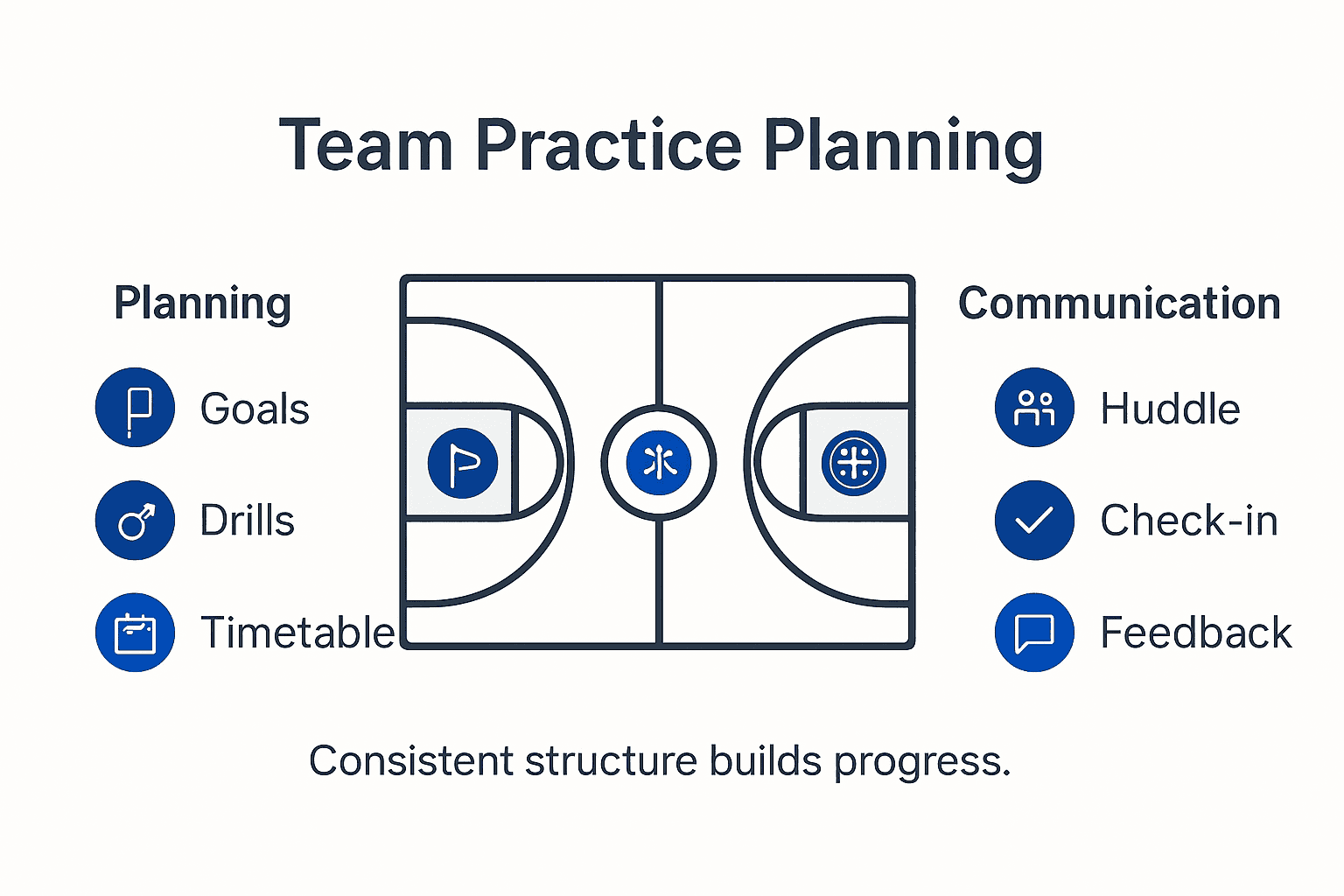
Practice planning demands a multifaceted approach that balances technical skill development, team dynamics, and individual player progression. Structured session design typically involves segmenting practice time into focused segments: warm-up activities, skill-specific drills, team strategy execution, situational gameplay, and cool-down periods. Coaches must remain flexible, adapting their plans to match player energy levels, skill acquisition rates, and emerging team needs while maintaining a consistent overall training framework.
Team communication represents the critical nerve center of successful basketball coaching. Effective coaches develop nuanced communication strategies that transcend simple instruction, creating environments of mutual respect, clear expectations, and positive reinforcement. This involves active listening, providing constructive feedback, explaining the rationale behind training decisions, and fostering an atmosphere where players feel empowered to ask questions and contribute their perspectives. Nonverbal communication, including body language, tone, and emotional regulation, plays an equally significant role in creating trust and motivation.
Pro tip: Create a standardized practice plan template that allows for spontaneity while maintaining a consistent structural framework, enabling you to quickly adjust to your team’s evolving needs and individual player development.
Common Challenges and Mistakes to Avoid
Youth basketball coaching presents a complex landscape of potential challenges that can significantly impact team development and player experience. Coaches frequently encounter difficulties balancing skill instruction with meaningful gameplay while managing diverse player abilities and maintaining positive communication, which requires exceptional adaptability and strategic approach.
Coaching mistakes often stem from well-intentioned but misguided perspectives about youth sports competition. Common errors include overemphasizing winning at early developmental stages, neglecting individual player growth, and implementing overly rigid training structures that discourage player creativity. Effective conflict resolution becomes critical in managing team dynamics, requiring coaches to use nuanced communication strategies that validate athlete concerns and promote open dialogue, rather than defaulting to authoritarian approaches.
Navigating interpersonal challenges requires coaches to develop sophisticated communication skills and emotional intelligence. This involves creating supportive environments where players feel safe expressing themselves, understanding that developmental progress matters more than immediate competitive outcomes. Coaches must learn to balance constructive feedback with positive reinforcement, recognize individual player strengths, and create inclusive team cultures that encourage collective growth and mutual respect.
Pro tip: Develop a reflective coaching practice by regularly soliciting anonymous feedback from players and parents, using these insights to continuously refine your approach and address potential communication blind spots.
Maximizing Available Resources and Tools
Youth basketball coaching demands strategic utilization of diverse resources and tools that extend beyond traditional training approaches. Successful coaches understand that comprehensive development requires accessing a wide range of educational materials, technological solutions, and community support systems designed to enhance player growth and program effectiveness.
Technological resources play an increasingly critical role in modern coaching strategies. Digital platforms offer innovative practice planning applications, performance tracking tools, and communication systems that enable more personalized and data-driven athlete development. National coaching standards now provide comprehensive frameworks for responsible resource management, encouraging coaches to integrate technological solutions while maintaining ethical and developmentally appropriate training methodologies.
Effective resource maximization involves a holistic approach that combines digital tools, community networks, and standardized educational materials. Coaches should actively seek professional development opportunities, leverage online learning platforms, connect with local sports organizations, and remain current with coaching best practices. This multifaceted strategy ensures access to cutting-edge training techniques, safety protocols, and athlete development models that can significantly enhance team performance and individual player potential.
Pro tip: Create a digital coaching toolkit that consolidates your most valuable resources, including practice templates, communication guides, skill progression charts, and performance tracking spreadsheets, enabling quick access and consistent coaching methodology.
Unlock Your Youth Team’s Full Potential with Proven Coaching Tools
Coaching youth basketball means balancing technical skills, emotional intelligence, and team communication to foster growth and success. Challenges like creating effective practice plans, maintaining player motivation, and adapting coaching styles require the right resources. That is why seasoned coaches turn to Basketball Templates - Hoop Mentality and Basketball Drills - Hoop Mentality for structured, flexible solutions that save time and increase team cohesion.
Empower your coaching strategy today with Hoop Mentality. Access expert-designed playbooks, workouts, and communication guides to confidently lead your team while prioritizing player development and winning games. Start optimizing your coaching approach now and transform potential into performance.
Frequently Asked Questions
What are the primary responsibilities of a youth basketball coach?
Youth basketball coaches serve as teachers, mentors, strategists, and motivators, focusing on skills development, team dynamics, and individual player growth both on and off the court.
What coaching styles are most effective in youth basketball?
The three primary coaching systems include Autonomy-Supportive, Directive, and Collaborative systems. Each has its own approach to player involvement, with the best coaches often integrating elements from all three to meet specific team and individual needs.
What qualifications are essential for becoming a youth basketball coach?
Essential qualifications include a blend of formal education, professional certifications such as first aid and sport-specific training, and practical experience in coaching techniques and player development.
How can I effectively communicate with my youth basketball team?
Effective communication involves active listening, providing constructive feedback, establishing clear expectations, and creating an open environment for discussion, where players feel comfortable sharing their thoughts and concerns.
Recommended
- How to Coach Youth Basketball for Team Success – Hoop Mentality
- Build a Basketball Team: Step-by-Step Guide for Coaches – Hoop Mentality
- Mastering The Basics: Best Youth Basketball Drills For Kids – Hoop Mentality
- First Time Basketball Coach: Step-by-Step Game Plan – Hoop Mentality
- Making Learning Fun: Engaging Activities for Your Kids – The Zoofamily