

Over 23 million american youth participate in organized basketball each year, driven by the dream of working together and achieving greatness on the court. Building a standout team demands much more than just assembling skilled players or relying on talent alone. True success starts with a solid foundation guided by clear goals, values, and an organized approach that brings out the best in every athlete. Discover how strategic planning can shape a high-performing basketball team from day one.
Table of Contents
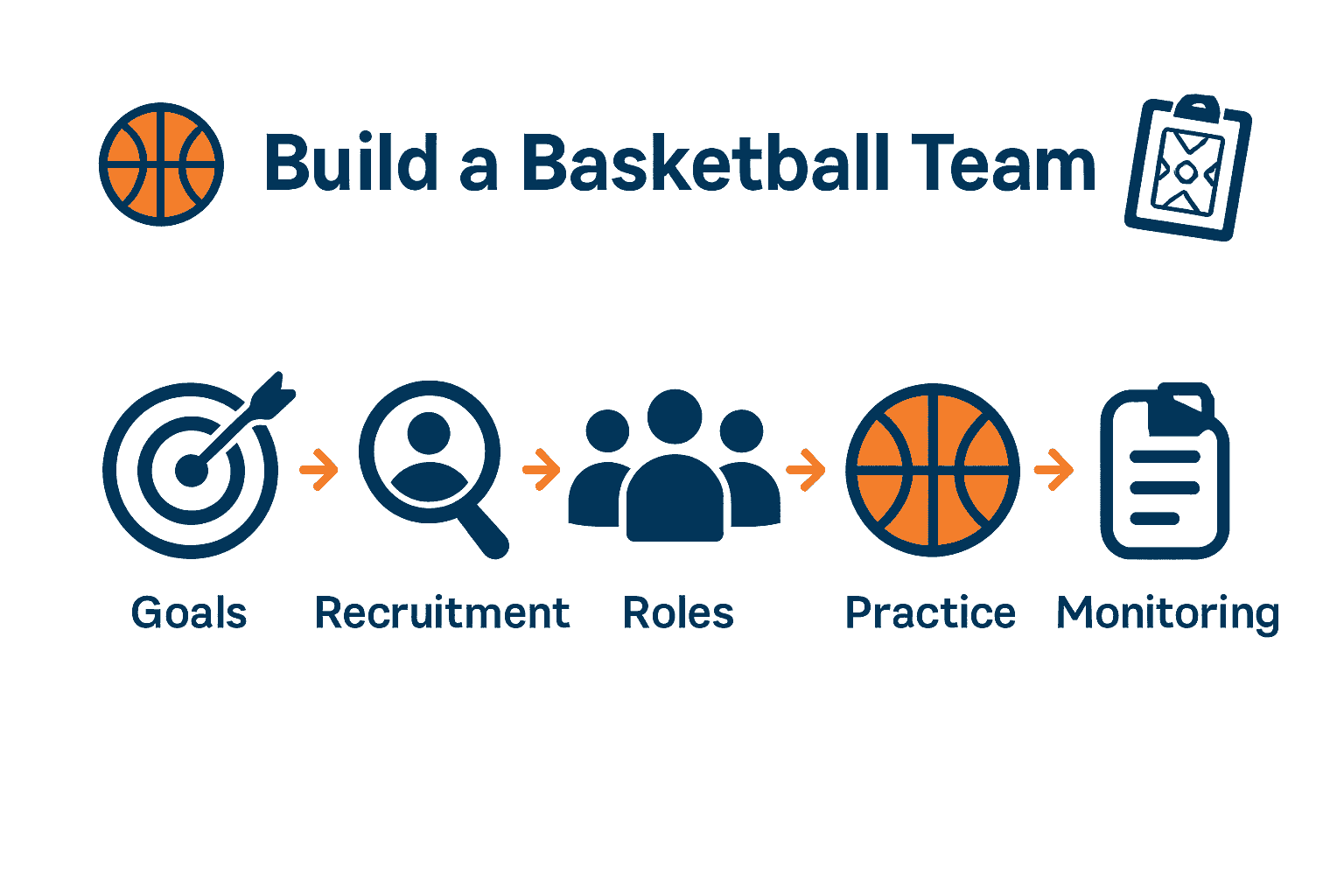
- Step 1: Define Team Goals And Core Values
- Step 2: Recruit And Evaluate Potential Players
- Step 3: Establish Team Roles And Responsibilities
- Step 4: Implement Structured Practices And Drills
- Step 5: Monitor Progress And Adjust Strategies
Quick Summary
| Key Insight | Explanation |
|---|---|
| 1. Define clear team goals | Establish specific, measurable goals for skill development and team performance beyond winning. |
| 2. Recruit holistically | Look beyond athletic ability; evaluate character, work ethic, and teamwork potential in players. |
| 3. Clearly outline roles | Define unique roles for each player that highlight their strengths and contributions to the team. |
| 4. Implement structured practices | Design practices that incorporate skill development, teamwork, and game scenario training. |
| 5. Monitor and adjust strategies | Regularly assess performance and adapt training methods based on individual and team progress. |
Step 1: Define team goals and core values
Building a successful basketball team starts with clearly defining your team’s purpose and fundamental principles. This crucial first step establishes the strategic foundation that will guide your team’s culture, performance, and collective mindset.
According to North Bay Basketball Association, effective team goals should focus on comprehensive athlete development. This means creating objectives that go beyond winning games and prioritize skill enhancement, personal growth, and critical character traits like sportsmanship and leadership. Consider establishing goals across multiple dimensions: player skill development, competitive performance, character building, and team cohesion.
Core values serve as the moral compass for your team. Drawing inspiration from City of Birmingham Rockets, these values might include integrity, communication, teamwork, and mutual respect. Start by hosting a team meeting where players collaboratively define what these values mean to them. Ask questions like: What does respect look like on our team? How do we support each other during challenging moments? This inclusive approach transforms values from abstract concepts into lived principles.
When crafting your goals, make them specific and measurable. Instead of a vague “improve skills” goal, aim for “Each player will demonstrate two new offensive moves by season midpoint” or “Increase team assist rate by 15% compared to last season.” These concrete objectives provide clear targets and motivation.
The next step involves translating these goals and values into actionable team practices that reinforce your collective vision. By establishing a strong foundation now, you’re setting the stage for a cohesive, motivated, and high-performing basketball team.
Step 2: Recruit and evaluate potential players
Building a championship basketball team requires strategic recruitment and thorough player evaluation. In this critical step, you will develop a systematic approach to identifying and assessing talent that aligns with your team’s goals and culture.
According to NCSA Sports, effective recruitment involves multiple scouting channels including high school games, AAU tournaments, and player showcases. Your evaluation process should extend beyond physical skills and focus on holistic player attributes. NBA Scout perspectives highlight the importance of analyzing not just athletic performance, but also intangibles like work ethic, coachability, and character.
When evaluating potential players, create a comprehensive assessment framework. Look for athletes who demonstrate technical basketball skills, mental resilience, and alignment with your team’s core values. Develop a scoring rubric that includes categories like technical skills, physical attributes, game intelligence, teamwork potential, and academic commitment. Use 7 Key Elements of a Basketball Scouting Checklist to standardize your evaluation process and ensure consistent, objective player assessment.
Pro tip: Always observe players in multiple contexts.
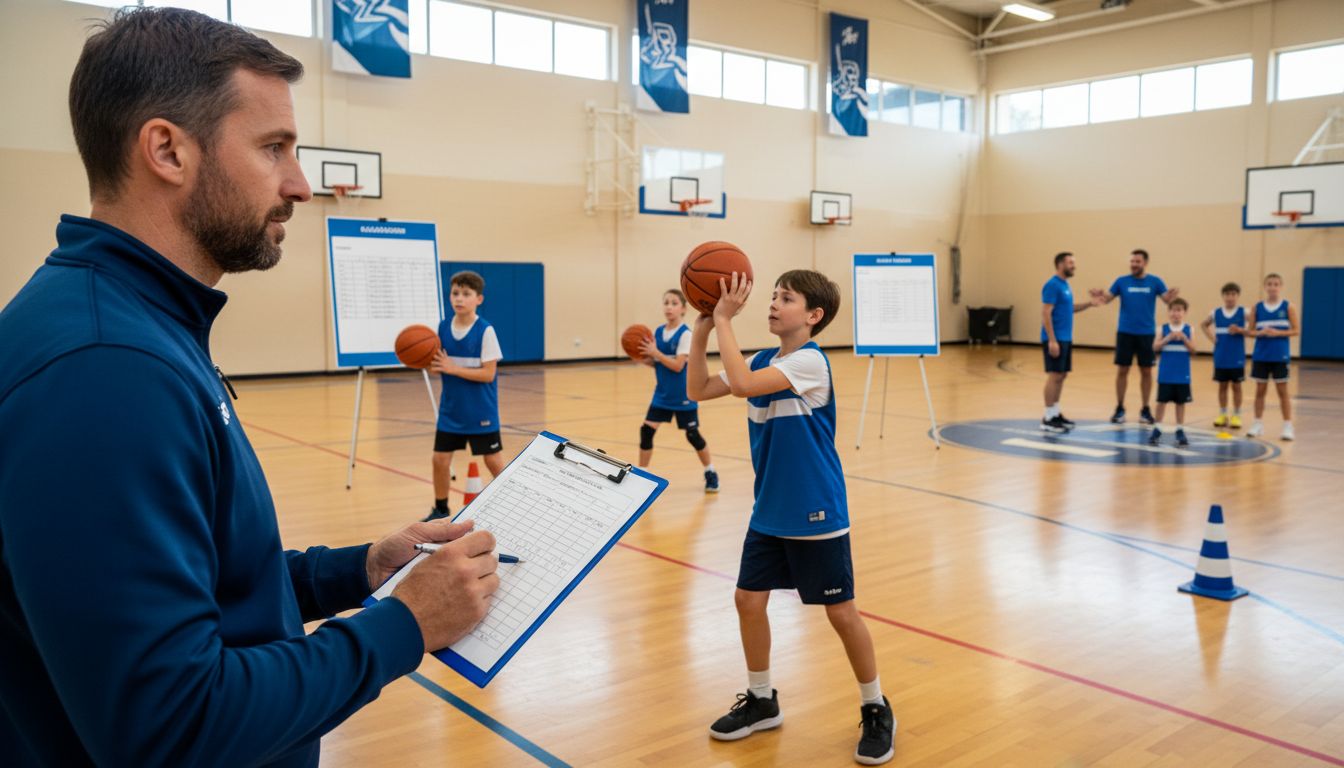 A single game or tryout cannot reveal a player’s full potential. Watch their performance during tournaments, practice sessions, and interaction with teammates. This comprehensive approach helps you identify players who will contribute not just athletically, but also to your team’s overall culture and chemistry.
The next phase involves scheduling individual interviews and additional assessments to further understand each potential team member’s motivations, goals, and fit within your basketball program.
Step 3: Establish team roles and responsibilities
Defining clear roles and responsibilities is fundamental to creating a cohesive and high performing basketball team. This critical step will help you create a structured environment where every player understands their unique contribution to team success.
According to Coaching Resources, effective coaches communicate expectations clearly and treat each player as an individual. When establishing team roles, consider each player’s strengths, skills, and potential. The Role of Team Captain becomes crucial in this process, as team leaders can help reinforce team structure and motivate players in their specific roles.
Develop a comprehensive role definition strategy that goes beyond on court positions. Consider creating roles like defensive specialist, offensive facilitator, energy generator, and team morale booster. These nuanced roles help players feel valued and understand their specific contributions. For each role, clearly outline responsibilities, performance expectations, and how they fit into the team’s overall strategy.
Pro tip: Hold a team meeting to collaboratively discuss and define these roles. This approach increases player buy in and helps them understand that every role is essential to team success. Encourage open dialogue about player strengths and areas for growth, allowing for role flexibility and personal development.
The next phase involves implementing a communication system that keeps players informed about their roles and provides ongoing feedback and support.
Step 4: Implement structured practices and drills
Successful basketball teams are built through deliberate and strategic practice sessions that systematically develop individual and team skills. Your goal is to create a comprehensive training approach that maximizes player potential and team performance.
According to Wikipedia), basketball coaching involves directing team behavior and improving both offensive and defensive skills through structured practices. Basketball Practice Structure becomes critical in transforming individual talents into a cohesive team strategy. Design your practice sessions with a clear progression that includes skill development, tactical training, physical conditioning, and team communication exercises.
Break down your practice into targeted segments. Begin with dynamic warm ups that prepare players physically and mentally. Follow with skill specific drills focusing on shooting, passing, defensive positioning, and ball handling. Incorporate game situation scenarios that simulate real match conditions, allowing players to apply learned skills under pressure. Allocate time for individual skill refinement and team strategy development, ensuring a balanced approach to player and team growth.
Pro tip: Rotate drills and keep practices unpredictable. Players lose motivation with repetitive routines. Use variation in drill complexity, introduce competitive elements, and provide immediate feedback to maintain engagement and accelerate learning.
The next phase involves analyzing practice performance and adapting your training approach based on individual and team progress.
Step 5: Monitor progress and adjust strategies
Effective coaching requires continuous evaluation and strategic adaptation. Your ability to track individual and team performance will determine how quickly your basketball team can improve and overcome challenges.
Cutting edge research from ArXiv suggests using advanced analytical techniques to cluster players according to their performance and playing styles. Time Management for Coaches becomes crucial in implementing a systematic approach to performance monitoring. Develop a comprehensive tracking system that includes quantitative metrics like shooting percentages, defensive stops, and assist rates, as well as qualitative assessments of player motivation and team dynamics.
Create regular performance review intervals. Schedule weekly individual player meetings to discuss progress, challenges, and personal development goals. Conduct monthly team assessments to evaluate collective performance and identify areas requiring strategic adjustments. Use data visualization tools to help players understand their performance trends and growth opportunities. Encourage players to participate actively in these reviews, transforming them from evaluative sessions into collaborative development conversations.
Pro tip: Be flexible and responsive. Performance tracking is not about criticism but continuous improvement. When you notice performance plateaus or declining metrics, quickly design targeted interventions tailored to specific player or team needs.
The final stage involves integrating your performance insights into future training strategies and individual player development plans.
Elevate Your Coaching and Build a Winning Basketball Team Today
Building a basketball team takes more than talent. It demands clearly defined goals, strategic player evaluation, and structured practices that foster growth and teamwork. If you are ready to overcome challenges like creating specific player roles or implementing effective drills, we have you covered. Hoop Mentality understands these pain points and provides you with practical solutions designed to turn your coaching vision into reality.
Our collection of Basketball Drills and Basketball Templates offers proven tools developed from real coaching experience to help you design purposeful practices and manage team roles effectively.
Stop spending countless hours trying to organize your team’s training with guesswork. Visit Hoop Mentality now to access professional resources that will save you time, improve communication with your players, and empower you to build a motivated, high-performing basketball team. Take the next step and coach with confidence today.
Frequently Asked Questions
How do I define team goals for my basketball team?
Develop your team goals by focusing on athlete development beyond just winning games. Identify specific, measurable objectives, such as improving team assist rates by 15% or having each player learn two new offensive moves by mid-season.
What are effective strategies for recruiting potential basketball players?
Utilize multiple scouting channels, such as high school games and player showcases, to identify talent. Evaluate potential players not only on athleticism but also on character and coachability by creating a scoring rubric for consistent assessments.
How can I establish clear roles and responsibilities for my basketball team?
Define roles by assessing each player’s strengths while considering responsibilities beyond just on-court positions. Hold a team meeting to discuss these roles collaboratively, ensuring players understand their unique contributions and reinforcing their importance to team success.
What should I include in my basketball practice structure?
Design your practice to include a mix of skill development, tactical training, and team communication exercises. Break it down into targeted segments, starting with warm-ups and moving on to drills specific to shooting and passing, while regularly varying your drills to keep players engaged.
How do I monitor progress and adjust strategies for my basketball team?
Create a tracking system that includes both quantitative metrics and qualitative assessments of team dynamics. Schedule regular performance reviews and stay flexible with adjustments, aiming to implement targeted interventions whenever you notice performance plateaus, ideally within a few practice sessions.
How often should I hold individual player meetings to discuss progress?
Schedule individual player meetings weekly to discuss personal development goals and any challenges they are facing. This regular check-in allows for timely adjustments to their training focus and helps maintain motivation throughout the season.