

Over half of American high school basketball coaches report that effective player development is the main factor separating good teams from great ones. In today’s fast-paced game, refining both skills and team communication is vital for long-term player success. If you want to create an environment where your athletes thrive on and off the court, a strategic approach to player development delivers the edge your team needs.
Table of Contents
- Defining Player Development In Coaching
- Essential Skill Areas For Growth
- Assessment Methods And Goal Setting
- Structuring Effective Training Plans
- Common Pitfalls And How To Avoid Them
- Building Team Culture Through Development
Key Takeaways
| Point | Details |
|---|---|
| Holistic Player Development | Focus on enhancing physical, tactical, mental, and character skills to promote well-rounded growth in athletes. |
| Effective Assessment and Goal Setting | Implement SMART goals and comprehensive assessment methods to track both skill improvement and personal growth. |
| Balanced Training Programs | Design training plans that integrate multiple skill dimensions while allowing for player autonomy and adaptability. |
| Team Culture Importance | Cultivate a supportive team environment that emphasizes psychological safety and shared accountability among players. |
Defining Player Development In Coaching
Player development represents a strategic, holistic approach to nurturing basketball talent that transcends basic skill training. At its core, this process involves systematically enhancing an athlete’s physical abilities, tactical understanding, mental resilience, and overall character through intentional coaching interventions. Coaching competency frameworks emphasize that effective player development requires more than technical instruction.
Successful player development integrates multiple dimensions of growth. Physical skill enhancement occurs through targeted drills and conditioning, while tactical development involves teaching game intelligence, strategic thinking, and positional awareness. Mental development focuses on building confidence, emotional regulation, leadership skills, and competitive mindset. Coaches must also address personal character development, instilling values like teamwork, discipline, and sportsmanship that extend beyond basketball performance.
Research demonstrates that coaches’ leadership styles critically impact player development outcomes. Instructional strategies combining democratic leadership with motivational techniques produce the most positive results. This means creating an environment where players feel empowered to contribute ideas, receive constructive feedback, and understand the purpose behind each training activity. Autocratic approaches that prioritize rigid discipline over player engagement can actually hinder long-term athletic and personal growth.
Pro tip: Design player development programs that balance structured skill training with opportunities for player autonomy and self-directed learning.
Essential Skill Areas For Growth
Effective player development requires a comprehensive approach that addresses multiple interconnected skill domains. Skill acquisition models highlight complex developmental pathways that extend far beyond traditional technical training. High school basketball coaches must recognize that player growth involves a nuanced integration of physical, mental, technical, and tactical capabilities.
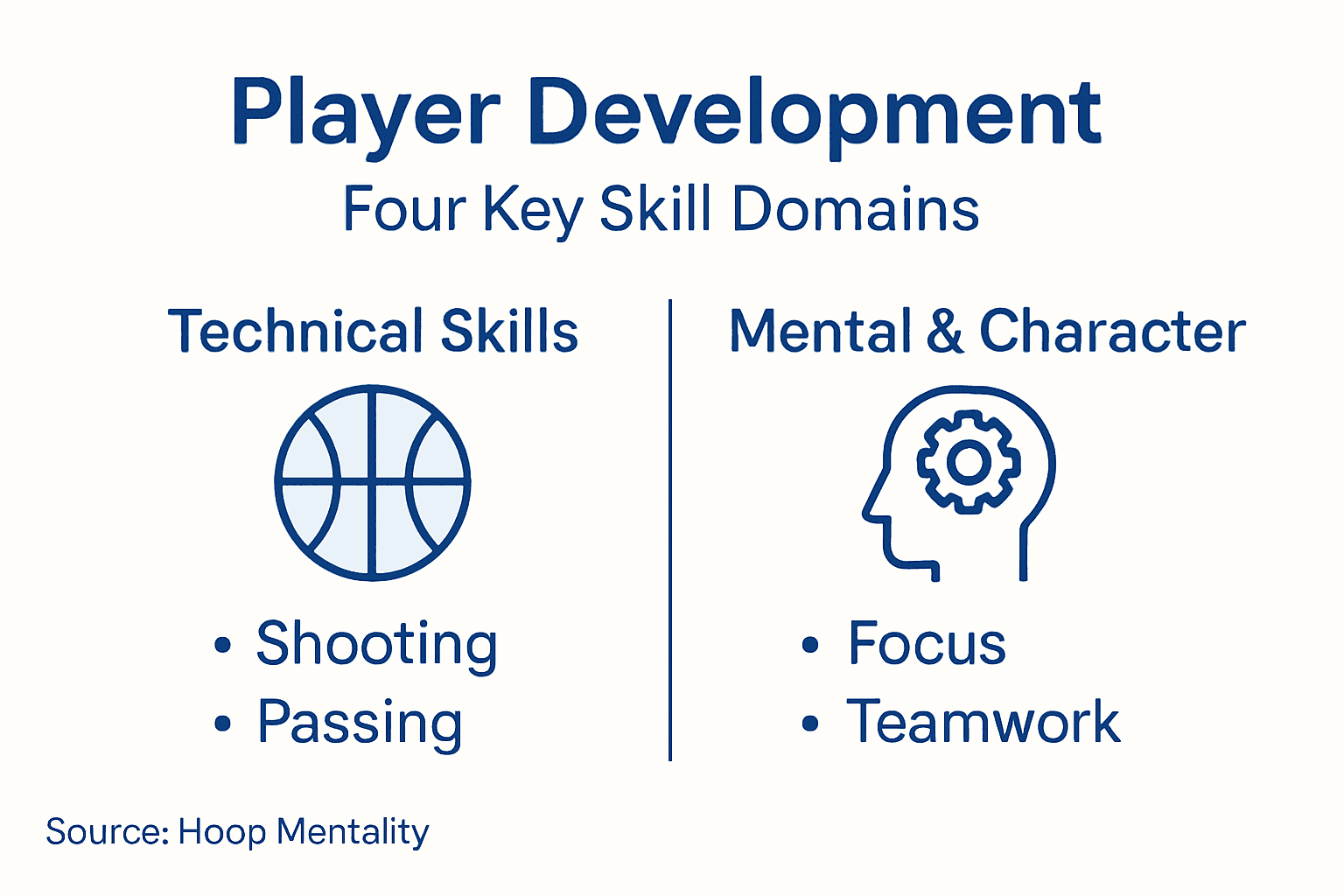
The primary skill areas for basketball player development can be categorized into four key dimensions. Technical skills include fundamental movements like shooting, dribbling, passing, and defensive positioning. Tactical skills involve game intelligence, understanding team strategies, reading opponents’ movements, and making split-second decisions. Physical skills encompass strength, conditioning, agility, speed, and biomechanical efficiency. Psychological skills focus on mental toughness, emotional regulation, confidence building, communication, and leadership development.
Player development stages require age-specific training approaches that systematically build competence and complexity. For high school athletes, coaches should design training programs that progressively challenge players across these skill domains. This means creating practice environments that demand technical precision, tactical creativity, physical adaptability, and psychological resilience. The goal is not just athletic performance but holistic personal growth that prepares young athletes for competitive basketball and life challenges.
Here’s a summary of key skill domains and their impact on player development:
| Skill Domain | Focus Areas | Impact on Athlete Growth |
|---|---|---|
| Technical | Shooting, passing, dribbling | Improves core game performance |
| Tactical | Strategy, decision making, awareness | Enhances team play and game intelligence |
| Physical | Conditioning, speed, agility | Boosts endurance and injury prevention |
| Psychological | Confidence, leadership, resilience | Fosters mental toughness for competition |
Pro tip: Design skill development circuits that intentionally integrate multiple skill domains, forcing players to simultaneously apply technical, tactical, physical, and psychological competencies.
Assessment Methods And Goal Setting
Goal setting is a critical component of effective player development that transforms individual potential into measurable athletic progress. Goal-setting strategies require systematic approaches that go beyond simple performance metrics. High school basketball coaches must develop comprehensive assessment methods that capture both quantitative skill improvements and qualitative personal growth indicators.
Effective assessment involves multiple evaluation dimensions. Objective measurements include statistical performance data like shooting percentages, defensive metrics, assist-to-turnover ratios, and physical fitness benchmarks. Subjective evaluations focus on intangible qualities such as leadership potential, court awareness, teamwork, and mental resilience. Motivational processes play a crucial role in player development, requiring coaches to understand each athlete’s unique psychological drivers and achievement motivations.
Successful goal setting follows the SMART framework: Specific, Measurable, Achievable, Relevant, and Time-bound. Coaches should collaborate with players to establish both individual and team objectives that create clear pathways for improvement. This might involve setting short-term technical skill goals, medium-term performance targets, and long-term developmental milestones. Regular feedback sessions, progress tracking, and adaptive goal refinement ensure continuous player engagement and motivation.
Pro tip: Create personalized player development portfolios that document individual goals, track progress across multiple skill domains, and provide visual evidence of athletic growth.
Structuring Effective Training Plans
Training plan design represents the strategic blueprint for transforming high school basketball teams from individual players into cohesive athletic units. Comprehensive training programs balance multiple skill development dimensions through intentional, periodized approaches that address technical, tactical, physical, and psychological growth simultaneously.
Effective training plans require meticulous structural considerations. Coaches should implement a balanced approach that incorporates skill progression modules, which systematically build complexity across practice sessions. Complex training methodologies combining strength, agility, and sport-specific skills enhance overall athletic performance while minimizing injury risks. These modules should include targeted technical drills, tactical scenario simulations, strength conditioning segments, and mental resilience training.
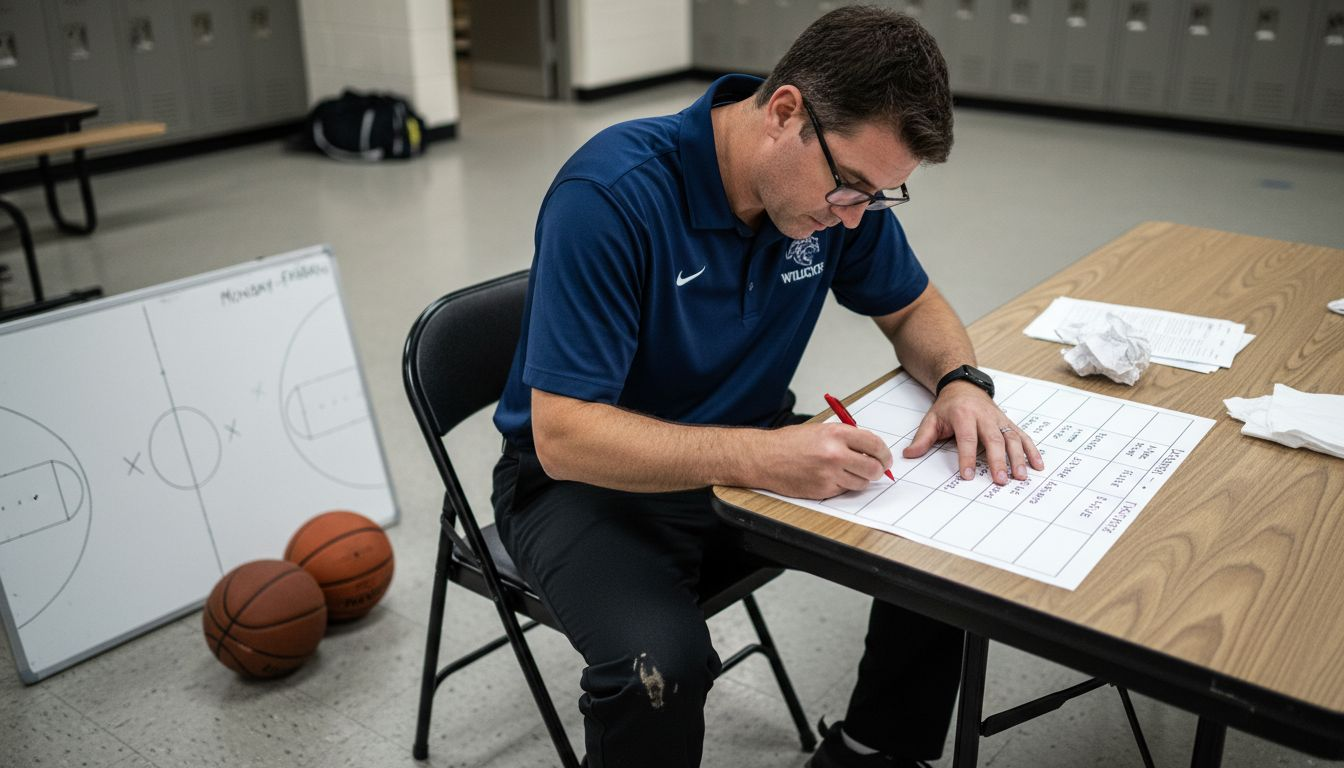
Successful training structures follow a strategic cyclical framework that alternates between skill acquisition, performance intensification, and recovery periods. Coaches must design plans that progressively challenge athletes while maintaining appropriate training volumes. This involves creating detailed weekly and monthly training cycles that strategically introduce new skills, reinforce existing competencies, and provide sufficient rest and adaptation time. The most effective plans remain flexible, allowing coaches to modify approaches based on individual player progress and team dynamics.
Pro tip: Develop a color-coded training matrix that visually tracks skill development across different domains, enabling quick assessment of individual and team progression.
Common Pitfalls And How To Avoid Them
Player development is a nuanced process fraught with potential missteps that can derail athletic progress. Coaching efficacy requires understanding common developmental obstacles that systematically undermine team and individual growth. High school basketball coaches must remain vigilant against predictable patterns that compromise player potential.
Some of the most significant pitfalls stem from misguided coaching philosophies. Coaches frequently fall into traps like the win-at-all-costs mentality, which prioritizes immediate victory over long-term player development. Youth sports require a positive coaching approach that emphasizes personal growth, enjoyment, and intrinsic motivation over punitive techniques. Common mistakes include excessive criticism, rigid training methods, neglecting individual player differences, and implementing one-size-fits-all strategies that fail to recognize unique athletic profiles.
Effective coaches recognize that player development is a holistic journey requiring adaptive, empathetic leadership. This means avoiding autocratic communication styles, creating supportive environments that encourage risk-taking and learning, and maintaining a balanced perspective that values player psychological well-being as much as physical performance. Critical red flags include consistently benching players without constructive feedback, using conditioning as punishment, and failing to provide individualized skill development pathways that align with each athlete’s strengths and growth potential.
This comparison highlights common player development pitfalls and effective solutions:
| Pitfall | Effect on Development | Solution for Coaches |
|---|---|---|
| Win-at-all-costs mentality | Undermines long-term growth | Emphasize enjoyment and learning |
| One-size-fits-all training | Neglects individual strengths | Use personalized skill plans |
| Excessive criticism | Damages confidence | Provide constructive feedback |
| Autocratic communication style | Reduces player engagement | Foster open, supportive dialogue |
Pro tip: Conduct monthly one-on-one player feedback sessions that allow athletes to share their developmental challenges and aspirations, transforming potential pitfalls into personalized growth opportunities.
Building Team Culture Through Development
Team culture transcends simple group dynamics, representing the foundational framework that transforms individual athletes into a cohesive, high-performing unit. Team development interventions create essential psychological foundations that enable players to trust, communicate, and collaborate effectively beyond individual skill sets. High school basketball coaches play a critical role in architecting these complex social ecosystems.
Building a robust team culture requires intentional strategies that address both collective and individual needs. Successful approaches involve creating shared values, establishing clear communication protocols, and developing mutual accountability mechanisms. Psychological safety becomes paramount, enabling players to take risks, express vulnerabilities, and support each other’s growth. Leadership development supports collaborative team norms by fostering environments where constructive feedback, mutual respect, and collective problem-solving become natural team behaviors.
Effective team culture development demands consistent, purposeful interventions. Coaches must design experiences that challenge players to grow together, such as team-building exercises, shared goal-setting sessions, and collaborative leadership opportunities. This involves creating scenarios that require interdependence, mutual understanding, and collective resilience. The ultimate objective extends beyond winning games, focusing instead on developing young athletes who understand the profound value of teamwork, personal accountability, and collective achievement.
Pro tip: Implement a rotating team leadership model where players take turns leading practice segments, fostering ownership, communication skills, and mutual respect.
Elevate Player Development with Proven Coaching Resources
Transforming your high school basketball team demands more than just passion. It requires structured drills, clear playbooks, and strategic training plans that address technical, tactical, physical, and psychological skill growth as highlighted in the article. If you struggle with balancing these essential areas or avoid common coaching pitfalls like one-size-fits-all training, Hoop Mentality has the tools designed to meet these challenges head-on.
Our vast collection of Basketball Drills - Hoop Mentality offers progressive exercises to sharpen player skills while fostering mental resilience. Alongside, explore our detailed Basketball Playbooks - Hoop Mentality to implement tactical strategies that boost team cohesion and game intelligence. Each resource is crafted to save you time and help develop a winning team culture.

Take action now to create comprehensive training plans that transform potential into measurable progress. Visit Hoop Mentality today to access all products designed specifically for coaches ready to raise their team’s performance and cultivate a strong player development foundation.
Frequently Asked Questions
What is player development in coaching?
Player development in coaching is a strategic, holistic process that enhances an athlete’s physical abilities, tactical understanding, mental resilience, and character through intentional coaching interventions beyond just skill training.
How can coaches effectively assess player development?
Coaches can assess player development through both objective measurements, like performance statistics, and subjective evaluations, such as leadership potential and mental resilience, while implementing the SMART framework for goal setting.
What are the key skill areas essential for player development?
The key skill areas essential for player development include technical skills (like shooting and passing), tactical skills (understanding game strategies), physical skills (conditioning and agility), and psychological skills (mental toughness and leadership).
What common pitfalls should coaches avoid in player development?
Coaches should avoid the win-at-all-costs mentality, one-size-fits-all training approaches, excessive criticism, and autocratic communication styles, which can hinder holistic player growth and engagement.
Recommended
- Build a Basketball Team: Step-by-Step Guide for Coaches – Hoop Mentality
- 7 Key Player Development Tips for Coaches – Hoop Mentality
- How to Coach Youth Basketball for Team Success – Hoop Mentality
- 7 Essential Basketball Teamwork Tips for Youth Coaches – Hoop Mentality
- Step by Step Workout Prep for Hyrox Athletes UK – Interval