

Over 60 percent of american basketball coaches rely on structured assessments to shape winning teams. Understanding player abilities and key team needs matters because every decision fuels your strategy. When you know exactly where your players excel and what skills your team truly requires, you set the stage for effective training sessions and real progress. This guide highlights practical steps for building a workflow that helps coaches develop, measure, and refine player skills with lasting results.
Table of Contents
- Step 1: Assess Player Abilities And Team Needs
- Step 2: Design Targeted Skill-Building Sessions
- Step 3: Implement Progressive Basketball Drills
- Step 4: Evaluate Progress With Practical Benchmarks
- Step 5: Adjust Workflow For Continuous Improvement
Quick Summary
| Key Insight | Explanation |
|---|---|
| 1. Assess player abilities objectively | Create detailed player profiles using performance metrics and observations to identify strengths and weaknesses. |
| 2. Design tailored skill-building sessions | Structure training sessions around individual player needs and strategic team goals for optimal development. |
| 3. Implement progressively challenging drills | Develop drills that gradually increase in complexity to enhance both physical skills and decision-making capabilities. |
| 4. Evaluate progress with specific metrics | Use a multidimensional framework to track performance improvements through both quantitative and qualitative indicators. |
| 5. Adapt coaching strategies for improvement | Regularly review player data to adjust training approaches, ensuring continuous development and effective team dynamics. |
Step 1: Assess player abilities and team needs
Assessing player abilities and team needs is a critical first step in developing an effective basketball skills development workflow. According to research from SpringerLink, coaches can quantitatively evaluate each player’s importance by calculating their average marginal contribution to team success.
To conduct a comprehensive assessment, start by creating individual player profiles that track key performance metrics. These should include both statistical data and observational insights. ScienceDirect recommends utilizing advanced data mining techniques to identify specific strengths and weaknesses across your roster. Focus on metrics like shooting percentages, defensive efficiency, court awareness, and physical attributes that align with your team’s strategic approach.
A practical tip is to develop a standardized evaluation template that allows you to score players consistently across multiple dimensions. This might include categories like technical skills, physical conditioning, basketball IQ, teamwork, and mental resilience. By creating a structured assessment framework, you can objectively compare players and identify areas where targeted skill development will have the most significant impact on your team’s overall performance.
Step 2: Design targeted skill-building sessions
Designing targeted skill-building sessions requires a strategic approach that addresses individual player needs while enhancing overall team performance. According to research from National Center for Biotechnology Information, an effective training program combines theoretical learning with practical sessions, focusing on fundamental basketball skills like dribbling, passing, shooting, and layups.
To create impactful sessions, start by mapping out specific skill development objectives based on your player assessment. Journals.CopmadridOrg suggests incorporating dynamic criteria that consider personality traits, experience, and motivation into your training design. This means tailoring drills and exercises to not just physical skills, but also mental attributes that contribute to player effectiveness.
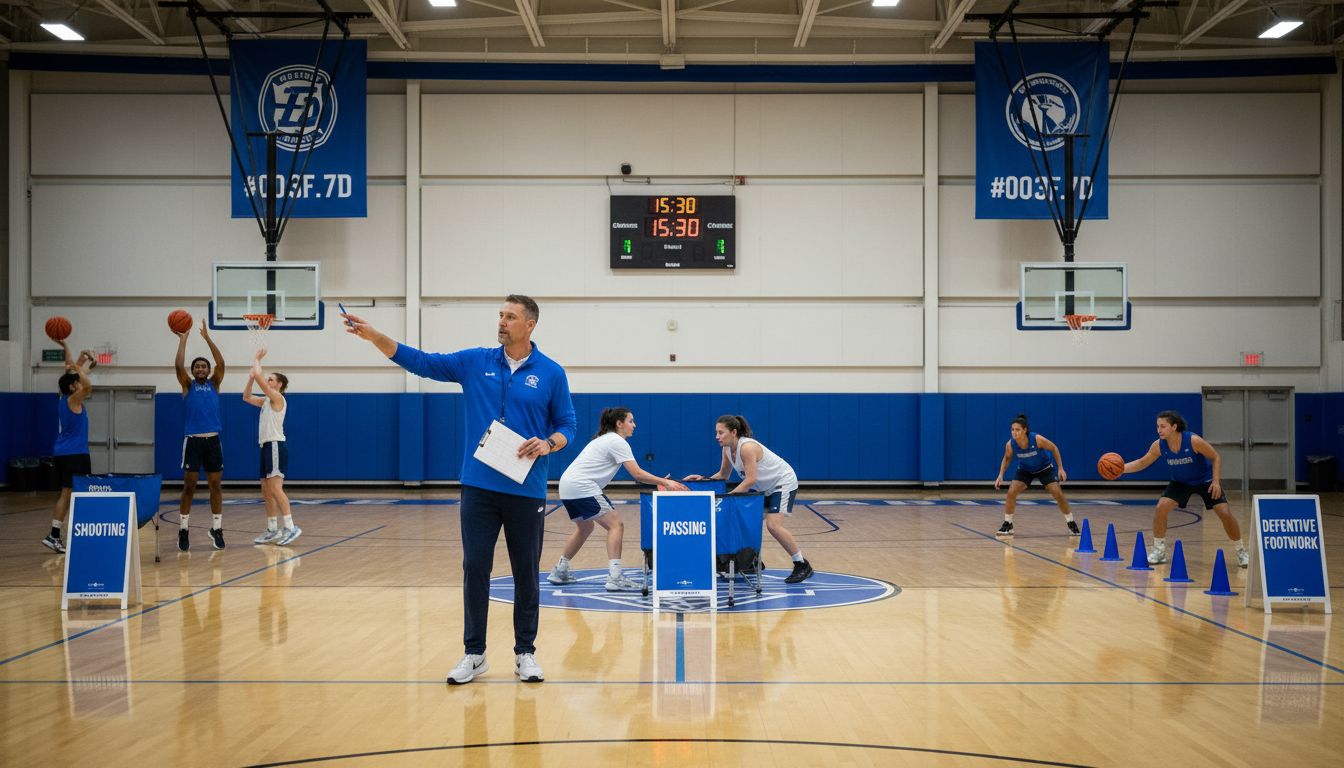
A practical approach is to structure each session with progressive skill challenges that incrementally increase in complexity. Begin with foundational techniques, then build toward more advanced game-scenario drills. For instance, start with basic shooting form, then progress to shooting under defensive pressure, and finally integrate those skills into full-court game simulations. By creating a structured yet adaptable training framework, you can ensure continuous player growth and maintain high engagement throughout your skill-building program.
Step 3: Implement progressive basketball drills
Implementing progressive basketball drills requires a sophisticated approach that develops both physical skills and mental capabilities. Research from Frontiersin emphasizes that training should not only focus on physical techniques but also address players’ psychological development, particularly their decision-making abilities under varying levels of self-confidence.
To create an effective progressive drill sequence, start by designing exercises that gradually increase in complexity and challenge. ArXiv suggests utilizing a multi-aspect analytical framework that considers spatial and temporal dynamics of basketball. This means structuring drills that simulate game-like scenarios with increasing levels of pressure, complexity, and cognitive demand. Begin with fundamental skill repetitions, then progressively introduce defensive elements, time constraints, and strategic decision-making components.
A practical tip is to develop drill sequences that blend physical skill practice with cognitive training. For example, start with basic shooting techniques, then add movement constraints, defensive pressure, and finally integrate quick decision-making requirements. By creating multilayered drills that challenge players physically and mentally, you can develop more adaptable, confident athletes who can perform effectively under game-like conditions.
This approach ensures comprehensive skill development that prepares players for real-world basketball challenges.
Step 4: Evaluate progress with practical benchmarks
Evaluating player progress requires a systematic and data-driven approach that goes beyond subjective observations. ArXiv introduces an innovative metric called ‘Expected Points Above Average (EPAA)’ which provides coaches with a sophisticated Bayesian hierarchical modeling technique for assessing individual player performance more comprehensively.
To implement effective progress tracking, create a multidimensional evaluation framework that captures both quantitative and qualitative performance indicators. This means developing a scorecard that measures not just statistical outcomes like shooting percentages or defensive stops, but also incorporates less tangible aspects such as court awareness, teamwork, and mental resilience. Break down each skill into specific, measurable components that can be consistently assessed across multiple training sessions and game scenarios.
A practical strategy is to establish baseline measurements at the start of your training program and then conduct periodic reassessments using the same standardized metrics. This allows you to track incremental improvements and identify areas requiring additional focus. By combining objective data analysis with targeted skill interventions, you can create a dynamic feedback loop that continuously refines your players’ capabilities and adapts your coaching strategies to maximize individual and team potential.
Step 5: Adjust workflow for continuous improvement
Continuous improvement in basketball coaching requires a dynamic and data-driven approach that adapts to evolving team capabilities. ArXiv provides an innovative methodology that combines Bayesian longitudinal modeling with strategic optimization techniques, enabling coaches to make precise adjustments to team compositions and training strategies.
To implement an adaptive workflow, develop a systematic feedback loop that continuously analyzes performance data and player interactions. ArXiv suggests utilizing advanced clustering models that examine player effectiveness and playing styles. This means regularly reviewing your assessment metrics, identifying emerging patterns in player performance, and quickly modifying your training approach to address specific skill gaps or team dynamics.
A practical strategy is to schedule monthly or quarterly workflow reviews where you critically examine your training program. Look for subtle shifts in player capabilities, team chemistry, and individual skill progression. Be prepared to redesign drills, modify practice structures, and realign your coaching strategies based on the latest performance insights. By maintaining a flexible and responsive approach, you can create a training environment that consistently challenges players, addresses weaknesses, and capitalizes on emerging strengths.
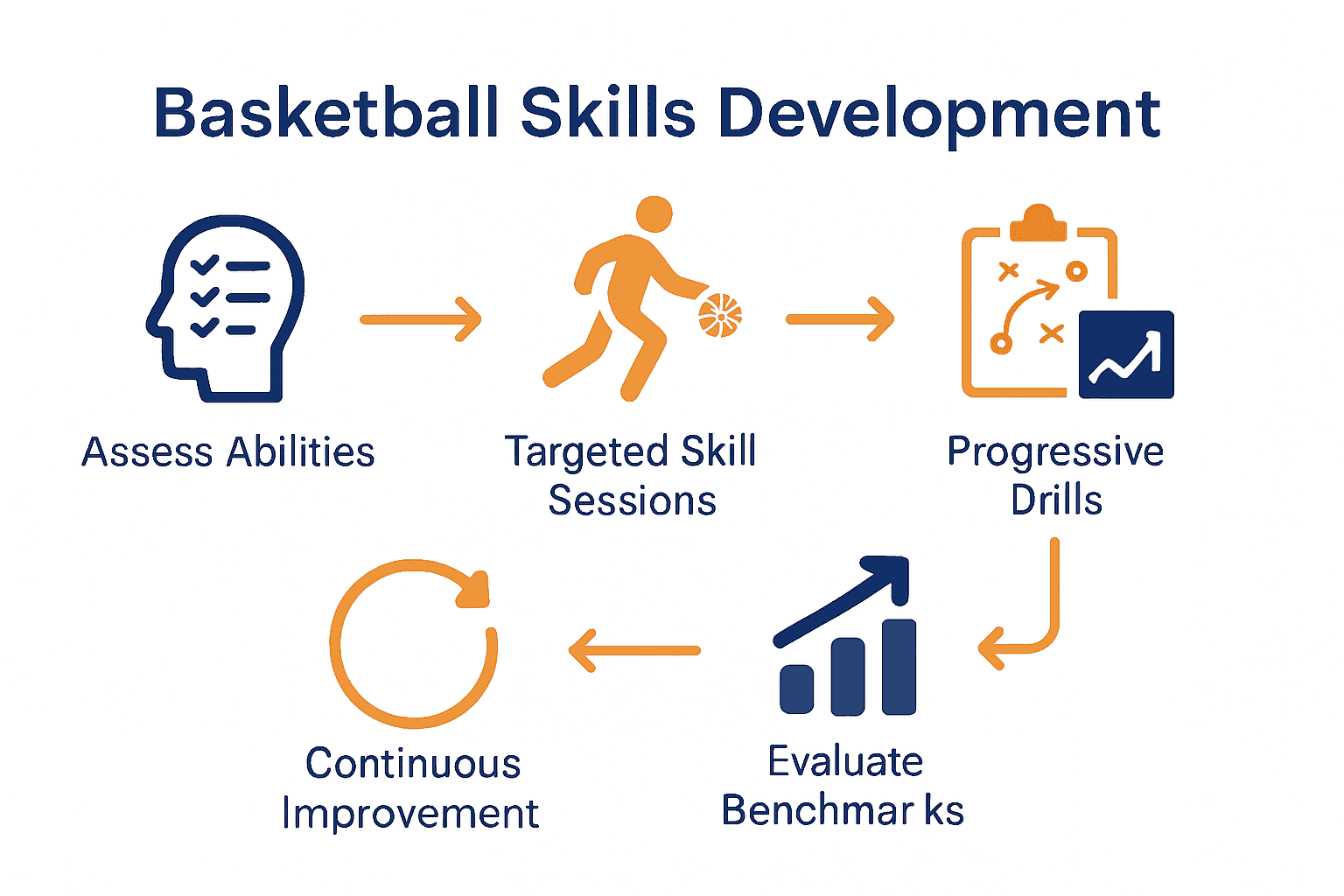 Remember that continuous improvement is not about dramatic overhauls, but incremental, purposeful adjustments that compound over time.
Elevate Your Coaching Workflow With Proven Tools
Coaches face the challenge of creating structured, progressive basketball training programs that develop skills, enhance decision-making, and track player growth effectively. This article highlights the need for targeted skill-building sessions, progressive drills, and data-driven evaluation methods to maximize team performance. If you want to move beyond theory and design practical sessions that boost player confidence and capability, having the right resources is essential.
Discover how Hoop Mentality can help you overcome these challenges with ease. Our Basketball Drills - Hoop Mentality collection offers thoughtfully crafted drills that align perfectly with the step-by-step progressive methods discussed. 
Take control of your basketball skills development workflow today. Visit Hoop Mentality to access proven practice plans, customizable Basketball Templates - Hoop Mentality, and detailed workout guides all designed to help coaches implement focused training, measure player progress precisely, and continuously improve team strategy. Start building better players and smarter teams now.
Frequently Asked Questions
How do I assess player abilities for skills development?
To assess player abilities, create individual player profiles that track key performance metrics such as shooting percentages and defensive efficiency. Use standardized evaluation templates to score players consistently, enabling you to identify specific strengths and weaknesses.
What should I include in targeted skill-building sessions?
Targeted skill-building sessions should focus on individual player needs while enhancing overall team performance. Map out specific skill development objectives and design drills that progress in complexity, ensuring that each session combines fundamental skills with mental attributes.
How can I implement progressive basketball drills effectively?
To implement progressive basketball drills, start with basic skill repetitions and gradually introduce more complex scenarios. Structure your drills to simulate game situations with increasing difficulty, ensuring players can adapt their skills under pressure and make quick decisions.
What benchmarks should I use to evaluate player progress?
Establish a multidimensional evaluation framework that captures both quantitative and qualitative performance indicators. Create a scorecard that measures specific skills over time, and conduct regular reassessments to track incremental improvements and adjust training accordingly.
How do I adapt my coaching workflow for continuous improvement?
To adapt your coaching workflow, develop a feedback loop that analyzes player performance data regularly. Schedule monthly reviews to identify emerging patterns and modify drills and strategies based on the latest insights, aiming for small, purposeful adjustments over time.
What metrics should I focus on when evaluating my players?
Focus on metrics that reflect both statistical outcomes, such as shooting percentages, and less tangible qualities like court awareness and teamwork. This comprehensive approach will enable you to assess overall player effectiveness and guide targeted skill development efforts.