

These are ready-to-run basketball teamwork drills that build communication, spacing, and coordinated decision-making, plus a 30 to 60 minute practice plan you can copy today. You will find communication warmups, cooperative passing and spacing work, and competitive small-sided games that force players to talk, rotate, and trust each other. Hoop Mentality drill packs extend any of these sessions when you need more structured reps.
TL;DR:
- Teams should focus on practicing verbal communication drills, like name-and-pass and help calls, consistently to build habit and urgency under pressure.
- Using constrained scoring and rotation rules in drills like possession-with-goals and scramble transition enhances spacing, patience, and rapid decision-making.
- Coaches need to progressively teach drills slowly, constrain behaviors, score for correct habits, and then let players run at game speed to ensure skills transfer.
- Tracking specific metrics such as assists and help-calls over several weeks provides measurable evidence of improvements in team communication and coordination.
- Incorporating leadership roles and decision-making tasks in drills increases accountability, trust, and player confidence in verbal cues during real-game situations.
Table of Contents
- Quick Teamwork Warmups That Build Communication Fast
- Game-Like Cooperative Drills That Force Shared Decisions
- How to Coach These Drills So Teamwork Habits Actually Stick
- A 30 to 60 Minute Practice Plan You Can Copy Today
- Drills That Build Defensive Coordination as a Unit
- Drills That Build Trust and Clarify Player Roles
- Building Leadership and Decision-Making Into Every Drill
- How to Tell If the Teamwork Is Actually Improving
- Dejan’s Coaching Notes on What Actually Moves the Needle
- Extend These Sessions With Hoop Mentality Drill Packs
- Sources
- FAQ
Quick Teamwork Warmups That Build Communication Fast
The first ten minutes of practice set the tone for everything after it. These warmups are short by design. They teach players to talk before they touch the ball, which is the foundation every coordinated defensive rotation and every clean offensive read gets built on.
- Name-and-pass progression. Players form a circle and must call a teammate’s name before passing to them. No name, no pass, no exceptions. Run it for two minutes, then add a rule: eye contact must happen before the ball leaves your hands. This sounds basic, but you will see immediately which players default to silence under pressure.
- 3-man weave with mandatory calls. The classic weave gets a teamwork upgrade: every handoff requires a verbal cue (“ball,” “here,” “switch”). Coaches often skip this detail, but the call is the whole point. Run several weaves per group, then rotate groups regularly with brief intervals.
- Pass-and-replace under light pressure. Two passers work against one defender in a confined space. Every completed pass forces the passer to sprint and replace a cutter. This builds spacing instincts because players learn fast that standing still gets the pass deflected. Run for short timed intervals with multiple rounds per group.
- Silent-signal weave. Same weave pattern as above, but players cannot speak. They must use hand signals or eye contact instead. Alternating loud and silent versions in the same warmup trains both verbal leadership and visual signal reading, which matters late in games when crowd noise kills verbal calls.
Pro Tip: Run the silent version immediately after the loud version. Players notice the difference in urgency immediately, and that contrast teaches them why both skills matter.
Keep total warmup time under ten minutes. Any longer and you lose the energy you need for the harder work coming next.
Game-Like Cooperative Drills That Force Shared Decisions
Warmups teach the mechanics. These four drills force players to apply them at competitive speed, where the real test of teamwork happens.
- 3-on-3 continuity with assist scoring. Standard 3-on-3, but baskets only count if they follow a pass, and assists are tracked out loud by the coach. Add a bonus point for a “help” rotation that forces a turnover. This single rule change shifts scorers’ mindsets from isolation to distribution almost instantly.
- Scramble transition drill. Start with a live rebound and require the outlet player to call out the matchup (“I’ve got 23”) before the break develops. Limit possessions to three passes maximum before a shot. Transition scenarios that force players to call matchups and recover quickly build the exact habits that show up in fast-break defense during real games.
- Possession-with-goals. Small-sided 4-on-4 in a half-court grid. Teams score points for consecutive completed passes (five in a row equals one point) in addition to made baskets. This rewards spacing and patience without killing competitive intensity.
- Shell drill with help-call variants. The traditional 4-man shell gets one addition: no help rotation counts unless the helper calls “help left” or “help right” before sliding. Coaches running silent shell reps often see clean footwork with zero verbal communication, which falls apart the moment a game gets loud.
A quick internal note worth tracking: teams that consistently practice constrained scoring systems like these tend to show measurable gains in help-defense rotations within a few weeks of daily, explicit communication practice. Scale any of these drills up by removing the pass limit once a team shows high completion consistency, or scale down by adding a neutral zone for younger players who need more space to process the read.
How to Coach These Drills So Teamwork Habits Actually Stick
Running a drill once teaches nothing. The progression matters more than the drill itself.
- Teach it slow. Walk through the pattern with no defense and no time pressure. Name every cue out loud as players move.
- Constrain it. Add a rule that forces the behavior you want, such as requiring a call before every pass.
- Score it. Introduce points for the behavior, not just the basket. This is where reinforcing team contributions beyond scoring starts to change how players value each other’s roles.
- Release it. Remove the training wheels and let players run the drill at game speed. Watch whether the habit survives without the artificial constraint.
This teach, constrain, score, release sequence is the structure top coaching resources consistently recommend for making any skill transfer from drill to game.
Common errors show up fast. Players go silent under fatigue, so pause the drill and reset the expectation rather than letting bad habits repeat. Players call out too late to matter, so require the call before the action, not during it. Players stop rewarding the extra pass once scoring gets competitive, so track assists out loud and celebrate them the same way you’d celebrate a bucket.
Pro Tip: Pick one simple communication phrase per week and drill it until it becomes automatic. Trying to install five new calls at once guarantees none of them stick.
A 30 to 60 Minute Practice Plan You Can Copy Today
Here is a session that layers everything above into one structure. Adjust the total time based on how much practice you have available.
- Warmup block, 10 minutes. Run the name-and-pass progression and a weave variant from the warmup section.
- Skills block, 25 to 35 minutes. Split this into two drills: possession-with-goals followed by the scramble transition drill for the remaining time. Add a scoring progression halfway through each.
- Controlled scrimmage, 10 to 15 minutes. Play 5-on-5 with the rule that every assist and verbal help-call earns a bonus point on the scoreboard. Track both out loud so players hear the count to encourage communication.
- Wrap and review, 2 to 3 minutes. Ask two players to name one moment where a teammate’s call helped them make a play.
For youth teams, shorten the skills block and substitute frequently to keep attention sharp. College and club teams can extend the scrimmage block and reduce substitutions to simulate real game rotations.
Drills That Build Defensive Coordination as a Unit
Offense gets most of the attention in teamwork conversations, but defense is where miscommunication costs the most points. A missed rotation call is almost always the difference between a contested shot and a wide-open three.
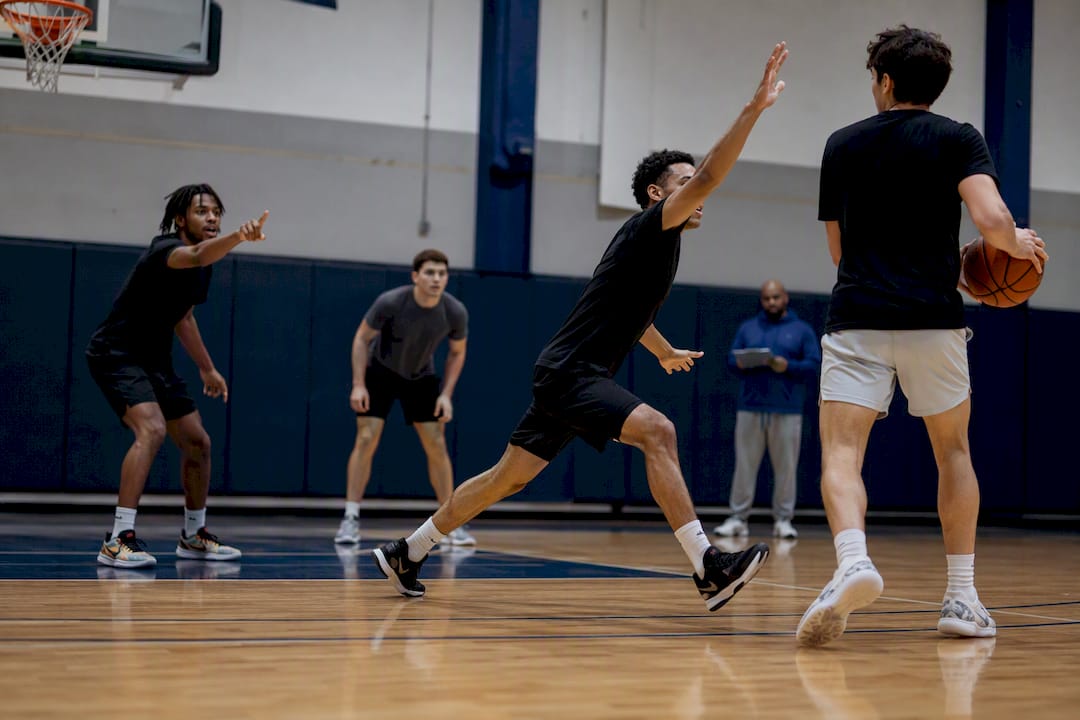
Run closeout and rotate drills where four defenders start in a shell and one offensive player swings the ball to force a closeout. The closing defender must call “ball” while the weak-side defenders call “help” before rotating. This single verbal requirement exposes which players are watching the ball instead of talking through the possession.
Scramble recovery drills work well here too. Deliberately break your team’s defensive shape (send two defenders to the wrong side) and require the group to communicate its way back into position before the offense scores. This simulates the chaos of a broken transition defense far better than a static shell drill ever could.
For coaches who want a deeper bank of these variations, the role of communication drills in defensive rotations is worth a longer read beyond what fits in one practice plan.
Drills That Build Trust and Clarify Player Roles
Teamwork breaks down fastest when players do not trust their teammates to fill a role, or when nobody knows what that role actually is. Fix this with drills that make roles explicit before adding competition.
Try a role-locked scrimmage: assign each player a single job for the possession (screener, cutter, shooter, help defender) and rotate jobs every few possessions. Players quickly learn what a good screen feels like from the other side of it, which builds a kind of trust that generic scrimmaging never teaches.
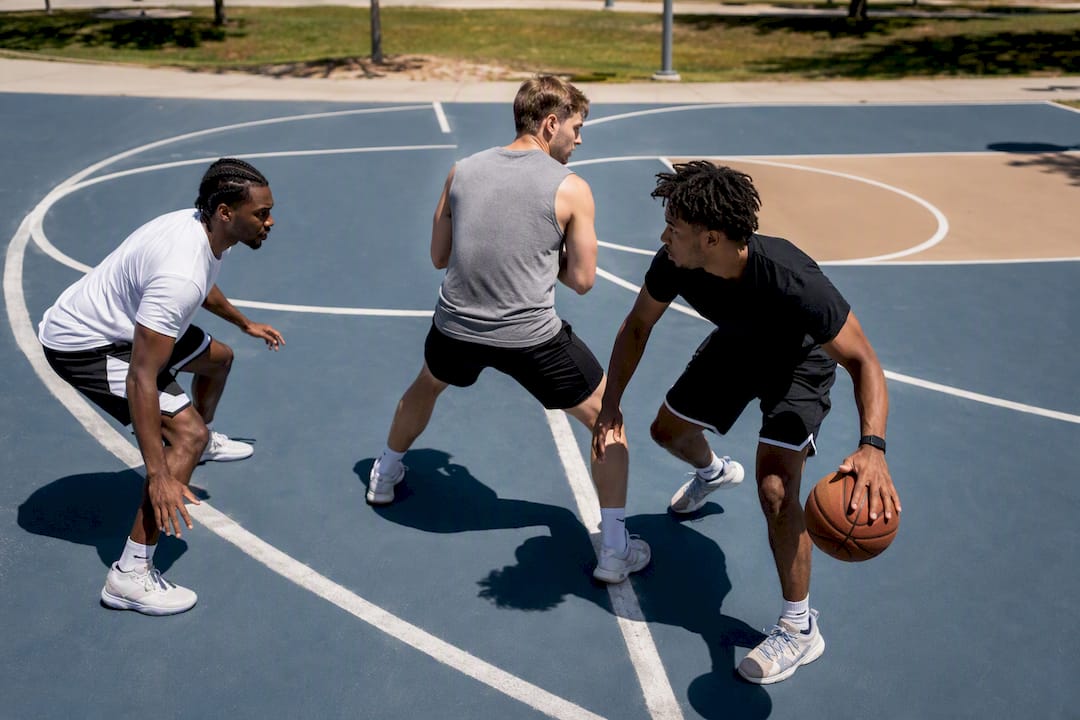
Blind trust passing is a simple add-on to any passing drill: one player closes their eyes for a count of two after releasing a pass, trusting the receiver to be where they said they would be. It sounds unusual, but it forces verbal confirmation of cuts before they happen, which is exactly the habit you want in a half-court offense.
Pairing these drills with off-court activities reinforces the same lesson. Hoop Mentality’s guide to basketball team bonding ideas offers short exercises that complement on-court role clarity work without eating into practice time.
Building Leadership and Decision-Making Into Every Drill
Every drill above gets stronger when you assign a vocal leader and rotate that role through the roster. Naming a point guard as the only voice on the floor creates a bottleneck. Naming a different leader each week, including bench players, builds a deeper pool of players who can make calls under pressure.
A practical version: designate one defender per possession as the “caller.” That player is responsible for identifying the offensive action and calling out the coverage before the ball is even passed. Coaches who set explicit communication expectations and give immediate corrective feedback tend to see this responsibility spread across the roster faster than expected, rather than staying stuck with the same one or two vocal players.
Give players a real decision to make inside the drill, not just a physical action to execute. In possession-with-goals, let the ball handler choose between two bonus-point options (extra pass credit or a quick-hitter shot) and require them to call the choice out loud before executing it. That single addition turns a passing drill into a decision-making rep.
How to Tell If the Teamwork Is Actually Improving
Watching a drill and feeling good about it is not the same as measuring whether it worked. Track something concrete every session.
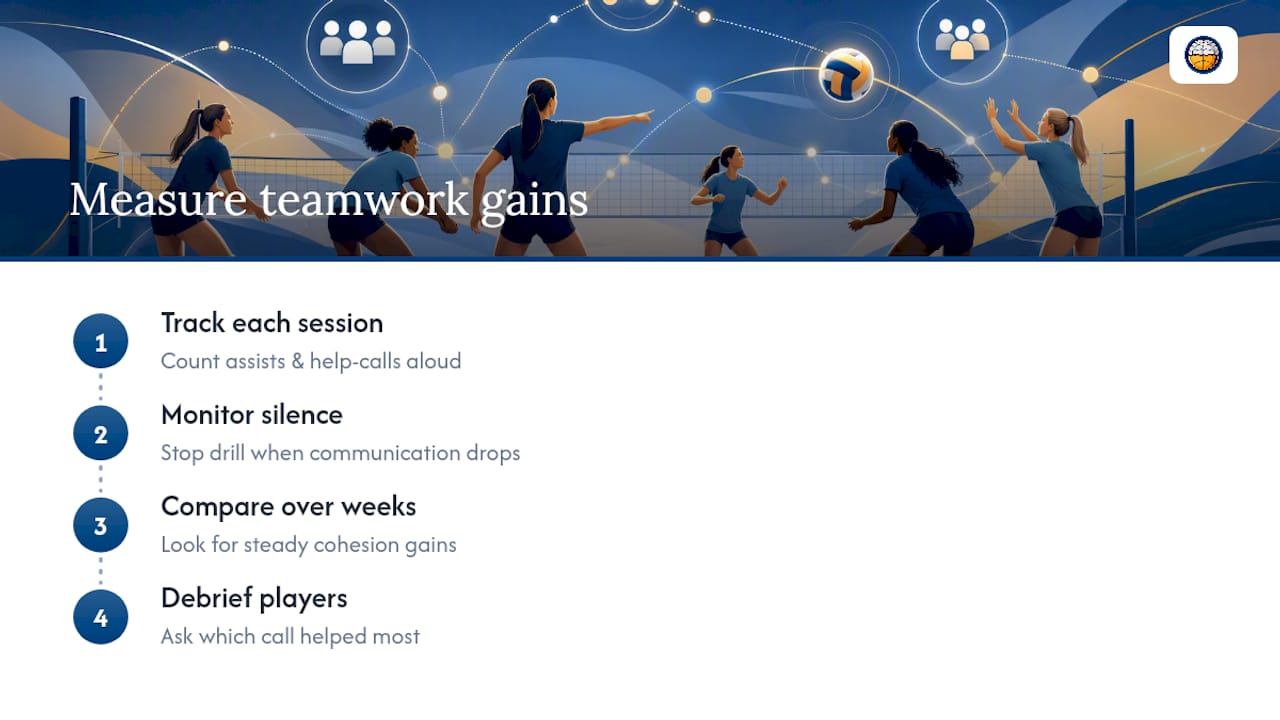
Count assists and help-calls out loud during scrimmages, the same way you would track shooting percentage. A team calling out fewer than a handful of help rotations across a full scrimmage segment is a team that is not yet talking under pressure, regardless of how clean it looks in a walk-through. Tracking small measures like assist counts and help-calls over several weeks tends to reveal steady cohesion gains that are easy to miss game to game.
Watch for silence, specifically. A drill that runs cleanly with zero verbal communication has not actually taught anything, it has just taught players to memorize a pattern. Stop the drill the moment communication drops off and reset the expectation rather than letting the rep finish quietly.
Ask players directly after a scrimmage which call helped them the most. Their answers tell you which cues are actually landing and which ones need to be simplified or dropped.
Dejan’s Coaching Notes on What Actually Moves the Needle
I’ve watched youth and club teams run the possession-with-goals drill for three straight weeks and seen something specific happen: the number of assisted baskets in scrimmages climbed noticeably, and the silence that used to follow a missed rotation turned into players actually calling out the mistake and fixing it mid-possession. That shift, from silent frustration to vocal correction, is the real marker of teamwork taking hold.
Coaches wanting to build on this can read Hoop Mentality’s guide on developing team chemistry or the shorter breakdown of communication strategies coaches use.
— Dejan
Extend These Sessions With Hoop Mentality Drill Packs
Building a full practice plan from scratch every week takes time most coaches do not have. Hoop Mentality’s drill packs give you the diagrams and progressions already built, so you spend your prep time coaching instead of drawing on a whiteboard.
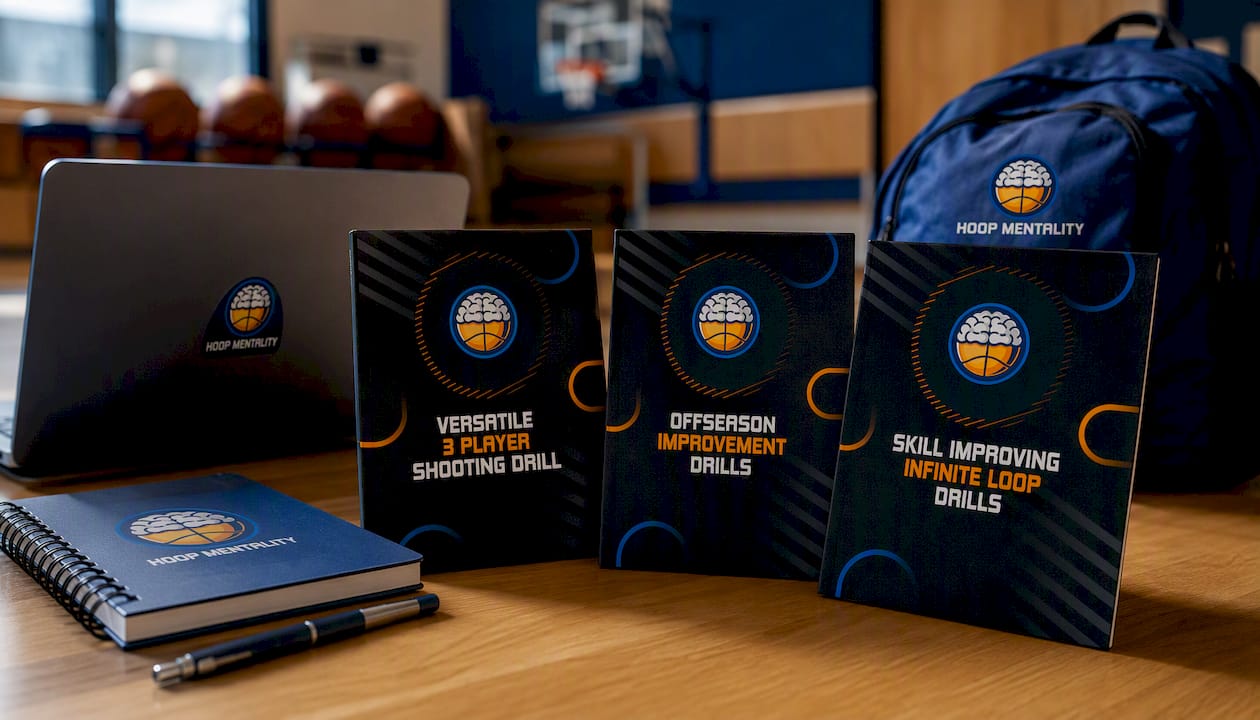
The Versatile 3 Player Shooting Drill fits directly into the skills block from the sample practice plan above, adding shooting progressions that pair naturally with the passing and spacing work you just ran. The Basketball Offseason Improvement Drills bundle supports the multi-week progression model from the coaching-progressions section, giving you a full sequence to build on once your team masters the basics here. And the Skill Improving Infinite Loop Drills pack is built for high-rep, continuous game simulations, exactly the kind of conditioning-heavy teamwork work that keeps a scramble drill sharp late in the season.
Each pack is a downloadable PDF you get instantly after checkout, with printable diagrams ready for your next practice. Browse the full collection at Hoop Mentality and add one to your next practice plan.
Sources
- Basketball Communication Drills: Sharpen Team Talk on the Court - Balr
- In-Game Communication Drills to Improve Your Game - Revolution Basketball Training
- Zeljko Obradovic discusses coaching philosophy and leadership - Basketball Sphere
FAQ
What are the best teamwork drills for volleyball crossover training in basketball?
The keyword confusion aside, the strongest basketball teamwork drills are the ones in this guide: possession-with-goals, scramble transition, and shell drill variants that require verbal help calls before rotation.
How long should a teamwork-focused practice be?
A full teamwork session works well at 30 to 60 minutes, split into a 10-minute communication warmup, a 25 to 35 minute skills block, and a 10 to 15 minute scrimmage with tracked assists and help-calls.
How do I know if my team’s teamwork is actually improving?
Track assists and verbal help-calls out loud during scrimmages over several weeks rather than relying on how clean a drill looks in isolation.
Can these drills work for youth teams?
Yes, shorten each block and substitute more frequently. Younger players benefit from more space and simpler single-word calls before adding scoring constraints.
Where can I find ready-made drill diagrams for these sessions?
Hoop Mentality’s drill packs include printable diagrams and progressions built specifically to extend sessions like the ones in this practice plan.