

Most American basketball teams struggle to achieve true unity, even though research shows that strong team chemistry can boost performance by over 20 percent. For any American coach or player, forming a cohesive unit matters far more than individual talent when chasing long-term success on the court. Discover practical steps and smart coaching methods that transform separate athletes into one powerful force.
Table of Contents
- Step 1: Set Clear Team Values and Expectations
- Step 2: Facilitate Honest Team Communication
- Step 3: Integrate Shared On-Court Experiences
- Step 4: Implement Collaborative Team-Building Drills
- Step 5: Monitor Progress and Reinforce Positive Dynamics
Quick Summary
| Key Point | Explanation |
|---|---|
| 1. Define Core Team Values | Establish loyalty, character, accountability, and commitment to foster team unity and performance. |
| 2. Promote Open Communication | Encourage players to share thoughts and feedback through regular meetings and different communication channels. |
| 3. Engage in Shared Experiences | Design group drills that require teamwork, enhancing player connections and fostering a cohesive environment. |
| 4. Implement Collaborative Drills | Use exercises that necessitate mutual dependence to build chemistry and teamwork among players. |
| 5. Monitor and Reinforce Dynamics | Regularly assess team interactions and recognize positive behaviors to maintain a healthy team culture. |
Step 1: Set Clear Team Values and Expectations
Establishing clear team values and expectations forms the fundamental foundation for building powerful basketball team chemistry. By defining precise standards of behavior, conduct, and commitment, coaches create a unified framework that transforms individual players into a cohesive unit.
A robust team culture starts with articulating core values that go beyond basketball skills. Key expectations for student athletes typically center around four critical dimensions: loyalty, character, accountability, and commitment. During team meetings, coaches should transparently communicate these principles, explaining how each value contributes to collective success. For instance, loyalty means supporting teammates during challenging moments, while accountability requires players to take responsibility for their performance and errors.
Here’s a summary of the core values commonly emphasized when building strong basketball team chemistry:
| Core Value | Definition | Team Impact |
|---|---|---|
| Loyalty | Supporting teammates in all situations | Enhances trust among players |
| Character | Acting with integrity and sportsmanship | Builds respect and positive culture |
| Accountability | Taking responsibility for actions and outcomes | Increases individual reliability |
| Commitment | Consistent dedication to team goals | Ensures high effort and discipline |
Implementing these values requires consistent reinforcement. Create a written team constitution that outlines specific behavioral guidelines, practice protocols, and performance standards. According to FIBA coaching guidelines, this document should address respect, fairness, discipline, and game conduct. Post this constitution in the locker room and review it regularly, ensuring every player understands and internalizes these expectations.
Pro tip: Schedule quarterly team meetings to revisit and discuss your team values, allowing players to provide input and reinforcing the collective commitment to your shared standards.
Step 2: Facilitate Honest Team Communication
Effective team communication transforms individual basketball players into a synchronized, high performing unit. This step focuses on creating an environment where players feel safe sharing thoughts, concerns, and constructive feedback without fear of judgment or reprisal.
Establishing open communication requires intentional strategies. Understanding coaching communication techniques helps coaches create dialogue channels that promote transparency and trust. Begin by implementing regular team meetings where every player gets equal opportunity to speak. These sessions should not be one directional lectures but interactive discussions where players can share perspectives on team dynamics, training approaches, and personal challenges. Encourage players to communicate both positive observations and areas where they see potential improvements.
Create multiple communication platforms to accommodate different player personalities. Some athletes might feel more comfortable sharing in small group settings, while others prefer one on one conversations. Implement anonymous suggestion systems, team feedback forms, and periodic individual check ins to ensure every team member has a voice. These varied approaches demonstrate that you value each players input and are committed to building a collaborative team environment.
The following table compares popular team communication methods and their strengths for basketball teams:
| Communication Method | Best For | Key Benefit |
|---|---|---|
| Team Meetings | Open group feedback and discussion | Promotes transparency |
| Small Group Sessions | Shy or reserved players | Encourages participation |
| One-on-One Check-ins | Personal concerns or conflicts | Builds individual trust |
| Anonymous Suggestions | Sensitive or critical feedback | Increases honesty and safety |
Pro tip: Practice active listening during team communications by maintaining eye contact, asking clarifying questions, and reflecting back what you hear to show genuine engagement and understanding.
Step 3: Integrate Shared On-Court Experiences
Shared on court experiences are the crucible where individual players transform into a unified basketball team. By strategically designing collaborative interactions and group challenges, coaches can accelerate team chemistry and create deeper connections between players.
Advanced team dynamics research reveals that understanding collective movement patterns and shared interactions is crucial for team performance. Implement structured group drills that require synchronized effort and mutual dependence. These exercises might include complex passing sequences, defensive rotations that demand constant communication, or offensive plays where each player has a critical interdependent role. For example, design drills where scoring requires multiple player touches or defensive scenarios that can only be successfully navigated through real time coordination.
Analyzing player interactions goes beyond simple observation. Game theoretic approaches to team optimization suggest coaches should track how players collaborate, make collective decisions, and support each other during competitive scenarios. Use video analysis to highlight moments of exceptional teamwork, discussing these instances in group settings to reinforce positive collaborative behaviors. Encourage players to reflect on their shared experiences, discussing not just technical execution but the emotional and strategic connections that emerge during intense gameplay.
Pro tip: Create a team highlight reel showcasing moments of exceptional collective effort, using these visual narratives to reinforce the value of mutual support and synchronized performance.
Step 4: Implement Collaborative Team-Building Drills
Collaborative team-building drills are the cornerstone of transforming individual basketball players into a cohesive unit. By designing strategic exercises that require mutual dependence and communication, coaches can rapidly accelerate team chemistry and develop deeper player connections.
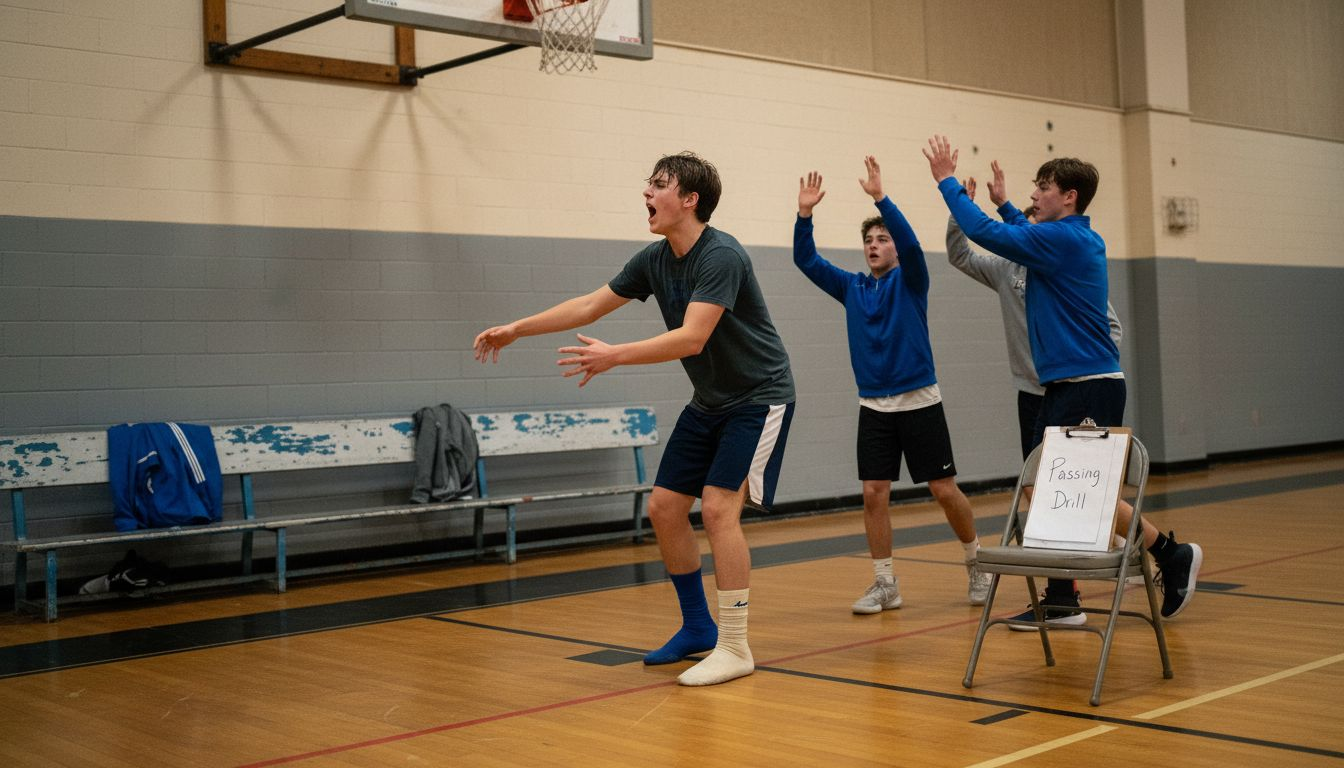
Effective teamwork training techniques emphasize the importance of purposeful drills that challenge players to work together seamlessly. Implement multi player defensive rotations where each athlete must communicate and anticipate teammates movements. Create offensive sequences that require consecutive player touches before scoring, forcing collaborative decision making and synchronized execution. Design passing challenges that reward precise communication and collective ball movement rather than individual performance.
Advanced collaborative drills should simulate game intensity while highlighting interdependence. Develop scenarios where players must solve complex basketball challenges that cannot be accomplished through individual skill alone. These might include defensive coordination drills where players must simultaneously switch assignments, offensive plays requiring split second timing, or competitive scenarios where team success depends on collective strategy rather than individual brilliance. Rotate player combinations frequently to ensure everyone learns to work effectively with different teammates and develops comprehensive team awareness.
Pro tip: Record and review collaborative drill performance as a team, allowing players to analyze their collective interactions and discuss how improved communication can enhance overall team effectiveness.
Step 5: Monitor Progress and Reinforce Positive Dynamics
Successful team chemistry requires continuous assessment and strategic reinforcement of positive interactions. Coaches must develop systematic approaches to tracking team dynamics and individual player contributions that go beyond traditional performance metrics.
Strategies for setting clear goals and expectations highlight the importance of creating measurable objectives that align individual player strengths with overall team performance. Implement quarterly team chemistry assessments that evaluate not just statistical achievements but also interpersonal communication, collaborative behaviors, and collective problem solving skills. These evaluations should include confidential player feedback sessions, peer review components, and objective observations of team interactions during practices and competitive scenarios.
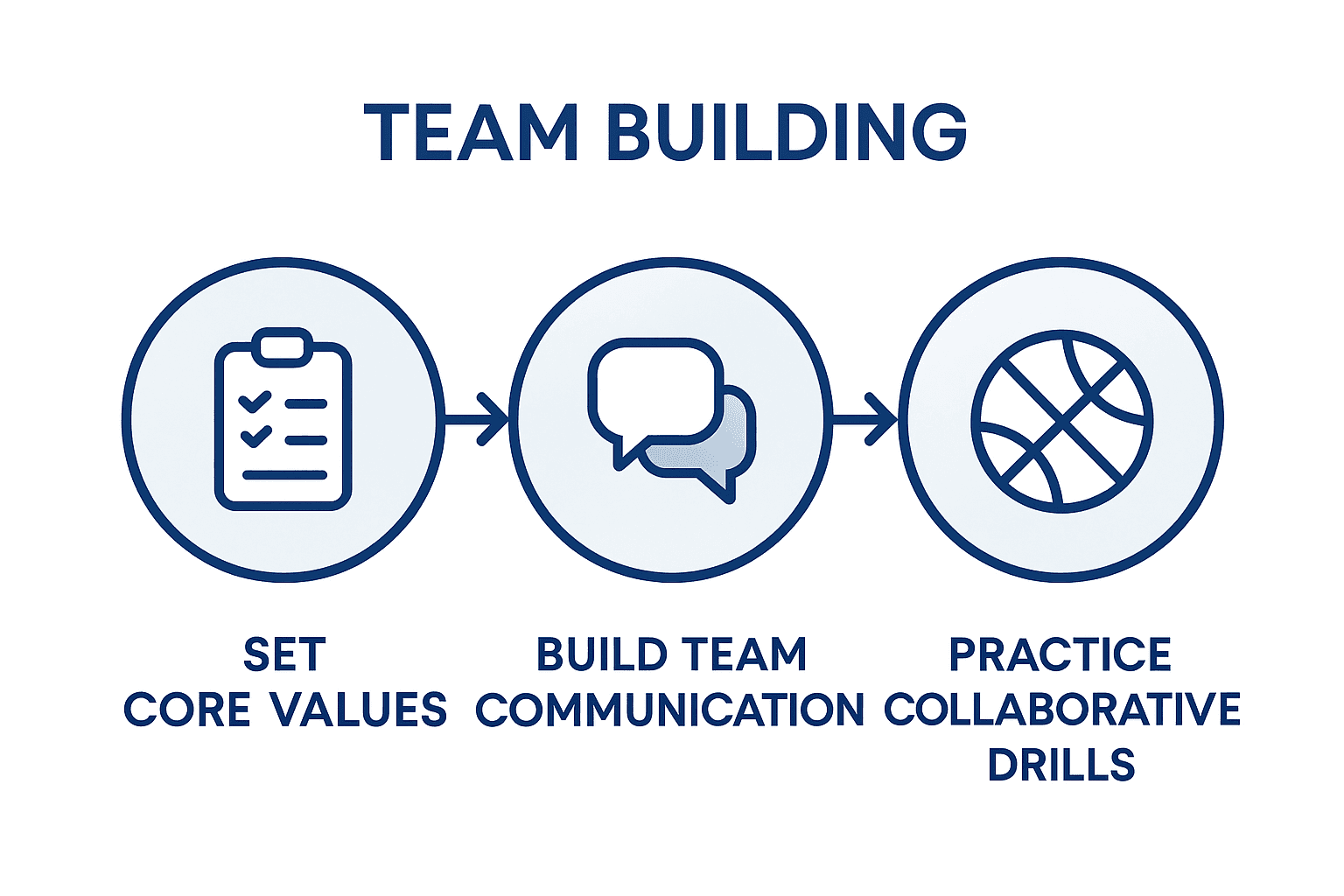
Reinforcing positive team dynamics requires deliberate recognition and celebration of collaborative achievements. Create a systematic approach to highlighting moments of exceptional teamwork where players demonstrate mutual support, selfless play, and collective problem solving. Use team meetings to publicly acknowledge players who consistently embody the team’s core values and contribute to a positive team environment. Develop a points or recognition system that rewards players for actions that strengthen team chemistry such as assist rates, defensive communication, supporting teammates during challenging moments, and demonstrating emotional intelligence during high pressure situations.
Pro tip: Rotate team leadership responsibilities quarterly to give every player an opportunity to develop leadership skills and gain deeper insights into team dynamics.
Elevate Your Team Chemistry With Proven Coaching Resources
Building powerful basketball team chemistry requires clear values, honest communication, and shared on-court experiences as highlighted in the article. If you are seeking practical solutions to overcome challenges like reinforcing core values or implementing collaborative drills, Hoop Mentality offers expertly designed tools to support coaches every step of the way. Our comprehensive collection of playbooks, drills, and strategy guides is crafted to save you time, improve your communication, and strengthen your team’s unity.

Discover how to translate concepts like accountability and commitment into effective practice plans. Visit Hoop Mentality now and access detailed resources that help you organize practices with clarity, track progress, and foster the positive team dynamics needed for basketball success. Take the first step toward transforming your team’s chemistry today by exploring our expert coaching materials at Hoop Mentality.
Frequently Asked Questions
How can I set clear team values to improve chemistry for basketball success?
Establish clear team values by defining standards of behavior, conduct, and commitment for your players. Create a written team constitution that outlines these values and review it regularly during team meetings to reinforce their importance.
What are effective communication methods to enhance team chemistry in basketball?
Utilize various communication methods such as team meetings, small group sessions, and one-on-one check-ins. Implement an anonymous suggestion system to allow players to share their thoughts comfortably, ensuring everyone feels heard and valued.
How can on-court experiences contribute to building basketball team chemistry?
Integrate shared on-court experiences through collaborative drills that require teamwork and communication. Design drills that highlight interdependence, such as offensive sequences that require multiple player touches to score, to foster deeper connections among players.
What types of team-building drills can I implement to improve team dynamics?
Incorporate collaborative team-building drills that emphasize communication and mutual dependence, such as multi-player defensive rotations and passing challenges. Rotate player combinations frequently in practice to ensure that all teammates learn to work effectively together.
How do I monitor progress and reinforce positive team dynamics in basketball?
Establish regular assessments to evaluate team chemistry, focusing on interpersonal communication and collaborative skills. Celebrate teamwork achievements in team meetings and develop a recognition system to highlight players who contribute positively to the team’s dynamics.
How often should I review our team values and expectations with the players?
Schedule quarterly team meetings to revisit and discuss your team values and expectations. This gives players an opportunity to provide input and strengthens their commitment to the collective standards you’ve established.