

Over 90 percent of american basketball coaches say communication skills are just as important as tactical knowledge. In the fast-paced world of basketball, simple instructions rarely lead to lasting results. Players look for direction, motivation, and genuine support that help unlock their true potential. This article breaks down what effective coach communication really means, why it directly shapes team success, and how understanding key methods can elevate both player and coach performance.
Table of Contents
- Defining Coach Communications In Basketball
- Core Communication Methods And Channels
- Types Of Coach-To-Player Interactions
- Role Of Communication In Team Success
- Common Barriers And How To Overcome Them
- Best Practices For Effective Communication
Key Takeaways
| Point | Details |
|---|---|
| Effective communication | Basketball coaching requires a blend of verbal and nonverbal strategies to optimize player performance and foster team cohesion. |
| Adaptability | Coaches must tailor communication styles to individual players based on their age, skill level, and psychological readiness. |
| Building trust | Creating an open and respectful environment is crucial for maintaining team dynamics and enhancing player motivation. |
| Overcoming barriers | Identifying and addressing communication challenges is essential for fostering a supportive and productive team atmosphere. |
Defining Coach Communications in Basketball
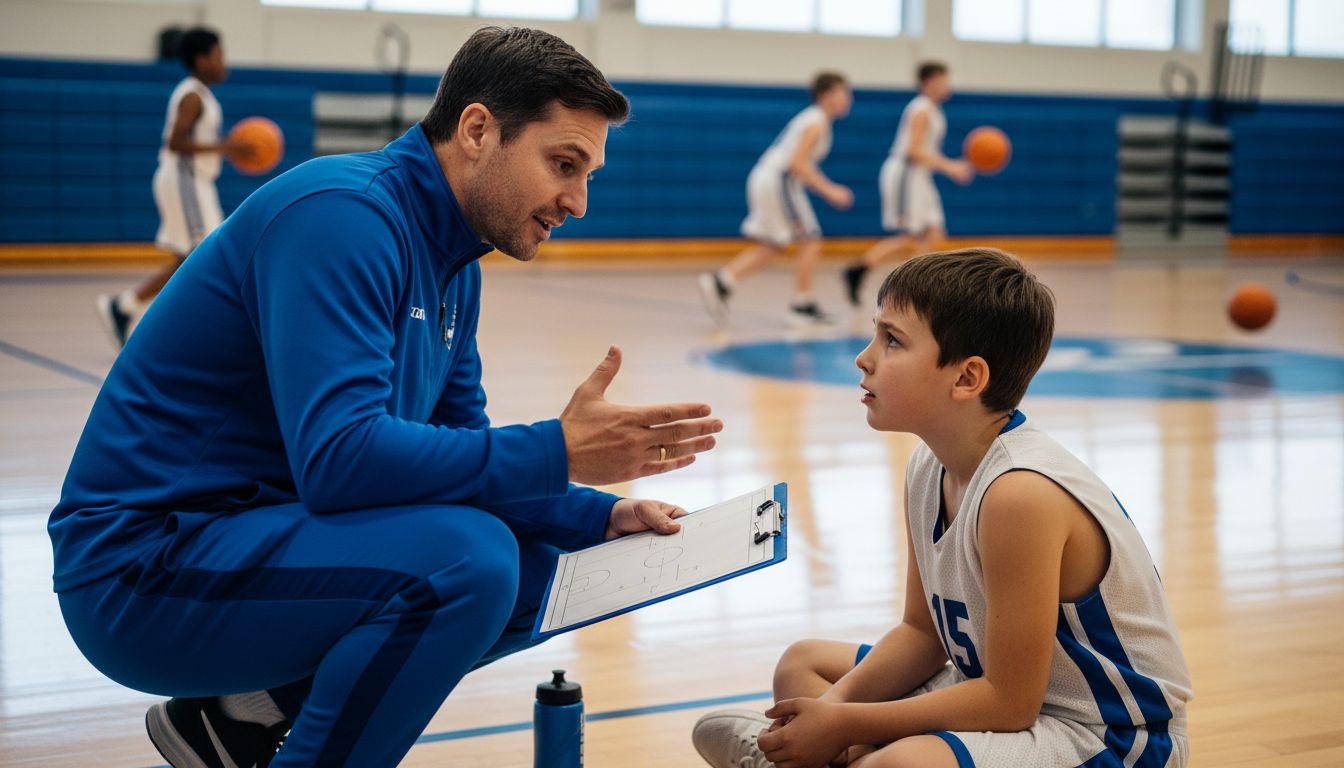
Coach communications in basketball represent a sophisticated, multifaceted system of verbal and nonverbal interactions designed to guide, motivate, and develop players toward peak performance. According to research from digitalcommons, coaching communication processes are critical for building successful basketball programs, emphasizing how coaches translate strategic knowledge into actionable guidance for players.
At its core, coach communications encompass more than simple instructions. They involve complex verbal techniques, body language, emotional intelligence, and strategic messaging that help players understand team objectives, individual roles, and performance expectations. The bearworks research highlights that communication styles vary dramatically, with coaches adapting their speech patterns, tone, and delivery based on player age, skill level, and psychological readiness.
Effective basketball coach communications typically involve several key dimensions:
- Instructional Communication: Direct technical guidance about skills, plays, and strategies
- Motivational Communication: Emotional and psychological support that builds player confidence
- Feedback Communication: Constructive critique and performance analysis
- Strategic Communication: Big-picture team vision and game planning
Understanding these communication dimensions allows coaches to create a holistic approach that goes beyond simple play-calling, transforming communication into a powerful tool for player development and team success.
 For more insights into building strong player relationships, check out our guide on player coach relationships.
Core Communication Methods and Channels
Basketball coaches leverage multiple communication methods to effectively guide and motivate their players, with each channel serving a specific strategic purpose. According to research from scitepress, interpersonal communication strategies are crucial for enhancing athlete motivation, with active listening and empathy emerging as foundational techniques for successful coaching interactions.
These communication channels can be categorized into several primary modes of interaction. The assets.fiba.basketball coaching manual highlights key communication channels that coaches utilize:
- Verbal Direct Communication: Face-to-face team and individual instructions
- Nonverbal Communication: Body language, gestures, and physical demonstrations
- Group Communication: Team meetings, huddles, and collective strategy sessions
- Individual Communication: One-on-one performance discussions and personal feedback
- Technology-Assisted Communication: Video analysis, digital performance tracking, and remote coaching tools
Advanced coaches recognize that effective communication requires flexibility and adaptability across these channels.
Types of Coach-to-Player Interactions
Coach-to-player interactions represent a complex ecosystem of communication strategies designed to optimize team performance and individual athlete development. According to research from scholarworks, coaching styles and leadership characteristics significantly impact psychological outcomes and athlete motivation, highlighting the nuanced nature of these interactions.
These interactions can be broadly categorized into several distinct interaction types, each serving a unique purpose in player development:
- Instructional Interactions: Focused on skill development and technical guidance
- Motivational Interactions: Designed to build confidence and psychological resilience
- Corrective Interactions: Providing constructive feedback and performance improvement strategies
- Supportive Interactions: Addressing personal challenges and emotional well-being
- Strategic Interactions: Discussing team goals, individual roles, and game planning
The scitepress research emphasizes that active listening and empathy are critical components of effective coach-player interactions. Successful coaches recognize that each interaction is an opportunity to not just communicate instructions, but to build trust, understand individual player motivations, and create a supportive environment that promotes both athletic and personal growth. When conflicts or challenges arise, understanding these interaction types becomes crucial for maintaining team cohesion and individual player development. For practical strategies on managing team dynamics, check out our guide on handling team conflict.
Role of Communication in Team Success
Communication stands as the fundamental backbone of basketball team performance, transforming individual talents into a cohesive, high-functioning unit. According to research from scitepress, effective interpersonal communication is critical in creating a positive team environment that motivates players and significantly enhances overall team performance.
Successful team communication involves several key strategic elements:
- Shared Understanding: Ensuring all players comprehend team objectives and individual roles
- Trust Building: Creating an environment of mutual respect and open dialogue
- Performance Alignment: Synchronizing individual efforts with collective team goals
- Conflict Resolution: Addressing challenges and disagreements constructively
- Psychological Safety: Developing an environment where players feel comfortable expressing ideas and concerns
Research from scholarworks underscores how leadership characteristics directly influence team dynamics, highlighting that communication is not just about transmitting information but about creating a psychological framework that drives collective success. Coaches who master these communication strategies can transform a group of individual players into a unified, high-performing team. For coaches looking to develop stronger leadership skills that support team communication, our basketball leadership guide offers comprehensive strategies for building a robust team culture.
Common Barriers and How to Overcome Them
Effective communication in basketball coaching is frequently hindered by complex psychological and interpersonal challenges that can undermine team performance and player development. According to guidance from athletic-officials, understanding and strategically addressing communication barriers requires a nuanced approach that prioritizes mutual understanding and respect.
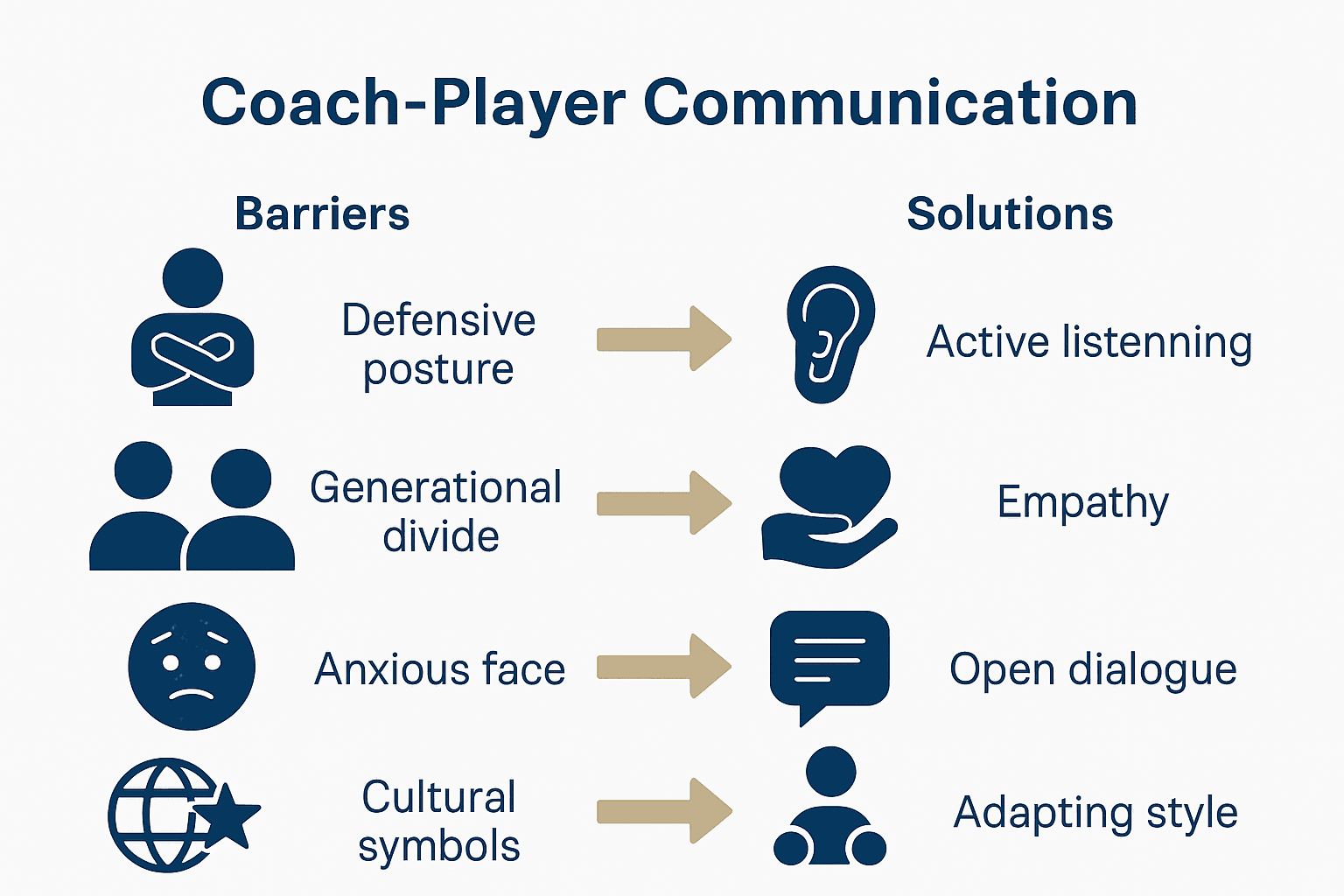
Coaches commonly encounter several critical communication barriers:
- Emotional Reactivity: Players responding defensively to criticism
- Generational Communication Gaps: Different communication styles between coaches and younger players
- Performance Anxiety: Players shutting down during high-pressure discussions
- Cultural and Personal Differences: Varied communication expectations and backgrounds
- Hierarchical Communication Blocks: Players feeling intimidated by coaching authority
To effectively overcome these barriers, coaches must develop adaptive communication strategies that create psychological safety and open dialogue. This involves active listening, validating player perspectives, using non-threatening language, and creating environments where players feel comfortable expressing concerns without fear of judgment. Successful coaches recognize that breaking down communication barriers is not about eliminating hierarchy, but about building trust through genuine, empathetic interactions.
 For coaches seeking to develop more nuanced communication skills, our 7 essential basketball leadership tips offer practical guidance for navigating complex team dynamics.
Best Practices for Effective Communication
Effective communication in basketball coaching transcends simple instruction, representing a sophisticated approach to player development, team building, and performance optimization. Coaches must cultivate a comprehensive communication strategy that balances technical guidance with emotional intelligence and adaptive interaction styles.
The most successful communication practices involve several critical dimensions:
- Clarity and Precision: Using specific, actionable language that eliminates ambiguity
- Individualized Approach: Tailoring communication style to each player’s learning preferences
- Consistent Feedback: Providing regular, constructive input that supports player growth
- Emotional Intelligence: Reading and responding to players’ psychological states
- Transparent Goal Setting: Clearly communicating team and individual performance expectations
Mastering these communication practices requires coaches to develop a multifaceted skill set that goes beyond traditional coaching methods. This involves active listening, creating psychological safety, demonstrating empathy, and maintaining a balance between authority and approachability. Coaches who successfully implement these strategies can transform communication from a management tool into a powerful mechanism for player development and team cohesion. For coaches seeking a structured approach to enhancing their coaching toolkit, our 7 essentials for an effective basketball coaching checklist provides a comprehensive framework for communication excellence.
Elevate Your Coach Communications with Proven Tools
Clear and effective communication is crucial to coaching success. This article highlights the challenges coaches face in delivering precise instructions, motivating players, and building trust within the team. If you struggle with broken communication channels or want to enhance your coaching impact through structured methods and clarity this is the moment to take action. Coaches must master motivational interaction and strategic feedback to foster a winning culture.

Explore our wide range of Basketball Templates designed to simplify your communication processes and customize your coaching style. From detailed playbooks to progressive drills, all resources are built to support clear practice plans and confident game preparation. Don’t let communication barriers hold your team back visit Hoop Mentality now and discover how our professional coaching tools can empower you to connect better with your players and lead them to victory.
Frequently Asked Questions
What are the key dimensions of coach communications in basketball?
Coach communications in basketball encompass several key dimensions: instructional communication (technical guidance), motivational communication (emotional support), feedback communication (constructive critique), and strategic communication (team vision and planning).
How do coaches adapt their communication styles based on player needs?
Coaches adapt their communication styles by considering factors such as player age, skill level, individual personalities, and psychological readiness, tailoring their approach to resonate with each player.
What are common barriers to effective communication in basketball coaching?
Common barriers include emotional reactivity from players, generational communication gaps, performance anxiety, cultural differences, and hierarchical communication blocks that can intimidate players.
Why is emotional intelligence important in coach-to-player interactions?
Emotional intelligence is crucial because it helps coaches understand and respond to players’ psychological states, fostering a supportive environment that enhances trust, motivation, and overall team performance.