

TL;DR:
- Scouting video is accessible and valuable for coaches at all levels to improve preparation and player development.
- Focusing on key attributes and integrating video reviews into a structured workflow enhances decision-making and on-court results.
- Combining video analysis with live scouting provides a comprehensive understanding of team tendencies and player character.
Scouting video is not just for NBA front offices and Division I programs. Coaches at every level, from youth leagues to high school varsity to semi-pro, can use it to sharpen preparation, accelerate player development, and build smarter game plans. The idea that you need a full analytics department to benefit from video is simply wrong. This guide breaks down why video matters, how to filter what you watch, how to build it into your workflow, and how to turn film sessions into real on-court results. You will walk away with a clear, practical system you can start using this week.
Table of Contents
- Why scouting video matters for modern basketball
- Selecting what to focus on: Turning video into actionable insights
- Integrating scouting video into your coaching workflow
- Maximizing effectiveness: Avoiding common pitfalls and applying insights
- Our take: Why the best coaches blend video and live eyes
- Take your basketball development to the next level with Hoop Mentality
- Frequently asked questions
Key Takeaways
| Point | Details |
|---|---|
| Focus on key traits | Zero in on five to ten attributes to turn videos into actionable insights. |
| Blend live and video | Combining in-person and video scouting yields the clearest picture of team and player capability. |
| Streamline your process | Using integrated platforms and standard checklists saves significant time and avoids overwhelm. |
| Apply insights directly | Make lessons from video count by translating them into drills and action items at practice. |
Why scouting video matters for modern basketball
For most of basketball history, coaches relied on handwritten notes, memory, and word-of-mouth reports. A scout would sit in the stands, jot down tendencies, and report back. That process worked, but it had obvious limits. You could only watch what was in front of you, and human memory is selective.
Video changed everything. Not just at the top. A basketball scouting overview shows that even youth and amateur coaches now have access to tools that were unthinkable a decade ago. Affordable cameras, cloud storage, and platforms like Hudl have put serious video analysis within reach of almost any program.
The numbers back this up. Advanced metrics improve player success prediction by 20 to 30% compared to traditional evaluation alone. That is not a marginal gain. That is the difference between identifying a breakout player early and missing them entirely.
Here is what video catches that live scouting often misses:
- Off-ball movement patterns that are invisible from one vantage point
- Defensive rotations and how a team communicates under pressure
- Tendencies in transition, both offensive and defensive
- Individual habits like shot selection under fatigue or late-game decision making
- Spacing and floor balance across multiple possessions
Understanding the scouting reports importance is the first step. Video makes those reports far more reliable because you can rewatch, pause, and verify. A live scout might miss a subtle defensive tell. Video lets you catch it on the third review.
“Platforms like Hudl allow coaching staffs to break down film 1.75 times faster than manual review, freeing up prep time for actual coaching.”
That speed matters. When you are preparing for a game in 48 hours, every saved minute counts. Video is not a luxury. It is a competitive tool that levels the playing field for coaches who use it well.
Selecting what to focus on: Turning video into actionable insights
Here is the trap most coaches fall into: they pull up hours of footage and try to absorb everything. The result is information overload, not clarity. More video does not automatically mean better preparation.
Video enhances accuracy over traditional scouting but only when you focus on five to ten key attributes per evaluation. Trying to track 20 variables at once produces noise, not signal. You need a filter.
The scouting checklist elements that matter most will vary by level and opponent, but a solid starting framework includes:
- Primary ball handler tendencies (left vs. right, pull-up vs. drive)
- Transition defense habits after made and missed shots
- Set play recognition from common inbound and half-court sets
- Key scorer tendencies in late-game situations
- Team defensive scheme (zone, man, switching rules)
Here is a direct comparison of what live scouting and video scouting each do best:
| Focus area | Live scouting | Video scouting |
|---|---|---|
| Body language and energy | Strong | Limited |
| Off-ball movement patterns | Weak | Strong |
| Tendencies across multiple games | Limited | Strong |
| Real-time reads and adjustments | Strong | Limited |
| Specific play recognition | Moderate | Strong |
| Player effort and leadership | Strong | Moderate |
The best approach uses both columns. But when you are watching film, lean into what video does best: pattern recognition across multiple possessions and games.
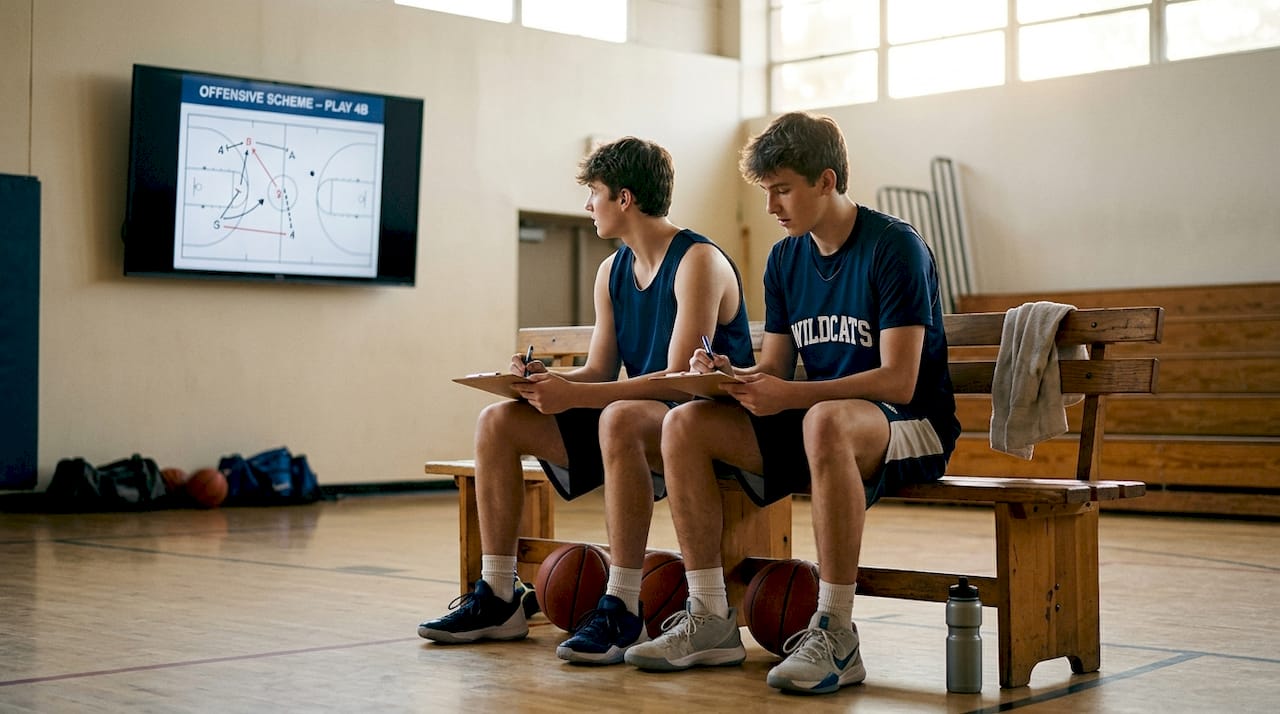
Pro Tip: Build a standardized checklist before every film session. Decide in advance which five to seven attributes you are evaluating. This keeps your review focused and your notes actionable rather than scattered.
If your program lacks quality footage, investing in training video production resources can significantly raise the quality of what you are working with. Clear angles and consistent framing make pattern recognition much easier.
Integrating scouting video into your coaching workflow
Knowing what to look for is only half the job. The other half is building video review into your actual schedule so it happens consistently, not just when you find spare time.
Here is a step-by-step workflow that works at most levels:
- Pre-game (3 to 5 days out): Pull the opponent’s last three to five games. Focus your checklist on their top five tendencies. Share a two to three minute clip package with your staff.
- Pre-game (1 to 2 days out): Narrow your focus to two or three specific adjustments your team needs to make. Build a short film session for players around those points.
- In-game: Use halftime to reference one or two specific video-confirmed tendencies. Keep it simple. Players cannot process a full breakdown at halftime.
- Post-game (within 24 hours): Review your own team’s execution. Compare what you saw on film to what actually happened. Note the gaps.
- Weekly review: Identify recurring patterns in your own team’s play. Use these to drive practice planning for the coming week.
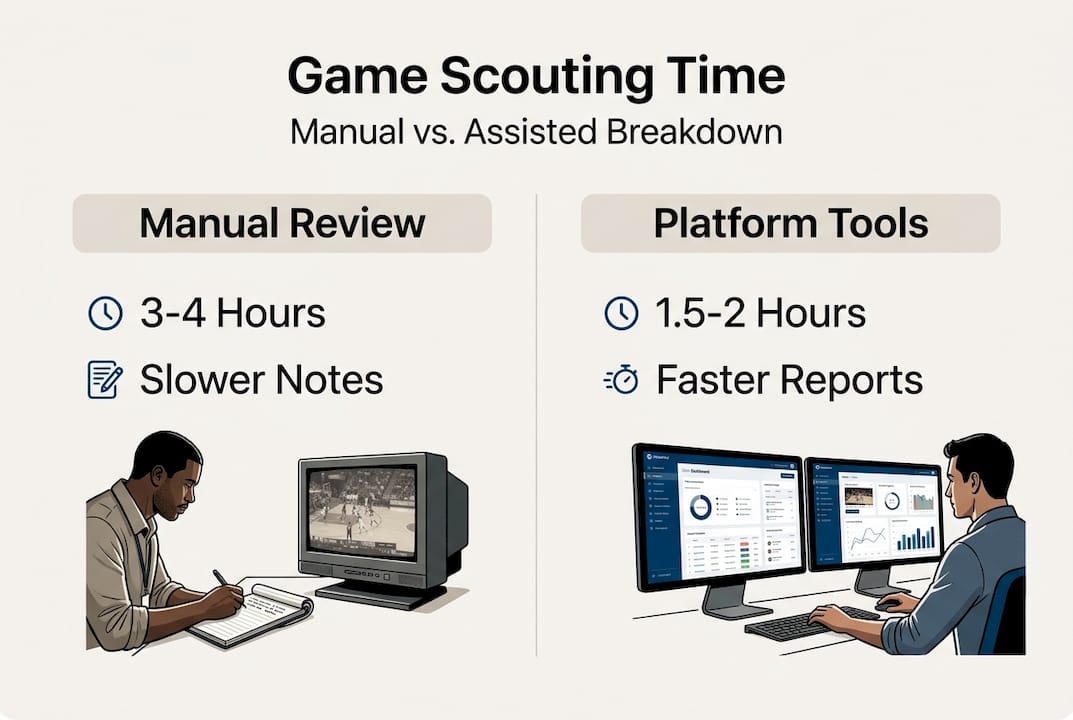
Platforms built for this workflow make a real difference. Hudl integrations deliver breakdowns 1.75x faster, and hybrid machine learning models now achieve 91.4% accuracy in defensive strategy classification. That is not just faster, it is more reliable.
| Task | Manual review time | Platform-assisted time |
|---|---|---|
| Full game breakdown | 3 to 4 hours | 1.5 to 2 hours |
| Clip package creation | 45 to 60 minutes | 15 to 20 minutes |
| Opponent tendency report | 2 hours | 45 to 60 minutes |
Explore the scouting strategies and scouting workflow tips that help coaches build this into their weekly routine without burning out.
Pro Tip: Assign a video coordinator role, even at the high school level. This can be a player, an assistant, or a manager. Having one person responsible for organizing and queuing footage saves everyone time and keeps the process consistent.
Maximizing effectiveness: Avoiding common pitfalls and applying insights
Video analysis only creates value when it changes what you do on the court. A film session that produces no adjustments to practice or game planning is just time spent watching basketball.
The decision-action gap is real. Coaches often complete a thorough review and then fail to translate findings into specific drills or game calls. Every film session should end with at least one concrete action item. One drill added to practice. One defensive adjustment communicated to players. One play added to the game plan.
The three most common pitfalls coaches run into with video scouting:
- Overanalysis: Reviewing too much footage without a clear focus leads to paralysis. Stick to your checklist and your five to ten key attributes.
- Ignoring context: A player who struggles in a blowout loss may look worse than they are. Always consider the game situation behind the numbers and clips.
- Missing intangibles: Combine video with live scouting for the full picture. Leadership, effort, and body language under pressure are things video alone cannot fully capture.
This is why the film vs. stats debate misses the point. The real answer is integration. Video tells you what happened. Live observation tells you why. You need both.
Learning how to structure your findings is just as important as gathering them. Resources on creating scouting reports and reviewing scouting report examples give you a framework for turning raw video observations into clear, usable documents.
Pro Tip: Build film review into your team culture by ending every session with two or three specific takeaways written on the board. Players engage more when they see a direct line between what they watched and what they will practice the next day.
Our take: Why the best coaches blend video and live eyes
Here is something worth saying plainly: coaches who rely only on video are leaving information on the table. And coaches who skip video entirely are doing the same thing from the other direction.
We have seen high school programs transform their competitive record not by buying expensive software, but by pairing basic video review with intentional live observation. The video told them what plays to expect. The live scouting told them which players would compete when the game got tight.
That combination is where the real edge lives. Video gives you patterns. Live eyes give you character reads. Neither one is complete without the other.
At youth and amateur levels especially, intangibles like hustle, coachability, and leadership under pressure are often the deciding factors in close games. No algorithm catches those. Your eyes do.
Explore winning scouting tactics that bring both approaches together into a system your whole staff can use. There is no single formula that works for every program. Experiment, adjust, and build what fits your team.
Take your basketball development to the next level with Hoop Mentality
Video insights are only as good as what you do with them. The gap between knowing a tendency and building a drill that addresses it is where most programs stall.
Hoop Mentality resources are built to close that gap. From the big man dual action drill that targets specific post and perimeter reads, to the practice plan template that helps you structure sessions around your scouting findings, every tool is designed for real coaching situations. Explore the full resource library at Hoop Mentality and start turning your film sessions into on-court results.
Frequently asked questions
How many games of video should I review before facing an opponent?
Reviewing the last three to five games gives the best blend of current form and tendencies without overwhelming your workflow. More than five games rarely adds new information and takes time away from actual preparation.
Should I prioritize team or individual player video analysis?
Start with team-level patterns, then drill down to key player tendencies for the best balance of strategic and tactical preparation. Team schemes shape the context for individual reads.
Is there an ideal length for team film sessions?
Sessions of 20 to 30 minutes keep players engaged and maximize retention of key concepts. Longer sessions tend to lose focus and reduce the impact of your key takeaways.
Can video scouting fully replace in-person evaluation?
No. Live scouting is still essential for catching intangibles like leadership and energy that video alone cannot fully reveal. A blended approach gives you the most complete picture.
How does AI or advanced analytics change the value of scouting video?
Advanced metrics improve prediction by up to 30% and speed up breakdowns significantly, making your prep faster and more accurate. AI tools work best when paired with a coach’s own contextual judgment.