

Over 80 percent of successful basketball teams credit strong scouting as a key factor in their winning strategies. Whether you are a coach trying to outsmart rivals or a fan eager to understand what drives on-court decisions, knowing how scouting works can unlock powerful insights. This article breaks down the fundamentals of basketball scouting, explains each main scouting type, and reveals practical techniques that help teams transform raw observations into game-winning choices.
Table of Contents
- Basketball Scouting Defined and Core Concepts
- Types of Scouting: Player, Team, and Opponent
- How Scouting Processes Work in Practice
- Essential Tools and Techniques for Coaches
- Common Scouting Mistakes and How to Avoid Them
Key Takeaways
| Point | Details |
|---|---|
| Importance of Data-Driven Scouting | Modern basketball scouting combines qualitative insights with quantitative analysis to enhance player and team evaluations. |
| Types of Scouting | Scouting can be categorized into player, team, and opponent types, each focusing on specific aspects of performance evaluation. |
| Scouting Process | Effective scouting requires a systematic approach including data collection, analysis, and report preparation to derive actionable insights. |
| Avoiding Common Mistakes | Coaches should mitigate biases and ensure comprehensive data collection to improve the accuracy and effectiveness of their scouting efforts. |
Basketball Scouting Defined and Core Concepts
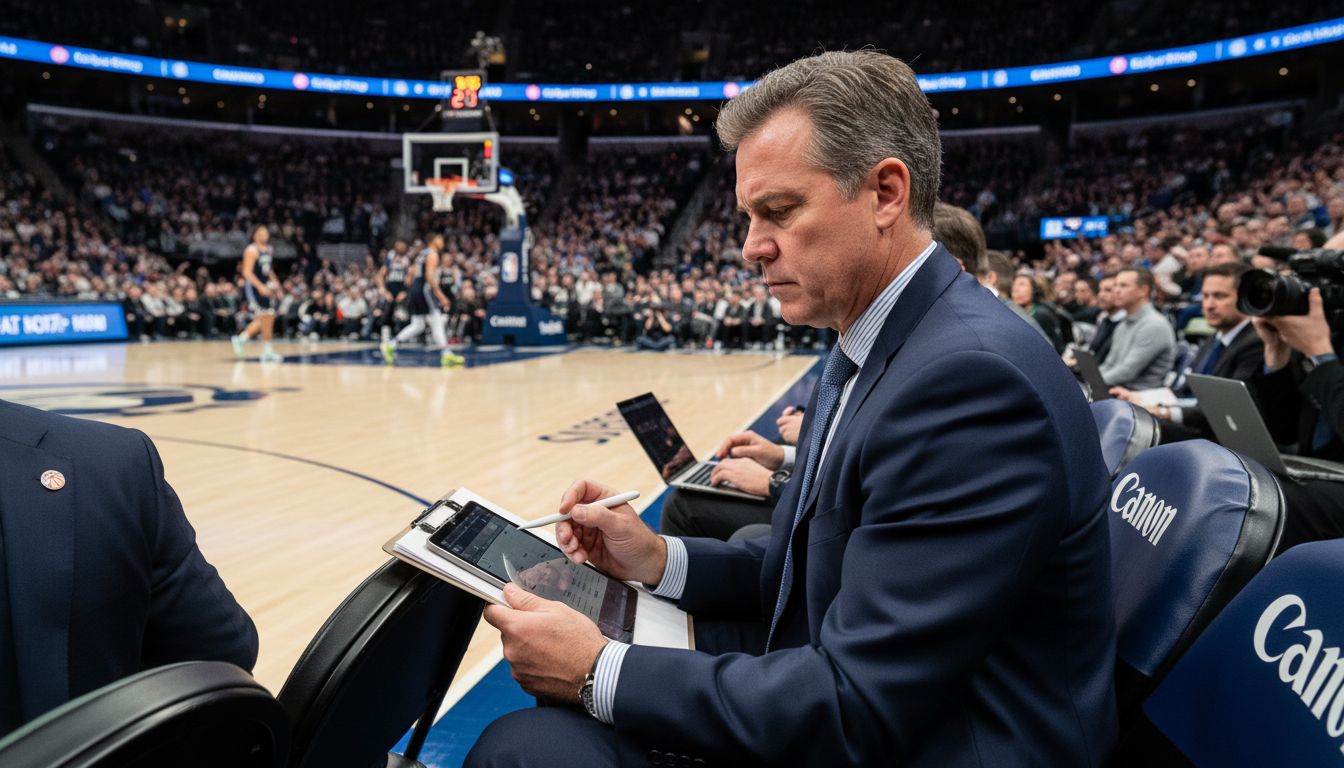
Basketball scouting is a strategic process of systematically observing and analyzing players and teams to uncover performance insights. According to arcjournals, scouting involves detailed observation to identify strengths, weaknesses, and critical player tendencies that can inform competitive strategies.
Traditionally, basketball scouting relied heavily on coaches’ intuition and personal experience. As ijke highlights, the field is now transitioning toward more objective, data-driven approaches that complement traditional qualitative assessments. Modern scouting integrates both human expertise and quantitative analysis to provide comprehensive player and team evaluations.
The core objectives of basketball scouting include:
- Identifying individual player capabilities
- Understanding team dynamics and strategies
- Discovering potential competitive advantages
- Developing targeted game plans
- Evaluating recruitment and player development opportunities
Effective scouting requires a multifaceted approach that combines visual observation, statistical analysis, and strategic thinking. Coaches and scouts must develop keen analytical skills to transform raw player data into actionable insights that can significantly impact team performance.
Types of Scouting: Player, Team, and Opponent
Basketball scouting encompasses three primary approaches: player, team, and opponent scouting. According to playsportsabroad, player scouting focuses on evaluating individual athletes for their potential recruitment, skill levels, and overall team compatibility.
Team scouting involves comprehensive analysis of a team’s collective performance, strategic patterns, and tactical approaches. Coachingclipboard highlights that opponent scouting goes beyond surface-level observations, diving deep into understanding playing styles, strategic tendencies, and potential vulnerabilities.
Let’s break down each scouting type:
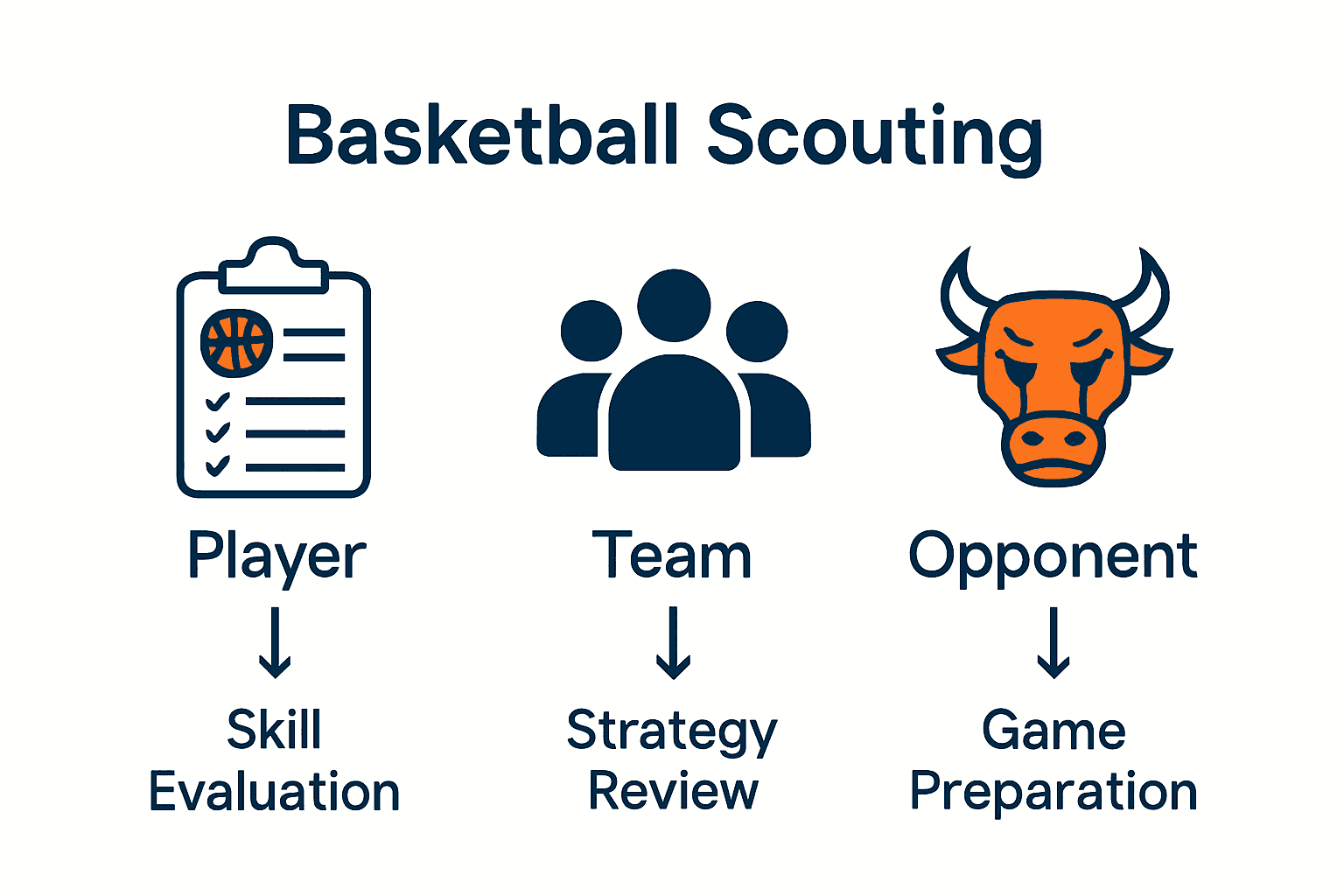
Here’s a summary of the three primary types of basketball scouting:
| Scouting Type | Main Focus | Key Objectives |
|---|---|---|
| Player Scouting | Individual athlete | Skill evaluation Potential assessment Team fit analysis |
| Team Scouting | Whole team performance | Strategy review Formation study Chemistry analysis |
| Opponent Scouting | Competing teams | Weakness identification Tactical planning Game preparation |
Player Scouting
- Evaluates individual athlete’s physical abilities
- Assesses technical skills and potential
- Determines player’s psychological attributes
- Analyzes compatibility with team dynamics
Team Scouting
- Examines overall team performance metrics
- Studies strategic formations and play patterns
- Identifies team strengths and collective weaknesses
- Monitors team chemistry and communication
Opponent Scouting
- Analyzes opposing team’s offensive and defensive strategies
- Studies key player interactions and roles
- Identifies potential tactical exploits
- Develops counter-strategies for game preparation
Check out our detailed opponent scouting checklist for coaches to enhance your strategic preparation and gain a competitive edge in basketball analysis.
How Scouting Processes Work in Practice
Basketball scouting transforms raw observations into strategic insights through a systematic and detailed approach. According to playcollegebasketball, the scouting process involves comprehensive analysis that goes beyond simple observation, encompassing detailed event documentation, play categorization, and creating informative video clips.
The scouting workflow typically follows a structured progression that combines multiple analytical techniques. Scouts and coaches begin by gathering comprehensive data through live game observations, video analysis, and statistical tracking. This initial information collection phase is crucial for building a nuanced understanding of player and team performance.
Key steps in the practical scouting process include:
- Data Collection
- Attend live games and tournaments
- Record detailed game footage
- Collect performance statistics
- Analyze individual and team metrics
- Analysis and Evaluation
- Break down player movements and techniques
- Identify strategic patterns
- Compare performance against benchmarks
- Assess potential and skill development
- Report Preparation
- Synthesize collected information
- Create visual and written reports
- Highlight key strengths and weaknesses
- Develop actionable recommendations
Learn more about creating comprehensive scouting reports with our guide on basketball evaluation criteria, which provides deeper insights into effectively analyzing player performance.
Essential Tools and Techniques for Coaches
Basketball coaching requires a sophisticated arsenal of tools and techniques to effectively scout and develop players. According to playcollegebasketball, key tools for effective scouting include advanced video analysis software that enables detailed event documentation, systematic play categorization, and creation of targeted performance clips.
The modern coaching toolkit combines technology with strategic observation techniques. Professional coaches leverage a range of digital and analytical resources to transform raw game data into actionable insights. This approach allows for comprehensive player assessment, tactical planning, and performance optimization.
Essential Scouting Tools:
- Video Analysis Software
- Statistical Tracking Platforms
- Performance Metrics Dashboards
- Game Footage Editing Tools
Critical Coaching Techniques:
- Systematic Game Observation
- Quantitative Performance Analysis
- Individual Player Skill Assessment
- Strategic Pattern Recognition
Technology Breakdown:
- Video Analysis Tools
- Performance Tracking Software
- Statistical Evaluation Platforms
- Collaborative Reporting Systems
Discover essential leadership tips for basketball coaches to enhance your strategic approach, providing comprehensive guidance for effective team management and player development.
Common Scouting Mistakes and How to Avoid Them
Basketball scouting requires precision and strategic observation to minimize critical errors that can compromise team performance. According to playcollegebasketball, avoiding common scouting mistakes involves ensuring comprehensive analysis through accurate event documentation and effective information organization.
The most prevalent scouting pitfalls often stem from subjective assessments, limited observation techniques, and insufficient data collection. Coaches and scouts must develop a systematic approach that balances qualitative insights with quantitative analysis to create comprehensive player and team evaluations.
Common Scouting Mistakes:
- Relying exclusively on personal bias
- Overlooking subtle player performance indicators
- Incomplete statistical tracking
- Inconsistent observation methodologies
Strategies to Mitigate Scouting Errors:
- Implement Multiple Observation Techniques
- Use Advanced Video Analysis Tools
- Develop Objective Assessment Frameworks
- Cross-Validate Performance Data
Key Improvement Areas:
- Enhance Data Collection Precision
- Standardize Evaluation Criteria
- Leverage Technology for Comprehensive Analysis
- Continuously Update Scouting Approaches
Explore our comprehensive guide on basketball scouting checklists to refine your approach and minimize potential assessment errors.
Take Your Basketball Scouting to the Next Level with Proven Tools
Understanding the complexities of basketball scouting can be overwhelming. The need to capture detailed player evaluations, identify team strategies, and prepare effective opponent scouting reports calls for precise organization and trusted systems. If you struggle with turning raw game observations into actionable insights or want to avoid common scouting mistakes, you are not alone. Many coaches face these challenges when trying to optimize recruitment and game preparation approaches.

Unlock clarity and confidence in your scouting process by exploring our collection of Basketball Templates designed specifically to support coaches in creating comprehensive and easy-to-use scouting reports. At Hoop Mentality, we offer practical resources developed through real coaching experience so you can save time, improve communication with your players, and focus on winning. Start transforming the way you scout today and bring systematic structure to your coaching strategy.
Frequently Asked Questions
What is basketball scouting?
Basketball scouting is the process of systematically observing and analyzing players and teams to gather insights on their performance, strengths, weaknesses, and tendencies. This information helps inform competitive strategies.
What are the main types of basketball scouting?
The three primary types of basketball scouting are player scouting, team scouting, and opponent scouting. Player scouting focuses on evaluating individual athletes, team scouting analyzes overall team performance, while opponent scouting examines competing teams’ strategies and weaknesses.
How does the basketball scouting process work in practice?
The basketball scouting process involves data collection through live game observations, video analysis, and statistical tracking. This data is then analyzed to evaluate player performance, strategic patterns, and develop comprehensive reports to inform coaching strategies.
What tools and techniques are essential for effective basketball scouting?
Essential tools for effective basketball scouting include video analysis software, statistical tracking platforms, and performance metrics dashboards. Key techniques involve systematic observation, quantitative performance analysis, and strategic pattern recognition.