

Most American high school basketball teams lose critical games due to incomplete scouting details. Coaches know that every competitive edge can make the difference between victory and defeat. Understanding how to define and use advanced scouting reports allows American coaches to transform scattered performance data into clear, actionable strategies. This guide reveals effective scouting methods, the types of reports available, and explains how to apply these tools for smarter game planning and stronger results throughout the season.
Table of Contents
- Defining Scouting Reports In Basketball
- Types Of Scouting Reports And Their Purposes
- How Scouting Reports Inform Game Strategy
- Creating Effective Player And Team Analyses
- Common Mistakes When Using Scouting Reports
Key Takeaways
| Point | Details |
|---|---|
| Comprehensive Analysis is Essential | Effective scouting reports require a blend of statistical metrics and qualitative observations to capture player and team dynamics. |
| Types of Scouting Reports Serve Specific Purposes | Different report types focus on individual players, team tactics, and opponent strategies to enhance game preparation. |
| Technology Enhances Scouting Efficiency | Advanced tools provide real-time analytics and in-depth performance tracking to inform game strategies. |
| Avoid Common Pitfalls | Coaches should balance quantitative data with qualitative insights to prevent incomplete assessments and misguided strategies. |
Defining Scouting Reports in Basketball
Basketball scouting reports are strategic documents that provide comprehensive insights into a team’s or player’s performance, strengths, weaknesses, and tactical tendencies. These detailed analytical tools help coaches develop targeted game plans by breaking down an opponent’s playing style and individual capabilities. Scouting reports represent a critical preparation mechanism that transforms raw player data into actionable coaching intelligence.
A well-constructed scouting report typically includes multiple layers of analysis, ranging from statistical performance metrics to psychological behavioral patterns on the court. Coaches examine key performance indicators like shooting percentages, defensive positioning, offensive play selections, and individual player tendencies. By systematically documenting these elements, coaches can identify potential strategic advantages and design defensive or offensive approaches that exploit an opponent’s specific vulnerabilities.
The most effective scouting reports go beyond simple statistical aggregation. They provide nuanced insights into player dynamics, team chemistry, and situational performance variations. Coaches analyze how players perform under different game pressures, their preferred shooting zones, defensive reaction times, and collaborative play patterns. Scouting templates help standardize this complex information gathering process, ensuring consistent and comprehensive evaluation across different opponents.
Pro tip: Develop a standardized scouting report template that allows for quick comparison and analysis across multiple teams and game scenarios.
Types of Scouting Reports and Their Purposes
Basketball scouting reports can be categorized into multiple specialized types, each serving a unique strategic purpose within team preparation and competitive analysis. Basketball scouting workflow typically involves developing comprehensive reports that provide coaches with actionable intelligence about potential opponents and team dynamics.
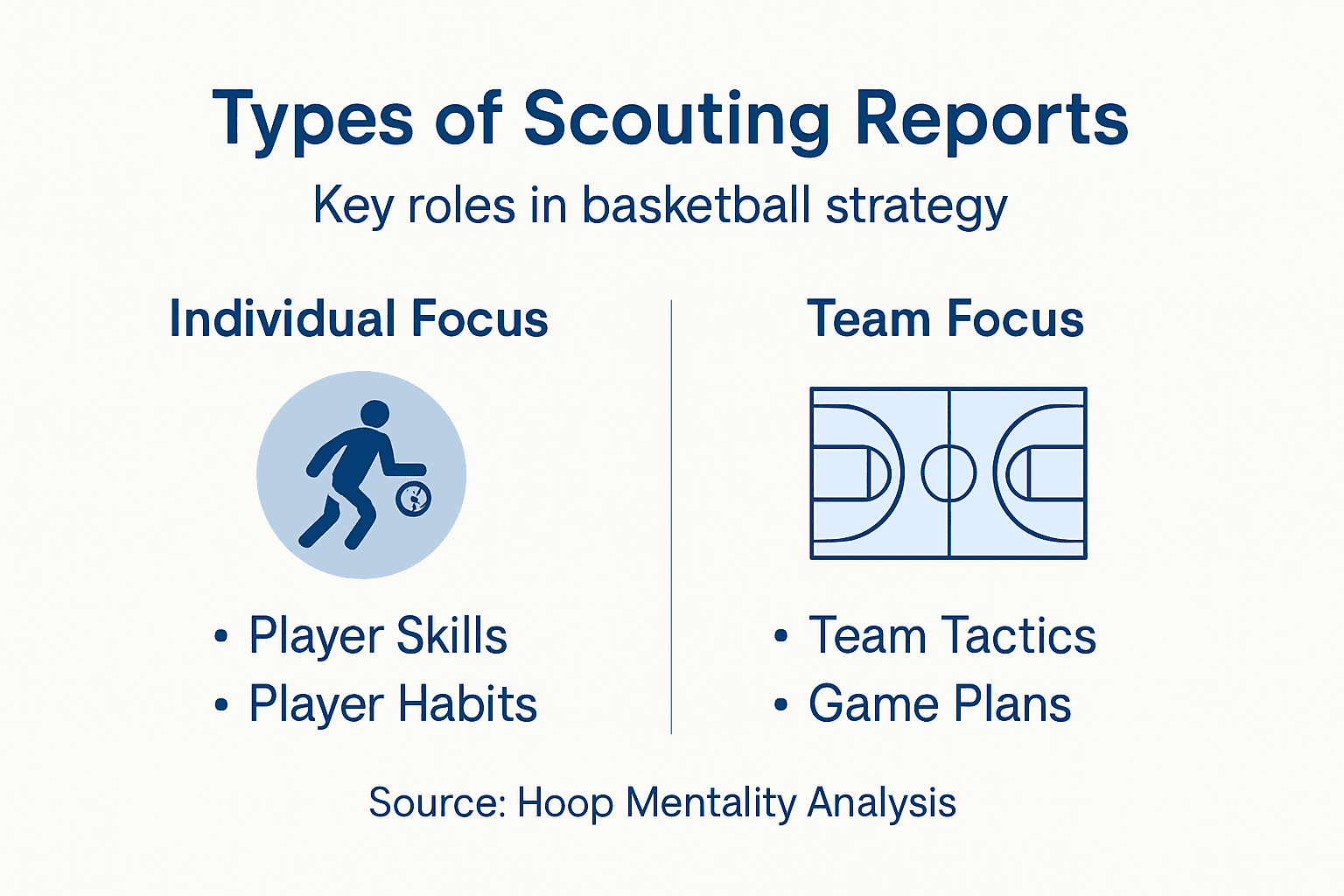
The primary types of scouting reports include individual player reports, team tactical analysis, opponent game strategy reports, and performance trend evaluations. Individual player reports focus on specific athlete capabilities, breaking down shooting percentages, defensive skills, psychological tendencies, and physical performance metrics. These granular assessments help coaches design targeted defensive strategies or exploit individual weaknesses during competitive matchups.
Team scouting reports provide a broader perspective, examining collective playing styles, offensive and defensive formations, substitution patterns, and overall strategic approaches. Coaches utilize these comprehensive documents to predict potential game scenarios, develop adaptive game plans, and prepare players for anticipated challenges. Scouting report checklists help ensure that no critical performance element is overlooked during the evaluation process, maintaining a systematic and thorough approach to competitive analysis.
Here is a summary of the main types of basketball scouting reports and their primary strategic focus:
| Report Type | Primary Focus | Tactical Benefit |
|---|---|---|
| Individual Player Analysis | Player skills and tendencies | Target specific matchups |
| Team Tactical Analysis | Group strategies and patterns | Prepare for systemwide trends |
| Opponent Strategy Report | Key play styles and tactics | Anticipate counter-moves |
| Performance Trend Review | Long-term strengths/weaknesses | Adjust training and lineups |
Pro tip: Create a standardized scouting report template that allows for quick comparative analysis across different teams and game scenarios, ensuring consistent and comprehensive evaluation.
How Scouting Reports Inform Game Strategy
Scouting reports transform raw data into actionable strategic insights that coaches use to design precise game plans and anticipate opponent behaviors. Basketball strategic planning relies heavily on these comprehensive analytical tools to identify potential competitive advantages and develop targeted defensive and offensive approaches.
The strategic value of scouting reports emerges through their ability to deconstruct complex team and player dynamics. Coaches analyze detailed metrics like shooting zones, defensive reaction times, offensive formation patterns, and psychological performance under pressure. By mapping these intricate performance characteristics, teams can develop adaptive strategies that exploit specific opponent weaknesses. For instance, understanding an opposing player’s preferred shooting angles or a team’s substitution patterns can inform critical in-game decisions about defensive assignments and offensive strategies.
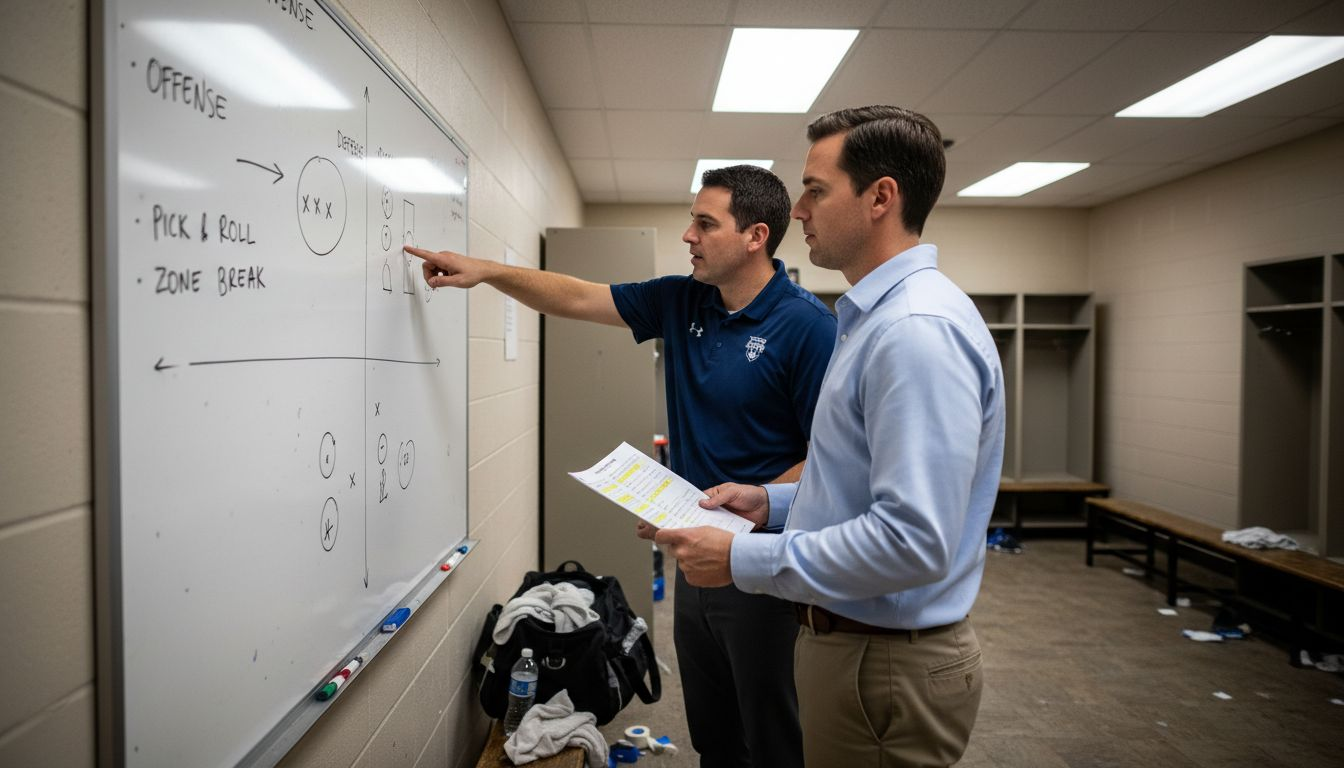
Technological advancements have significantly enhanced the depth and precision of scouting reports. Scouting tools now provide real-time data analytics, video breakdown capabilities, and advanced performance tracking that allow coaches to develop more nuanced and dynamic game strategies. These sophisticated analytical approaches enable coaches to move beyond traditional observation methods, creating predictive models that anticipate opponent behaviors with unprecedented accuracy.
Pro tip: Develop a dynamic scouting report system that continuously updates player and team performance data, allowing for real-time strategic adjustments during competitive matches.
Creating Effective Player and Team Analyses
Creating comprehensive basketball scouting analyses requires a systematic approach that combines quantitative data with nuanced performance observations. Player performance evaluation demands meticulous attention to both statistical metrics and contextual game dynamics that cannot be captured through numbers alone.
Effective analyses break down performance into multiple layers of investigation. Coaches must examine individual player capabilities through detailed metrics like shooting percentages, defensive positioning, physical endurance, and psychological resilience under competitive pressure. The most sophisticated analyses integrate tempo analysis, set play recognition, scoring intent, and defensive coverage patterns. This multilayered approach allows teams to develop targeted strategies that exploit specific opponent vulnerabilities while understanding the intricate interactions between individual player behaviors and team dynamics.
Basketball analytics have transformed traditional scouting methodologies by providing unprecedented depth of insight. Modern coaches leverage advanced tracking technologies, video breakdown tools, and sophisticated statistical models to create predictive performance profiles. These comprehensive analyses go beyond surface-level statistics, revealing complex patterns of player movement, decision-making sequences, and situational effectiveness that traditional observation methods could never capture. By synthesizing quantitative data with qualitative observations, coaches can develop more nuanced and adaptive game strategies.
Pro tip: Develop a standardized analysis framework that balances statistical metrics with contextual performance observations, ensuring a holistic understanding of player and team capabilities.
Common Mistakes When Using Scouting Reports
Coaches frequently encounter critical pitfalls when interpreting basketball scouting reports that can significantly undermine their strategic preparation. Scouting report techniques require careful analysis to avoid common errors that can lead to misguided game strategies and ineffective player management.
One of the most prevalent mistakes is overreliance on statistical data without contextual understanding. Coaches often mistakenly treat raw numbers as absolute truth, failing to recognize the nuanced circumstances behind performance metrics. For instance, a player’s shooting percentage might appear low, but this could result from being forced into difficult defensive situations or playing through injury. Confirmation bias can lead coaches to selectively interpret data that confirms their preexisting beliefs about a team or player, potentially overlooking critical performance indicators that challenge their initial assumptions.
Another significant error involves neglecting the human element in scouting reports. Quantitative data provides valuable insights, but it cannot fully capture a player’s psychological resilience, team chemistry, or adaptability under competitive pressure. Shot chart analysis represents just one dimension of player evaluation, and coaches who rely exclusively on technical metrics risk developing incomplete and potentially misleading game strategies. Effective scouting requires a holistic approach that balances statistical evidence with qualitative observations about player dynamics and team interactions.
The table below highlights crucial mistakes coaches make and the impact on team preparation:
| Scouting Mistake | Consequence | How to Avoid |
|---|---|---|
| Overreliance on statistics | Incomplete strategic adjustments | Analyze game context |
| Confirmation bias | Missed opponent strengths | Seek diverse perspectives |
| Ignoring human factors | Overlooking team chemistry issues | Include qualitative assessment |
| Misusing new technologies | Information overload or confusion | Focus on actionable insights |
Pro tip: Develop a balanced scouting approach that integrates quantitative metrics with qualitative insights, ensuring a comprehensive understanding of team and player performance.
Take Your Scouting Reports to the Next Level with Proven Basketball Templates
Creating detailed and actionable scouting reports is vital for winning basketball games. If you want to avoid common pitfalls like relying solely on statistics or missing key player tendencies, our Basketball Templates provide structured and easy-to-use solutions that help you organize and analyze player and team data effectively. These templates align perfectly with proven scouting strategies highlighted in the article, giving you the edge to develop thorough reports that translate into winning game plans.
Start transforming your scouting process today by exploring Hoop Mentality’s comprehensive resources. Visit our main site at Hoop Mentality to access expert-designed playbooks, scouting templates, and strategy guides created by real coaches. Don’t wait – build your winning edge now with practical tools that let you save time, improve communication, and focus on leading your team to victory.
Frequently Asked Questions
What is a basketball scouting report?
A basketball scouting report is a strategic document that provides insights into a team or player’s performance, strengths, weaknesses, and playing styles, helping coaches prepare effective game plans.
How can scouting reports help improve game strategy?
Scouting reports help coaches understand player tendencies, anticipate opponent behaviors, and develop targeted offensive and defensive strategies based on detailed performance metrics and observations.
What types of analysis are included in a scouting report?
A scouting report can include individual player analyses, team tactical evaluations, opponent game strategy reports, and performance trend assessments, providing a comprehensive view of strengths and weaknesses.
What common mistakes should coaches avoid when using scouting reports?
Coaches should avoid overreliance on statistics without context, confirmation bias, ignoring human factors like team chemistry, and misusing technology, as these can lead to misguided strategies.