

Over 60 percent of competitive basketball teams say that structured scouting is the difference between winning and falling short. Scouting is no longer about just watching tape, it is the backbone of smart preparation and tactical advantage in every match. When you know exactly what to look for and how to communicate those insights, you give your team the edge. This guide breaks down each critical step to help you build a sharper, more effective scouting workflow from start to finish.
Table of Contents
- Step 1: Define Scouting Objectives And Key Focus Areas
- Step 2: Gather Essential Opponent And Team Data
- Step 3: Analyze Player Tendencies And Tactical Patterns
- Step 4: Organize Scouting Findings Using Templates
- Step 5: Communicate Actionable Insights With The Team
- Step 6: Review And Update Scouting Workflow For Improvement
Quick Summary
| Key Point | Explanation |
|---|---|
| 1. Define clear scouting objectives | Establishing precise objectives helps coaches focus on relevant data and improve team performance effectively. |
| 2. Collect multidimensional data | Gather game footage, statistics, and player behaviors to create a thorough understanding of opponents and team dynamics. |
| 3. Analyze player tendencies systematically | Use pattern recognition to identify player behaviors and tactical sequences, optimizing strategies for games. |
| 4. Organize findings using templates | Implement structured templates to document and communicate scouting results clearly and cohesively. |
| 5. Continuously improve the scouting process | Regularly review and adapt your scouting methods to stay competitive and relevant to team needs. |
Step 1: Define scouting objectives and key focus areas
Defining clear scouting objectives sets the foundation for successful team preparation and strategic player evaluation. By establishing precise focus areas, coaches transform random observations into actionable intelligence that can dramatically improve team performance.
To create robust scouting objectives, start by identifying your team’s specific competitive landscape and strategic needs. Ask critical questions: What defensive weaknesses does our team need to address? Which offensive strategies might give us an competitive edge? Consider examining key elements of basketball scouting to help structure your initial approach.
Your scouting objectives should typically include comprehensive player assessments across multiple dimensions. Focus on evaluating individual player skills like shooting percentages, defensive capabilities, court awareness, physical conditioning, and psychological temperament. Create a systematic framework that allows consistent and objective player evaluation. For instance, develop rating scales for technical skills, mental resilience, and adaptability that can be applied uniformly across potential recruits or opponents.
Pro Tip: Always align your scouting objectives with your team’s long term strategic vision rather than getting lost in granular details.
Once your objectives are defined, you will be ready to move into the next critical phase of developing a comprehensive scouting workflow that transforms raw data into strategic insights.
Step 2: Gather essential opponent and team data
Gathering comprehensive data is the cornerstone of effective basketball scouting strategy. This critical phase transforms raw information into actionable insights that can give your team a competitive advantage by understanding potential strengths and vulnerabilities.
Start by collecting multidimensional data across several key areas. Analyze game footage of opponent teams to understand their playing patterns, offensive and defensive strategies, and individual player behaviors. How to write a basketball scouting report can provide additional guidance on systematic data collection. Examine statistical metrics like shooting percentages, turnover rates, player efficiency ratings, and performance under different game conditions. Track individual player characteristics such as speed, agility, court awareness, and psychological resilience.
Utilize multiple data collection methods to build a comprehensive profile.
 This might include video analysis, statistical tracking, live game observations, player interviews, and performance databases. Cross reference different sources to validate your findings and reduce potential biases. Create a standardized template that allows consistent and objective player and team evaluation.
Pro Tip: Technology is your ally. Leverage video analysis software and statistical tracking tools to streamline your data gathering process.
With your essential data gathered, you will be prepared to move into the next phase of analyzing and interpreting these insights to develop strategic game plans.
Step 3: Analyze player tendencies and tactical patterns
Analyzing player tendencies and tactical patterns transforms raw data into strategic insights that can significantly impact your team’s competitive edge. By understanding the nuanced behaviors and performance patterns of individual players and teams, coaches can develop targeted strategies that exploit potential weaknesses.
Research from arXiv reveals that basketball games can be effectively analyzed as dynamic networks, allowing coaches to cluster players based on their unique playing styles and performance characteristics. Start by breaking down individual player movements, shot selection, defensive positioning, and energy expenditure. According to advanced spatio-temporal analysis techniques, examine how players interact within offensive and defensive schemes, tracking metrics like shooting angles, pass completion rates, defensive pressure points, and transition speed.
Develop a systematic approach to pattern recognition by creating visual mapping and statistical models. Utilize advanced tensor decomposition methods to identify prototype patterns in player behaviors. Look for recurring tactical sequences, individual player preferences under pressure, and team coordination dynamics. Understanding the role of scouting templates can help standardize your analytical approach and ensure comprehensive player assessment.
Pro Tip: Combine quantitative data with qualitative observations to create a holistic understanding of player tendencies.
With a comprehensive analysis of player tendencies complete, you are now prepared to translate these insights into actionable strategic recommendations.
Step 4: Organize scouting findings using templates
Organizing scouting findings systematically transforms complex player and team data into actionable strategic insights. A well-structured template ensures that critical information is captured, analyzed, and easily communicated across your coaching staff.
Begin by selecting a comprehensive basketball scouting report template that allows for detailed and consistent documentation. Develop sections that capture key performance indicators such as individual player statistics, tactical tendencies, strengths, weaknesses, and psychological profiles. Organize your findings into clear categorical sections that enable quick reference and strategic planning.
Create a standardized scoring or rating system within your template to quantify player and team characteristics objectively. This might include numerical ratings for skills like shooting accuracy, defensive positioning, court awareness, and mental resilience. Use visual elements like charts, graphs, and color coding to enhance information comprehension. Ensure your template is flexible enough to accommodate diverse player styles and evolving team dynamics.
Pro Tip: Design your template with collaboration in mind. Make it easily shareable and digestible for all coaching staff members.
With your scouting findings meticulously organized, you are now prepared to develop targeted strategies that leverage your comprehensive player and team analysis.
Step 5: Communicate actionable insights with the team
Effective communication of scouting insights transforms complex data into strategic team understanding. Your goal is to translate detailed analysis into clear, motivating guidance that players can immediately apply on the court.
According to Fatih Akser, translating scouting reports into actionable game plans requires a nuanced approach to team communication. Begin by presenting insights through interactive team meetings where you break down complex data into digestible segments. Use visual aids like video clips, statistical graphics, and comparative charts to illustrate player tendencies and strategic opportunities. Highlight specific scenarios where understanding opponent patterns can create competitive advantages.
Develop a communication strategy that balances technical details with motivational storytelling. Handle potential team conflicts proactively by framing scouting insights as opportunities for improvement rather than criticism. Create personalized feedback mechanisms that allow players to engage with the data, ask questions, and contribute their own observations. Encourage open dialogue that transforms scouting insights from passive information to an active collaborative process.
Pro Tip: Customize your communication approach for different player personalities. Some respond better to visual data, while others prefer verbal explanations.
With insights effectively communicated, your team will be prepared to implement strategic adjustments and maximize their competitive potential.
Step 6: Review and update scouting workflow for improvement
Continuous improvement of your scouting workflow is essential for staying competitive and adapting to evolving team dynamics. This final step transforms your scouting process from a static procedure into a dynamic system of ongoing refinement and learning.
Understanding basketball evaluation criteria provides a framework for systematic workflow assessment. Begin by conducting a comprehensive review of your scouting approach. Analyze the effectiveness of your data collection methods, template design, communication strategies, and strategic insights. Schedule regular retrospective meetings with your coaching staff to discuss what worked well and identify areas that need enhancement.
Develop a feedback loop that integrates insights from players, assistant coaches, and performance data. Use an editable scouting report template that allows for flexible modifications based on your evolving understanding. Create metrics to quantify the impact of your scouting insights on team performance. Track how your strategic recommendations translate into actual game results, player development, and competitive advantages.

Pro Tip: Treat your scouting workflow as a living document. Be willing to discard approaches that no longer serve your team and embrace innovative techniques.
By committing to continuous improvement, you will build a robust scouting system that adapts and grows with your team’s unique needs and potential.
Elevate Your Scouting Workflow with Proven Basketball Templates
If you are striving to turn detailed scouting data into winning strategies you know how essential it is to organize your findings clearly and communicate insights effectively. The challenges of aligning scouting objectives with tactical analysis and player tendencies demand tools that save time and enhance precision. With Hoop Mentality’s Basketball Templates - Hoop Mentality you gain access to professional-grade scouting report templates designed to simplify data collection and streamline your workflow.
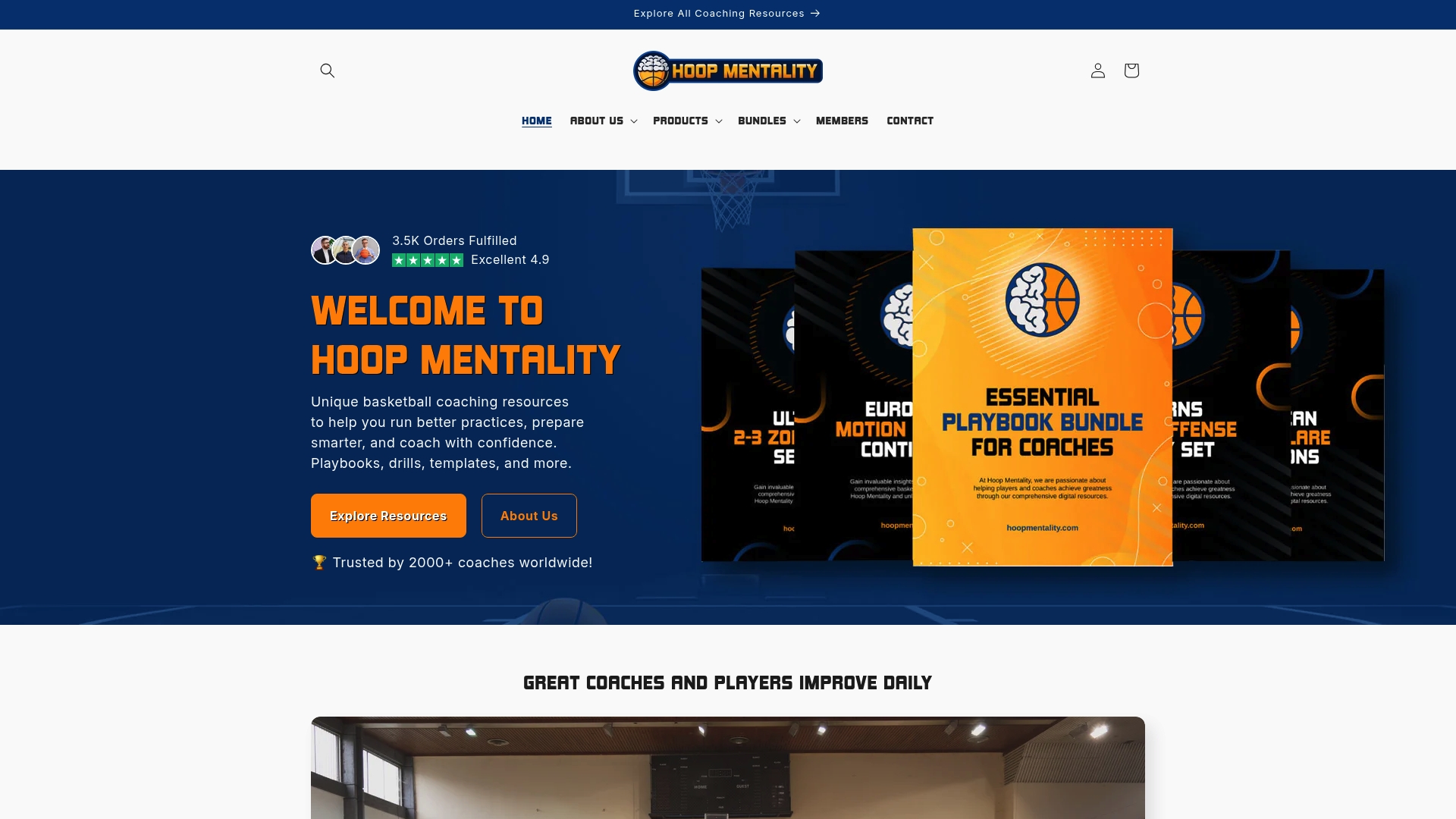
Start implementing structured scouting processes today. Visit Hoop Mentality to explore resources that support your entire coaching journey. Combine our templates with targeted Basketball Drills - Hoop Mentality to prepare your team thoroughly. Take action now to transform complex scouting insights into clear tactical advantages your players can trust on game day.
Frequently Asked Questions
What are the key objectives for a basketball scouting workflow?
Defining clear objectives for your basketball scouting workflow involves identifying specific needs related to both your team and opponents. Start by evaluating your team’s strengths and weaknesses and set measurable goals, such as improving shooting accuracy by 10% over the season.
How can I collect essential data on opposing teams effectively?
Gather essential data by analyzing game footage and statistics of your opponents. Track specific metrics such as shooting percentages and turnover rates, and combine this information with live game observations to create a comprehensive profile in less than two weeks.
What should be included in a basketball scouting report template?
A basketball scouting report template should include sections for player statistics, tactical tendencies, and strengths and weaknesses. Create a standardized format that allows for clear categorization, ensuring all relevant information is documented for easy access during game preparation.
How can I communicate scouting insights to my team?
Effectively communicate scouting insights by presenting them in interactive team meetings using visual aids like video footage and statistics. Focus on specific scenarios that highlight potential advantages, enabling players to grasp the information quickly and apply it during practice and games.
How often should I review and update my scouting workflow?
Regularly review and update your scouting workflow at least once per month to enhance its effectiveness. Schedule retrospective meetings with your coaching staff to assess what’s working and make adjustments based on team performance data from recent games.
Recommended
- What Is Basketball Scouting? Complete Overview – Hoop Mentality
- How To Write A Scouting Report For Basketball - Hoop Mentality
- 7 Key Elements of a Basketball Scouting Checklist – Hoop Mentality
- Basketball Scouting Report Template - Hoop Mentality
- How to Coach Sales Teams for Predictable Growth
- How to Improve Teamwork for Success in College and Work – Optio Station: Best Project Management App for Prioritization