

Coaches wrestling with scouting report formats often find themselves overwhelmed by conflicting advice and unclear standards. Selecting the right scouting report directly impacts team preparation quality and game-day performance. This article cuts through the confusion by exploring four practical scouting report types, complete with real examples and clear usage guidelines. You’ll discover which format best fits your team level, resources, and tactical goals, enabling smarter preparation decisions.
Table of Contents
- How To Choose The Right Scouting Report: Key Selection Criteria
- Example 1: Basic Player-Focused Scouting Report
- Example 2: Comprehensive Team Tendencies Report
- Example 3: Digital Video-Integrated Scouting Report
- Example 4: Advanced Analytics NBA-Style Scouting Report
- Comparing Scouting Report Types: Strengths, Weaknesses, And Best Uses
- Implementing Scouting Reports In Team Preparation
- Conclusion And Situational Recommendations
- Enhance Your Coaching With Hoop Mentality Resources
Key Takeaways
| Point | Details |
|---|---|
| Concise reports win | Most coaches prefer reports under 5 pages for better usability and retention. |
| Balance matters | Effective reports blend player-specific insights with team-level tactical analysis. |
| Video boosts retention | Video-integrated scouting reports improve information retention by 30%. |
| Analytics for elite teams | Advanced statistical reports suit professional and top college programs with specialist resources. |
| Match report to level | Your team’s competitive tier and available resources should guide your scouting report choice. |
How to Choose the Right Scouting Report: Key Selection Criteria
Selecting a scouting report starts with understanding what makes a report truly useful. The best reports stay under five pages, delivering actionable intelligence without overwhelming coaches or players. This length constraint forces clarity and prioritization, ensuring every detail serves a purpose.
Your report must balance team and player analysis. Team-level insights reveal offensive sets, defensive schemes, and substitution patterns, while player-specific observations highlight individual strengths, weaknesses, and tendencies. This dual perspective equips you to craft targeted game plans and make real-time adjustments.
Format dramatically affects usability. Paper reports suit coaches with limited technology access, while digital formats enable faster updates and easier distribution. Video-enhanced reports provide visual context that text alone cannot match, though they demand more sophisticated tools.
Adapt data complexity to your team level. Youth teams benefit from simple qualitative observations focusing on fundamental tendencies. Professional programs leverage deep statistical analysis with shot charts, efficiency metrics, and lineup data. Mismatching complexity to team maturity wastes preparation time and confuses players.
Pro Tip: Start with qualitative reports focusing on three to five key observations per opponent. As your process matures, gradually layer in quantitative data that directly supports tactical decisions.
Implementing structured scouting report strategies improves consistency across your program. Standardized templates ensure scouts capture the same categories, making cross-game comparisons easier and revealing opponent patterns over time.
- Keep reports under 5 pages for optimal player retention
- Include both offensive and defensive analysis
- Match data depth to team skill level
- Update reports within 48 hours of viewing game film
- Distribute digitally when technology allows
Example 1: Basic Player-Focused Scouting Report
The basic player-focused report serves coaches operating with minimal resources or working with younger teams. This format centers on qualitative observations about three to five key opponent players, describing their offensive tendencies, defensive habits, and situational behaviors.
Each player profile runs one paragraph, highlighting specific strengths to exploit and weaknesses to attack. Observations stay descriptive rather than statistical. You might note that an opponent’s point guard prefers right-hand drives or struggles finishing through contact. These insights emerge from careful film study rather than complex data collection.
Basic player-focused reports rely on manual updates, making them perfect for coaches without analytics software. You watch film, take notes, and compile observations into a simple document. This approach fits youth basketball programs, recreational leagues, and coaching situations with limited scouting staff.
The simplicity becomes an advantage. Players grasp concrete observations faster than abstract statistics. Telling your defender that an opponent shoots poorly going left provides immediately actionable intelligence. The report’s brevity means players remember key points during games.
- Focus on 3 to 5 opponent players maximum
- Use descriptive language over numbers
- Highlight tendencies players can exploit immediately
- Update after each film session
- Print copies for players without devices
This format works best for high school teams and below, where opponent scouting stays relatively straightforward and players benefit from focused, digestible preparation materials.
Example 2: Comprehensive Team Tendencies Report
Comprehensive team tendency reports shift focus from individual players to collective tactical patterns. These reports analyze how opponents organize offensively, defend different actions, substitute players, and control game tempo. The format suits high school varsity programs and college teams seeking deeper strategic preparation.
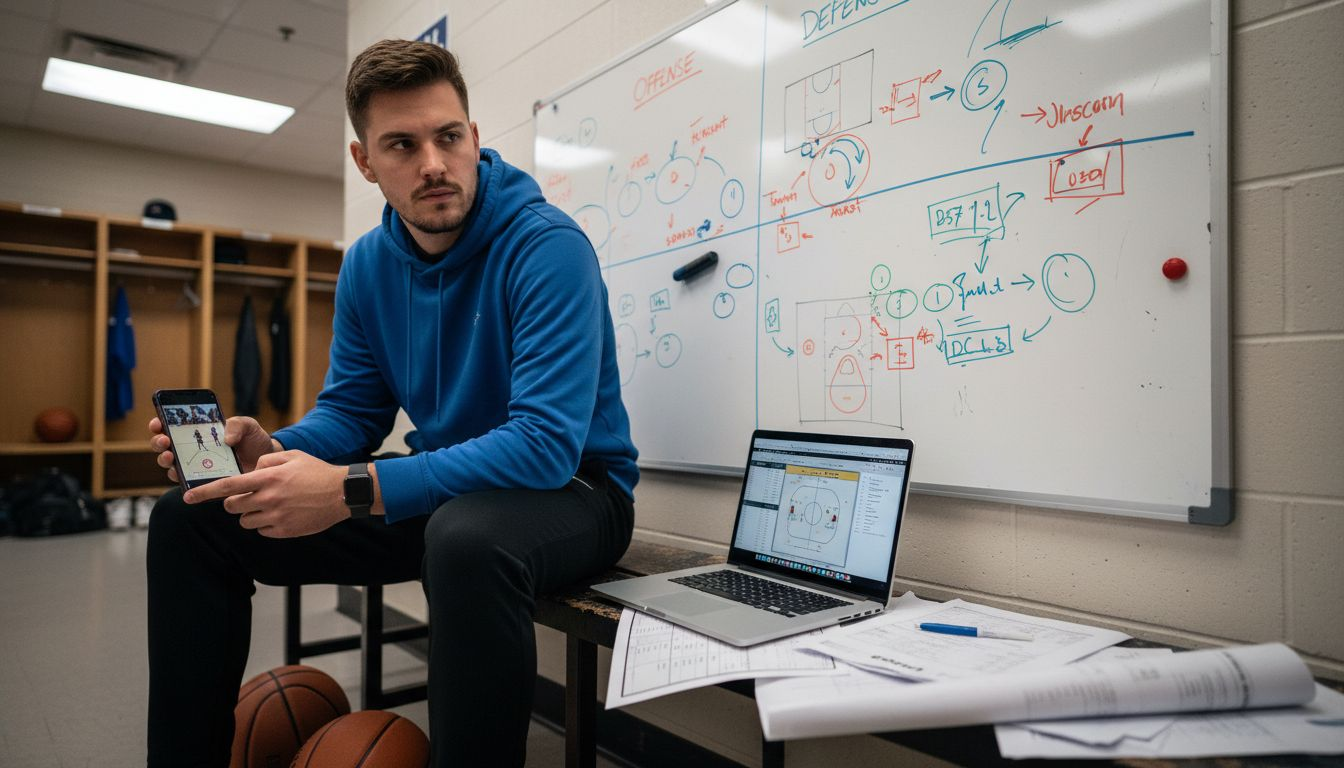
Your report details the opponent’s primary offensive sets, including favorite plays out of timeouts and late-game actions. Defensive analysis covers base schemes, pick-and-roll coverages, transition strategies, and how opponents adjust to different offensive looks. Team tendency reports document substitution rotations, revealing which lineups opponents trust in critical moments.
This intelligence directly informs game planning. Knowing an opponent runs zone defense after made baskets lets you prepare specific zone attacks. Recognizing their reliance on one ball handler in clutch situations suggests defensive pressure strategies. The depth enables tactical flexibility during games.
The report balances team patterns with key player information, creating context for individual observations. Understanding that an opponent’s offense flows through high post actions makes their power forward’s passing ability more significant. This integrated view produces smarter tactical adjustments.
- Document 3 to 5 primary offensive sets
- Identify base defensive scheme and adjustments
- Track substitution patterns by game situation
- Note tempo preferences and pace control tactics
- Connect team strategies to individual player roles
College assistant coaches typically maintain these reports, updating them after each opponent game throughout the season. The format requires more time investment than player-focused reports but delivers strategic advantages justifying the effort.
Example 3: Digital Video-Integrated Scouting Report
Digital video-integrated reports revolutionize scouting by embedding film clips directly alongside written observations. Rather than describing an opponent’s ball screen defense in words, you link a video compilation showing their actual coverage. This visual evidence accelerates understanding and improves retention.
Coaches using video reports typically organize clips by category: offensive sets, defensive schemes, out-of-bounds plays, and individual player tendencies. Each clip includes brief text annotations highlighting what to notice. Players watch targeted film segments rather than scanning full games, making preparation more efficient.
Research confirms video clips increase retention by 30% compared to text-only reports. Visual learning strengthens memory and helps players recognize game situations faster. The format particularly benefits teams facing unfamiliar opponents or complex tactical systems.
Implementing digital video-integrated scouting requires technology infrastructure. You need video editing software, cloud storage for sharing files, and devices for players to access materials. Many college programs and well-resourced high school teams now operate video-first scouting workflows.
Pro Tip: Keep individual video clips under 30 seconds and group similar actions together. Players absorb patterns better from multiple short examples than single long sequences.
- Embed 10 to 15 video clips per report
- Organize clips by offensive, defensive, and special situations
- Add text annotations highlighting key details
- Share via cloud platforms for easy access
- Update video libraries throughout the season
The format works exceptionally well for college programs and above, where coaches have video coordinators and players possess devices for reviewing materials independently.
Example 4: Advanced Analytics NBA-Style Scouting Report
Professional teams and elite college programs employ analytics-driven reports featuring deep statistical analysis and data visualizations. These reports move beyond basic stats into shot chart analysis, player efficiency ratings, lineup combination performance, and synergy data tracking every play type.
Advanced reports analyze over 50 data points, including shooting percentages by court zone, defensive ratings against specific actions, and plus-minus figures for different lineup combinations. Visual displays like shot charts reveal spatial patterns invisible in traditional box scores. Heat maps show where opponents generate the most efficient offense.
This data depth requires specialized software and trained analysts. NBA teams employ full-time video coordinators and analytics staff who generate reports for coaching staffs. The investment produces granular insights that create competitive edges, especially when opponents lack similar analytical capabilities.
Analytics reports deliver specific tactical recommendations grounded in statistical evidence. Data might reveal an opponent shoots 28% on contested threes but 41% on open attempts, suggesting aggressive closeout strategies. Lineup analysis identifies which opponent combinations struggle defensively, indicating optimal times to attack.
| Metric Category | Data Points Tracked | Strategic Application |
|---|---|---|
| Shooting efficiency | Field goal % by zone, shot types | Defensive positioning priorities |
| Player tracking | Speed, distance, touches | Pace control and matchup decisions |
| Lineup performance | Plus/minus, offensive/defensive rating | Substitution timing strategies |
| Play type analysis | Pick-and-roll, isolation, transition | Scheme adjustments and coverage rules |
These reports suit teams competing at the highest levels where marginal advantages determine outcomes. The complexity overwhelms lower-level programs lacking resources to interpret and apply advanced metrics effectively.
Comparing Scouting Report Types: Strengths, Weaknesses, and Best Uses
Each scouting report format offers distinct advantages and limitations. Basic player-focused reports excel in simplicity and accessibility, requiring minimal technology and preparation time. Their limitation lies in narrow scope, missing team-level tactical insights crucial for strategic game planning.
Comprehensive team tendency reports provide strategic depth ideal for competitive high school and college programs. They balance tactical analysis with player information, supporting sophisticated game planning. The weakness emerges in production time and the risk of overwhelming younger players with excessive detail.
Video-integrated reports dramatically improve information retention and pattern recognition. Players grasp concepts faster when seeing actual examples rather than reading descriptions. The barrier sits in technology requirements and the time needed to edit and organize video content properly.
Advanced analytics reports deliver the deepest insights available, revealing patterns invisible to traditional observation. Professional teams gain measurable competitive advantages through data-driven decision making. The prohibitive factor involves cost, requiring expensive software subscriptions and specialist staff to generate and interpret reports.
| Report Type | Best For | Key Strength | Main Limitation |
|---|---|---|---|
| Player-focused | Youth and beginner coaches | Simple, quick to create | Limited tactical scope |
| Team tendencies | High school and college | Strategic depth | Time-intensive preparation |
| Video-integrated | College programs | 30% better retention | Technology requirements |
| Advanced analytics | Professional and elite college | Data-driven precision | High resource cost |
Your choice depends on three factors: team competitive level, available resources, and tactical sophistication needed. Youth teams benefit most from simple player observations. High school varsity programs gain advantages from team tendency analysis. College teams should explore video integration. Professional programs must invest in comprehensive analytics platforms.
- Match report complexity to player development level
- Consider available technology and staff resources
- Prioritize formats you can update consistently
- Start simple and add complexity as processes mature
Implementing Scouting Reports in Team Preparation
Producing quality scouting reports means nothing without effective implementation. Integration into regular team meetings ensures players absorb and apply the intelligence you’ve gathered. Schedule dedicated film sessions where you review key report sections, connecting observations to specific game situations.
Structured presentation improves understanding. Present offensive scouting first, then defensive, followed by special situations. This sequence mirrors game flow, helping players mentally organize information. Limit each session to 20 to 30 minutes, maintaining focus and preventing information overload.
Research shows structured report reviews improve tactical understanding by 40% compared to informal preparation. Systematic presentation creates shared understanding across your team, enabling coordinated defensive rotations and offensive execution.
Balance detail carefully. Overloading players with excessive information creates confusion rather than clarity. Focus on three to five key tactical points players can realistically execute during games. Save deeper analysis for coaching staff discussions about adjustments and strategic options.
Digital distribution accelerates preparation. Share reports via team apps or cloud storage so players review materials independently before meetings. This approach transforms team sessions into interactive discussions rather than passive information dumps. Players arrive prepared with questions, deepening engagement.
- Distribute reports 48 hours before games
- Schedule 20 to 30 minute structured review sessions
- Focus on 3 to 5 key tactical priorities
- Connect scouting points to practice drills
- Update reports after viewing fresh film
- Collect player feedback on report usefulness
Effective implementation of scouting workflows separates programs that scout from programs that use scouting strategically. The discipline to maintain consistent processes delivers compounding advantages throughout seasons. Teams can apply similar systematic approaches to remote team management when coordinating distributed coaching staffs.
Conclusion and Situational Recommendations
Choosing the right scouting report format transforms preparation from guesswork into systematic competitive advantage. Youth and developing programs should start with basic player-focused reports emphasizing simple observations players can immediately apply. These reports build foundational scouting habits without overwhelming limited resources.
High school and college teams benefit from comprehensive team tendency reports that enable sophisticated game planning and tactical adjustments. The strategic depth justifies increased preparation time for programs competing at higher levels where tactical execution determines outcomes.
Video-integrated formats suit college programs and above with technology infrastructure supporting digital workflows. The proven retention benefits make the investment worthwhile for teams facing complex opponents or preparing for high-stakes competitions.
Advanced analytics reports remain the domain of professional and elite college programs with dedicated analyst staff and substantial budgets. The granular insights create measurable edges but require organizational commitment beyond most programs’ capabilities.
Your resources and competitive goals must guide the final decision. Start where your current capabilities allow, then evolve your scouting process as your program develops. Consistent execution of a simpler system outperforms sporadic attempts at sophisticated approaches beyond your capacity.
Enhance Your Coaching with Hoop Mentality Resources
Building effective scouting processes requires proven templates and systematic workflows that save preparation time while improving output quality. Hoop Mentality provides professional coaching resources specifically designed to streamline your team preparation and elevate strategic planning.
Discover why scouting templates accelerate your workflow and ensure consistency across your coaching staff. Access our detailed basketball scouting checklist covering the seven essential elements every report should include.
Implement battle-tested scouting workflow systems that guide you from film breakdown through game-day execution. These practical tools equip coaches at every level to prepare teams with confidence, save countless hours, and focus energy on developing players and winning games.
FAQ
What are the main differences between traditional and digital scouting reports?
Traditional reports rely on paper formats or static PDF documents containing text descriptions and basic statistics. Digital reports incorporate embedded video clips, hyperlinked content, and interactive elements that update easily. Digital formats enable faster distribution and improve player retention through visual learning, though they require technology infrastructure traditional reports avoid.
How often should scouting reports be updated for optimal use?
Update reports within 48 hours after viewing recent opponent game film to capture fresh insights while details remain clear. During competitive seasons, weekly updates maintain accuracy as opponents adjust strategies and rotations. More frequent updates benefit playoff preparation when facing the same opponent multiple times in short windows.
Can video-integrated scouting reports be used at youth levels?
Video reports generally suit college programs and above due to editing software requirements and player device access. Simple video compilations work at youth levels if kept extremely brief and focused. However, basic qualitative reports typically serve younger players better, avoiding technological complexity that may overwhelm developing basketball understanding.
What is the best scouting report type for a new coach?
Basic player-focused reports using qualitative observations provide the ideal starting point for new coaches. Focus on identifying three to five key opponent players and noting their primary tendencies in simple descriptive language. This approach builds scouting fundamentals without requiring specialized software or extensive film study experience. Complexity can increase as your process matures.
Recommended
- Scouting Report Strategies for Winning Basketball – Hoop Mentality
- Importance of Scouting Reports in Basketball Success – Hoop Mentality
- How to Create Scouting Reports for Winning Basketball Teams – Hoop Mentality
- 6 Scouting Report Essentials Every High School Coach Needs – Hoop Mentality
- 7 Ways Sports Sweatshirts Elevate Everyday Style – ChillStitchApparel