

TL;DR:
- A structured player development workflow includes goal setting, assessment, skill work, film review, and feedback.
- Flexibility and ongoing adjustments are essential to adapt to player progress and prevent stagnation.
- Integrating on-court practice, film study, physical training, and feedback creates effective player growth systems.
Without a clear player development workflow, practice time slips away fast. Coaches at every level face the same challenge: players plateau, sessions feel scattered, and progress is hard to measure. A structured workflow changes that. NBA programs show that consistent systems, from film to individual skill work, drive real improvement. This guide breaks down how to build, organize, and troubleshoot a player development workflow that actually works, so you can run better practices, develop stronger players, and compete with confidence.
Table of Contents
- Core components of a successful player development workflow
- How to plan and organize your development sessions
- Integrating skill acquisition: On-court, off-court, and film study
- Troubleshooting: Common workflow pitfalls and how to fix them
- Why rigid routines hold most teams back
- Take your workflow further with Hoop Mentality tools
- Frequently asked questions
Key Takeaways
| Point | Details |
|---|---|
| Structure builds consistency | A clear workflow ensures no practice time is wasted and everyone knows their role. |
| Adaptability matters | Elite workflows are flexible enough to adjust for player needs and progress. |
| Regular feedback accelerates growth | Ongoing assessment and feedback are key to unlocking each player’s potential. |
| Blend training types | The best results come from integrating court skills, strength, and film study. |
Core components of a successful player development workflow
A workflow is only as strong as its parts. Before you can build one, you need to know what belongs in it.
Elite programs don’t leave development to chance. NBA workflows include pregame routines, film sessions, individual skill work managed by dedicated coaches, and year-round systems that extend into the offseason. Staff like Rico Hines with the Sixers oversee these processes and adapt sessions to each player’s learning style, whether that’s film-based, live reps, or hands-on feedback. That level of personalization is what separates good programs from great ones.
You don’t need an NBA budget to apply these principles. Start with these core components:
- Goal setting: Define clear, measurable targets for each player every month.
- Assessment: Use physical and skill benchmarks to track where players stand.
- Physical training: Build strength, speed, and conditioning into every week.
- Mental training: Include focus routines, confidence work, and pressure simulation.
- Film review: Make video a regular part of feedback, not an afterthought.
- Feedback loops: Give players structured input after every session.
Building pregame routines into your workflow also reinforces consistency. Players who follow predictable routines perform more reliably under pressure.
| Workflow component | Primary impact |
|---|---|
| Film sessions | Pattern recognition and tactical awareness |
| Individual skill drills | Technical improvement and muscle memory |
| Physical conditioning | Speed, endurance, and injury prevention |
| Structured feedback | Faster correction and player accountability |
| Goal setting | Direction, motivation, and measurable progress |
Pro Tip: Start with one or two predictable routines before adding complexity. Consistency builds accountability, and accountability builds momentum.
For a broader view of how to structure your entire season around these components, explore this season planning workflow that maps out the full calendar.
How to plan and organize your development sessions
Knowing the components is step one. Organizing them into sessions that actually move players forward is where most coaches get stuck.
Start with readiness. Research on youth basketball benchmarks across 234 players found that U16 athletes outperform U15 peers in jump height, while U15 players show greater mass and height advantages. Multidimensional tests including sprint, agility, and functional movement screens give you real data to work with. Age and maturity matter. Design sessions around where players actually are, not where you want them to be.
Here’s a simple process to follow:
- Set session goals. Pick one to three specific skills to target per session.
- Assess current level. Use benchmarks or quick tests to confirm readiness.
- Design the session. Match drills to skill gaps and energy levels.
- Schedule and sequence. Order activities from activation to peak intensity to cool-down.
- Review and adjust. After each session, note what worked and what didn’t.
This process keeps sessions purposeful. Every drill has a reason. Every rep connects to a goal.
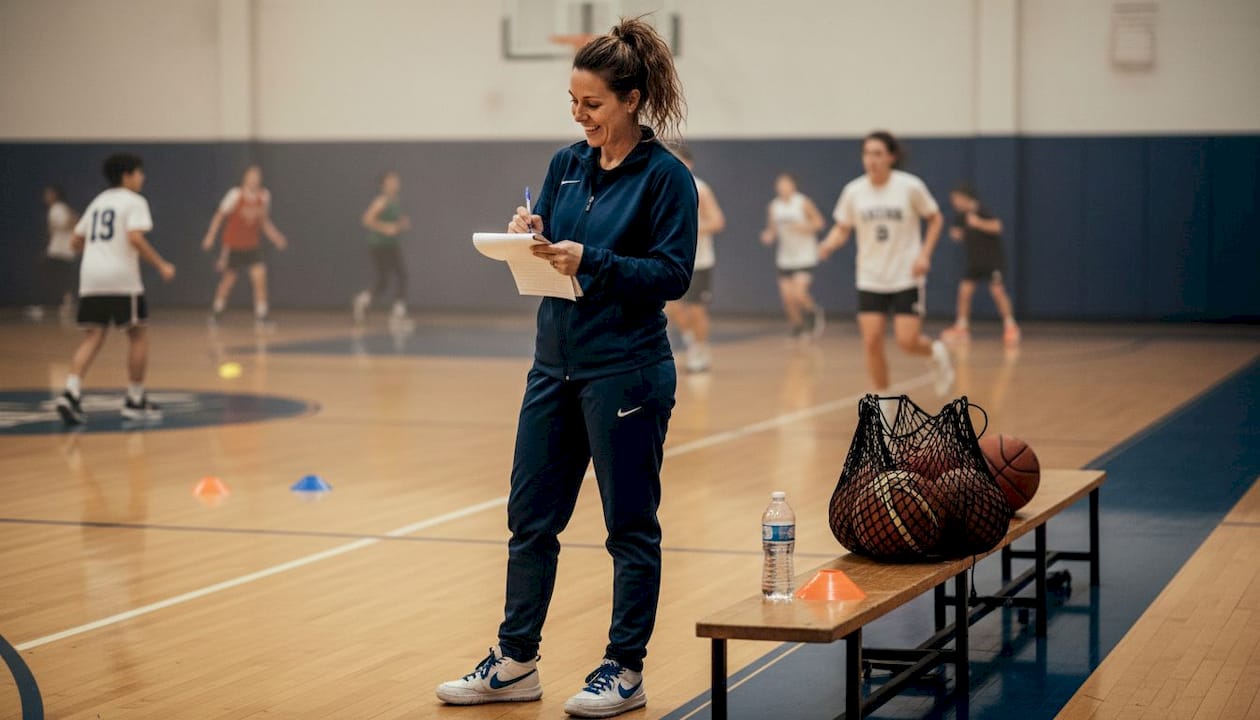
Not every team needs the same format. Here’s a quick comparison:
| Format | Best for | Limitation |
|---|---|---|
| Fixed template | Beginners and youth teams | Less adaptable to individual needs |
| Modular workflow | Mixed skill groups | Requires more planning time |
| Individualized sessions | Advanced or elite players | Resource and time intensive |
For practical player development tips that apply across skill levels, those resources can help you fill in the gaps between planning and execution.
Pro Tip: Rotate your drills and physical tests every four weeks. Fresh challenges keep players engaged and give you cleaner data on actual improvement.
You can also layer in a scouting workflow to connect individual development with team preparation, especially as you approach competition.
Integrating skill acquisition: On-court, off-court, and film study
Once your sessions are mapped out, the next challenge is making sure all the pieces work together. On-court work, conditioning, and film study should reinforce each other, not compete for time.
Here’s what a complete skill acquisition plan includes:
- On-court skill drills: Shooting, ball handling, footwork, and defensive positioning.
- Strength and conditioning: Functional movement, explosiveness, and recovery protocols.
- Film sessions: Breakdown of game footage and individual mechanics.
- Feedback routines: Immediate post-drill corrections and weekly review meetings.
Elite programs adapt this mix based on where each player is in their development. Pro workflows scale individualization through personal coaches, adaptive learning formats, and pregame simulation drills. That means a player who learns best through film gets more screen time. A player who needs live reps gets more floor time.
“The best development systems don’t force players into one mold. They identify how each player learns and build the workflow around that.”
For your team, blending live and film-based feedback is practical and effective. Use film study tips to structure your video sessions around specific cues, not just general review. Show players exactly what to look for.
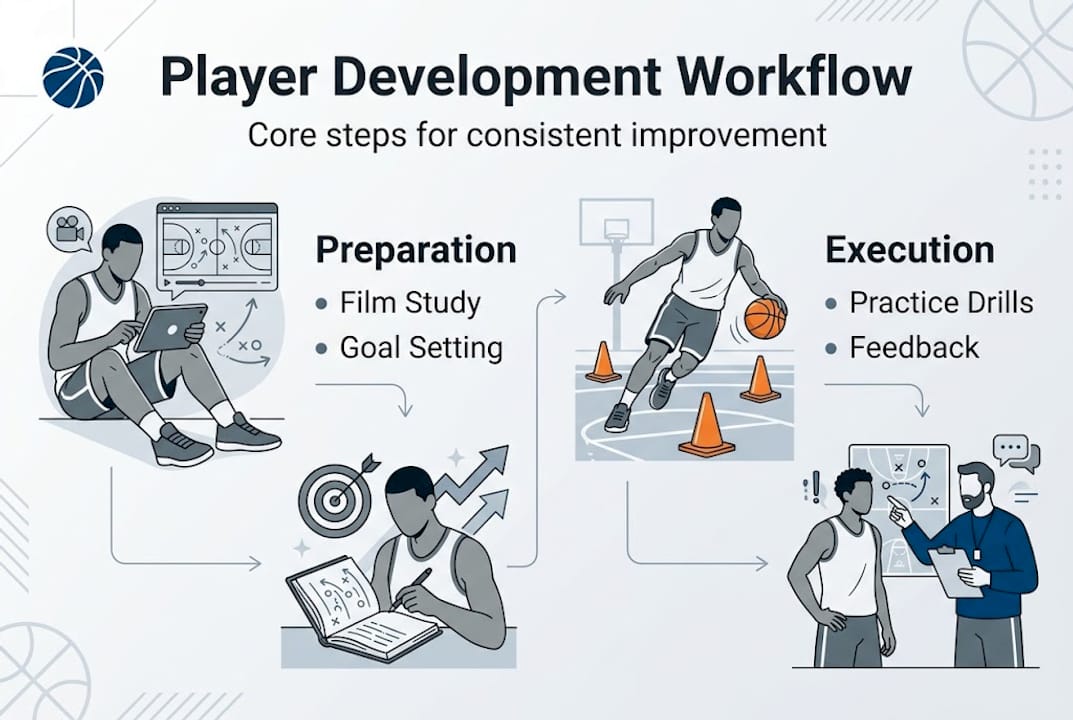
Encourage player ownership too. When athletes can self-evaluate using film or a simple checklist, they develop faster. Self-reflection is a skill. Teach it early.
Building in structured player feedback methods also keeps communication clear and consistent. Players who understand why they’re doing something buy in more completely.
Troubleshooting: Common workflow pitfalls and how to fix them
Even a well-built workflow breaks down. Knowing the warning signs early saves you weeks of lost development time.
Here are the most common mistakes coaches make:
- Overloading players: Too many skills targeted at once leads to shallow learning.
- Skipping fundamentals: Rushing to advanced concepts before basics are solid creates bad habits.
- No feedback structure: Players repeat errors when corrections aren’t timely or specific.
- Ignoring motivation: Burned-out players don’t improve, no matter how good the plan is.
- Workflow drift: Sessions slowly shift away from the original plan without anyone noticing.
Shooting mechanics are a good example of where drift causes real damage. Elite shooting form relies on a quad load through ankles, knees, and hips, a kinetic chain that starts from the ground up, a high arc around 45 degrees, and a smooth one-motion release. When coaches skip these fundamentals or let players develop sloppy habits early, fixing them later takes three times as long.
For cultural or motivational breakdowns, the fix is usually simpler than it looks. Reset expectations. Revisit goals with players directly. Make sure they understand the purpose behind each drill.
Pro Tip: Use a session checklist and short video review at the end of each week. Catching workflow drift early, before it becomes habit, keeps your system on track.
For a structured approach to building these habits from the ground up, these skill progression tips walk through how to sequence development across age groups and skill levels.
Why rigid routines hold most teams back
Here’s the uncomfortable truth: the coaches who follow their workflow too strictly often get worse results than those who stay flexible.
Structure matters. But structure that never changes stops serving the players and starts serving the plan. NBA workflows adapt continually, using player feedback and real-time assessment to shift priorities. The Sixers don’t run the same development sessions in March that they ran in October. The team has changed. The players have changed. The workflow should too.
The best programs build core habits and then stay open to adjusting the method. Repetition builds skill. But excessive repetition without reflection builds stagnation.
“A great workflow is a living document. Review it, challenge it, and update it. The goal is player growth, not process loyalty.”
Prioritize learning over routine. When a drill stops producing results, replace it. When a player needs something different, give it to them. Flexibility within structure is what separates teams that develop players from teams that just run them through drills.
For ideas on how to keep development fresh during the off-season, these summer development strategies offer a practical starting point.
Take your workflow further with Hoop Mentality tools
Building a strong player development workflow takes the right structure and the right tools. Hoop Mentality has both.
Our practice plan template gives you a ready-made framework you can customize for any session, any skill level, and any team size. No more starting from scratch. If you’re working with big men and want to add targeted skill work, the Big Man Dual Action Drill is built specifically for post development and dual-action movement patterns. Both resources are designed to save you time and help you run more effective practices starting today.
Frequently asked questions
What are the stages of a successful player development workflow?
Key stages include assessment, goal setting, targeted training, feedback, and continual re-evaluation. NBA development staff like Rico Hines use all five stages to manage individual player progress throughout the season.
How often should coaches adjust their workflow?
Review and adjust your workflow monthly, or sooner if player progress plateaus. Pro workflows use adaptive learning and frequent check-ins to keep development on track.
What’s the most common mistake in player development workflows?
The biggest mistake is relying on rigid routines without building in individualized feedback. NBA staff continually adapt sessions based on each player’s needs and progress.
How can film study be included in a development workflow?
Schedule film sessions weekly and tie them directly to on-court drills for reinforcement. NBA teams use film breakdown as a standard part of individual player development, not just team prep.