

Every high school basketball coach knows the chaos that can creep in once the season starts and the games pile up. Balancing team development, academic demands, and ever-changing rosters can quickly overwhelm even seasoned coaches. That is why having structured planning tools is essential for turning uncertainty into clear, actionable steps. This guide offers practical strategies for assessing team needs, setting measurable goals, and staying organized so you can lead your team confidently through every stage of the season.
Table of Contents
- Step 1: Assess Team Needs And Set Seasonal Goals
- Step 2: Map Out Key Dates And Build Season Calendar
- Step 3: Develop Progressive Practice Plans
- Step 4: Implement Scouting And Game Preparation Systems
- Step 5: Monitor Progress And Adjust Workflow
Quick Summary
| Main Insight | Detailed Explanation |
|---|---|
| 1. Conduct a Thorough Team Assessment | Evaluate player skills and identify gaps to set measurable seasonal goals. This forms the foundation for your coaching plan. |
| 2. Build a Strategic Season Calendar | Create a comprehensive calendar that includes practice dates, game schedules, and recovery periods to stay organized and prepared. |
| 3. Develop Progressive Practice Plans | Structure practices to gradually increase complexity and intensity, ensuring skills are built systematically over the season. |
| 4. Implement Effective Scouting Systems | Analyze opponents thoroughly to create targeted game plans that exploit weaknesses and enhance player confidence during matches. |
| 5. Monitor Team Progress Regularly | Track performance metrics and adjust practices based on player development and game outcomes to keep the team aligned with goals. |
Step 1: Assess Team Needs and Set Seasonal Goals
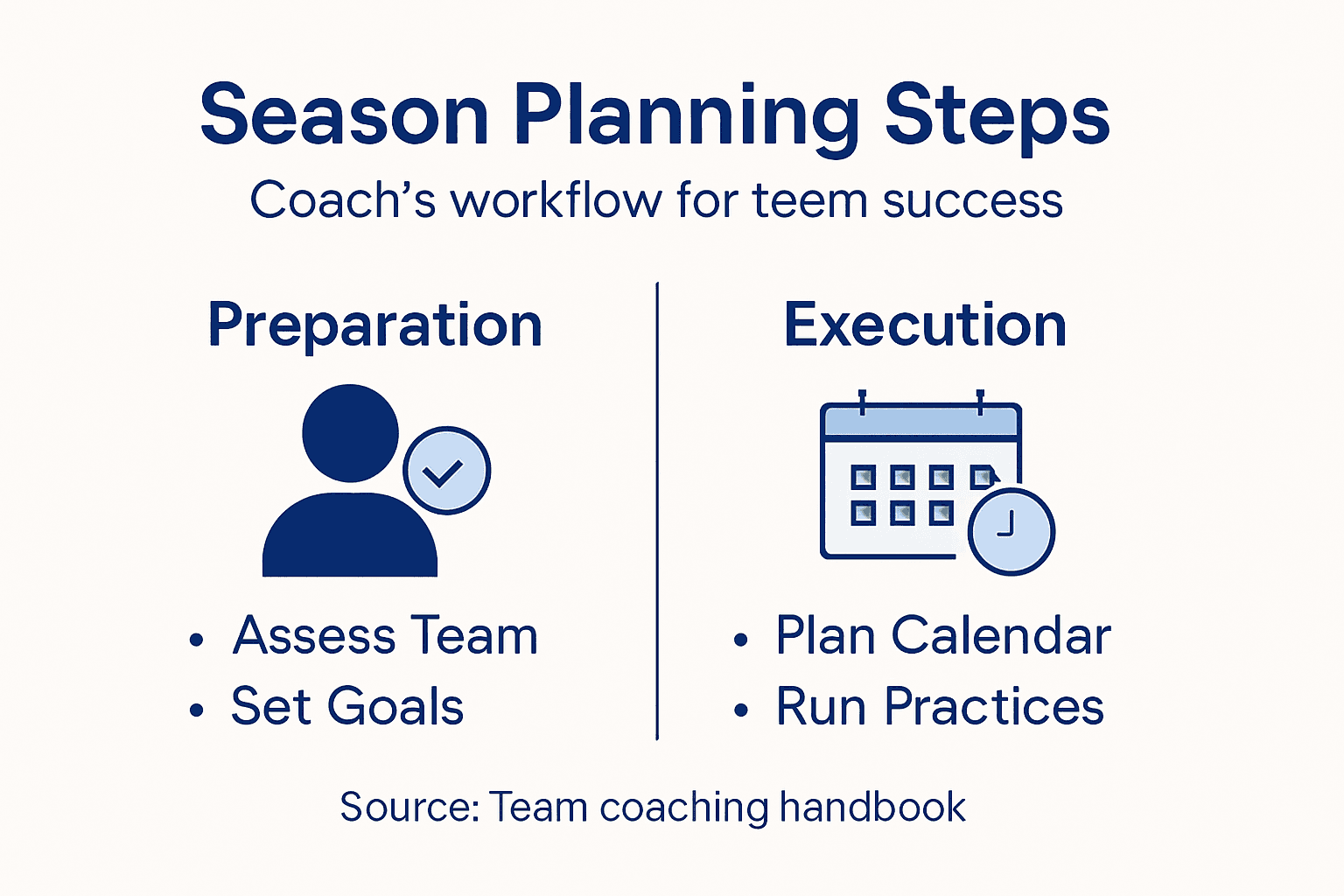
Before you draw up a single play or schedule your first practice, you need to know exactly what your team is working with and where you want to go. This step establishes the foundation for everything that follows. You’ll conduct an honest assessment of your current roster, identify skill gaps, and translate those findings into specific, measurable goals that will drive your entire season.
Start by evaluating your roster with brutal honesty. Watch game film from last season if this is a returning group, or organize individual skill assessments during tryouts if you’re building a new team. Look beyond just scoring ability. Assess ball handling, defensive footwork, basketball IQ, rebounding positioning, and how players move without the ball. Document which players excel in transition, half-court sets, or specific defensive schemes. Are your guards capable shooters? Can your big men step out and defend on the perimeter? Do you have natural leaders or do you need to develop leadership skills across the roster? This inventory becomes your baseline. The research on coach education programs emphasizes that assessing both team and player needs is essential when setting technical and tactical development goals that maximize competitive performance.
Once you understand your personnel, identify the gaps between where you are and where you need to be. Maybe your defensive intensity is strong but offensive execution is inconsistent. Perhaps you have scoring depth but struggle with transition defense. You might have five solid players but limited bench production. These gaps become your priority areas for development. From there, build your seasonal goals around addressing these gaps while leveraging your strengths. Research shows that specific, measurable, and attainable goals provide direction and motivation while fostering accountability and team unity. Your goals should include both outcome goals like winning your conference or reaching playoffs, and performance goals like shooting 42 percent from three or holding opponents to under 65 points per game. Include skill development goals too. Maybe every player needs to improve free throw shooting by 5 percent, or your guards need to average fewer turnovers per game. Break these into monthly or quarter-season targets so you can track progress and adjust your practice focus as needed.
Create a written document outlining your assessment and goals. Share it with your coaching staff to ensure everyone understands the plan and can reinforce it daily. More importantly, communicate these goals to your players in language they understand. Let them know what you observed during assessment, what you expect to improve, and how their individual development connects to the team’s success. When players understand the why behind your coaching decisions, they buy in faster and work harder to achieve those targets.
Pro tip: Schedule your team needs assessment during the offseason or immediately after your final game, then revisit your goals every month and adjust them based on actual progress and changing circumstances rather than sticking rigidly to goals that no longer fit your team’s reality.
Step 2: Map Out Key Dates and Build Season Calendar
With your team assessment and seasonal goals defined, you now need to create the calendar that will guide your entire season. Building a season calendar is about much more than marking game dates. You’re creating a strategic document that allocates your practice time, accounts for important dates and events, and ensures you can progressively develop your team toward your goals. A well-constructed calendar keeps everything aligned and prevents you from scrambling at the last minute.
Start by gathering all your fixed dates. List every game your team will play, including non-conference games, league games, playoff dates, and tournament schedules. Add institutional dates too like exam weeks, school breaks, holidays, and any athletic department events where your team must participate. Mark your preseason window so you know exactly how many practices you have before competition begins. Include any mandatory strength and conditioning sessions, team travel days, or special meetings. Once you have these dates plotted, you can see your actual practice windows and identify potential problems early. Maybe you have three games in four nights during mid-season, which means your practice intensity that week needs to shift. Or perhaps exam week falls right before playoffs, requiring adjustments to your training load. Identifying these conflicts now lets you plan around them rather than react in the moment.
Now build your practice structure around these dates. Most coaches organize their season into phases. Your preseason typically runs two to four weeks before your first game and focuses on conditioning, team building, and establishing fundamental systems. Early season practices emphasize game preparation as you face opponents while still developing. Mid-season often involves higher game volume with fewer total practices, so your sessions must become more efficient and targeted. Late season practices during playoffs tend to be shorter and more tactical, focusing on opponent-specific preparation and maintaining player health. Within each phase, establish weekly themes. One week you might emphasize defensive principles, the next offensive movement patterns. This prevents your team from spinning in circles and gives structure to your progression. Consider using basketball season planning tips to determine which areas deserve focus during specific windows. Plot individual player development timelines too. Which players need conditioning work early? When will bench players get significant playing time? When can you experiment with different lineups? These details belong in your calendar alongside game schedules.
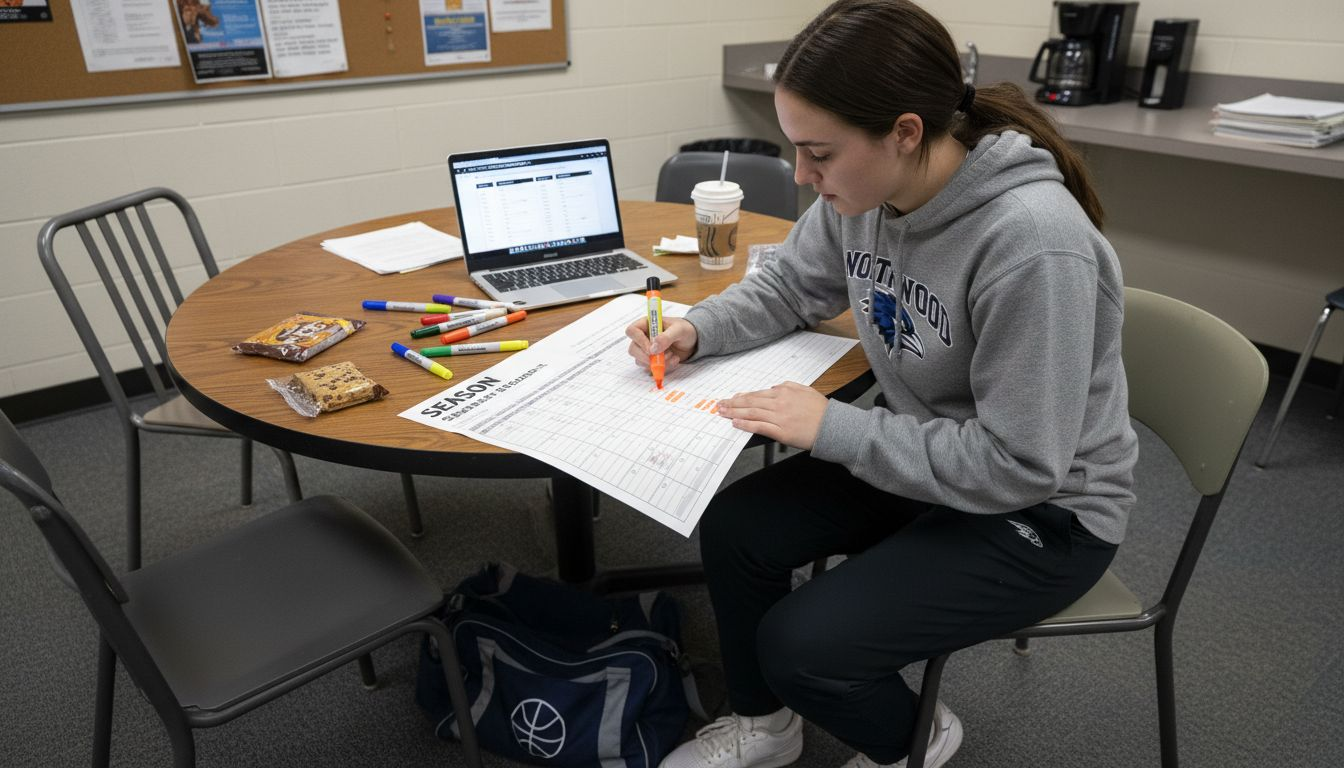
Translate your calendar into a document everyone can access. Digital calendars like Google Calendar work well because players, parents, and assistant coaches can all see updates simultaneously. Color coding helps. Use one color for games, another for practices, another for rest days, and another for special events. Include practice start times, location details, and any special instructions. Post this in your locker room and send it to your team. Transparency about scheduling reduces confusion and shows your players that you have a clear plan. The calendar becomes a communication tool that reinforces your organizational competence.
One final step matters tremendously. Build recovery and rest into your calendar intentionally. Mark designated days off where no basketball activities happen. Overtraining leads to injuries and burnout, especially in high school programs where players often handle heavy academic loads alongside athletics. Your calendar should reflect realistic expectations about human fatigue and recovery needs. A well-balanced calendar actually increases your chances of reaching your goals because your team stays healthy and mentally fresh.
Here’s a comparison of common practice plan phases and their primary focus:
| Phase | Main Focus | Sample Activities |
|---|---|---|
| Preseason | Conditioning & Team Bonding | Running drills, icebreakers |
| Early Season | Systems & Game Prep | Installing offense/defense |
| Mid-Season | Efficiency & Refinement | Shorter, targeted practices |
| Late Season | Tactics & Recovery | Opponent scouting, rest days |
Pro tip: Build your season calendar three months before your season starts, then review it with your coaching staff monthly and adjust dates as needed based on team performance, injuries, or unforeseen scheduling conflicts rather than assuming your initial plan will remain perfect throughout the season.
Step 3: Develop Progressive Practice Plans
Your calendar is set and your goals are clear. Now comes the work that actually develops your team. Progressive practice plans are the daily blueprint for turning your seasonal vision into reality. Each practice builds on the previous one, gradually increasing complexity and intensity while systematically addressing the skill gaps you identified during your team assessment. Without this progression, players practice in circles without clear development, and you waste valuable time.
Start by understanding that practice progression works like a pyramid. Your foundation consists of fundamental skill development and basic system execution. Early in the season, especially in preseason, you dedicate significant time to footwork, spacing, ball handling, and defensive stance. These fundamentals must be automatic before players can execute complex plays under pressure. As the season progresses and your team grasps these basics, you layer in complexity. You add game-speed movement, multiple defensive looks, and situational variations. By mid-season, your team operates within systems rather than learning them. Late season practices assume your team knows the fundamentals and systems, so you spend time on opponent-specific adaptations and maintaining execution under fatigue. This progression only works when each practice connects logically to the one before it. Consider using basketball practice structure guidance to understand how to organize individual sessions within your larger progression.
Within this broader progression, build each week around a theme. During your first preseason week, emphasize conditioning and team chemistry alongside basic offensive principles. Week two might focus on defensive principles and team communication. Week three could introduce your primary offensive sets. By establishing these themes, players know what to expect and can mentally prepare. Your drills align with your theme rather than jumping randomly between topics. A themed approach also helps assistant coaches understand your vision. When everyone knows this week is about transition defense, all three assistant coaches can reinforce that message across different drill groups. Players feel the intentionality behind your planning, which increases their buy-in and effort.
Structure each individual practice around the principles of effective practice planning. Start with a warm up that includes dynamic stretching and low-intensity basketball movement. Follow with a skill development block where you teach or refine specific techniques related to your weekly theme. Then run competitive drills that apply those skills under pressure. Include scrimmage or game-situation work that replicates what players will face during competition. End with a cool down and a clear communication moment where you reinforce the day’s focus and preview what comes next. This structure works because it moves from simple to complex, individual to team, and controlled to competitive.
Track what happens in each practice. Keep simple notes about which drills worked well, which players showed improvement, and where the team still struggles. These observations become gold when planning next week’s practice. Maybe your guards struggled with pick and roll defense, so next week you dedicate extra time to that. Perhaps a young player showed unexpected improvement in ball handling, suggesting you can increase her role sooner than you anticipated. Progressive practice plans aren’t rigid blueprints carved in stone. They’re living documents that adjust based on what you actually observe.
Pro tip: Write your practice plans at least three days in advance so you have time to gather equipment, print handouts, and brief your assistant coaches, rather than scrambling to design practice the morning of or winging it based on whatever feels right that day.
Step 4: Implement Scouting and Game Preparation Systems
Your practice progression prepares your team to execute. Now you need to prepare them for specific opponents. Effective scouting and game preparation systems transform your team from generalists into specialists ready for each opponent’s unique tendencies. Without this work, your team plays the same way against every opponent regardless of matchups or tactical challenges. With strong scouting, your players understand what to expect and feel confident executing your counters.
Start by establishing a scouting routine that fits your schedule and resources. You don’t need expensive software or film breakdown specialists. Most coaches can handle opponent analysis by watching game film and taking notes on key patterns. Focus on what actually matters for your team. Watch their primary offensive sets and how they attack your expected defensive schemes. Identify their best scorers and how they get their shots. Notice their transition triggers and whether they push pace or play grind it out basketball. Check their defensive tendencies. Do they press or play straight half-court defense? Do they go under screens or play tight defense? How do they attack pick and rolls? Structured scouting report strategies help you organize this information so you’re not swimming in random observations. Take notes as you watch, but keep them organized by topic rather than chronologically. This makes it easier to spot patterns. Watch at least two complete games if possible. One game might be an anomaly due to matchups or personnel, but two games show you their actual system and tendencies.
Translate your scouting into a game plan that addresses opponent strengths while exploiting weaknesses. If their best scorer operates in pick and rolls, how will you defend that action? If they struggle against full court pressure, is that worth implementing? Will adjusting your offense create better matchups against their defense? According to coaching research, structured assessment and tactical preparation ensures optimal performance during competition. Your game plan should be clear enough that your players understand it without overcomplicating it. Three to five key adjustments is better than ten. Maybe you’re switching pick and rolls, playing two defenders on their top scorer, and running a specific offensive set that attacks their weakest defender. Your players can remember and execute three things. They’ll forget ten.
Communicate your game plan before game day. Walk through opponent tendencies during practice that week. Show film clips of their key plays. Simulate what your team will see on offense and defense. Practice executing your counters against scout teams that mimic opponent spacing and movement. By game time, your players have seen the opponent’s actions multiple times in controlled settings. When they see those actions in the actual game, they recognize them immediately and execute your prepared response. This confidence translates into better execution and composure during competition. Don’t wait until game day to teach your game plan. Players learn better when they see film, practice the adjustments, and sleep on the information before executing against the actual opponent.
Keep film and scouting notes organized in a system you can access quickly. Whether you use a notebook, a digital folder, or a dedicated app, you need to find information without searching for an hour. After the season ends, you’ll have video and notes on every opponent. Next year when you face that team again, you’ll reference what you learned last season rather than starting from scratch. This continuity saves enormous time and helps you identify how opponents have evolved.
Pro tip: Assign scouting responsibilities to your assistant coaches so one person isn’t watching film every night, then meet for 30 minutes to share observations and build your game plan together, which distributes the workload and brings diverse perspectives to your preparation.
Step 5: Monitor Progress and Adjust Workflow
You’ve set goals, built your calendar, designed progressive practices, and prepared for opponents. Now comes the part that separates successful coaches from those stuck in mediocrity. Monitoring your actual progress against your plan and adjusting accordingly keeps your season moving forward. Without this feedback loop, you’re following a plan that may no longer fit your team’s reality.
Start tracking the metrics that matter to your seasonal goals. If your goal was shooting 42 percent from three, track your team’s actual shooting percentage in every game. If you wanted to limit turnovers, log how many turnovers you committed each game. Track defensive field goal percentage allowed. Count assist to turnover ratios. Monitor individual player development too. Which players are improving? Which ones are struggling despite extra work? Effective monitoring systems require tracking individual and team performance during both practice and games while adjusting coaching strategies based on what the data reveals. Create a simple spreadsheet or notebook where you record these numbers weekly. You don’t need sophisticated analytics software. A basic tracking system helps you see trends over weeks rather than overreacting to single games. Maybe your three-point shooting is at 38 percent after four weeks instead of your 42 percent goal, but you’re trending upward. That’s different from being stuck at 35 percent and getting worse. One situation requires patience and continued execution. The other requires intervention.
Beyond statistics, assess your practices honestly. Are drills accomplishing what you intended? If you dedicated three weeks to transition defense and your team still leaks buckets in transition, something isn’t working. Maybe the drills aren’t difficult enough. Maybe your players don’t understand the concepts. Maybe you need a different approach. Pay attention to which players thrive in practice versus which ones struggle. Sometimes a practice drill reveals that a backup guard is further along than you realized, suggesting earlier playing time is warranted. Other times you discover that your starting five needs extra fundamental work that you hadn’t planned. Your practice observations should inform your lineup decisions and practice adjustments. Talk to your assistant coaches about what they’re seeing. They observe different drill groups and notice things you might miss. Create a culture where adjusting the plan based on evidence is smart coaching, not failure. Coaches who stick rigidly to their original plan even when evidence shows it isn’t working frustrate their players and waste time.
Communicate your progress and adjustments to your team. Show them the shooting percentages, the turnover numbers, the progress on team goals. Let them know what you’re adjusting and why. Maybe you’re adding an extra ball handling drill because turnovers increased. Maybe you’re changing practice structure because fatigue is affecting execution. When players understand that adjustments stem from actual observation and data, they respect the decisions and buy in faster. They see coaching as responsive rather than arbitrary. Schedule monthly check-ins where you review progress toward seasonal goals with your entire team. Celebrate what’s working. Address what isn’t. Adjust together. This transparency builds accountability and keeps everyone focused on the same targets.
Keep detailed records of what works and what doesn’t throughout your season. Document which drills produced the biggest improvements. Note which players responded to different coaching approaches. Record which game plans successfully neutralized certain opponents. This information becomes invaluable next season. You won’t remember whether that pick and roll defensive drill was brilliant or mediocre unless you documented it. You won’t recall exactly how you defended a specific opponent’s system months later without notes. Create a coaching journal that captures your observations, decisions, and outcomes. At season’s end, you’ll have a detailed record of your coaching season that helps you build next year’s plan even better.
The following table summarizes effective performance-tracking methods for basketball teams:
| Method | What to Track | Value for Coaches |
|---|---|---|
| Game Statistics | Shooting, turnovers | Identify trends over time |
| Practice Notes | Drill effectiveness | Spot skill gaps, adjust plans |
| Player Progress | Individual growth | Guide lineup and role changes |
Pro tip: Schedule 15 minutes after every game to record statistics and your observations about execution, individual performance, and what adjustments you might need, while the game is fresh in your mind, rather than trying to recall details days later when memory fades.
Take Control of Your Season Planning with Proven Coaching Resources
Building a winning basketball season demands clear goals, structured calendars, and progressive practices that respond to real team needs. The challenges of juggling detailed scouting reports, organizing effective sessions, and tracking progress can overwhelm even the most dedicated coaches. That is why having the right tools to streamline these steps is essential. Hoop Mentality empowers coaches to overcome these hurdles with professional Basketball Templates designed for easy customization, comprehensive Basketball Drills that develop key skills systematically, and detailed practice plans that save time while maximizing impact.

Unlock your team’s full potential today by integrating proven systems and clear structures into your coaching workflow. Visit https://hoopmentality.com now to access a collection of practical, easy to use resources born from real coaching experience. Start planning smarter, coaching stronger, and leading your team to victory with confidence.
Frequently Asked Questions
How can I assess my basketball team’s needs effectively?
To assess your basketball team’s needs, evaluate your current roster honestly by reviewing past performance and conducting individual skill assessments. Watch game film or hold skill evaluations to identify strengths and gaps, then document these observations. Schedule this assessment during the offseason or right after the season ends to ensure you have a clear understanding before setting goals.
What should I include in my basketball season calendar?
Your basketball season calendar should include all fixed dates, such as games, practice sessions, and important institutional events like exam weeks. Organize these dates to identify your available practice windows and plan around potential scheduling conflicts. Aim to build your calendar at least three months before the season starts to give you ample time to adjust as needed.
How can I create a progressive practice plan for my basketball team?
To develop a progressive practice plan, start with fundamental skill development and gradually layer in complexity throughout the season. Structure your practices around weekly themes, focusing on specific skills, and ensure each session builds on the last. Set aside time to refine basic techniques, then move into more complex drills as the season progresses to maximize player development.
What are effective methods for scouting opposing basketball teams?
Effective scouting involves watching multiple games of your opponents to identify their offensive and defensive tendencies. Take organized notes focusing on key patterns, strengths, and weaknesses. Before game day, communicate these findings to your players and practice your game plan so they can execute effectively against the opponent’s strategies.
How should I monitor my team’s progress throughout the season?
Monitor your team’s progress by tracking key metrics related to your seasonal goals, such as shooting percentages and turnover rates, regularly. Record these statistics weekly in a simple spreadsheet to observe trends over time and adjust practices accordingly. Schedule monthly check-ins with your team to discuss this progress, celebrating successes and addressing areas that need improvement.
What should be included in a coaching journal?
A coaching journal should include detailed records of practice observations, game analyses, and adjustments made throughout the season. Document which drills were effective, player development progress, and successful game plans against specific opponents. This information will be invaluable for planning the next season, helping you refine your coaching strategies based on past experiences.
Recommended
- 7 Essential Basketball Season Planning Tips for Coaches – Hoop Mentality
- What A Basketball Practice Plan Template Must Include In 2026 – Hoop Mentality
- What A Basketball Practice Plan Template Must Include In 2026 – Hoop Mentality
- Basketball Preseason Tips and Priorities for Coaches – Hoop Mentality