

Every American basketball coach knows that a successful season starts well before the first game tip-off. More than 60 percent of youth teams struggle to reach their full potential because key preseason steps are overlooked. Understanding how to evaluate player readiness, design targeted practice plans, and build a resilient team culture can set your squad apart from the competition. This guide offers actionable insights to help American coaches create a structured, high-performing preseason foundation for their basketball teams.
Table of Contents
- Step 1: Assess Player Readiness And Team Needs
- Step 2: Design Effective Preseason Practice Plans
- Step 3: Implement Priority Skills And Conditioning Drills
- Step 4: Set Clear Team Goals And Communication Standards
- Step 5: Evaluate Progress And Adjust Preseason Strategies
Quick Summary
| Key Point | Explanation |
|---|---|
| 1. Assess Player Readiness Thoroughly | Use objective wellness monitoring and assessments to gauge players’ physical, technical, and psychological preparedness early in the preseason. |
| 2. Design Structured Practice Plans | Create comprehensive training plans that integrate skill development, conditioning, and tactical understanding for individual and team improvement. |
| 3. Implement Targeted Skills and Drills | Focus on systematic skills development through drills that enhance both individual performance and overall team effectiveness during practices. |
| 4. Set Clear Goals and Communication Tactics | Establish measurable team goals and structured communication channels to foster trust and alignment among players and coaches. |
| 5. Continuously Evaluate and Adjust Strategies | Maintain a flexible training approach by regularly assessing progress and adapting practices based on real-time performance data. |
Step 1: Assess Player Readiness and Team Needs
Successfully preparing your basketball team for the upcoming season starts with a comprehensive assessment of individual player readiness and overall team potential. Coaches must implement strategic evaluation methods that provide holistic insights into physical conditioning, skill levels, and psychological preparedness.
The first critical component involves utilizing objective wellness monitoring techniques to gauge player performance capacity. Recent research demonstrates sophisticated approaches like heart rate variability and specialized player development assessments can reveal nuanced indicators of athlete preparedness. For instance, scientific studies have validated the handgrip test as an effective method for tracking player readiness during preseason training periods, offering coaches quantifiable data about an athlete’s current physical state.
To conduct a comprehensive team assessment, create a multifaceted evaluation framework that includes physical fitness tests, skill assessments, and mental readiness screenings. Focus on individual player metrics while simultaneously understanding how each athlete might contribute to team dynamics. Key areas to examine include cardiovascular endurance, strength levels, technical basketball skills, and psychological resilience. By developing a systematic approach that balances individual potential with collective team needs, coaches can design targeted training programs that maximize player development and team performance during the preseason.
Step 2: Design Effective Preseason Practice Plans
Successful basketball coaches understand that strategic preseason practice planning is the foundation for building a competitive team. Your goal is to create a comprehensive training approach that develops individual skills while simultaneously strengthening team cohesion and performance potential.
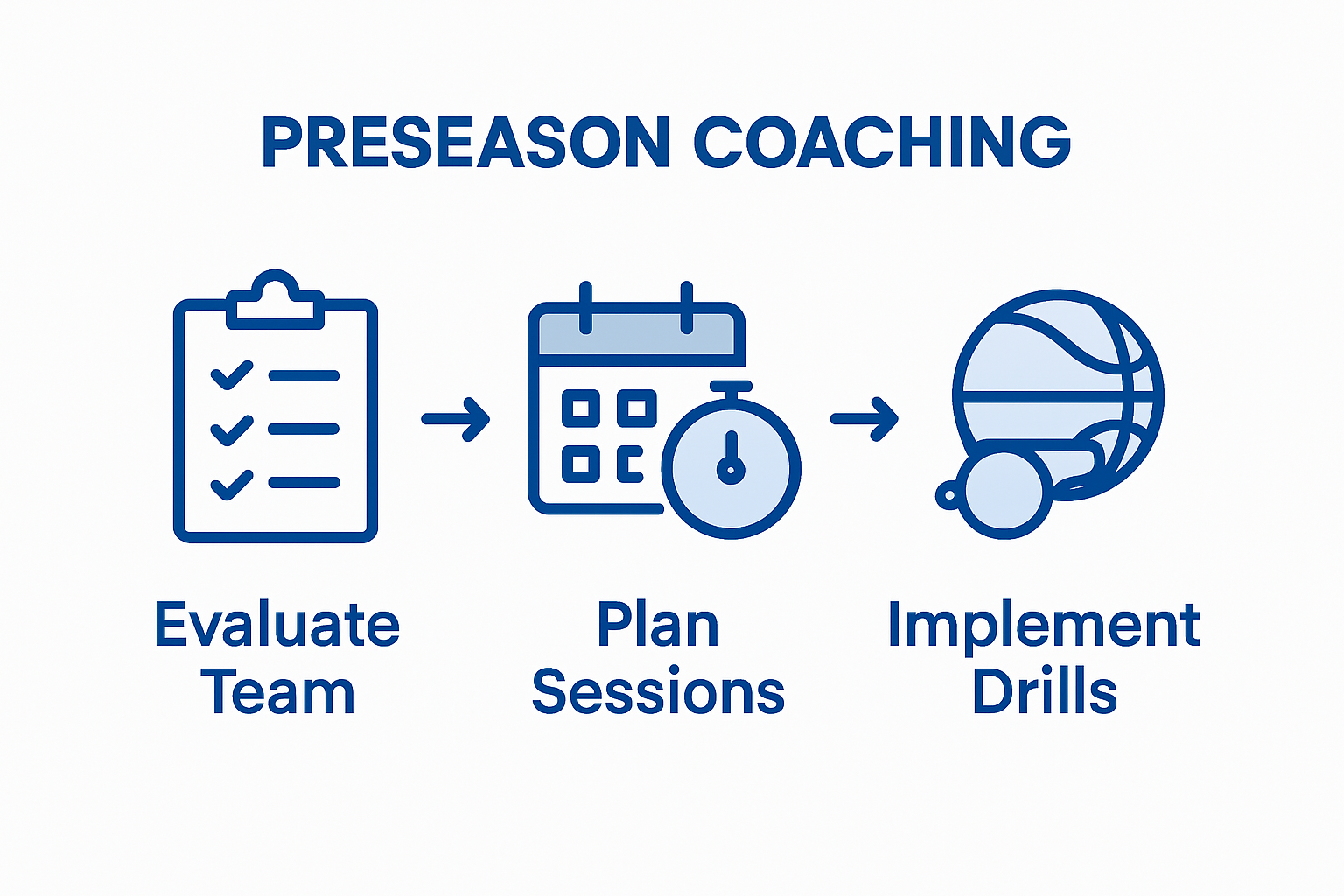
To develop an effective preseason practice framework, start by structuring practice sessions with intentional progression. Professional coaching resources recommend breaking down practice plans into distinct components that address physical conditioning, skill development, tactical understanding, and team dynamics. Implementing a systematic practice planning checklist can help ensure you cover all critical training elements. Research from specialized basketball coaching guides suggests creating a progressive training model that gradually increases complexity and intensity, allowing players to build fundamental skills while adapting to team strategies.
Your preseason practice plan should balance technical skill work with strategic team building. Allocate time for individual player assessments, position specific drills, conditioning exercises, and team scrimmages. Pay special attention to developing players communication skills, understanding team roles, and building a cohesive team culture. Remember that an effective preseason practice plan is not just about physical training but creating a comprehensive environment where players can grow technically, physically, and mentally. By thoughtfully designing your approach, you set the stage for a successful and competitive basketball season.
Step 3: Implement Priority Skills and Conditioning Drills
Designing an effective preseason basketball training program requires a strategic approach to skills development and physical conditioning. Your primary objective is to create a comprehensive drill sequence that simultaneously improves individual player capabilities and overall team performance potential.
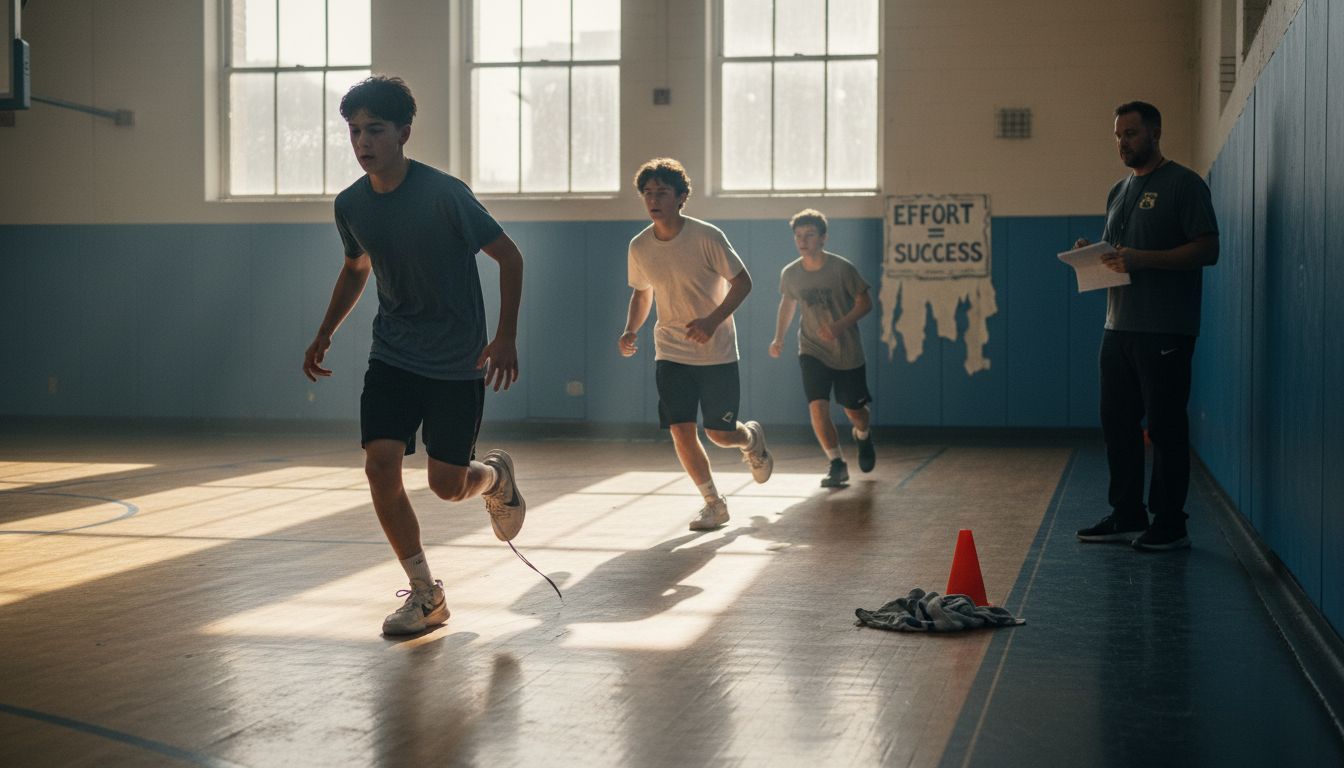
Begin by implementing a systematic skills development workflow that progressively challenges players while maintaining engagement. Research indicates that small sided games offer unique opportunities to enhance both technical skills and physical conditioning. Strategic basketball drills should focus on developing core competencies such as ball handling, shooting accuracy, defensive positioning, and rapid decision making. Carefully structured training sessions that incorporate varying intensity levels and tactical complexity can significantly improve players technical tactical profiles and overall performance readiness.
Prioritize drills that simulate game scenarios and demand multifaceted skill execution. Include exercises that develop cardiovascular endurance, agility, strength, and sport specific movement patterns. Pay close attention to individual player strengths and weaknesses, designing personalized training interventions that address specific developmental needs. By creating a holistic and adaptive training approach, you will build a resilient team capable of responding effectively to diverse competitive challenges during the upcoming season.
Step 4: Set Clear Team Goals and Communication Standards
Establishing a cohesive team environment starts with setting crystal clear goals and communication protocols that align every player toward a unified vision. Your primary responsibility as a coach is to create a transparent framework that guides team expectations and individual performance standards.
Basketball leadership strategies require deliberate communication approaches that foster trust and mutual understanding. Research demonstrates that coaches with varying experience levels emphasize the critical importance of structured communication standards in developing team performance. When defining team goals, focus on creating specific measurable objectives that challenge players while remaining achievable. Effective coach communication techniques should include regular team meetings, individual player check ins, and transparent performance feedback mechanisms that keep everyone aligned and motivated.
Implement a goal setting process that involves player input and collective accountability. Break down broader team objectives into individual player development targets, ensuring each team member understands their unique role in achieving collective success. This collaborative approach transforms goal setting from a top down mandate into a shared commitment. By creating an environment of open dialogue and mutual respect, you will build a resilient team culture capable of overcoming challenges and adapting to competitive pressures throughout the basketball season.
Step 5: Evaluate Progress and Adjust Preseason Strategies
Successfully developing a basketball team requires continuous monitoring and strategic adaptation of your preseason training approach. Your goal is to create a dynamic assessment framework that allows you to track player development and team performance with precision and flexibility.
Basketball season planning strategies demand rigorous progress evaluation methods that go beyond surface level observations. Research highlights the critical importance of analyzing strategic tactical tendencies and physical fitness characteristics throughout the preseason. Develop a comprehensive evaluation system that incorporates quantitative performance metrics, individual player assessments, and team dynamic observations. Pay special attention to tracking physical fitness indicators, technical skill progression, and tactical understanding to identify areas requiring targeted intervention.
Implement a flexible adjustment protocol that allows you to modify training strategies based on real time performance data. This approach transforms your preseason preparation from a rigid plan to a responsive development process. Create periodic review checkpoints where you assess individual and team progress, gather player feedback, and recalibrate training focuses. By maintaining an adaptive and data informed approach, you will maximize player potential and build a resilient team capable of continuous improvement throughout the competitive season.
Elevate Your Team’s Preseason Performance Today
Preparing your basketball team for the season demands precise evaluation, strategic practice planning, and targeted skill development. The article highlights common challenges coaches face such as assessing player readiness, designing effective practice sessions, and setting clear team goals. If you want to simplify these complex tasks and boost your team’s potential, professional resources can make all the difference.
Discover expertly crafted Basketball Drills and comprehensive Basketball Templates that help you implement progressive training workflows and meaningful goal-setting frameworks. 
Take control of your preseason coaching journey now with Hoop Mentality. Access proven tools that save time, foster clear communication, and support continuous progress tracking. Visit Hoop Mentality to unlock practical solutions designed to build winning teams with confidence.
Frequently Asked Questions
How do I assess player readiness for the preseason?
To assess player readiness, utilize objective wellness monitoring techniques such as heart rate variability and performance assessments. Conduct physical fitness tests, skill assessments, and mental readiness screenings to evaluate each player’s condition and set focused training goals.
What should be included in a preseason practice plan?
A preseason practice plan should include physical conditioning, skill development, tactical understanding, and team building activities. Structure practice sessions to progressively develop these skills, ensuring time is allocated for both individual assessments and team scrimmages.
What drills should I prioritize during preseason training?
Prioritize drills that enhance core competencies, such as ball handling, shooting accuracy, and defensive positioning. Incorporate small-sided games and exercises that simulate game scenarios to improve both individual skills and team performance.
How can we set effective team goals for the season?
Set effective team goals by creating specific, measurable objectives that challenge players while remaining achievable. Involve players in the goal-setting process to ensure accountability and comprehension of their roles in achieving team success.
How do I evaluate progress during the preseason?
Evaluate progress by implementing a comprehensive assessment system that tracks physical fitness, technical skills, and team dynamics. Conduct periodic reviews to gather player feedback and adjust training strategies based on real-time performance data.
What are the key communication strategies for a successful team?
Establish clear communication protocols that promote trust and understanding among team members. Conduct regular team meetings and provide transparent feedback to ensure everyone is aligned with team goals and expectations.