

Over 70 percent of coaches agree that structured drills are the backbone of basketball skill development. Parents, players, and even new coaches often feel lost trying to separate what truly works from just busywork on the court. Understanding exactly what basketball drills are can make all the difference in reaching new performance levels and building lasting confidence. By digging deeper into the real purpose behind these exercises, you can unlock smarter ways to train and see steady progress in every session.
Table of Contents
- What Basketball Drills Really Are
- Types Of Basketball Drills Explained
- How Drills Enhance Player Development
- Implementing Drills With Precision
- Common Drill Mistakes Coaches Should Avoid
Key Takeaways
| Point | Details |
|---|---|
| Importance of Drills | Basketball drills are essential for enhancing technical skills and athletic performance through structured, repetitive practice. |
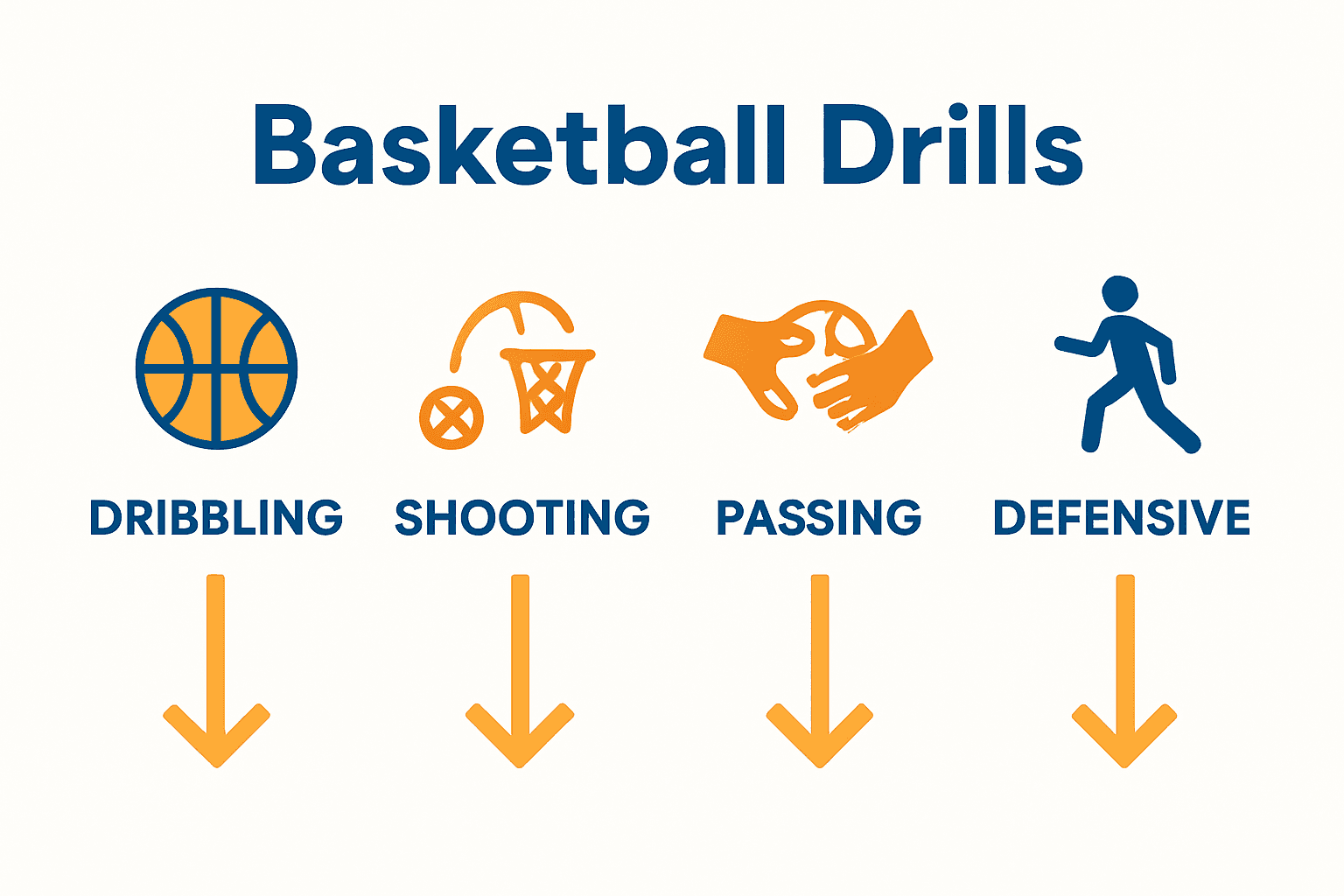
| Types of Drills | Different categories, such as dribbling, shooting, passing, and defensive drills, target specific skills necessary for player development. |
| Effective Implementation | Precise execution of drills with clear instructions, feedback, and tailored complexity is vital for maximizing player development. |
| Common Mistakes | Coaches should avoid rushing technique explanations and prioritizing speed over accuracy to prevent hindering skill growth and increasing injury risk. |
What Basketball Drills Really Are
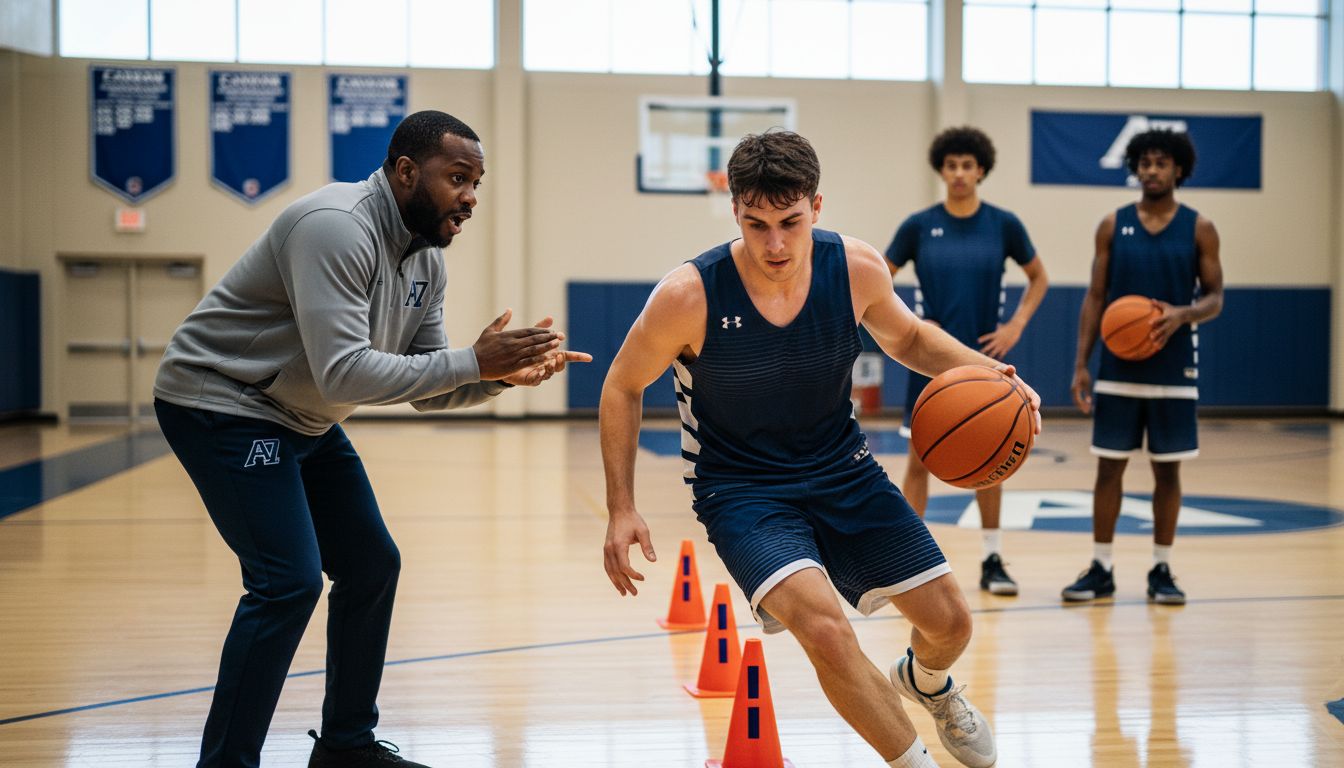
Basketball drills are structured training exercises designed to systematically improve a player’s athletic performance and technical skills. According to Special Olympics, these drills are “structured exercises designed to develop specific skills such as dribbling, shooting, passing, and defensive techniques.”
At their core, basketball drills represent targeted practice mechanisms that help athletes build muscle memory, enhance coordination, and develop strategic game understanding. MasterClass highlights that these training tools focus on improving fundamental skills like dribbling, shooting, and passing while simultaneously increasing player agility and strategic comprehension.
Effective basketball drills share several critical characteristics:
- Repetitive skill practice
- Progressive difficulty levels
- Specific skill targeting
- Measurable performance improvement
- Engagement and motivation enhancement
By breaking complex basketball movements into manageable components, drills allow players to isolate and perfect individual techniques before integrating them into full-game scenarios. This methodical approach transforms raw athletic potential into refined, consistent performance, making drills an indispensable component of basketball skill development.
Types Of Basketball Drills Explained
Basketball drills are diverse training techniques designed to target specific skills and improve overall player performance. According to MasterClass, these drills can be categorized into several essential types that address different aspects of basketball proficiency.
Core Basketball Drill Categories
1. Dribbling Drills These fundamental exercises focus on ball control, hand-eye coordination, and movement manipulation. Players learn to maintain possession, change direction quickly, and navigate through defensive pressure. Special Olympics emphasizes these drills as critical for developing precise ball-handling skills.
2. Shooting Drills Designed to enhance shooting accuracy and technique, these drills help players develop consistent shooting mechanics. They typically include various shooting positions, range variations, and simulated game scenarios to build muscle memory and confidence.
3. Passing Drills Teamwork and ball distribution are key focus areas for passing drills. These exercises improve players’ ability to make accurate, quick passes under different defensive pressures and game situations.
4. Defensive Drills Critical for developing defensive skills, these drills teach players positioning, footwork, blocking techniques, and strategic body movement to effectively guard opponents.
By integrating these drill types into regular practice, coaches can develop comprehensive basketball skills training that address every fundamental aspect of the game. Each drill type serves a specific purpose, helping players transform individual skills into cohesive, high-performance gameplay.
How Drills Enhance Player Development
Basketball drills are fundamental to comprehensive player development, transforming raw athletic potential into refined skill sets. According to MasterClass, regular practice of basketball drills “enhances player development by reinforcing fundamental skills, improving physical conditioning, and fostering a deeper understanding of game strategies.”
Key Development Mechanisms
Muscle Memory and Technical Precision Special Olympics emphasizes that structured drills “build muscle memory, increase agility, and promote effective teamwork through repetitive practice.” This consistent repetition allows players to internalize complex movements, making them second nature during high-pressure game situations.
Physical and Mental Skill Progression
Player development through drills occurs across multiple dimensions:
- Technical skill refinement
- Physical conditioning
- Strategic game understanding
- Confidence building
- Team coordination
By systematically challenging players with progressively difficult drills, coaches can develop targeted training strategies that address individual and team performance gaps. These purposeful exercises transform isolated skills into integrated, game-ready capabilities, ensuring players evolve both technically and strategically throughout their basketball journey.
Implementing Drills With Precision
Successful basketball training hinges on implementing drills with meticulous attention to detail and strategic planning. According to MasterClass, coaches should “focus on proper technique, set specific goals for each drill, and provide constructive feedback to help players refine their skills.”
Key Implementation Strategies
Structured Drill Execution Special Olympics emphasizes that implementing drills with precision requires “clear instruction, consistent practice, and immediate feedback to ensure players perform exercises correctly.”
Critical Components of Precision Drill Implementation
Effective drill implementation involves several crucial elements:
- Precise technique demonstration
- Clear, concise instructions
- Individualized player feedback
- Progressive skill complexity
- Consistent performance monitoring
Coaches can optimize practice planning by breaking down complex drills into manageable components, ensuring players understand each movement’s purpose and mechanical execution. This methodical approach transforms standard practice into a targeted skill development experience, allowing players to progressively improve their basketball fundamentals with intentional, focused training.
Common Drill Mistakes Coaches Should Avoid
Basketball coaching requires precision and strategic approach, especially when designing and implementing training drills. According to MasterClass, coaches frequently make critical mistakes that can “hinder skill development,” including “neglecting proper form, overemphasizing speed over accuracy, and failing to provide individualized feedback.”
Fundamental Coaching Pitfalls
Performance-Limiting Errors Special Olympics highlights that coaches should be cautious about “insufficient warm-ups, lack of clear objectives, and not tailoring drills to the skill level of players, as these can impede progress and increase injury risk.”
Key Mistakes to Recognize and Correct
Common drill implementation errors include:
- Rushing through technique explanations
- Ignoring individual player differences
- Prioritizing quantity over quality
- Neglecting proper warm-up procedures
- Failing to provide constructive feedback
First-time basketball coaches must understand that effective drill implementation requires patience, adaptability, and a nuanced understanding of player development. By avoiding these common mistakes, coaches can create a more productive, engaging, and skill-focused training environment that promotes consistent player improvement and team success.
Elevate Your Team with Expert Basketball Drills
Struggling to turn complex basketball skills into consistent game-winning performances is a common challenge for coaches and players alike. This article highlights how focused basketball drills develop muscle memory, technical precision, and strategic understanding — all critical to unlocking your team’s potential. If you want to overcome issues like inconsistent shooting, weak defense, or lack of coordination, targeted drills are your solution.
Discover our carefully crafted collection of Basketball Drills - Hoop Mentality designed to help coaches like you build solid fundamentals and progressive skill sets.

Take action now to transform practice sessions into purposeful training by leveraging professional drill resources. Visit Hoop Mentality to find proven basketball workouts, precise practice plans, and coaching templates. Let us help you save time, improve communication, and lead your team to victory with confidence and clarity.
Frequently Asked Questions
What are basketball drills?
Basketball drills are structured training exercises designed to systematically improve a player’s athletic performance and technical skills, including dribbling, shooting, passing, and defensive techniques.
Why are basketball drills important for player development?
Basketball drills enhance player development by building muscle memory, improving physical conditioning, reinforcing fundamental skills, and fostering a deeper understanding of game strategies.
What types of basketball drills should I incorporate into practices?
You should incorporate a variety of drills, including dribbling drills for ball control, shooting drills for accuracy, passing drills for teamwork, and defensive drills for positioning and blocking techniques.
How can coaches effectively implement basketball drills?
Coaches can effectively implement drills by focusing on proper technique, providing clear instructions, setting specific goals for each drill, and offering constructive feedback to players during practice.