

Organizing summer basketball practices in a busy city gym can quickly become chaotic without a clear system. Grassroots coaches face daily challenges balancing player growth and session efficiency in environments where time and resources are limited. This guide delivers structured assessment techniques, progressive practice frameworks, skill-focused drills, and actionable evaluation strategies drawn from verified sport research, so you can transform raw talent into consistent performance while keeping every moment purposeful.
Table of Contents
- Step 1: Assess Team Needs And Goals
- Step 2: Design Progressive Practice Plans
- Step 3: Implement Skill-Focused Drills
- Step 4: Integrate Game-Like Situations
- Step 5: Evaluate Player Progress
- Step 6: Refine Plans For Optimal Results
Quick Summary
| Key Point | Explanation |
|---|---|
| 1. Assess Team Needs and Goals | Start with evaluating player strengths and weaknesses to set focused development strategies for individual and team growth. |
| 2. Design Progressive Practice Plans | Create structured practice sessions that build skills systematically, adjusting intensity and complexity over time. |
| 3. Implement Skill-Focused Drills | Select strategic drills that enhance fundamental techniques, ensuring progressive difficulty to keep players engaged. |
| 4. Integrate Game-Like Situations | Simulate real game scenarios to enhance decision-making and teamwork under pressure, mirroring actual game conditions. |
| 5. Evaluate Player Progress | Regularly assess and document individual performance, using both quantitative and qualitative methods to track improvement. |
Step 1: Assess Team Needs and Goals
Successful basketball team development starts with a comprehensive assessment of your team’s current capabilities and future potential. By systematically evaluating player strengths, weaknesses, and collective performance gaps, coaches can create targeted strategies that transform individual talents into cohesive team success.
Begin by conducting individualized performance assessments using physical performance test batteries that measure age appropriate athletic metrics. These evaluations provide crucial baseline data about each player’s physical capabilities, helping you understand the raw potential within your roster. Focus on collecting specific measurements like speed, agility, strength, and basketball specific skill indicators. Compare these metrics against established norms to identify areas requiring focused improvement.
Next, collaborate with players to establish specific and measurable goals that balance individual and team objectives. Create a goal setting framework that includes process goals (skill development milestones) and outcome goals (performance targets). Write these goals down collaboratively, ensuring players feel ownership and commitment. Regularly monitor progress through scheduled check ins and adjust strategies as needed.
Pro tip: Create a visual goal tracking board in your practice space that allows players to see their individual and team progress, maintaining motivation and accountability.
Step 2: Design Progressive Practice Plans
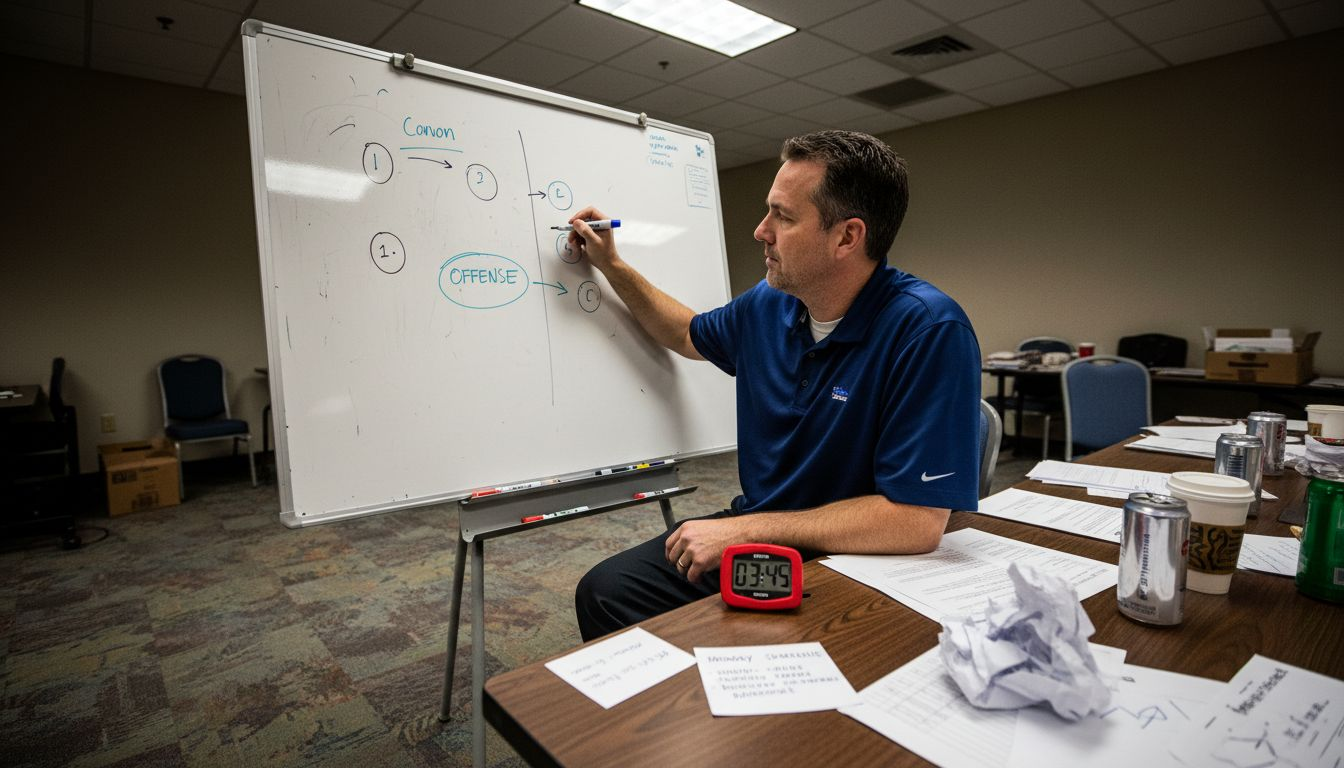
Creating an effective basketball practice plan requires strategic thinking and deliberate progression that builds player skills systematically throughout the summer development season. Your goal is to design training sessions that challenge athletes while maintaining a structured approach to skill enhancement and team cohesion.
Start by implementing basketball training periodization strategies that strategically manage training volume and intensity. This approach involves breaking your summer program into distinct phases with specific focus areas. For instance, early summer sessions might concentrate on fundamental skill refinement while later phases emphasize complex tactical execution. Divide your practice plans into segments that progressively increase complexity and demand more nuanced team coordination.
Utilize a practice plan template that allows flexibility while maintaining clear structure. Design each session with intentional warm ups, skill development drills, tactical instruction, and competitive scenarios. Ensure each practice builds upon previous sessions skills, creating a cumulative learning experience that keeps players engaged and continuously improving.
Pro tip: Document and review your practice plans weekly to track player progress and make real time adjustments to your summer development strategy.
Step 3: Implement Skill-Focused Drills
Successful basketball skill development requires strategic drill selection that challenges players while building fundamental techniques. Your goal is to create a comprehensive training approach that systematically improves individual player capabilities and team performance.
Implement structured basketball skill drills that target specific technical elements with progressive difficulty. Design drills that incorporate multiple skill dimensions including ball handling, passing accuracy, shooting mechanics, and defensive positioning. Break complex movements into smaller components, allowing players to master individual techniques before combining them into more advanced sequences. Focus on drills that simulate game scenarios and require players to make quick decisions while executing precise skills.
Utilize basketball drill types that provide variety and maintain player engagement. Rotate between stationary skill work and dynamic movement drills to prevent monotony and challenge athletes across different performance dimensions. Ensure each drill has clear objectives, measurable outcomes, and opportunities for individual player feedback and improvement.
Pro tip: Record player performance during skill drills to provide visual feedback and track incremental improvements throughout the summer development program.
Step 4: Integrate Game-Like Situations
Transforming individual skills into cohesive team performance requires creating realistic basketball scenarios that challenge players mentally and physically. Your objective is to design training environments that mirror actual game conditions and push athletes to apply their technical skills under pressure.
Adopt the Teaching Game for Understanding approach to shift training from repetitive drills to dynamic decision making scenarios. Construct practice situations that require players to read defensive alignments, make split second choices, and execute skills within complex team interactions. Design scenarios that progressively increase complexity beginning with basic two on two confrontations and advancing to full court competitive scenarios that simulate real game pressure and strategic thinking.
Incorporate sport development strategies that emphasize player engagement and holistic skill development. Create competitive scenarios that reward not just physical execution but also tactical awareness communication and team chemistry. Rotate players through different positions and roles to enhance their comprehensive understanding of team dynamics and individual responsibilities.
Pro tip: Use video analysis during game like situations to provide immediate visual feedback and help players understand their decision making patterns.
Step 5: Evaluate Player Progress
Effective player development requires systematic and objective assessment of individual and team performance throughout the summer training program. Your goal is to create a comprehensive evaluation framework that provides meaningful insights into each player’s growth and potential.
Implement athletic development assessments that utilize standardized test batteries to compile norm referenced physical profiles. Develop a multidimensional evaluation approach that captures technical skills physical attributes tactical understanding and mental resilience. Collect quantitative data through precise measurements of speed agility shooting accuracy and endurance while simultaneously tracking qualitative improvements in player decision making communication and team integration.
Utilize player performance evaluation techniques that go beyond simple statistical tracking. Create individual player development portfolios that document progress through video analysis performance graphs and written observations. Schedule regular feedback sessions where players can reflect on their own growth understand their strengths and collaborate on targeted improvement strategies.
Pro tip: Create a confidential digital dashboard for each player that allows transparent tracking of individual progress and helps motivate continuous improvement.
The table below compares qualitative and quantitative player evaluation methods for basketball:
| Method Type | Key Features | Best Used For |
|---|---|---|
| Quantitative | Measurable metrics, statistics | Tracking speed, accuracy, endurance |
| Qualitative | Observations, video analysis | Assessing decision-making, teamwork |
Step 6: Refine Plans for Optimal Results
Successful basketball development requires ongoing strategic adaptation that responds dynamically to team performance and individual player progression. Your mission is to create a flexible training approach that continuously evolves based on real world insights and measurable outcomes.
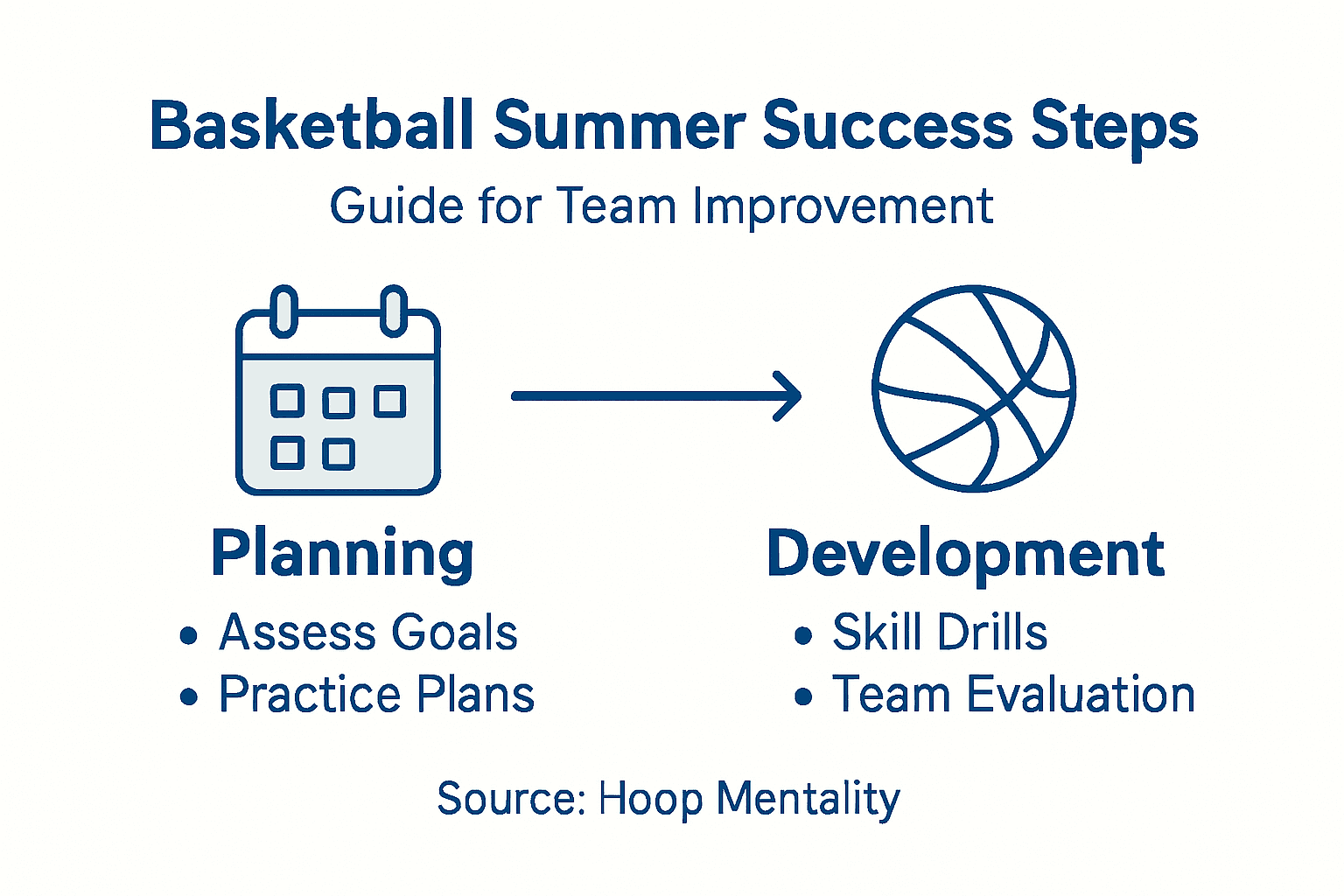
Apply practice planning techniques that emphasize continuous assessment and strategic modification. Regularly analyze performance data from previous training sessions to identify specific areas requiring targeted intervention. Break down your evaluation into individual player metrics team dynamics and overall strategic execution. Look for patterns in player skill development areas of consistent struggle and moments of breakthrough performance that can inform future training strategies.
Utilize strategic basketball planning methods that allow for rapid and intelligent program adjustments. Create a feedback loop where player assessments directly influence training design. Develop flexible practice frameworks that can be quickly modified based on emerging team needs while maintaining a consistent overall development trajectory. Encourage open communication with players to gather qualitative insights that complement quantitative performance data.
Pro tip: Schedule monthly strategy review sessions where coaching staff collaboratively analyze team progress and make data driven adjustments to the summer development program.
Here’s a summary of key focus areas at each summer basketball development stage:
| Development Step | Main Focus | Typical Activities |
|---|---|---|
| Assess Needs & Goals | Identifying gaps | Testing, goal setting sessions |
| Progressive Practice | Skill progression | Warm-ups, drills, tactics |
| Skill-Focused Drills | Technique improvement | Ball handling, shooting, defense |
| Game-Like Situations | Real-game application | Scrimmages, scenarios, feedback |
| Evaluate Progress | Measuring improvement | Test batteries, portfolios |
| Refine Plans | Adapting strategies | Data review, plan adjustments |
Elevate Your Team’s Summer Basketball Development with Proven Coaching Tools
Building a championship-level basketball team starts with addressing the challenges of assessing player needs, designing progressive practice plans, and implementing skill-focused drills that translate into game success. If you found the detailed steps on goal setting, periodized training, and realistic game scenarios valuable, imagine accelerating your team’s growth with professional resources tailored specifically for these purposes. Avoid wasting time on guesswork and unlock your full coaching potential by integrating ready-made, structured solutions that drive measurable progress.
Explore our extensive collection of Basketball Drills - Hoop Mentality to find focused exercises that sharpen fundamentals and simulate real-game situations. Use our Basketball Templates - Hoop Mentality to craft strategic plans that keep your summer sessions organized and effective. Every coach deserves practical, easy-to-use tools that foster clear communication and consistent player improvement. Visit Hoop Mentality today to discover how you can transform your offseason development into a winning formula. Start now because your team’s success depends on well-structured preparation and decisive action.
Frequently Asked Questions
How can I assess my basketball team’s needs and goals effectively?
To assess your basketball team’s needs and goals, conduct individualized performance assessments that focus on each player’s strengths and weaknesses. Use this information to collaboratively set specific and measurable goals that balance individual development with team objectives. Schedule regular check-ins to monitor progress and make adjustments as needed.
What should a progressive basketball practice plan include?
A progressive basketball practice plan should comprise warm-ups, skill development drills, tactical instructions, and competitive scenarios. Design each session with increasing complexity to challenge athletes while ensuring their skills build upon previous practices. Document your practice plans to track player progress and adapt strategies as necessary.
What types of drills should I implement for skill-focused training?
For skill-focused training, incorporate structured basketball drills that target specific technical elements such as ball handling, passing, shooting mechanics, and defense. Use drills that simulate game scenarios, allowing players to practice their skills under pressure. Rotate drill types to maintain engagement and evaluate player progress quantitatively.
How can I create game-like situations during practices?
To create game-like situations, implement the Teaching Game for Understanding approach, which focuses on decision-making and tactical execution. Design realistic scenarios that reflect actual game conditions, gradually increasing their complexity. Encourage players to work through these scenarios while making quick decisions, enhancing their application of skills.
What methods can I use to evaluate player progress during the summer development program?
Utilize a combination of quantitative methods, like standardized test batteries, and qualitative techniques, such as video analysis, to evaluate player progress. Create individual development portfolios that include performance tracking graphs and reflections on growth. Schedule regular feedback sessions to discuss progress and collaborate on targeted improvement strategies.
How should I refine my basketball training plans based on player evaluations?
Refine your training plans by continuously assessing player performance and identifying areas needing targeted intervention. Analyze data from your evaluations to inform practice adjustments, maintaining a flexible approach that adapts to both individual and team needs. Conduct monthly strategy review sessions to facilitate real-time adjustments and optimize results.