

Nearly every american basketball player spends hours on drills, yet only about 40 percent translate practice skills into game success. With so much emphasis on structured training, players and coaches alike want to know which drills actually matter. The right drill can mean the difference between good and great performance, so understanding how drills work and why they matter is key to reaching your full basketball potential.
Table of Contents
- Defining Basketball Drills And Their Purposes
- Major Categories Of Basketball Drills
- Key Features And Selection Criteria
- Implementing Drills In Practice Sessions
- Common Mistakes When Running Drills
Key Takeaways
| Point | Details |
|---|---|
| Importance of Basketball Drills | Structured drills are essential for developing specific skills, techniques, and physical attributes critical for basketball performance. |
| Categories of Drills | Drills are categorized into shooting, ball handling, defensive, passing, and conditioning to target different areas of player development. |
| Effective Drill Selection | Successful drill implementation requires balancing player skill levels, objectives, and engagement through clear performance metrics and adaptability. |
| Common Mistakes in Drill Implementation | Coaches should be aware of pitfalls such as poor drill design, safety oversights, and ineffective communication to optimize training outcomes. |
Defining Basketball Drills and Their Purposes
Basketball drills are structured training activities designed to develop specific skills, techniques, and physical attributes essential for peak basketball performance. Unlike random practice sessions, these carefully crafted exercises target precise aspects of a player’s game, enabling systematic improvement across shooting, dribbling, passing, defensive positioning, and overall athletic conditioning.
At their core, basketball drills serve multiple critical purposes that extend beyond simple repetition. They help players build muscle memory, improve technical skills, enhance decision making, and develop the physical and mental resilience required for competitive gameplay. Why basketball drills are fundamental to player development reveals that consistent, focused drill work can transform individual player capabilities and team dynamics.
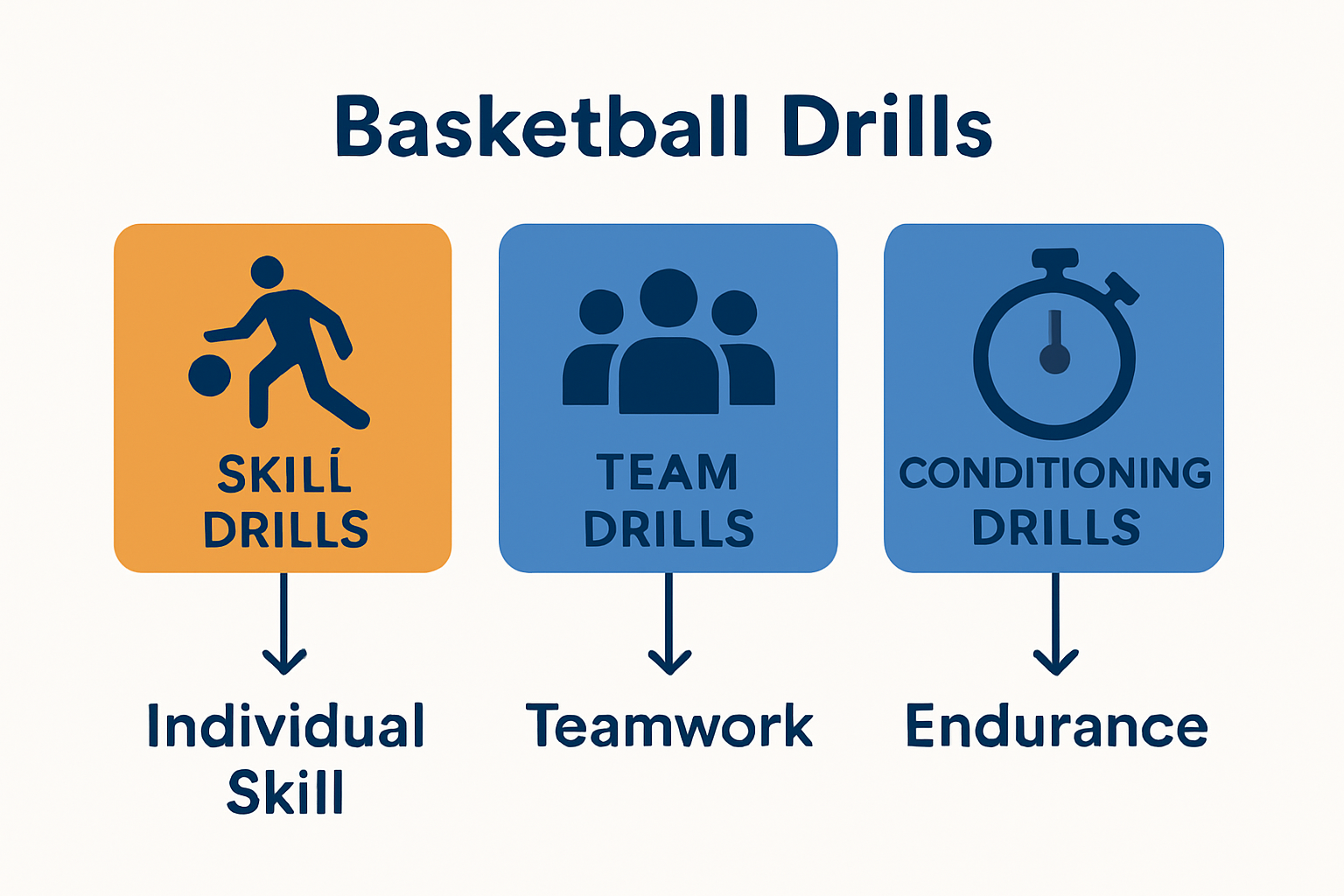
Drills are typically categorized into several key types that address different skill domains:
- Shooting Drills: Focus on accuracy, form, and shooting under various game-like conditions
- Ball Handling Drills: Develop dexterity, control, and confidence with ball management
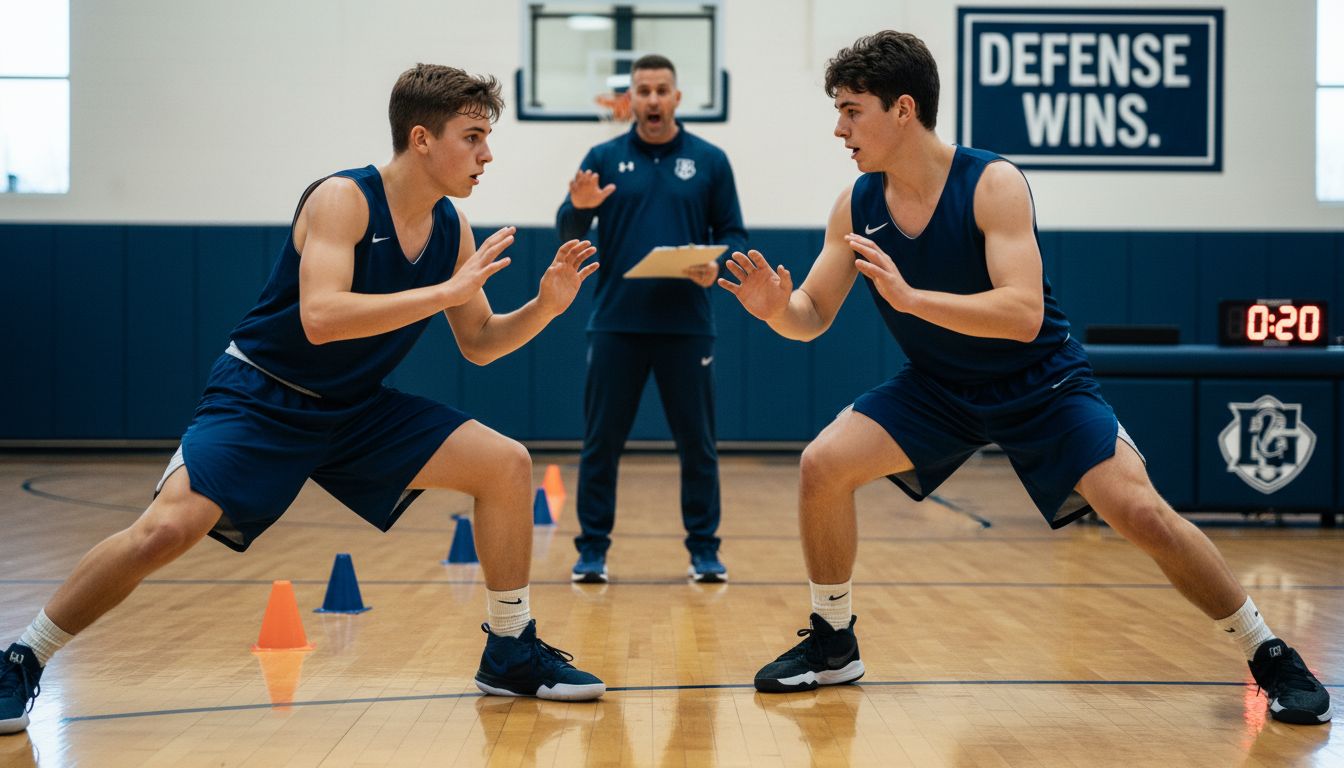
- Defensive Drills: Improve footwork, positioning, and defensive reaction skills
- Conditioning Drills: Enhance physical fitness, agility, and stamina specific to basketball movements
By methodically breaking down complex basketball skills into manageable components, coaches can help players progressively build their capabilities. Each drill serves as a building block, transforming raw potential into refined athletic performance through intentional, structured practice.
Major Categories of Basketball Drills
Basketball drills are systematically organized into distinct categories that address specific skill development, athletic performance, and strategic gameplay improvement. Types of shooting drills for basketball coaches demonstrate how targeted training can transform individual player capabilities across multiple skill domains.
The primary categories of basketball drills encompass five fundamental areas of player development:
-
Shooting Drills: Enhance accuracy, technique, and shooting performance under various game conditions
- Form shooting
- Spot shooting
- Movement shooting
- Game situation shooting
-
Ball Handling Drills: Develop technical control and confidence with basketball manipulation
- Dribbling techniques
- Ball protection
- Crossover and change of direction skills
- Advanced ball control exercises
-
Defensive Drills: Improve positional awareness, footwork, and defensive reaction capabilities
- Lateral movement
- Defensive stance
- Blocking and contesting shots
- Help defense strategies
-
Passing Drills: Refine communication, accuracy, and decision making through precise ball distribution
- Stationary passing
- Moving pass techniques
- Read and react passing scenarios
- Team passing coordination
-
Conditioning Drills: Build physical endurance, agility, and basketball-specific athletic performance
- Speed and acceleration training
- Plyometric exercises
- Stamina development
- Sport-specific strength training
Each drill category serves a unique purpose in developing comprehensive basketball skills, allowing coaches to create targeted training experiences that progressively build player capabilities. By understanding and implementing these diverse drill types, teams can systematically improve individual and collective performance through intentional, structured practice.
Key Features and Selection Criteria
Selecting the right basketball drills requires a strategic approach that balances player skill levels, team objectives, and individual developmental needs. Basketball practice structure guides emphasize the importance of intentional drill selection to maximize training effectiveness and player growth.
Key criteria for effective drill selection encompass several critical dimensions:
-
Skill Progression
- Matches current player skill level
- Provides incremental challenge
- Enables gradual performance improvement
- Prevents overwhelming or underwhelming athletes
-
Specificity
- Targets precise basketball skills
- Addresses individual player weaknesses
- Aligns with team strategic objectives
- Creates transferable game-like scenarios
-
Measurability
- Includes clear performance metrics
- Allows quantifiable skill tracking
- Provides immediate feedback
- Supports data driven player development
-
Engagement
- Maintains player motivation
- Incorporates competitive elements
- Balances repetition with variety
- Creates enjoyable learning environments
-
Equipment and Space Requirements
- Minimal specialized equipment needed
- Adaptable to different training environments
- Scalable for team or individual practice
- Practical implementation considerations
Successful drill selection is a nuanced process that requires coaches to understand each player’s unique developmental trajectory. By carefully evaluating these multifaceted criteria, coaches can design training experiences that systematically enhance individual and team performance while maintaining player enthusiasm and commitment to skill improvement.
Implementing Drills in Practice Sessions
Effective practice sessions require strategic drill implementation that transforms isolated skills into cohesive basketball performance. Basketball skills development workflows provide critical insights into structuring practice time for maximum player growth and team improvement.
Research highlights specific approaches for drill implementation, including structured skill-building activities that target precise athletic capabilities:
-
Drill Sequencing
- Start with fundamental skill isolation
- Progress to complex, integrated movements
- Build complexity gradually
- Maintain player confidence and engagement
-
Skill Variation Techniques
- Implement stationary ball handling drills
- Develop left and right-handed proficiency
- Practice no-dribble scenarios
- Use chair drills for spatial awareness
-
Practice Session Structure
- Allocate specific time blocks for drill types
- Rotate through skill categories
- Provide immediate performance feedback
- Maintain high-intensity, focused training
-
Progressive Difficulty Approach
- Start with basic skill repetitions
- Introduce defensive pressure incrementally
- Challenge players with game-like scenarios
- Continuously adjust drill complexity
-
Performance Tracking
- Establish clear drill objectives
- Measure quantitative skill improvements
- Use data to customize individual training
- Communicate progress transparently
Successful drill implementation transforms practice from repetitive exercise to dynamic skill development. Coaches who thoughtfully design and execute drills create environments where players continuously expand their basketball capabilities, turning potential into measurable athletic performance.
Common Mistakes When Running Drills
Basketball coaches frequently encounter pitfalls that can undermine drill effectiveness and player development. Basketball practice tips emphasize the importance of recognizing and addressing these common coaching missteps to optimize training outcomes.
The most critical mistakes in drill implementation include:
-
Safety Overlooked
- Neglecting proper warm-up routines
- Insufficient equipment safety checks
- Ignoring player physical limitations
- Failing to prevent potential injury scenarios
-
Poor Drill Design
- Mismatched skill level complexity
- Lack of clear performance objectives
- Repetitive, monotonous drill structures
- Insufficient variation in skill challenges
-
Communication Failures
- Unclear drill instructions
- Inadequate demonstration of techniques
- Limited individual player feedback
- Inconsistent performance expectations
-
Motivation and Engagement Issues
- Boring or predictable drill sequences
- No competitive elements
- Minimal player input or involvement
- Failure to adapt drills to player interests
-
Measurement and Tracking Errors
- No quantifiable skill progression metrics
- Inconsistent performance evaluation
- Lack of individual player tracking
- Missing data-driven improvement strategies
Successful coaches transform potential mistakes into opportunities for growth. By systematically addressing these common pitfalls, basketball training can become a dynamic, engaging process that consistently elevates player performance and team capabilities.
Master Basketball Drills with Confidence and Clarity
Understanding the different types of basketball drills is key to transforming practice sessions into real skill-building opportunities. This article highlights challenges such as selecting drills that match skill levels and maintaining player engagement through varied, purposeful activities. Players and coaches alike face the pressure to develop shooting accuracy, ball handling, defense, and conditioning in a structured way that builds momentum and measurable progress.
Elevate your coaching strategy with our extensive Basketball Drills - Hoop Mentality collection.

Discover professional coaching resources designed to save you time while boosting communication and motivation. Implement drills that fit your team’s needs with ease from start to finish. Visit Hoop Mentality today and take the next step toward optimized practices and winning results.
Frequently Asked Questions
What are basketball drills?
Basketball drills are structured training activities designed to enhance specific skills, techniques, and physical attributes needed for effective gameplay. They focus on areas like shooting, dribbling, passing, and defensive strategies.
Why are basketball drills important for player development?
Basketball drills are crucial as they help build muscle memory, improve technical skills, enhance decision-making abilities, and develop physical and mental resilience, thus transforming individual player capabilities and overall team dynamics.
What types of shooting drills are commonly used in basketball practices?
Common types of shooting drills include form shooting, spot shooting, movement shooting, and game situation shooting, each focusing on improving accuracy and shooting technique under varying conditions.
How can coaches select the right basketball drills for their players?
Coaches can select the right drills by considering factors like the players’ skill levels, specific developmental needs, the goals of the practice session, and ensuring that the drills provide measurable outcomes for skill improvement.