

Most coaches think pregame routines are just warmups. They’re wrong. Structured routines and priming rituals boost control and performance for 90% of top athletes. These routines prime athletes mentally and physically, creating a foundation for peak performance. This guide walks you through the evidence, real examples from NBA stars, and practical steps for building championship-level pregame plans that work for any team.
Table of Contents
- Why pregame routines matter in basketball
- Mental vs. physical routines: What actually works?
- Case study: How NBA stars structure pregame routines
- Designing your team’s winning pregame routine
- Rituals vs. superstitions: What coaches should know
- Turn knowledge into performance: Next steps for your team
- Frequently asked questions
Key Takeaways
| Point | Details |
|---|---|
| Consistency drives performance | Predictable routines create confidence and reinforce skill for every game. |
| Balance mind and body | Combine mental techniques like visualization with physical drills to maximize readiness. |
| Copy the pros, but adapt | Model routines after elite athletes, but tailor them for your team’s unique needs. |
| Distinguish science from superstition | Teach routines that have a proven performance impact, not empty habits or distractions. |
Why pregame routines matter in basketball
Consistent routines prime both body and mind for peak performance. Science shows that behavioral and temporal regularity improves free throw accuracy and self-efficacy. When athletes follow the same sequence before games, their brains recognize the pattern and shift into performance mode.
Pregame rituals create control and reinforce procedural memory. This isn’t superstition. It’s neuroscience. Your brain stores movement patterns and mental states, then recalls them when triggered by familiar routines.
Research confirms that 90% of elite athletes use structured routines. These athletes don’t leave performance to chance. They build systems that reduce anxiety and hesitation.
Key benefits of structured pregame routines:
- Reduced performance anxiety through familiar patterns
- Enhanced muscle memory activation
- Improved focus and mental clarity
- Greater confidence through preparation
- Consistent performance across games
Tailored and rehearsed pregame rituals set the tone for the entire game. Athletes who practice their routines regularly perform better under pressure. The routine becomes automatic, freeing mental energy for in-game decisions.
Confidence and control reduce anxiety for athletes. When players know exactly what to do before tipoff, they enter games with certainty. This mental edge translates directly to on-court performance.
Your team needs more than a basketball pre-game warm up. They need a complete system that addresses mental game readiness and physical preparation. The pregame preparation guide approach combines both elements for maximum impact.
Mental vs. physical routines: What actually works?
Mental routines build confidence and composure before games. Visualization, positive self-talk, breathing, and focus cues are the top mental components elite athletes use. These techniques calm nerves and sharpen concentration.
Physical routines reinforce procedural memory through repetition. Game-speed shooting, dribbling, and defensive slides prepare muscles and neural pathways for competition. Your body remembers these patterns when the game starts.
Mental routine components:
- Visualization of successful plays and outcomes
- Positive self-talk to build confidence
- Deep breathing exercises for calm focus
- Focus cues to trigger performance mindset
Physical routine components:
- Game-speed shooting drills
- Ball-handling sequences
- Defensive movement patterns
- Dynamic stretching and activation
A balanced routine addresses both mind and body to maximize readiness. You can’t prepare just one aspect and expect complete performance. The best routines integrate mental and physical elements seamlessly.
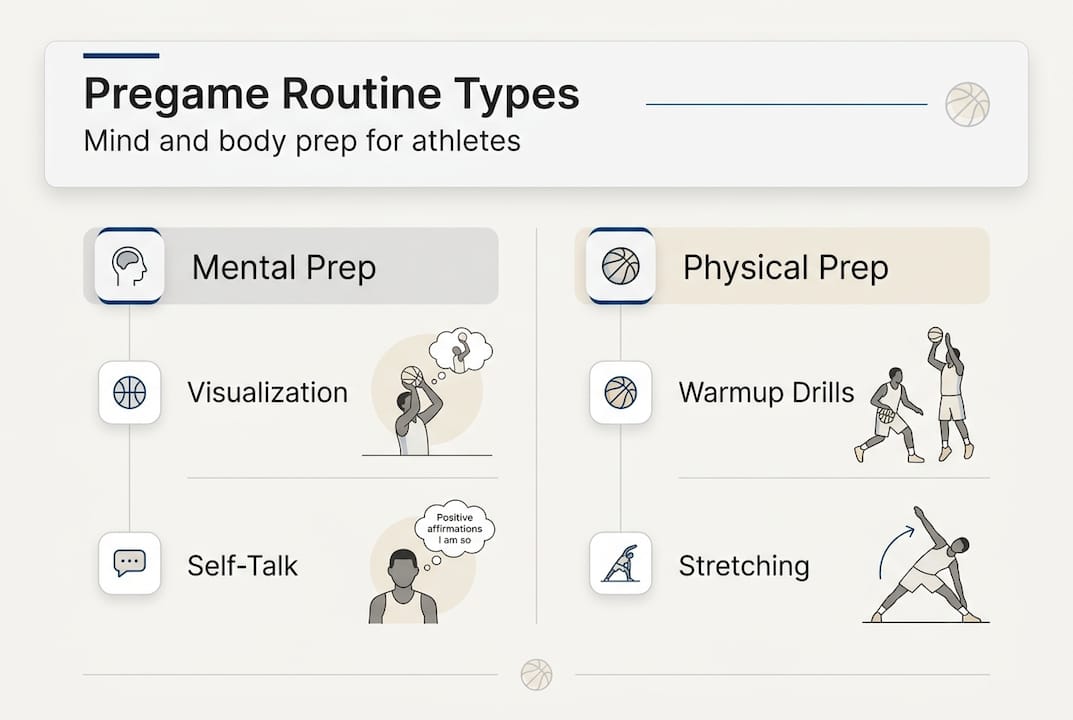
| Routine Type | Purpose | Example Activities | Time Needed |
|---|---|---|---|
| Mental | Focus and confidence | Visualization, breathing, self-talk | 5-10 minutes |
| Physical | Muscle memory and activation | Shooting, dribbling, defensive slides | 10-20 minutes |
| Combined | Complete readiness | Integrated drills with mental cues | 15-30 minutes |
The trap is confusing meaningful rituals with superstitions or distracting behaviors. Some players develop habits that don’t actually improve performance. These become crutches that hurt more than help.
Pro Tip: Teach purpose-driven routines, not just habits for habit’s sake. Every element should have a clear reason. If a player can’t explain why they do something, it might be a superstition rather than a performance tool.
Effective mental game prep strategies focus on controllable actions. The best drills to boost performance mirror game situations. When structuring basketball warmups, prioritize quality over quantity.
Your routine should feel natural, not forced. Athletes perform best when their pre-workout routine workflow matches their personality and playing style.
Case study: How NBA stars structure pregame routines
Kevin Durant’s pregame routine blends targeted physical skills with mental preparation. His 105-minute and 15-minute routines focus on intentional, game-speed reps for mental programming. Every shot, every dribble has purpose.
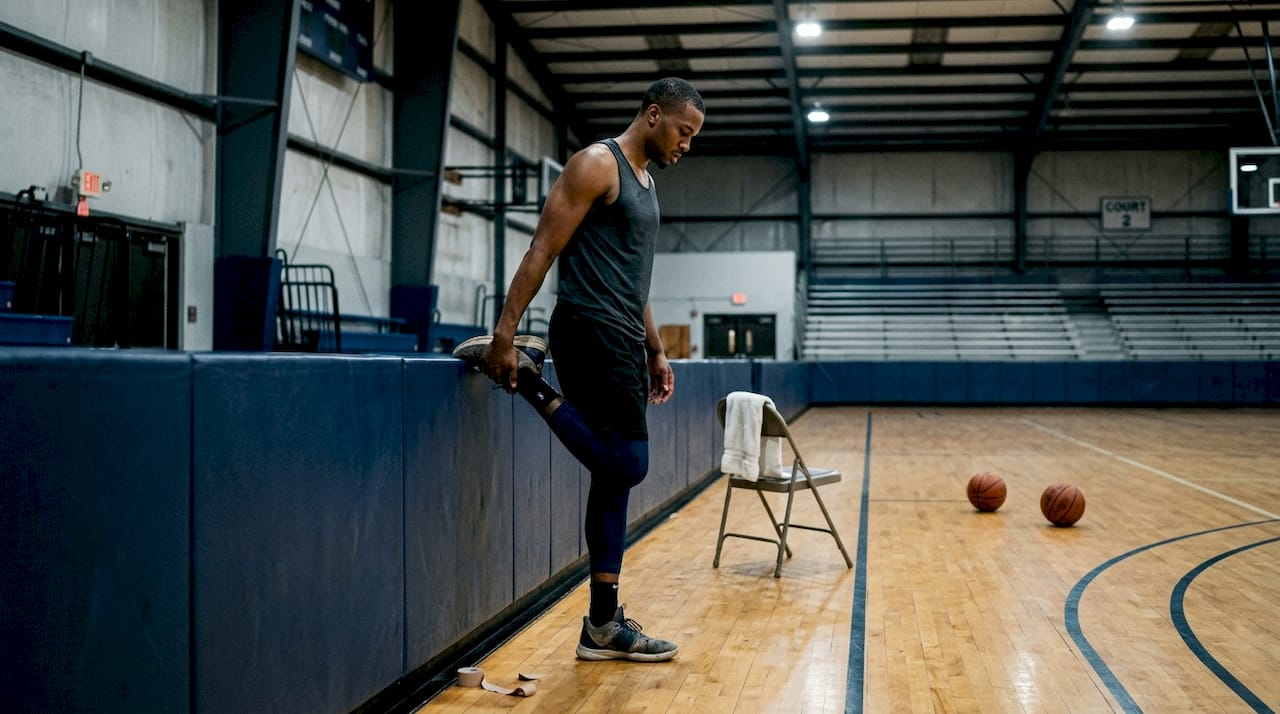
Durant doesn’t waste time on random drills. He practices the exact moves he’ll use in games. This specificity builds confidence and muscle memory simultaneously.
NBA playoff data shows consistency in pre-performance routines yields better free-throw accuracy. Players who follow the same routine before free throws make more shots. The pattern creates reliability under pressure.
| Routine Element | Duration | Focus | Benefit |
|---|---|---|---|
| Early arrival shooting | 60 minutes | Form and rhythm | Muscle memory |
| Ball-handling drills | 15 minutes | Game-speed moves | Confidence |
| Mental visualization | 10 minutes | Key plays | Focus |
| Team warmup | 20 minutes | Chemistry | Coordination |
“Build consistency, not just intensity. Your routine should be repeatable every game, regardless of venue or circumstances.”
Steps to model routines after elite athletes:
- Identify the specific skills your players need most
- Create drills that mirror actual game situations
- Set a consistent time and sequence for each element
- Practice the routine during the week, not just game day
- Adjust based on player feedback and performance data
The key is intentionality. Durant doesn’t shoot random shots. He practices the shots he’ll take in games from the spots he’ll take them. This specificity transfers directly to performance.
Your team can apply these principles at any level. The basketball warmup tips and basketball cardio drills you choose should reflect your game plan and player needs.
A step-by-step pre-workout approach ensures nothing gets missed. Consistency builds the neural pathways that produce reliable performance.
Designing your team’s winning pregame routine
Start by assessing your team’s age, skill level, and competition intensity. Youth teams need shorter, simpler routines. High school and college teams can handle more complex sequences. Tailor every element to your specific situation.
Step-by-step plan to create your routine:
- Define your goals: What mental and physical states do you want before tipoff?
- List essential elements: Mental prep, shooting, ball-handling, team drills, coach talk
- Set the timeline: Work backward from game time to arrival
- Assign responsibilities: Who leads each segment?
- Practice the routine: Run it during practice to build familiarity
- Collect feedback: Ask players what works and what doesn’t
- Refine and repeat: Adjust based on results and player input
Involve athletes in shaping meaningful routines. Players commit more to routines they help create. Ask them what makes them feel ready. Listen to their preferences and concerns.
Pregame routines provide confidence, control, and procedural memory benefits. These aren’t optional extras. They’re fundamental to consistent performance.
Coach pregame speeches and tactical clarity add emotional and performance benefits. Your words matter. Use them to reinforce the routine’s purpose and connect it to team goals.
Pregame routine checklist:
- Mental preparation time (visualization, breathing, focus)
- Dynamic warmup and activation exercises
- Skill-specific drills at game speed
- Team coordination activities
- Coach speech and tactical review
- Final mental reset before tipoff
Pro Tip: Routine review after games helps you adjust for the next matchup. Ask players which elements helped most. Track performance metrics to see what correlates with better results. Make data-driven adjustments.
The best fun warm up drills keep players engaged while building readiness. Your basketball practice tips should extend to pregame preparation.
Keep routines flexible enough to adapt to different venues and circumstances. Road games might require shorter sequences. Tournament play might need modified timing. Build adaptability into your system.
Rituals vs. superstitions: What coaches should know
Helpful rituals build self-efficacy and performance. Superstitions lack causal impact and may distract when disrupted. The difference matters for your team’s mental approach.
Rituals involve intentional actions that reinforce skill and mindset. Shooting the same warmup sequence primes your shooting form. Breathing exercises calm your nervous system. These have direct performance benefits.
Superstitions are beliefs not linked to performance. Wearing lucky socks doesn’t improve shooting. Eating the same meal doesn’t enhance speed. These create false dependencies that hurt when circumstances change.
Signs a team ritual is beneficial:
- Players can explain how it helps performance
- It involves skill practice or mental preparation
- It works regardless of external circumstances
- It builds confidence through preparation, not luck
Signs a habit is a distracting superstition:
- Players panic when they can’t complete it
- It has no logical connection to performance
- It focuses on external factors beyond control
- It creates anxiety rather than reducing it
“Control, not luck, powers performance. Build routines around what you can control: your preparation, your focus, your effort.”
Rituals often boost confidence placebo-style, even without direct causal effects. This isn’t necessarily bad. If a harmless ritual makes a player feel ready, it can help. The problem comes when the ritual becomes a crutch.
Frame pregame habits in a positive, scientific way. Explain to players why each element matters. Connect routines to brain science and muscle memory. This builds understanding and buy-in.
Teach players to distinguish between preparation and superstition. Preparation involves actions that directly improve readiness. Superstition relies on magical thinking. One builds real confidence. The other creates fragile confidence that breaks under pressure.
Your preseason priority strategies should include establishing healthy pregame routines early. Start building these habits in practice so they’re automatic by game time.
Turn knowledge into performance: Next steps for your team
You now understand the science and strategy behind effective pregame routines. The next step is implementation. The right templates and guides save time and help you execute proven pregame routines consistently.
Every element covered in this guide works better with structured planning tools. Ready-made basketball plans aligned with these best practices eliminate guesswork and ensure nothing gets missed.

Our practice plan template includes pregame routine sections you can customize for your team. The game preparation guide provides weekly practice plans that build pregame readiness into your regular training.
These resources help you move from theory to action. You get tested frameworks that work at every level. Your team gets consistent preparation that builds confidence and performance.
Equip your team with research-backed prep routines for the next game. Start building the habits that separate good teams from great ones.
Frequently asked questions
What is the main purpose of a pregame routine in basketball?
A pregame routine prepares athletes mentally and physically to perform at their peak by creating consistent habits, boosting confidence, and reducing anxiety. Pregame rituals reinforce procedural memory and self-efficacy, giving players control over their preparation.
How long should a basketball pregame routine be?
Elite players use routines from 15 to 105 minutes, but effective routines can be as short as 15-20 minutes if intentional and game-speed focused. The key is quality and consistency, not just duration.
What is the difference between a helpful pregame ritual and a superstition?
Helpful rituals involve intentional actions that reinforce skill and mindset, while superstitions are beliefs not linked to performance. Rituals boost confidence, but superstitions lack causal impact and risk becoming distractions when disrupted.
Do mental routines like visualization really improve game performance?
Yes, visualization, self-talk, breathing, and focus cues are essential mental components that enhance focus, confidence, and readiness. These techniques contribute measurably to performance by priming the brain for competition.
How can coaches help teams stick with pregame routines under pressure?
Coaches should keep routines simple, practiced, and adaptable, and regularly reinforce their value throughout the season. Consistency and simplicity help routines persist and drive performance under pressure, even in challenging environments.
Recommended
- Basketball Pregame Preparation Guide: Maximize Game Readiness – Hoop Mentality
- How to Structure Warm Up for Basketball Teams – Hoop Mentality
- How to Get Ready for a Basketball Game Mentally Effectively – Hoop Mentality
- Basketball Pre-Game Warm Up Routine - Hoop Mentality
- Technique Before Training – Peak Performance Swim Camp