

Teams with structured preseason plans see 20% higher win rates in season openers, proving that preparation directly impacts competitive success. Many coaches struggle to balance skill development, conditioning, tactics, and team chemistry during limited preseason time. Understanding how to prioritize these elements strategically transforms good teams into championship contenders while reducing injury risks and building sustainable performance habits that carry through the entire season.
Table of Contents
- Introduction To Basketball Preseason Priorities
- Foundational Skill Development In Preseason
- Physical Conditioning And Injury Prevention Strategies
- Tactical Preparation And Strategic Implementation
- Building Team Chemistry And Mental Preparation
- Common Misconceptions About Basketball Preseason Priorities
- Frameworks For Structuring Effective Preseason Practice Plans
- Applying Preseason Priorities For Competitive Season Success
- Explore Hoop Mentality’s Top Coaching Resources
- Frequently Asked Questions About Basketball Preseason Priorities
Key takeaways
| Point | Details |
|---|---|
| Prioritize foundational skills early | Teams emphasizing shooting and ball handling first improve accuracy by 15-20% under game pressure. |
| Balance conditioning with injury prevention | Integrated aerobic and anaerobic training reduces season injuries by approximately 30%. |
| Use phased practice plans | Structured progression from individual skills to team systems boosts overall season performance by 15%. |
| Build team chemistry deliberately | Goal setting and communication exercises enhance motivation and on-court execution. |
| Avoid common preseason myths | Conditioning alone or rushed timelines undermine balanced preparation needed for success. |
Introduction to basketball preseason priorities
Preseason establishes the foundation for everything your team accomplishes during the competitive season. This phase develops physical resilience, technical proficiency, tactical understanding, and psychological readiness simultaneously. When properly structured, preseason practice plans create measurable advantages in early season matchups and sustain performance through championship runs.
Coaches face significant challenges balancing multiple priorities within compressed timeframes. You must develop individual skills while building team systems, condition athletes without causing injuries, and foster mental toughness alongside technical competence. Poor planning during preseason creates deficits that persist throughout the season.
Effective preseason programming addresses four core priorities:
- Foundational skill development for shooting, ball handling, and defensive techniques
- Physical conditioning balancing aerobic endurance with anaerobic game intensity
- Tactical preparation progressing from individual concepts to team systems
- Team cohesion building communication, trust, and shared competitive mindset
Teams entering the season without balanced preparation in these areas consistently underperform expectations. Early season losses often trace back to gaps created during rushed or imbalanced preseason work. Your preseason structure directly determines whether your team starts strong or spends weeks catching up to better prepared opponents.
Foundational skill development in preseason
Skill development forms the base upon which all other basketball preparation builds. Research demonstrates that preseason training emphasizing fundamental skills first improves shooting accuracy by 15-20% compared to programs delaying skill work. Early focus on shooting mechanics, ball handling, and defensive footwork creates technical proficiency that transfers directly to competitive situations.
Structure your early preseason practices around these fundamental priorities:
- Shooting form and consistency from multiple spots and game situations
- Ball handling under defensive pressure with both strong and weak hands
- Defensive stance, lateral movement, and closeout techniques
- Passing accuracy and decision making in transition and half court settings
- Footwork fundamentals for offensive moves and defensive positioning
Track measurable progress weekly through shooting percentages, ball handling times, and defensive drill performance. Quantitative data reveals which players need additional repetitions and which skills require team-wide emphasis. This objective feedback prevents wasted practice time on areas your team already masters.
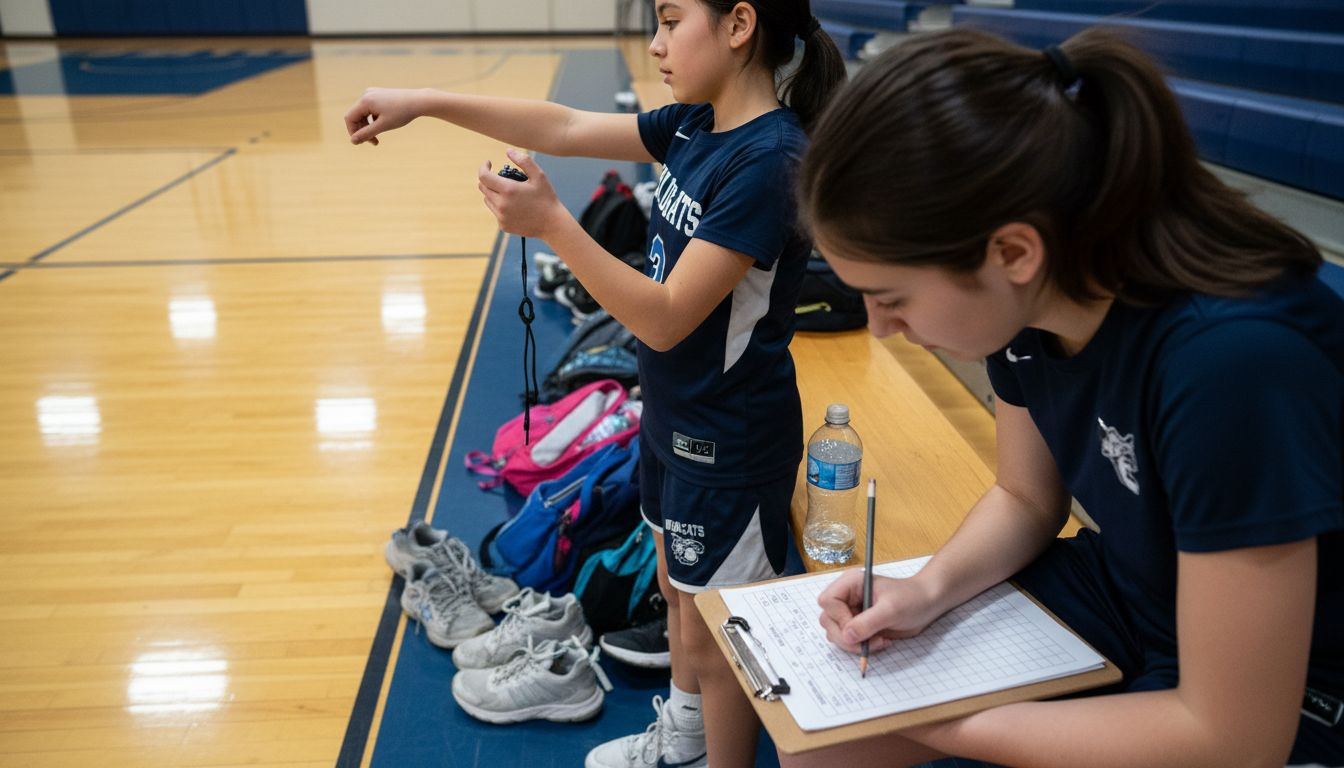
Pro Tip: Focus on quality repetitions over quantity when building foundational skills. Five perfect shooting form repetitions build better muscle memory than twenty sloppy attempts that reinforce poor mechanics.
Your basketball fundamentals guide provides detailed drill progressions for each skill area. Use your practice planning checklist to allocate appropriate time for fundamental work while maintaining balance with other preseason priorities. Strong fundamentals established early allow tactical complexity later without overwhelming players still mastering basic techniques.
Physical conditioning and injury prevention strategies
Physical preparation determines whether your players sustain performance through four quarters and entire seasons. Studies show that integrated aerobic and anaerobic conditioning reduces injury incidence by approximately 30% compared to programs emphasizing only one energy system. Basketball requires both sustained effort over 32 to 40 minute games and explosive bursts during critical possessions.
Balance your conditioning approach across these essential components:
- Aerobic base building through longer duration, moderate intensity running
- Anaerobic power development via sprint intervals matching game pace
- Strength training for injury resilience and physical contact absorption
- Flexibility and mobility work preventing common basketball injuries
- Progressive workload increases avoiding overtraining and burnout
Gradual progression prevents the overuse injuries that derail seasons before they start. Increase practice intensity and volume by no more than 10% weekly. Monitor individual player fatigue through simple assessments like resting heart rate and subjective soreness ratings.
Pro Tip: Track individual player fatigue daily using a simple 1 to 10 scale. Players rating themselves above 7 for soreness need modified workloads to prevent injury.
Implement structured warm-up and cooldown protocols at every practice. Dynamic stretching before activity prepares muscles and joints for basketball movements. Static stretching and foam rolling afterward promotes recovery and reduces next-day soreness. These habits become automatic through consistent preseason reinforcement.
Your conditioning and injury prevention strategies guide provides specific protocols for basketball-specific fitness development. Players entering the season with proper conditioning maintain higher performance levels during crucial late-game situations when fatigued opponents make critical mistakes.
Tactical preparation and strategic implementation
Tactical understanding separates skilled players from championship teams. Research confirms that phased preseason frameworks including tactical integration improve overall season performance by 15% compared to programs using linear or ad-hoc approaches. Effective tactical preparation progresses systematically from individual concepts to coordinated team execution.
Structure tactical development through three distinct phases. Early preseason focuses on individual tactical skills like reading defensive positioning and making correct spacing decisions. Mid preseason introduces small group concepts including pick and roll execution and defensive rotations. Late preseason integrates full team systems through controlled scrimmages and situational drills.
| Approach | Focus | Season Performance | Player Retention |
|---|---|---|---|
| Linear (constant intensity) | Single emphasis throughout | Baseline | Moderate |
| Phased (progressive) | Systematic skill to system build | 15% improvement | High |
| Ad-hoc (reactive) | No structured plan | 10% below baseline | Low |
Competitive simulations during late preseason prepare players for game pressure without the consequences of actual competition. Situational drills teaching end-of-game execution and defensive adjustments build confidence and decision-making skills. Players who practice these scenarios during preseason execute them successfully during critical moments.
Integrate tactical work naturally with conditioning and skill development rather than treating them as separate activities. Conditioning drills incorporating defensive rotations develop fitness and tactical understanding simultaneously. Your playbook creation guide helps structure offensive and defensive systems that players learn progressively throughout preseason.
Building team chemistry and mental preparation
Mental readiness and team cohesion determine how effectively players execute skills and tactics under competitive pressure. Psychological preparation enhances communication, motivation, and focus during challenging game situations. Teams with strong chemistry recover from adversity faster and sustain effort through difficult stretches.
Implement these team-building and mental preparation strategies:
- Goal setting sessions establishing individual and team objectives
- Mental imagery exercises visualizing successful execution
- Communication drills building trust and on-court leadership
- Team activities outside basketball strengthening interpersonal connections
- Performance review sessions celebrating progress and addressing challenges
Goal setting creates shared purpose and accountability. Players who establish specific, measurable objectives for preseason development demonstrate higher motivation and adherence to training demands. Public commitment to team goals builds collective responsibility for preparation quality.
Mental imagery improves motor learning and competitive confidence. Players who regularly visualize successful free throw shooting, defensive positioning, or offensive execution demonstrate improved actual performance. Dedicate five minutes at practice end for guided visualization of upcoming competitive situations.
Psychological preparedness translates directly to improved game-time communication and decision-making. Teams practicing verbal and non-verbal communication during preseason drills transfer these habits to competitive situations. Your team’s ability to communicate defensive assignments and offensive reads determines execution quality during critical possessions. Explore teamwork improvement strategies that enhance cohesion and collective performance.
Common misconceptions about basketball preseason priorities
Several persistent myths undermine preseason effectiveness for coaches worldwide. Understanding what doesn’t work prevents wasted time and suboptimal preparation that creates competitive disadvantages.
Myth one claims preseason should emphasize conditioning over skills and tactics. While fitness matters, basketball performance depends equally on technical proficiency and tactical understanding. Programs overemphasizing conditioning produce tired players who lack the skills and systems needed for competitive success. Balanced approaches integrating all priorities outperform conditioning-focused programs.
Myth two suggests shortening preseason duration saves time without consequences. Compressed timelines force rushed skill development, inadequate conditioning progressions, and incomplete tactical learning. Teams using abbreviated preseason consistently underperform during early season competition and experience higher injury rates from insufficient physical preparation.
Myth three assumes skill drills alone suffice for season readiness. Individual skill development without tactical context and competitive simulation leaves players unprepared for game situations. Skills must integrate with team systems and game-like pressure to transfer effectively to competition.
The evidence clearly demonstrates phased approaches balancing skills, conditioning, tactics, and mental preparation produce superior outcomes. Linear programs maintaining constant emphasis or ad-hoc planning without structure consistently underperform compared to systematic progression. Coaches avoiding these common misconceptions give their teams significant competitive advantages through properly structured preseason work.
Frameworks for structuring effective preseason practice plans
Systematic frameworks transform abstract preseason priorities into concrete practice schedules that develop players and teams progressively. The phased training model divides preseason into distinct periods, each emphasizing specific priorities while maintaining balanced attention to all development areas.
Follow this step-by-step process for structuring your preseason:
- Assess current player skill levels and team tactical understanding through baseline testing
- Establish measurable goals for individual skills, team systems, and competitive performance
- Divide preseason into three phases: foundations, integration, and competition preparation
- Allocate practice time across skills, conditioning, tactics, and team building for each phase
- Create detailed daily practice plans with specific drills and time allocations
- Monitor progress weekly and adjust plans based on player development and team needs
Structured plans dramatically improve both short-term and long-term outcomes. Research shows phased preseason programs achieve 15% better overall season performance compared to unstructured approaches. Player retention and skill maintenance also improve significantly with systematic preparation.
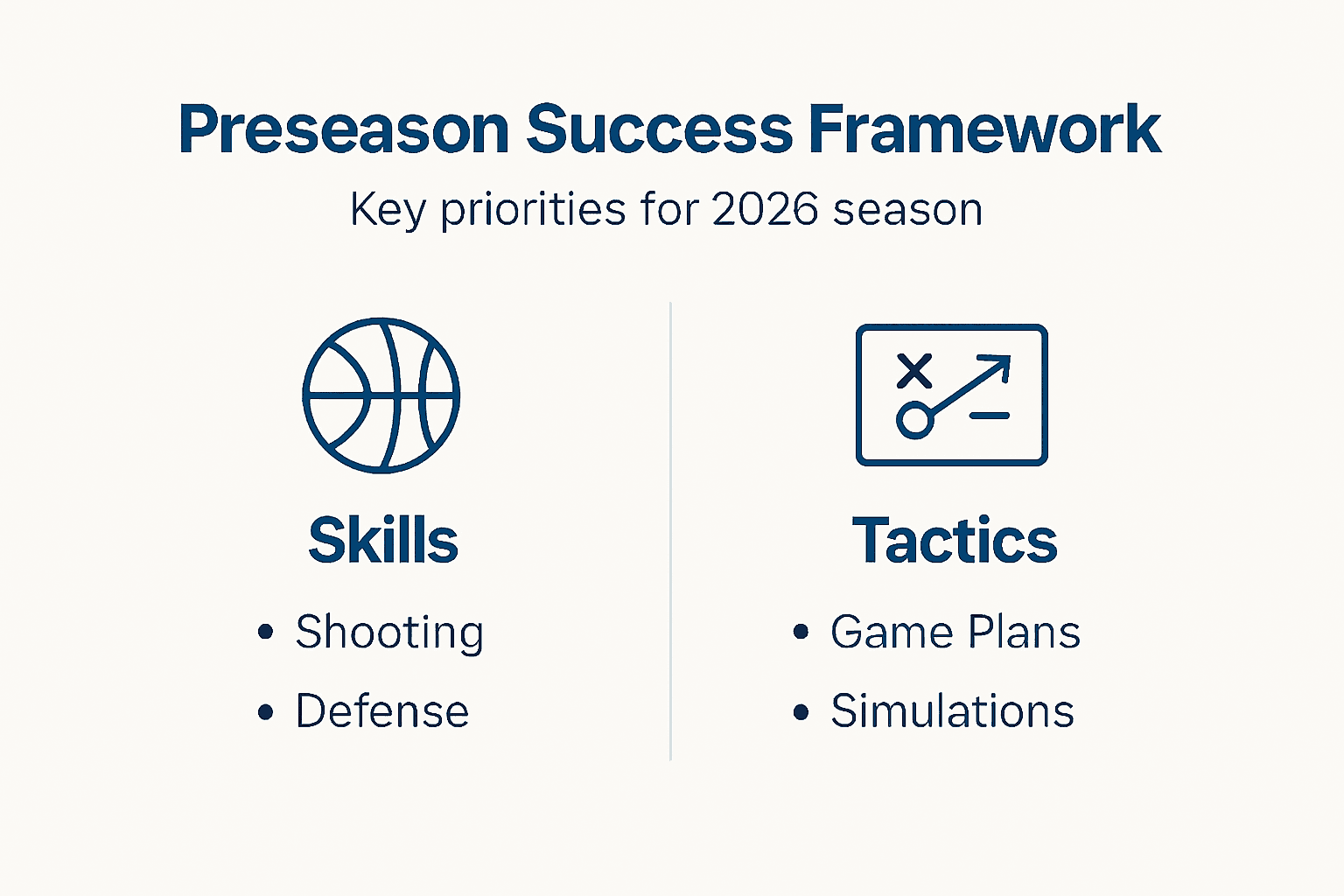
| Phase | Duration | Skills Focus | Conditioning Focus | Tactical Focus |
|---|---|---|---|---|
| Foundation | 2-3 weeks | Individual fundamentals | Aerobic base building | Individual concepts |
| Integration | 2-3 weeks | Contested skill execution | Anaerobic power development | Small group tactics |
| Competition | 1-2 weeks | Game-speed application | Peak conditioning maintenance | Full team systems |
Adapt this framework to your specific team level, available practice time, and competitive schedule. High school teams with six-week preseasons allocate two weeks per phase. College programs with longer preparation periods extend each phase while maintaining the progressive structure. Your winning practice planning checklist provides templates for organizing daily practices within this phased framework.
Applying preseason priorities for competitive season success
Maximizing your preseason investment requires ongoing management and strategic application throughout the competitive season. Progress monitoring, recovery management, and mindset reinforcement sustain the advantages created during preparation.
Continuously assess player development through objective measurements:
- Weekly shooting percentage tracking from game spots
- Timed ball handling and defensive movement drills
- Conditioning benchmarks including sprint times and recovery rates
- Tactical knowledge assessments through film review and verbal checks
- Subjective wellness monitoring for fatigue and injury prevention
Use preseason data to inform in-season coaching decisions. Players demonstrating specific skill strengths during preseason assessment should receive plays highlighting those abilities. Tactical concepts mastered during preseason become your go-to systems during competitive pressure. Physical conditioning baselines help identify when players need additional recovery.
Balance ongoing development with recovery needs to sustain peak performance. Reduce practice intensity during heavy competition periods while maintaining skill sharpness through focused repetitions. Monitor accumulated fatigue across the season and adjust workloads preventing injury and burnout.
Bridge mental and tactical readiness from preseason into competitive mindset. Reinforce goal commitments established during preparation. Reference preseason progress when motivating players through challenging stretches. The psychological foundation built during preseason sustains motivation and resilience throughout the competitive season. Review applying preseason priorities for additional strategies translating preparation into competitive advantages.
Explore Hoop Mentality’s top coaching resources
Ready to implement these preseason priorities with your team? Hoop Mentality provides comprehensive resources designed specifically for coaches seeking structured, effective preparation systems.
Our basketball fundamentals guide delivers detailed drill progressions for every essential skill. The practice planning checklist helps you organize balanced practices efficiently. Access expert-approved preseason priorities tips covering conditioning protocols, tactical frameworks, and team-building strategies. These proven resources save preparation time while improving player development and competitive results. Equip yourself with professional tools that transform preseason potential into championship performance.
Frequently asked questions about basketball preseason priorities
What is the ideal preseason length for high school teams?
Six to eight weeks provides sufficient time for balanced skill, conditioning, tactical, and mental preparation without overwhelming student athletes. This duration allows proper progression through foundation, integration, and competition phases while managing academic commitments.
How can I balance conditioning with skills drills in limited practice time?
Integrate conditioning into skill work rather than separating them. Use competitive drills requiring game-intensity effort while developing technical proficiency. This approach develops fitness and skills simultaneously, maximizing limited practice hours.
What mental preparation exercises work best in preseason?
Goal setting sessions, visualization practice, and communication drills produce measurable improvements. Dedicate five minutes daily to mental imagery of successful execution. Establish individual and team goals during the first week, then reference them regularly throughout preseason.
How do I measure preseason progress effectively?
Track objective metrics including shooting percentages, timed drills, conditioning benchmarks, and tactical knowledge assessments. Test baselines during week one, then reassess every two weeks. Quantitative data reveals which priorities need additional emphasis and celebrates player improvement.
Can preseason tactical work start before conditioning is complete?
Yes, introduce individual tactical concepts early while building conditioning simultaneously. Progress from simple tactical situations to complex team systems as fitness improves. This integrated approach prevents delays and reinforces how tactics, skills, and conditioning connect in actual competition.