

Over 80 percent of American youth basketball teams either skip or rush their warmup drills, leading to unnecessary injuries and missed performance gains. Whether you coach a local squad or guide competitive players, a strategic warmup sets the tone for every session. Learning how to design routines that match your team’s unique needs helps you elevate readiness, prevent injuries, and get the most out of every minute on the court.
Table of Contents
- Step 1: Assess Player Needs and Practice Goals
- Step 2: Select Dynamic Warm Up Activities
- Step 3: Organize Movement and Ball Drills
- Step 4: Integrate Team-Specific Routines
- Step 5: Evaluate and Adjust Warm Up Effectiveness
Quick Summary
| Actionable Insight | Clear Explanation |
|---|---|
| 1. Assess Player Needs | Evaluate individual player capabilities and specific practice goals to tailor warmup routines effectively. |
| 2. Choose Dynamic Activities | Incorporate aerobic movements and dynamic stretches that mimic basketball actions to enhance agility and flexibility. |
| 3. Structure Movement Drills | Combine footwork with ball handling drills to reinforce core basketball skills during warmup. |
| 4. Create Team-Specific Routines | Design warmup sessions that reflect team strengths and playing styles for targeted practice improvements. |
| 5. Regularly Evaluate Effectiveness | Use performance metrics and player feedback to assess and adjust warmup routines for optimal impact. |
Step 1: Assess Player Needs and Practice Goals
Designing an effective basketball warmup requires strategic evaluation of your team’s specific performance requirements and individual player capabilities. Research demonstrates that tailored warmup routines are critical for preventing injuries and enhancing athletic performance.
Successful assessment begins with a comprehensive player evaluation. Examine each athlete’s physical condition, skill level, and recovery status. Some players might need more intensive mobility work, while others require dynamic stretching or targeted strength activation. Consider factors like recent injury history, positional demands, and individual biomechanical differences. Small sided game warmup approaches can simultaneously prepare players physically and increase practice enjoyment, making them an excellent assessment tool.
To create a precise warmup strategy, analyze your specific practice goals. Are you focusing on offensive skills, defensive positioning, or overall conditioning? Each objective demands a unique warmup approach. For instance, a shooting practice might require different preparatory movements compared to a defensive drill session. Integrate player assessments with practice objectives to craft a holistic warmup routine that maximizes player readiness and minimizes injury risk.
Pro Tip: Create a standardized player assessment form with key performance indicators to track individual warmup needs consistently across practice sessions.
Step 2: Select Dynamic Warm Up Activities
Selecting the right dynamic warm up activities is crucial for preparing basketball players physically and mentally for practice or competition. A comprehensive warm up routine should include strategic aerobic activities, dynamic stretches, and movement preparation drills.
Start by incorporating aerobic movements that gradually increase heart rate and body temperature. Include exercises like light jogging, backward running, side shuffles, and high knee runs. These activities help activate major muscle groups and improve overall mobility. Next, progress to dynamic stretching that mimics basketball movement patterns. Implement exercises such as walking lunges with trunk rotation, sumo squats, leg swings, and arm circles. These movements enhance flexibility, range of motion, and prepare players for sport specific actions.
Move beyond basic stretching by introducing basketball specific movement drills. Incorporate jump and land exercises, defensive sliding drills, and quick change of direction movements. These activities not only warm up muscles but also reinforce fundamental basketball skills. Tailor the warm up intensity and complexity to match your practice objectives, ensuring players are physically and mentally prepared for the upcoming session.
Pro Tip: Rotate warm up activities to keep players engaged and prevent routine monotony, which can reduce motivation and effectiveness.
Step 3: Organize Movement and Ball Drills
Structuring effective basketball warm up drills requires strategic planning that combines fundamental movement skills with sport specific techniques. Incorporating targeted footwork exercises and shooting practice can significantly enhance player readiness and muscle activation.
Begin with foundational footwork drills that develop defensive positioning and agility. Include exercises like front pivots, crossover steps, defensive slides, and quick direction changes. These movements engage multiple muscle groups and simulate game like scenarios. Progress to shooting drills that combine movement with ball handling. Start with short range shots that require players to move into shooting positions rapidly, focusing on proper form and muscle memory. Integrate stationary shooting, shooting off cuts, and catch and shoot scenarios to create a comprehensive warm up routine.

Advance the drill complexity by connecting movement patterns with basketball specific skills. Design sequences that require players to execute footwork techniques while simultaneously handling the ball. For example, create drills where players perform a defensive slide followed by a quick pivot and jump shot, or execute a crossover dribble into a layup. These compound movements prepare players physically and mentally, reinforcing muscle coordination and sport specific reflexes.
Pro Tip: Design warm up drills that progressively increase in intensity and complexity, allowing players to build confidence and momentum before full practice engagement.
Step 4: Integrate Team-Specific Routines
Developing a customized warm up routine requires understanding your team’s unique characteristics, playing style, and performance objectives. Research demonstrates that specialized warm up programs can provide targeted improvements in athletic performance through strategic mobility exercises and neurocognitive drills.
Begin by analyzing your team’s specific strengths and weaknesses. Consider the primary playing positions, typical game strategies, and individual player characteristics. For guards, focus on quick lateral movement and ball handling drills. For centers, emphasize lower body mobility and vertical jump preparation. Incorporate position specific movements that mirror your team’s offensive and defensive schemes. This approach ensures that warm up activities directly translate to game performance, reinforcing muscle memory and tactical awareness.
Here’s a comparison of warm up focus areas by basketball position:
| Position | Key Warm Up Focus | Primary Benefit |
|---|---|---|
| Guards | Lateral movement, agility | Faster directional changes |
| Forwards | Jump preparation, mobility | Enhanced rebounding ability |
| Centers | Lower body strength, stability | Improved vertical power |
| All Players | Reaction drills, dynamic activation | Greater readiness and fewer injuries |
Progressively build complexity into your team specific routine by layering neurocognitive challenges with physical movements. Design drills that require players to make rapid decisions while executing technical skills. For instance, create warm up sequences that combine defensive positioning shifts with quick passing reactions or shooting under simulated defensive pressure. These integrated exercises enhance not just physical readiness but also mental sharpness, preparing players holistically for competitive scenarios.
Pro Tip: Rotate team specific warm up routines every few weeks to maintain player engagement and prevent training adaptation that might reduce exercise effectiveness.
Step 5: Evaluate and Adjust Warm Up Effectiveness
Research indicates significant variability in warm up routines across basketball teams, making continuous evaluation and adjustment crucial for optimizing player performance and minimizing injury risks. Developing a systematic approach to assessing your warm up routine allows coaches to make data driven improvements that directly impact team readiness.
Implement a comprehensive evaluation process that considers multiple performance indicators. Track player feedback, physical readiness metrics, and observable engagement during warm up activities. Pay attention to players individual energy levels, movement quality, and technical execution. Consider using short questionnaires to gather player perspectives on warm up effectiveness. Monitor injury rates, muscle soreness, and overall team responsiveness to different warm up strategies. Small sided game based warm ups can potentially increase player enjoyment and training adherence, making them an excellent assessment tool.
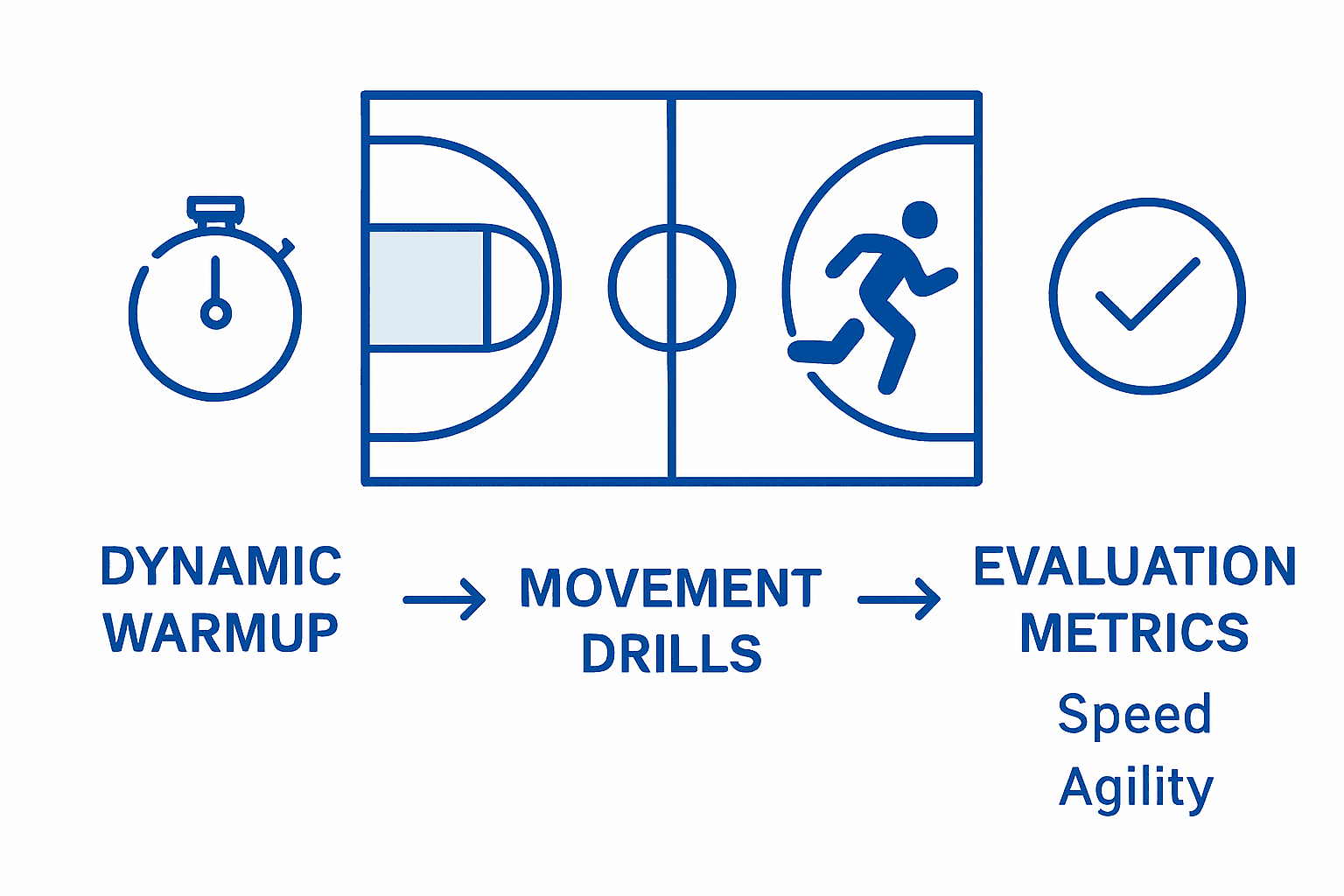
This table summarizes useful metrics for evaluating warm up effectiveness:
| Metric | What It Measures | Why It Matters |
|---|---|---|
| Player feedback | Perceived readiness | Ensures routines are effective |
| Physical performance | Speed, agility, accuracy | Tracks improvements over time |
| Injury incidence | Frequency of injuries | Assesses prevention success |
| Engagement level | Focus and participation | Indicates mental readiness |
Establish a regular review cycle for your warm up routine. Conduct monthly or quarterly assessments that compare player performance data before and after warm up modifications. Look for subtle shifts in player mobility, reaction time, and technical skill execution. Be prepared to make incremental adjustments based on empirical evidence and player feedback. Remember that an effective warm up routine is not static but an evolving system tailored to your team dynamic.
Pro Tip: Create a standardized tracking sheet that allows you to record and compare warm up effectiveness metrics across different training periods.
Elevate Your Team’s Warm Up Routine with Proven Basketball Workouts
Building an effective warm up routine is essential to prepare your players physically and mentally for success. This article highlights common challenges coaches face like assessing individual needs, organizing dynamic drills, and integrating team specific exercises that reduce injury risk and boost game readiness. If you want to save time while implementing structured and progressive warm ups that reflect these concepts, it is critical to rely on expert coaching resources designed for basketball teams at every level.

Discover a complete collection of Basketball Workouts crafted from real coaching experience. These workouts focus on dynamic warm ups, skill progressions, and team specific routines to help you consistently evaluate and adjust your training strategies. Visit Hoop Mentality today to access practical drills, detailed practice plans, and strategy guides all aimed at enhancing player readiness and practice structure. Take action now to build injury resilient, confident teams ready to dominate the court.
Frequently Asked Questions
How do I assess player needs when structuring a basketball warmup?
Begin by evaluating each player’s physical condition, skill level, and recovery state. Create a player assessment form to track individual performance indicators and tailor warmup activities accordingly.
What dynamic warmup activities should I include for basketball teams?
Incorporate aerobic movements, dynamic stretches, and basketball-specific movement drills. Aim to include exercises like light jogging, walking lunges, and defensive sliding drills to enhance mobility and readiness.
How can I organize movement and ball drills in a basketball warmup?
Start with foundational footwork drills, then progress to shooting drills that combine movement and ball handling. For example, design sequences where players execute a defensive slide followed by a jump shot to integrate skills effectively.
How do I create team-specific warmup routines for my basketball team?
Analyze your team’s strengths and weaknesses to determine key focus areas for each position. Incorporate position-specific movements that reflect your team’s gameplay, ensuring the warmup translates into real-game situations.
How can I evaluate and adjust the effectiveness of my basketball warmup?
Implement a systematic evaluation by tracking player feedback and observable performance metrics. Regularly review these metrics, looking for improvements in readiness and reducing injury rates, and make adjustments based on your findings.