

Game day nerves can quickly derail even the most skilled basketball teams, leaving coaches searching for solutions that go beyond physical drills. For many youth and high school squads, the real advantage lies in mastering mental preparation goals that build resilience, focus, and confidence under pressure. By tapping into proven strategies like visualization, mindfulness, and targeted psychological routines, coaches can help athletes transform anxiety into clarity for stronger, more consistent performance worldwide.
Table of Contents
- Step 1: Identify Mental Preparation Goals For Your Team
- Step 2: Establish A Consistent Pre-game Routine And Environment
- Step 3: Guide Players Through Visualization And Focus Strategies
- Step 4: Implement Positive Self-talk And Confidence Boosters
- Step 5: Evaluate Team Readiness And Reinforce Calm Mindset
Quick Summary
| Key Insight | Explanation |
|---|---|
| 1. Establish Clear Mental Goals | Setting defined psychological objectives enhances player resilience and focus during competition. |
| 2. Create Consistent Pre-game Routines | Structured routines help players transform anxiety into confidence and readiness for competition. |
| 3. Use Visualization Techniques | Mental rehearsal of success boosts competitive confidence and prepares players for game scenarios. |
| 4. Implement Positive Self-talk | Encouraging constructive internal dialogue builds player self-belief and resilience in challenging situations. |
| 5. Evaluate Team Readiness Regularly | Assessing emotional states and stress levels fosters a calm mindset and promotes optimal performance. |
Step 1: Identify mental preparation goals for your team
Successful basketball teams start with clear mental preparation goals. Understanding and establishing psychological objectives will help players develop the resilience and focus needed to perform consistently under competitive pressure.
To effectively set mental preparation goals, coaches must first recognize the critical psychological attributes that drive basketball performance. Mental toughness development requires a systematic approach targeting specific psychological skills. These key areas include:
- Emotional control: Managing stress and maintaining composure during high-pressure game situations
- Self-confidence: Building belief in individual and team capabilities
- Commitment: Developing consistent dedication to team strategies and performance standards
- Psychological resilience: Creating mental frameworks to bounce back from setbacks
Coaches should collaborate directly with players to craft personalized mental preparation objectives. This collaborative approach ensures that goals are meaningful, achievable, and aligned with both individual player and team needs. Psychological training methods must account for unique environmental and individual factors that shape player psychology.
Effective mental preparation is not about eliminating nervousness, but channeling that energy into focused, purposeful performance.
Pro tip: Create a team visualization session where players collectively discuss and define their mental preparation goals, fostering shared commitment and understanding.
Step 2: Establish a consistent pre-game routine and environment
Successful basketball teams understand that mental preparation is a deliberate, structured process. Creating a consistent pre-game routine helps players develop psychological resilience and focus, transforming nervous energy into powerful performance potential.
Mental preparation strategies require intentional design and commitment from both coaches and players. Coaches should develop comprehensive routines that address multiple psychological dimensions:
- Visualization techniques: Mental rehearsal of game scenarios and successful plays
- Mindfulness meditation: Grounding exercises to center players’ mental state
- Physical warm-up protocols: Integrating physical and mental preparation seamlessly
- Team communication rituals: Structured pre-game discussions to align team energy
Creating a reliable environment involves more than just physical space. Pre-game mental training requires establishing consistent emotional and psychological conditions that help players transition from pregame anxiety to competitive readiness. This means developing predictable sequences that signal to players’ brains that performance time is approaching.
A consistent pre-game routine transforms uncertainty into confidence, allowing players to channel their energy precisely where it matters most.
Pro tip: Design a 30-minute pregame routine that includes specific time blocks for individual mental preparation and team collective focus.
Step 3: Guide players through visualization and focus strategies
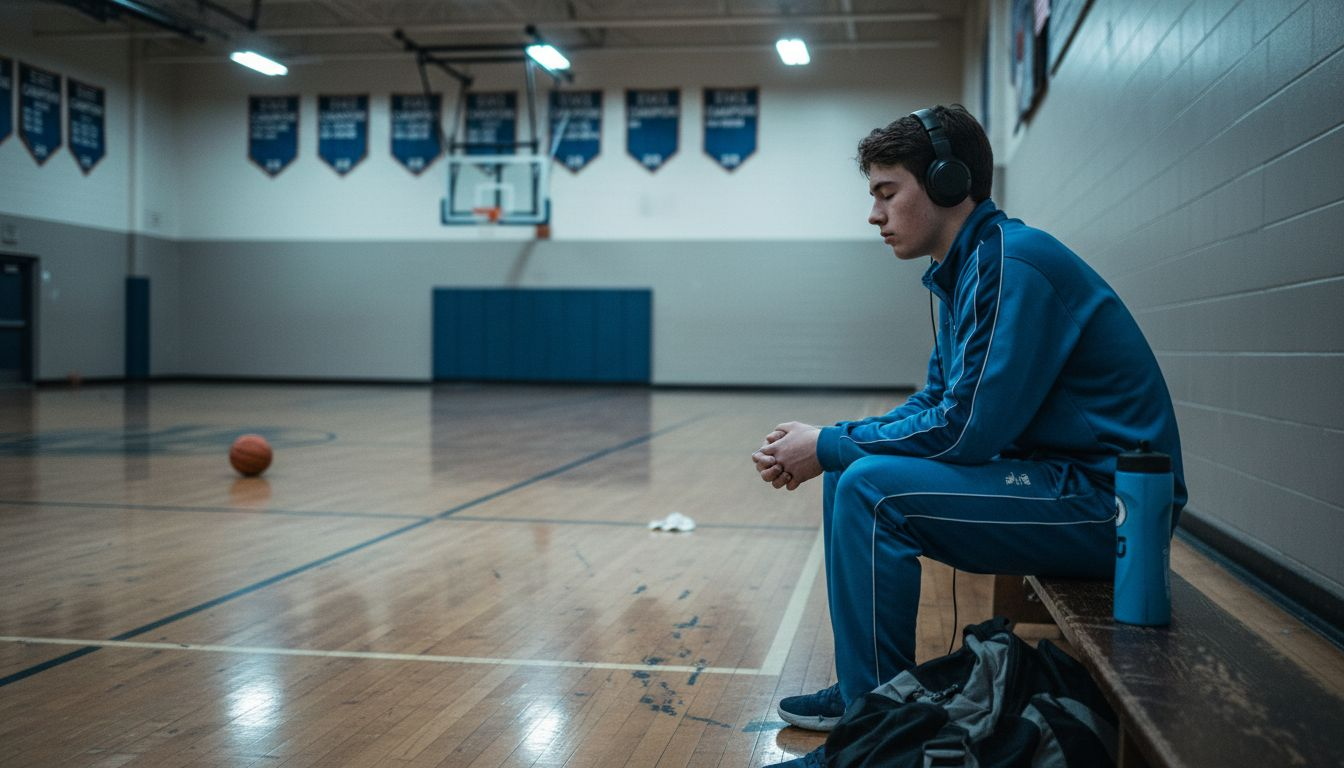
Mental preparation in basketball requires powerful techniques that transform players’ psychological approach to competition. Creative visualization meditation offers a structured method for players to mentally rehearse success and build competitive confidence.
Coaches can implement visualization strategies through targeted techniques that engage players’ mental imagery and focus. These approaches help athletes develop a proactive mindset and reduce performance anxiety:
- Mental rehearsal: Guiding players to imagine successful game scenarios in vivid detail
- Sensory engagement: Encouraging players to visualize using all five senses
- Success mapping: Creating specific mental scripts of ideal performance outcomes
- Emotional regulation: Teaching players to associate positive emotions with competitive scenarios
Effective visualization goes beyond simple daydreaming. Players must learn to create precise mental blueprints that translate directly into physical performance. This means developing techniques that are specific, repeatable, and connected to actual game dynamics.
Visualization is not about imagining perfection, but about building a realistic and confident mental framework for competition.
Pro tip: Develop a standardized 10-minute visualization protocol that players can practice individually and as a team, focusing on specific game situations and desired performance outcomes.
Step 4: Implement positive self-talk and confidence boosters
Building mental resilience in basketball requires deliberate strategies that transform players’ inner dialogue and self-perception. Mental toughness interventions play a crucial role in developing athletes’ psychological strength and competitive edge.
Coaches can cultivate positive self-talk through targeted techniques designed to reshape players’ mental frameworks:
- Affirmation development: Creating personalized, authentic statements that reinforce player strengths
- Performance narrative: Teaching players to reframe challenges as opportunities for growth
- Emotional regulation: Helping athletes recognize and redirect negative thought patterns
- Confidence calibration: Matching self-talk with actual skill development and performance evidence
Successful self-talk strategies require consistent practice and intentional coaching. Players must learn to replace self-limiting beliefs with constructive, empowering internal dialogue that builds genuine confidence and resilience.
Confidence is not about never experiencing doubt, but about developing the mental skills to move through uncertainty effectively.
Pro tip: Implement a daily 5-minute self-talk reflection exercise where players write down and verbalize their strengths, recent successes, and specific positive affirmations.
Step 5: Evaluate team readiness and reinforce calm mindset
Preparing a basketball team for competition involves more than physical training. Stress management strategies are critical for creating a resilient and focused team environment that promotes peak performance.
Coaches can assess and enhance team readiness through comprehensive mental preparation techniques:
- Emotional assessment: Conducting pre-game check-ins to gauge individual player stress levels
- Collective breathing exercises: Implementing synchronized relaxation techniques
- Performance pressure mapping: Identifying potential psychological triggers
- Mindset calibration: Aligning team mental states with competitive objectives
Successful mental readiness requires a holistic approach that addresses both individual and team psychological dynamics. Players must develop the ability to recognize and regulate their emotional states, transforming potential anxiety into focused energy.
Mental preparation is not about eliminating stress, but about developing the skills to channel competitive pressure productively.
Pro tip: Create a standardized 15-minute pre-game mental preparation protocol that includes group meditation, collective visualization, and individual stress assessment.
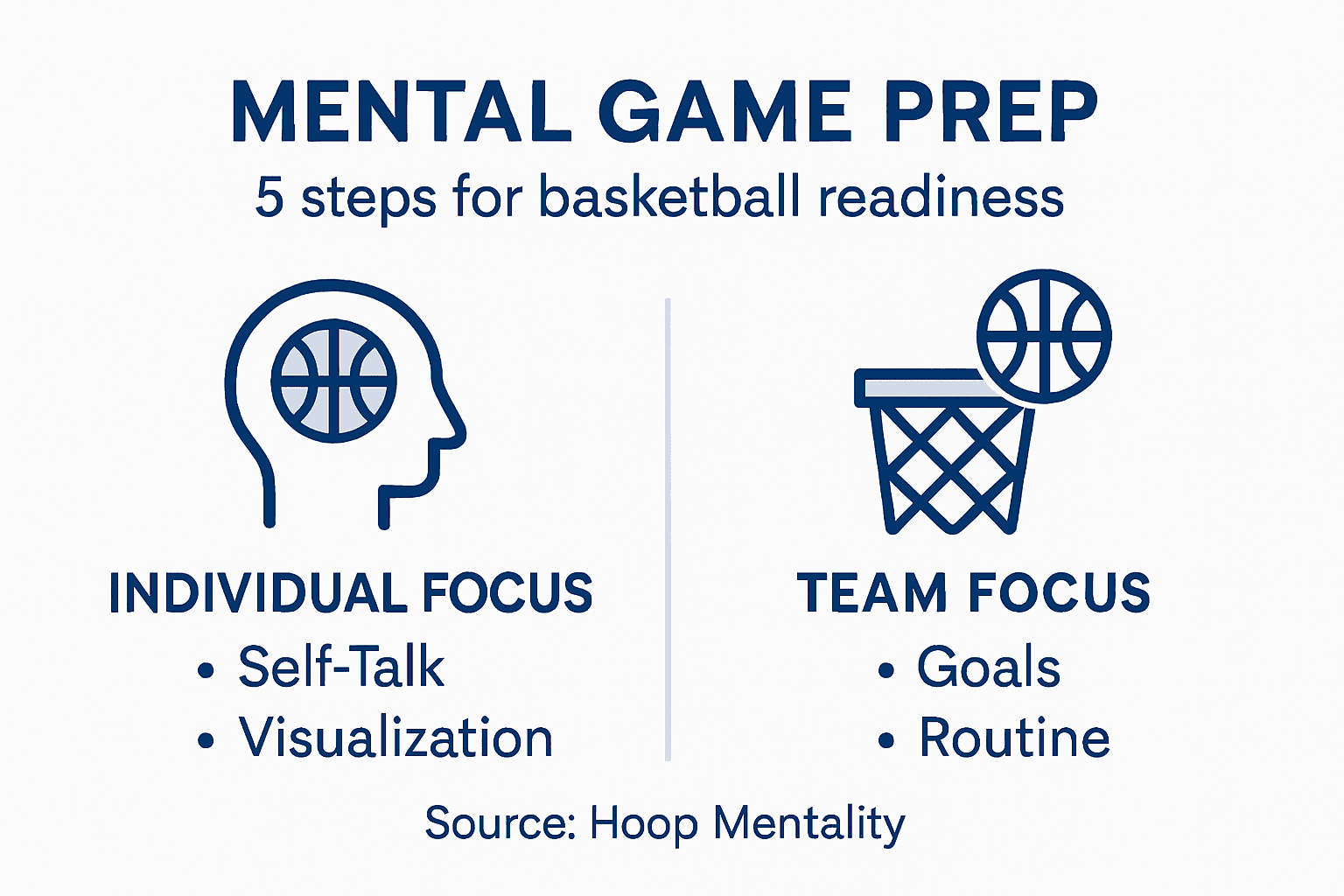
Here’s how individual and team strategies complement each other in mental preparation:
| Strategy Type | Individual Focus | Team Focus |
|---|---|---|
| Goal Setting | Tailored mental objectives | Shared group standards |
| Routine | Personalized pre-game rituals | Collective warm-up & discussions |
| Visualization | Imagining personal success | Unified team scenario rehearsal |
| Self-talk | Internal positive dialogue | Encouraging team communication |
| Readiness Assessment | Self-awareness checks | Team stress calibration |
Here’s a summary of critical mental preparation steps for basketball teams:
| Step | Main Objective | Example Technique |
|---|---|---|
| Set Goals | Build resilience & focus | Collaborative goal-setting |
| Pre-game Routine | Establish readiness | Visualization and mindfulness |
| Visualization | Boost mental confidence | Success mapping drills |
| Self-talk | Enhance self-belief | Affirmations & growth narratives |
| Readiness Evaluation | Manage stress | Emotional check-ins & meditation |
Master Mental Preparation and Elevate Your Team’s Performance
Getting your basketball team mentally ready for game day is a challenge that demands clear goals, consistent routines, and proven psychological techniques. This article highlights the key pain points coaches face such as building resilience, managing stress, and fostering confidence through visualization and positive self-talk. To truly address these needs and create a winning mindset, you need practical tools designed specifically for basketball coaching.
Take control of your team’s mental readiness with expertly crafted resources from Hoop Mentality. Our Basketball Drills and Basketball Workouts sections offer structured practice plans that integrate mental preparation seamlessly into physical training. These resources empower coaches to establish clear routines, implement confidence-building exercises, and fine-tune communication strategies with ease.
Start transforming the way your team prepares mentally for competition today. Visit Hoop Mentality now to access detailed coaching guides and step into your next game with clarity and confidence.
Frequently Asked Questions
How can I set effective mental preparation goals for my basketball team?
To set effective mental preparation goals, collaborate with your players to identify specific psychological attributes such as emotional control, self-confidence, and resilience. Create personalized objectives that resonate with both individual players and the team as a whole, ensuring they are meaningful and achievable.
What steps can I take to establish a consistent pre-game routine for my players?
Develop a structured pre-game routine that includes visualization techniques, mindfulness meditation, and physical warm-ups. Aim to create a 30-minute routine that incorporates both individual mental preparation and team focus, helping players transition from anxiety to readiness.
How do visualization strategies help improve mental readiness for a basketball game?
Visualization strategies enhance mental readiness by enabling players to mentally rehearse successful game scenarios and associate positive emotions with performance. Implement a 10-minute visualization protocol, where players vividly imagine successful plays to boost their confidence and focus before games.
What techniques can I use to encourage positive self-talk among my players?
Encourage positive self-talk by helping players develop personalized affirmations and performance narratives that frame challenges as growth opportunities. Integrate a daily 5-minute self-talk reflection exercise to help players recognize their strengths and cultivate a positive mental attitude.
How can I evaluate my team’s mental readiness before a game?
Assess mental readiness by conducting emotional check-ins with players to gauge their stress levels and implementing synchronized breathing exercises as a group. Create a standardized 15-minute pre-game protocol to include individual stress assessments and collective mental preparation techniques to align the team’s focus.
Why is mental preparation important for basketball performance?
Mental preparation is crucial as it builds resilience, focus, and confidence in players, allowing them to handle competitive pressure effectively. Prioritize mental training methods alongside physical preparation to ensure that players are mentally equipped for peak performance during games.