

Leadership in team sports is not about who talks the loudest. It is about who builds the most trust, the clearest roles, and the strongest shared purpose. Many coaches assume authority alone drives results. It does not. Research now shows that your leadership style and how you communicate directly shape whether players stay motivated, whether your team holds together under pressure, and whether they come back next season. This guide breaks down the evidence and gives you concrete tools to lead more effectively, starting with your next practice.
Table of Contents
- The foundations of leadership in team sports
- How communication shapes team cohesion and performance
- Task cohesion vs social cohesion: what really drives team success?
- Practical leadership tools for basketball coaches
- Why focusing on task cohesion transforms teams—what most coaches miss
- Next-level leadership resources for basketball coaches
- Frequently asked questions
Key Takeaways
| Point | Details |
|---|---|
| Leadership style matters | Transformational and democratic leadership boost team motivation, cohesion, and loyalty in basketball. |
| Communication drives cohesion | Strategic communication methods directly increase player retention and team engagement. |
| Task cohesion wins games | Focusing on shared goals impacts performance more than social bonds alone in high-pressure situations. |
| Practical tools work | Daily routines like debriefs, feedback sessions, and mental training strengthen leadership and culture. |
The foundations of leadership in team sports
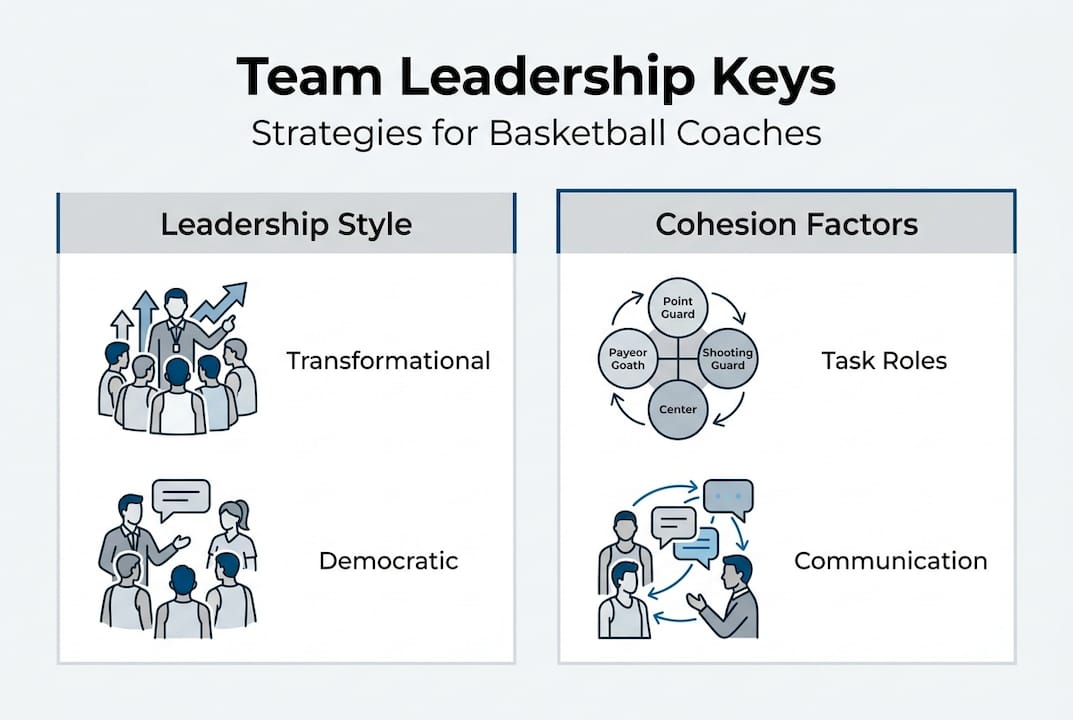
Leadership style is not just a personality trait. It is a decision you make every day, and it has measurable consequences for your team. Three styles show up most often in sports coaching research: transformational, democratic, and autocratic.
Transformational leadership means inspiring players to go beyond personal goals for the good of the team. You set a vision, model commitment, and build individual confidence. Democratic leadership means involving players in decisions, giving them ownership over team culture and strategy. Autocratic leadership means top-down control, where the coach decides everything and players follow.
Here is how these styles compare on key outcomes:
| Leadership style | Motivation | Team cohesion | Player retention |
|---|---|---|---|
| Transformational | High | High | High |
| Democratic | High | Moderate to high | Moderate to high |
| Autocratic | Low to moderate | Low | Low |
Democratic and transformational leadership styles are associated with higher intrinsic motivation and cohesion compared to the autocratic style. That gap matters more than most coaches realize.
Why does this matter beyond performance? Because transformational leadership by coaches positively relates to team identification, task cohesion, and intention to return in youth team sports. Players who feel led well come back. Players who feel controlled often do not.
Key outcomes linked to transformational and democratic leadership:
- Stronger player identity with the team
- Higher task cohesion under pressure
- Better retention from season to season
- Greater intrinsic motivation in practice and games
Autocratic coaching may produce short-term compliance, but it chips away at the internal drive that makes players push through tough moments. If you want a team that competes hard in the fourth quarter, your leadership style is where that starts. For more on developing team chemistry, the connection between leadership and player relationships is worth exploring closely.
How communication shapes team cohesion and performance
Understanding leadership styles is one thing, but what you say and how you say it ultimately drives how your team responds. Communication is not just talking. It is a system of habits that either builds trust or erodes it over time.
The most effective basketball coaches use a consistent set of communication methods:
- Active listening: Give players space to speak and show you hear them
- Clear, concise instructions: Remove ambiguity before it creates confusion on the court
- Peer-to-peer encouragement: Build a culture where players support each other, not just the coach
- Timely feedback: Address behavior and performance close to when it happens
- Visual aids: Use whiteboards, video clips, or diagrams to reinforce verbal messages
- Structured meetings: Regular team check-ins create predictability and psychological safety
These key communication methodologies for basketball coaches are not complicated, but they require consistency. One good talk does not build trust. A pattern of clear, respectful communication does.
Here is what the data shows:
| Communication factor | Impact on team |
|---|---|
| Active listening | Increases player trust and openness |
| Structured meetings | Improves role clarity and accountability |
| Timely feedback | Reduces repeated mistakes |
| Positive environment | Up to 20% higher retention and engagement |
Teams with strong communication and positive environments show up to 20% higher retention and engagement. That is not a small number. It means more players stay, more players invest, and your team culture compounds over time.
Structured, positive communication also builds what researchers call cognitive trust. That is the belief that your coach knows what they are doing and has your best interest in mind. Cognitive trust is what allows players to follow instructions without hesitation in high-pressure moments.
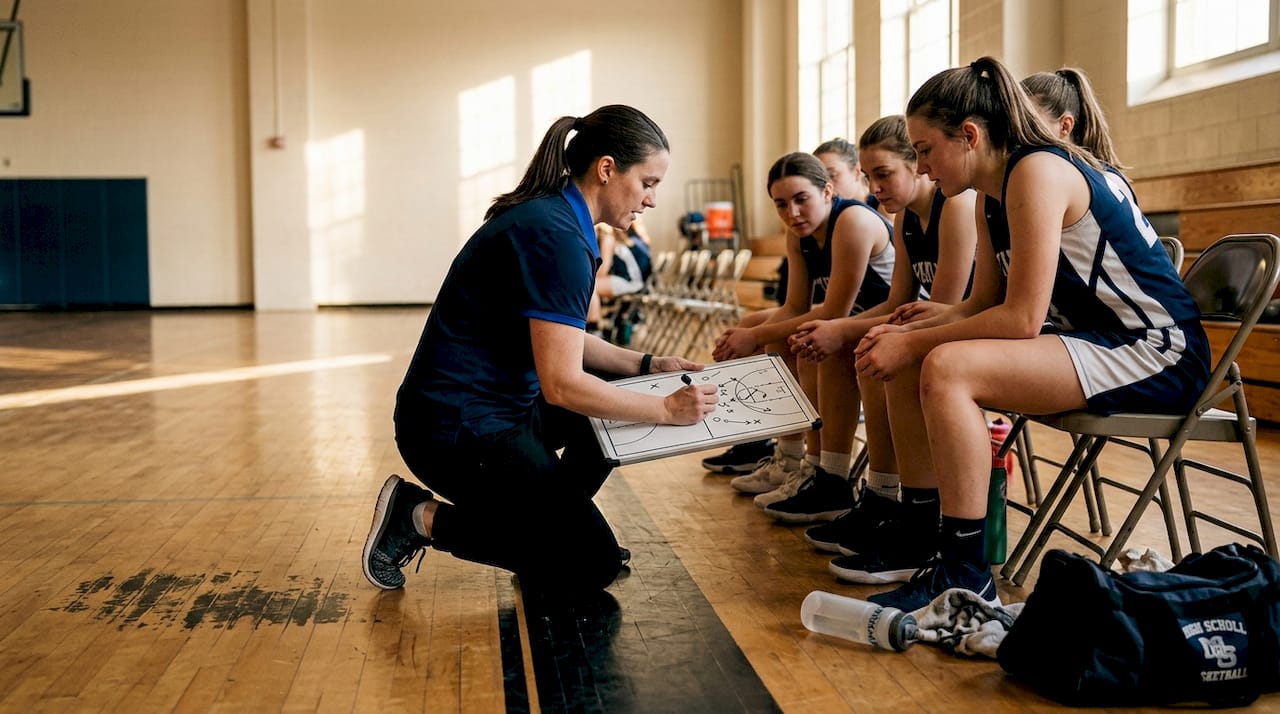
Pro Tip: Before each practice, write your two or three key messages on a whiteboard. Keep them visible. Repeat them at the end. Repetition is not redundancy. It is reinforcement.
Explore more communication methods that directly enhance team dynamics, or review the full coach communication guide for a structured approach to building these habits.
Task cohesion vs social cohesion: what really drives team success?
Strong communication naturally impacts how teams work together, but what truly holds a team together: shared tasks or social bonds?
This is one of the most misunderstood questions in coaching. Most coaches invest heavily in team bonding. Dinners, outings, trust falls. Those things are not bad. But they are not what wins games when the pressure is highest.
Task cohesion means your players are united around a common goal. They know their roles. They understand the system. They are committed to the team’s success above personal stats. Social cohesion means players like each other. They enjoy spending time together. They have personal bonds.
Both matter. But they are not equal in every situation.
“In high-pressure youth sports, task cohesion specifically drives performance and retention over social cohesion alone.”
When the game is close and players are tired, social bonds do not tell them what to do. Clear roles and shared goals do. Cognitive trust mediates the relationship between transformational leadership of university sports coaches and team task cohesion. In other words, trust in you as a coach is what makes task cohesion possible.
Strategies to build task cohesion:
- Set specific, measurable team goals at the start of each week
- Define each player’s role clearly and revisit it regularly
- Use film sessions to reinforce how individual roles connect to team success
- Create accountability structures so players track progress together
- Celebrate team milestones, not just individual highlights
The risk of overemphasizing social cohesion is real. A team that is too focused on relationships can avoid hard conversations, protect underperforming players, and lose clarity about what matters. Friendly teams can lose focus. Task-focused teams stay sharp. For practical youth teamwork tips and a deeper look at the team dynamics guide, both resources give you frameworks to act on this immediately.
Practical leadership tools for basketball coaches
With a clear understanding of what matters most, let’s get tactical about how you can lead more effectively. Theory only helps if you act on it. Here are five practical actions you can start using now.
- Daily debriefs: Spend five minutes after every practice reviewing what went well and what needs to improve. Keep it structured. Keep it short. Consistency matters more than length.
- Peer feedback sessions: Once a week, give players two minutes each to share one thing a teammate did well. This builds peer-to-peer trust and reinforces positive behavior without the coach doing all the talking.
- Structured goal-checks: At the start of each week, review your team goals. Are you on track? What adjustments are needed? This keeps task cohesion active, not just theoretical.
- Team roles review: Every two to three weeks, revisit each player’s role. Have roles shifted? Do players still feel clear about what is expected? Role ambiguity is a silent killer of cohesion.
- Visualization exercises: Before high-stakes games, guide your team through a brief visualization of executing their roles successfully. This is not just mental prep. It reinforces task cohesion by connecting individual actions to team outcomes.
Pro Tip: Mental toughness mediates leadership and cohesion, meaning that building mental resilience in your players directly strengthens the impact of your leadership on team cohesion. Add one mental toughness drill per week to your practice plan.
What you do every day matters more than what you say. Routines make leadership real. Explore team building activities that reinforce these habits, use the complete communication guide to sharpen your messaging, and apply structured feedback strategies to make every conversation count.
Why focusing on task cohesion transforms teams—what most coaches miss
Here is the uncomfortable truth: most coaches spend more time planning team dinners than clarifying player roles. That is not a criticism. It is a pattern. Social bonding feels good. It is easy to measure. Everyone smiles.
But when a game is on the line, smiles do not run the right play. Clarity does.
We have seen teams with genuine friendship and zero role clarity fall apart in tournament play. And we have seen teams with average social chemistry win tight games because every player knew exactly what to do and trusted the system. The difference was task cohesion.
The mindset shift is simple but not easy: stop asking “do my players like each other?” and start asking “do my players know their job and trust the plan?” That question changes how you run practice, how you give feedback, and how you structure your week.
If you want to build both, start with task cohesion. Social bonds tend to follow when players succeed together. The reverse is rarely true. For more on building that foundation, team chemistry advice gives you a clear path forward.
Next-level leadership resources for basketball coaches
Ready to put these insights into action? Hoop Mentality has practical tools built for coaches who want results, not just ideas.
Start with the practice plan template to organize your sessions around clear goals and roles. Add the big man dual action drill to reinforce task-focused habits on the court. Every resource at Hoop Mentality is built from real coaching experience. Explore the full collection. Find what fits your team. Apply it this week.
Frequently asked questions
What is the most effective leadership style for basketball coaches?
Democratic and transformational leadership styles consistently yield higher motivation and cohesion in teams than autocratic approaches. These styles give players ownership and build intrinsic drive.
How does communication impact basketball team retention?
Teams with strong communication and positive environments achieve up to 20% higher retention and engagement rates. Consistent, clear communication keeps players invested season after season.
What’s the difference between task cohesion and social cohesion?
Task cohesion means team members unite around goals and roles, while social cohesion is about personal bonds between players. High-pressure youth sports research shows task cohesion is the stronger driver of performance and retention.
How can coaches build mental toughness in their teams?
Coaches can incorporate goal-setting, feedback, and visualization exercises to nurture mental toughness and cohesion. Mental toughness mediates leadership and cohesion, making it a direct lever for improving team outcomes.