

Every american basketball team relies on more than just skill to succeed. Research shows that coaches who blend emotional intelligence with strategy achieve better results, yet only a small percentage truly excel in this area. With so many leadership philosophies and styles competing for attention, understanding what truly matters can be challenging. This guide breaks down the essential leadership skills and qualities every coach needs, helping you move beyond the basics to lead your team with confidence and clarity.
Table of Contents
- Defining Key Leadership Skills In Basketball
- Types Of Leadership Styles In Coaching
- Core Qualities Every Leader Should Possess
- Practical Examples From Elite Basketball Coaching
- Common Pitfalls And How To Avoid Them
Key Takeaways
| Point | Details |
|---|---|
| Emotional Intelligence is Essential | Effective basketball coaching relies on emotional intelligence, incorporating self-awareness, empathy, and strong communication skills to connect with players. |
| Diverse Leadership Styles Improve Team Dynamics | Coaches should blend various leadership styles, such as transformational and democratic approaches, to enhance player development and performance based on team needs. |
| Adaptability in Leadership is Crucial | Successful coaches maintain flexibility in their leadership strategies, avoiding rigid approaches that fail to consider individual player needs and team dynamics. |
| Avoid Common Leadership Pitfalls | Coaches must stay aware of potential missteps, such as micromanagement and communication breakdowns, to foster a positive team environment and individual development. |
Defining Key Leadership Skills in Basketball
Leadership in basketball transcends technical coaching knowledge. According to research from drpress.org, coaches must develop comprehensive leadership abilities that address not just game strategies, but also players’ psychological needs and team dynamics.
At its core, basketball leadership involves emotional intelligence and strategic interpersonal skills. As insights from arxiv.org demonstrate, successful coaches cultivate critical competencies that extend far beyond traditional management techniques. These include:
- Self-awareness: Understanding personal strengths and limitations
- Empathy: Connecting with players on a human level
- Self-regulation: Maintaining composure under high-pressure situations
- Social skills: Effectively communicating and motivating diverse team members
Effective basketball leadership requires coaches to function as mentors, strategists, and psychological guides. By developing a nuanced approach that balances technical instruction with emotional support, coaches can transform individual players into cohesive, high-performing teams.
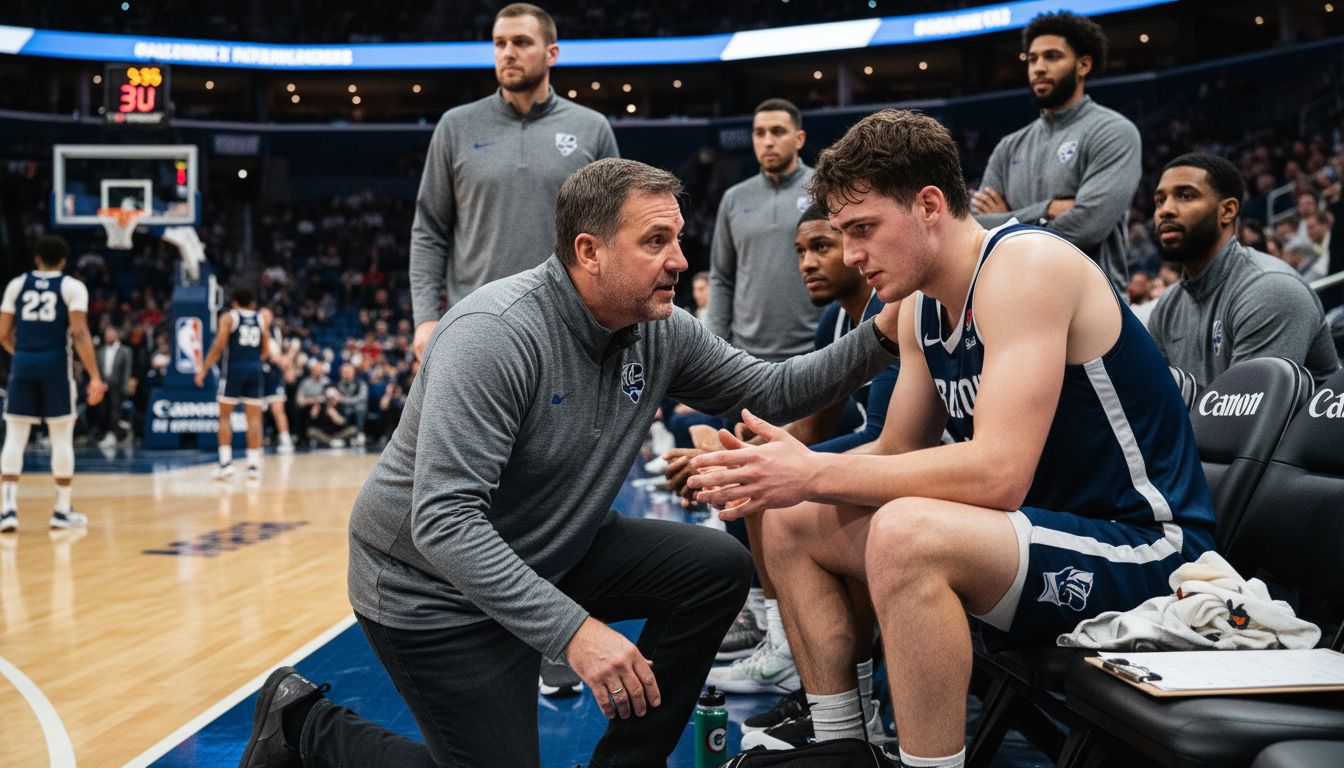 Learn more about building strong team leadership in our basketball leadership guide.
Types of Leadership Styles in Coaching
Basketball coaching involves diverse leadership approaches, each with unique strengths and challenges. According to research from jetir.org, coaches can adopt multiple leadership styles that significantly impact team performance and player development.
The most prominent leadership styles in basketball coaching include:
- Transformational Leadership: Focuses on inspiring and motivating players to exceed their own expectations
- Transactional Leadership: Emphasizes structured reward and consequence systems
- Autocratic Leadership: Characterized by direct, top-down decision making
- Democratic Leadership: Encourages player input and collaborative decision making
- Servant Leadership: Prioritizes player growth and team needs over individual coaching achievements
Research from iiste.org highlights that successful coaches often blend multiple leadership styles. The most effective approach depends on team dynamics, player personalities, and specific competitive contexts. Explore our guide on essential basketball leadership tips for deeper insights into developing a flexible and impactful coaching leadership strategy.
Core Qualities Every Leader Should Possess
Leadership in basketball demands a complex set of personal qualities that extend far beyond technical knowledge. According to research from arxiv.org, emotional intelligence stands as a critical foundation for effective coaching, encompassing skills that transform good coaches into exceptional leaders.
The most essential core qualities for basketball leaders include:
- Self-Awareness: Understanding personal strengths, weaknesses, and emotional triggers
- Empathy: Connecting genuinely with players’ individual experiences and challenges
- Adaptability: Flexibility in approach and decision making
- Integrity: Maintaining consistent ethical standards and transparency
- Communication Skills: Articulating strategies and feedback clearly and constructively
Research from arxiv.org emphasizes that heterogeneous leadership approaches, which integrate diverse perspectives and experiences, can significantly enhance team performance. By cultivating these core qualities, coaches can create an environment of trust, mutual respect, and collaborative growth.
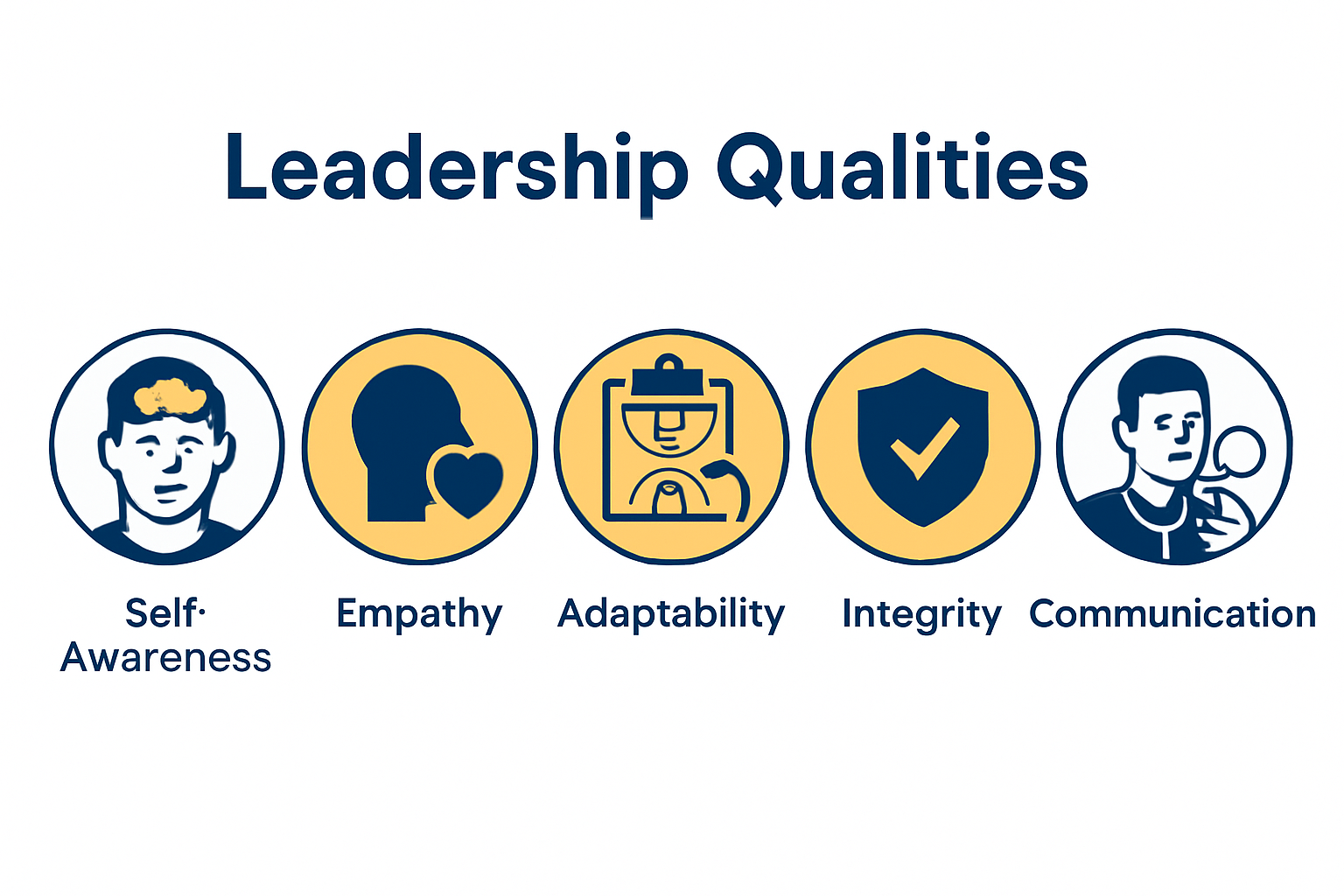 Learn more about building effective player-coach relationships in our comprehensive guide to understand how these qualities translate into practical leadership strategies.
Practical Examples From Elite Basketball Coaching
Elite basketball coaching transcends generic strategies, requiring nuanced, personalized leadership approaches. According to research from drpress.org, top coaches implement targeted training plans that systematically develop individual player potential while maintaining comprehensive team effectiveness.
Practical leadership techniques demonstrated by elite coaches include:
- Individualized Player Development: Creating custom training regimens that address specific player strengths and weaknesses
- Strategic Communication: Delivering feedback through personalized, constructive dialogues
- Performance Analysis: Using data-driven insights to guide player and team improvement
- Psychological Preparation: Building mental resilience through targeted mentoring
- Adaptive Game Planning: Modifying strategies based on real-time team dynamics and opponent behaviors
Research from arxiv.org further highlights the complexity of team interactions, demonstrating how advanced analytical approaches can decode intricate group activities and strategic patterns. These insights underscore the multifaceted nature of elite basketball coaching. Discover more about developing player leadership skills in our comprehensive guide to understand how top coaches transform individual talents into cohesive team performance.
Common Pitfalls and How to Avoid Them
Leadership in basketball coaching is fraught with potential missteps that can undermine team performance and player development. According to research from arxiv.org, leadership inflexibility represents one of the most significant challenges coaches face, with over-reliance on a single approach often leading to diminished team effectiveness.
Common leadership pitfalls coaches must actively avoid include:
- Rigid Leadership Style: Failing to adapt communication and motivation strategies to individual player needs
- Micromanagement: Overwhelming players with constant direct intervention
- Emotional Reactivity: Making decisions based on momentary frustrations instead of long-term team goals
- Communication Breakdown: Inconsistent or unclear feedback that confuses player expectations
- Neglecting Individual Development: Treating the team as a monolithic unit rather than a collection of unique individuals
Research from iiste.org emphasizes that situational leadership requires continuous learning and adaptation. Successful coaches recognize that effective leadership is not about implementing a single perfect strategy, but about remaining flexible and responsive to evolving team dynamics. Explore our guide on essential basketball coaching techniques to develop more nuanced leadership skills and learn how to navigate these potential pitfalls more effectively.
Elevate Your Coaching Leadership With Proven Resources
The journey to mastering key leadership skills in basketball requires more than just knowledge it demands practical tools that help you develop emotional intelligence, adaptability, and clear communication on and off the court. Coaches who struggle with leadership inflexibility or want to blend styles like transformational and democratic will find it challenging to reach their team’s full potential. That is where Hoop Mentality steps in with specialized resources designed to overcome these challenges and boost your coaching effectiveness.
Unlock your team’s true capabilities today by exploring our professional coaching resources at Hoop Mentality. With detailed playbooks, progressive drills, and strategy guides tailored to develop leadership qualities and enhance team culture, you will save time and lead with confidence. Start building trust, improving communication, and fostering player development by visiting this basketball leadership guide and expand your coaching toolbox with essential basketball leadership tips. Take the next step toward coaching excellence and create winning teams that thrive under your leadership now.
Frequently Asked Questions
What are the key leadership skills essential for basketball coaches?
Effective basketball coaches should possess skills such as emotional intelligence, self-awareness, empathy, self-regulation, and strong social skills to foster a cohesive team environment.
How do different leadership styles impact team performance in basketball?
Various leadership styles, including transformational, transactional, autocratic, democratic, and servant leadership, influence team dynamics and player development. Coaches often blend these styles based on specific team needs and contexts.
What qualities should basketball leaders develop to enhance team success?
Basketball leaders should focus on qualities like self-awareness, empathy, adaptability, integrity, and communication skills to build trust and promote collaborative growth within the team.
What common pitfalls should basketball coaches avoid in their leadership approach?
Coaches should avoid rigid leadership styles, micromanagement, emotional reactivity, communication breakdowns, and neglecting individual player development to maintain a positive and effective coaching environment.