

You call a timeout with two minutes left, diagram the perfect play, and send your team back on the court. But within seconds, confusion reigns as players miss their assignments and the opponent capitalizes on the breakdown. Sound familiar? Communication failures undermine even the best coaching strategies, costing games and fracturing team chemistry. Mastering basketball communication methods transforms these frustrating moments into seamless execution, building trust and cohesion that elevate performance during practices and games. This guide delivers practical techniques you can implement immediately to strengthen player-coach interactions and create a more responsive, confident team.
Table of Contents
- Key takeaways
- Preparing for effective basketball communication
- Executing communication during games and practices
- Fostering a supportive communication culture and feedback loop
- Enhance your coaching communication skills with Hoop Mentality
- Frequently asked questions about basketball communication methods
Key Takeaways
| Point | Details |
|---|---|
| Clear simple language | Using direct phrases instead of jargon helps all players understand plays. |
| Pre practiced calls | Develop a concise shorthand and practiced hand signals to communicate under noise and pressure. |
| Peer coaching | Encourage veterans to teach newcomers to reinforce concepts and strengthen team accountability. |
| Constructive feedback | Provide timely specific feedback that reinforces progress and guides improvement. |
| Coach athlete relationship | Invest in regular communication and trust to keep players engaged and motivated. |
Preparing for effective basketball communication
Before you step onto the court, establishing a solid communication foundation sets your team up for success. Setting clear practice objectives gives players a roadmap for each session, eliminating ambiguity about what you expect them to accomplish. When players understand the purpose behind every drill, they engage more deeply and retain concepts faster.
Using simple, direct language prevents the confusion that technical jargon creates, especially with younger or less experienced players. Replace complex basketball terminology with straightforward descriptions that paint clear mental pictures. Instead of saying “execute a pick and roll with proper spacing geometry,” try “set the screen, roll hard to the basket, and keep fifteen feet between you and your teammates.” This approach ensures everyone grasps the concept regardless of their basketball IQ.
Visual aids transform abstract concepts into concrete understanding. Diagrams on whiteboards, video clips of professional players executing the same techniques, and physical demonstrations all reinforce your verbal instructions. When you combine multiple sensory inputs, players absorb information through different learning channels, making retention significantly more effective.
Pro Tip: Create a visual playbook with simple diagrams for each offensive and defensive set. Laminate key pages so players can reference them during water breaks, reinforcing concepts without requiring lengthy verbal explanations.
Encouraging peer-to-peer communication builds a self-correcting team culture where players hold each other accountable. When veterans explain concepts to newer players, both groups benefit. The experienced player solidifies their understanding through teaching, while the learner receives information from someone who recently mastered the same skill. This dynamic reduces your communication burden and strengthens team bonds.
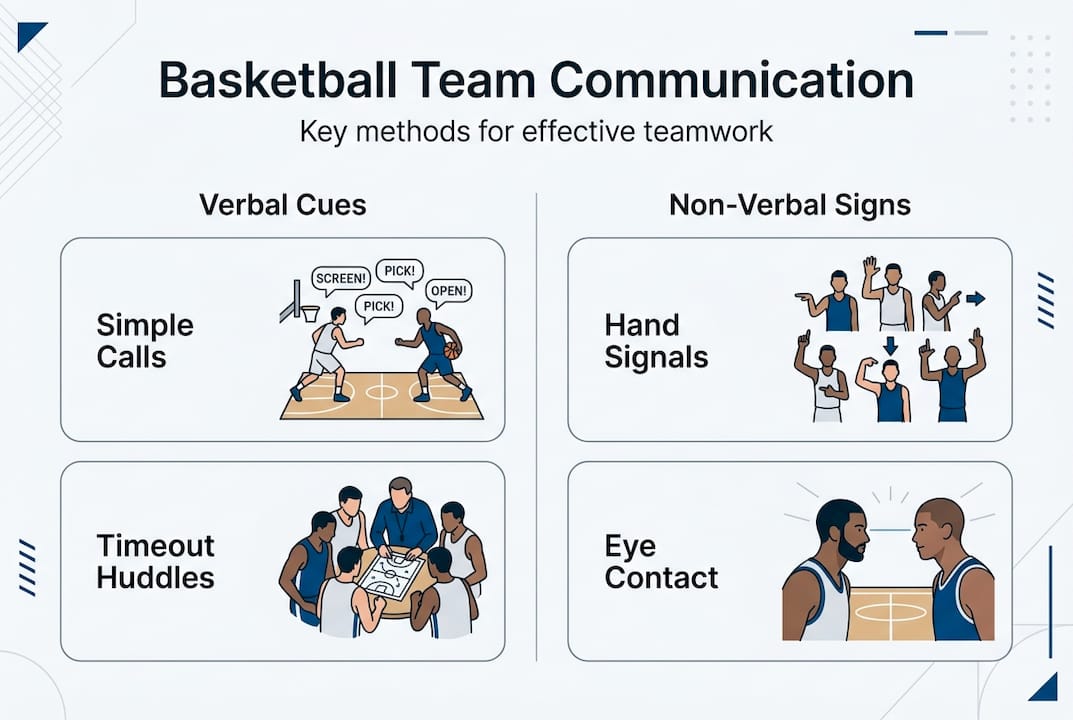
Pre-game and post-game meetings create structured opportunities for alignment and reflection. Before competition, brief meetings set tactical expectations and mental focus. Afterward, review sessions allow you to address what worked, what needs improvement, and how communication contributed to outcomes. These bookend conversations establish a rhythm that keeps everyone on the same page.
| Preparation element | Implementation method | Expected outcome |
|---|---|---|
| Practice objectives | Write 2-3 specific goals on the board before each session | Players arrive focused and purposeful |
| Simple language | Replace jargon with descriptive phrases | Faster comprehension across skill levels |
| Visual aids | Use video clips and diagrams during explanations | Improved retention of complex concepts |
| Peer communication | Pair experienced players with newer teammates | Enhanced team chemistry and learning |
| Meeting structure | Schedule 5-minute pre-game and 10-minute post-game talks | Better tactical alignment and reflection |
These preparation strategies create an environment where communication flows naturally because you have established clear channels, simple vocabulary, and multiple reinforcement methods. Your players know what to expect, how to interpret your instructions, and when to communicate with each other. This foundation makes in-game and in-practice communication exponentially more effective.
Executing communication during games and practices
When the game clock starts or practice intensity rises, your communication must adapt to the pressure and pace. Using concise pre-practiced calls eliminates confusion when split-second decisions matter most. Develop a shorthand vocabulary with your team during practice, so a single word triggers an entire tactical adjustment everyone understands instantly.
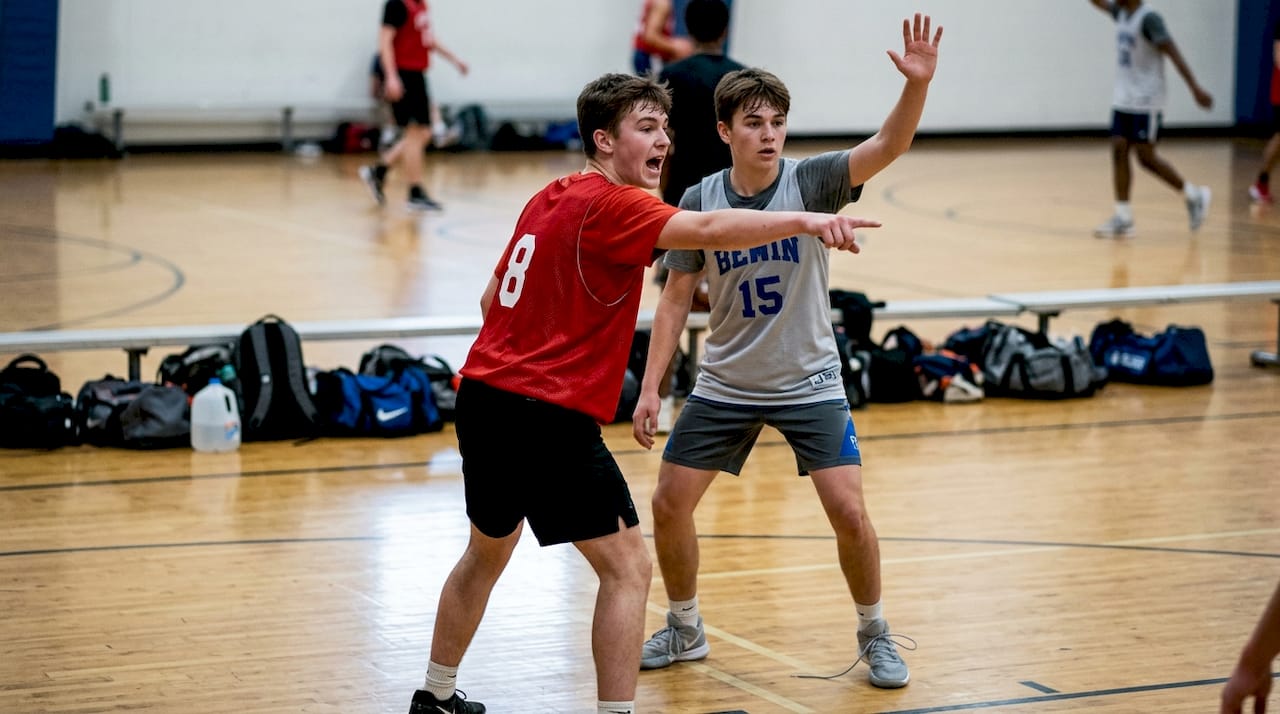
Standardized hand signals provide a silent communication layer that cuts through crowd noise and maintains the element of surprise against opponents. Create a consistent set of gestures for common situations like defensive schemes, offensive sets, and substitution patterns. Practice these signals repeatedly until they become automatic, so players react without conscious thought during competition.
Communication execution checklist:
- Establish 5-7 core verbal calls that cover your most frequent tactical adjustments
- Practice hand signals daily during the first five minutes of every session
- Limit instructions to one key point per timeout or dead ball situation
- Use players’ names before giving individual corrections to ensure attention
- Repeat critical information twice using different phrasing for clarity
Controlling your emotional tone maintains player focus and prevents panic during challenging moments. Research shows coaches convey instructions with alert and tense emotions during technical guidance, while observation periods carry neutral and anxious tones. Being aware of these emotional patterns helps you modulate your voice to match the situation. When you stay calm during a comeback attempt, your players mirror that composure and execute more effectively.
Pattern recognition allows you to anticipate situations and communicate proactively rather than reactively. When you notice the opponent running the same play for the third time, call out the counter before they initiate. This anticipatory communication positions your team ahead of the action, creating defensive advantages and offensive opportunities. Your players learn to read the game through your eyes, developing their own pattern recognition skills.
Step-by-step timeout communication process:
- Gather the team quickly and establish eye contact with each player
- Acknowledge what is working well to maintain confidence
- Identify one specific tactical adjustment needed
- Demonstrate or diagram the adjustment visually
- Confirm understanding by having a player repeat the instruction
- End with a motivational statement focused on execution
Avoiding information overload during high-pressure moments prevents paralysis by analysis. When you bombard players with multiple instructions simultaneously, they retain none of them effectively. Instead, prioritize the single most important adjustment that will impact the next possession. Save comprehensive analysis for halftime or post-game when players have mental bandwidth to process complex feedback.
| Game situation | Optimal communication approach | Words or signals to avoid |
|---|---|---|
| Opponent’s run | Calm tone, one defensive adjustment | Multiple simultaneous changes |
| Close finish | Pre-practiced call, hand signal confirmation | Long explanations or new concepts |
| Blowout game | Teaching moments with detailed feedback | Emotional outbursts or blame |
| Timeout | Visual aid, player confirmation | Information dump without structure |
Implementing basketball timeout strategies that emphasize clarity over volume transforms these brief windows into powerful coaching moments. Your players leave the huddle with crystal-clear understanding and renewed focus, ready to execute exactly what you need. This precision in communication creates a competitive advantage that compounds throughout the season as your team becomes increasingly responsive to your guidance.
Fostering a supportive communication culture and feedback loop
Building trust-based relationships with your players creates the foundation for effective communication that extends beyond Xs and Os. When players trust you genuinely care about their development as people and athletes, they become more receptive to coaching, more willing to take risks, and more committed to team success. Research demonstrates that a high-quality coach-athlete relationship predicts training engagement and shooting skill improvement, proving this connection directly impacts performance outcomes.
Using verbal encouragement strategically boosts player performance and enjoyment during practice. Studies show verbal encouragement in small-sided games increases player fatigue, enjoyment, and successful passing and shooting, meaning your positive words literally enhance physical output and skill execution. This does not mean empty praise for mediocre effort, but rather specific recognition of good decisions, proper technique, and improvement over previous performances.
“Catch them doing something right. Players hear criticism constantly, but specific praise for correct execution reinforces the behaviors you want to see repeated. Balance is essential, but weighted toward the positive.”
Delivering timely and constructive feedback after mistakes accelerates learning while maintaining player confidence. The key lies in timing and specificity. Immediate feedback during practice allows players to adjust on the next repetition, but avoid interrupting every mistake or you create hesitant, overthinking athletes. Instead, let them attempt the skill multiple times, then provide targeted guidance that addresses the root cause rather than surface symptoms.
Pro Tip: Use the “sandwich method” sparingly and authentically. Start with what they did well, address the correction needed, and end with confidence in their ability to improve. This only works when each component is genuine and specific, not formulaic praise-criticism-praise that players see through immediately.
Encouraging peer-to-peer communication enhances learning and cohesion by distributing leadership throughout your roster. Create structured opportunities for players to coach each other during drills, such as pairing them up to provide feedback on shooting form or defensive stance. This approach develops communication skills in your players while building a culture where everyone takes ownership of team improvement.
Reducing punitive feedback increases motivation and confidence across your roster. A training program that improved coaches’ supportive behaviors and decreased punitive behaviors led to increased technical instructions after mistakes, creating a more positive learning environment. This does not mean eliminating accountability, but rather framing corrections as opportunities for growth rather than failures deserving punishment.
Feedback culture best practices:
- Deliver corrections privately when possible to preserve player dignity
- Focus on controllable actions rather than outcomes beyond their control
- Ask players questions that guide them to self-correct rather than always providing answers
- Celebrate improvement and effort as much as results
- Create a team norm where mistakes during practice are expected and welcomed as learning opportunities
This supportive communication culture compounds over time as players become more confident, more willing to communicate with you and each other, and more resilient when facing adversity. Your team develops a shared language built on trust, where feedback flows in multiple directions and everyone contributes to collective improvement. This environment produces not just better basketball players, but more confident young people who carry these communication skills into every area of their lives.
Enhance your coaching communication skills with Hoop Mentality
Implementing these basketball communication methods becomes easier when you have structured resources that support your development as a coach. The communication principles you have learned here integrate seamlessly with targeted skill development drills that require clear instruction and player interaction. Hoop Mentality offers resources specifically designed to help you practice and refine your communication approach while building your team’s skills.
The big man dual action drill provides an excellent opportunity to practice concise verbal calls and hand signals while developing your post players’ offensive versatility. This drill requires constant communication between coaches and players as they learn to read defensive reactions and make quick decisions. Similarly, the game preparation guide with weekly practice plan helps you structure sessions that prioritize communication development alongside tactical and physical preparation, ensuring your team builds these essential skills systematically throughout the season. Explore the complete collection of coaching resources at Hoop Mentality to find tools that match your team’s specific needs and your communication goals.
Frequently asked questions about basketball communication methods
How can I avoid overwhelming players with communication during a game?
Focus on delivering one key instruction per dead ball or timeout rather than multiple simultaneous adjustments. Prioritize the single tactical change that will most impact the next possession, and save comprehensive analysis for halftime when players have mental capacity to process detailed feedback. Use pre-practiced shorthand calls that trigger complete tactical adjustments with minimal words.
What are effective non-verbal signals to use?
Develop 5-7 standardized hand signals for your most common situations, including defensive schemes like switching to zone or man-to-man, offensive sets you run frequently, and substitution patterns. Practice these signals daily during the opening minutes of practice until they become automatic. Ensure signals are distinct and visible from across the court, avoiding similar gestures that could create confusion.
How does coach emotion affect player responses?
Your emotional tone directly influences player focus and confidence during high-pressure situations. Coaches naturally convey technical instructions with alert and tense emotions, but maintaining composure during challenging moments helps players stay calm and execute effectively. When you panic or show frustration, players mirror that anxiety and make more mistakes, creating a negative spiral that undermines performance.
What’s the best way to give feedback after mistakes?
Deliver corrections immediately during practice to allow adjustment on the next repetition, but avoid interrupting every error or you create hesitant athletes. Focus on the root cause rather than surface symptoms, and frame feedback as opportunities for growth rather than failures. When possible, provide corrections privately to preserve player dignity, and balance criticism with recognition of what they are doing well to maintain confidence.
How can I encourage players to communicate more among themselves?
Create structured opportunities during drills where players must coach each other, such as pairing experienced athletes with newer teammates to provide feedback on technique. Establish a team norm that values vocal communication on defense and offense, and recognize players publicly when they demonstrate strong peer-to-peer communication. Model the communication behaviors you want to see by actively listening when players speak and incorporating their input into practice plans.
Why should I invest time building relationships beyond basketball?
Strong coach-athlete relationships directly predict training engagement and skill improvement, meaning the time you invest in knowing your players as people translates into measurable performance gains. Players who trust you genuinely care about their development become more receptive to coaching, more willing to take risks, and more committed to team success. This connection creates a foundation for effective communication that extends far beyond tactical instruction.