

TL;DR:
- Set plays are pre-designed actions that create high-percentage scoring chances by eliminating guesswork and ensuring players understand their roles. They are useful for executing specific shots, exploiting mismatches, drawing fouls, securing rebounds, and managing game clock situations. However, reliance on set plays can lead to predictability and limit creativity, so they should be balanced with motion offense principles for optimal results.
Set plays are pre-designed, repeatable actions coaches call to create high-percentage scoring chances and control specific game moments. They work because they remove guesswork. When your team runs a set play, every player knows their role, their timing, and their read before the ball is even inbounded.
Here is why coaches use set plays:
- Create specific shots. Set plays are built to produce a target action: a corner three, a post feed, a layup off a screen.
- Exploit mismatches. A scripted action can isolate a weak defender or force a switch that favors your personnel.
- Draw fouls. Plays designed around driving actions or post entries put defenders in difficult positions.
- Secure offensive rebounds. Assign rebounding lanes inside the play design so players crash with purpose, not instinct.
- Manage the clock. End-of-game and end-of-shot-clock situations need structure. Set plays deliver it.
Coach-sourced guidance from Winning Hoops confirms that the most effective set plays prioritize simplicity and a small number of clear options so teams can execute reliably under pressure. Hoop Mentality’s playbooks are built on that same principle: clear roles, practiced timing, and a primary read with one solid fallback.
Table of Contents
- Why do set plays actually help your team score?
- What are the real drawbacks of relying on set plays?
- Set plays versus motion offense: which one fits your situation?
- When should you call a set play during a game?
- How do you design and teach a set play that actually works?
- What execution habits separate good set plays from broken ones?
- What do popular set plays actually look like in practice?
- Key Takeaways
- The part most coaches get wrong about set plays
- Hoop Mentality has the set plays ready to run
- Useful sources
- FAQ
Why do set plays actually help your team score?
The core benefit is controlled scoring opportunities. Set plays turn stoppages into planned attacks rather than chaotic possessions. Instead of five players improvising, you get a scripted sequence that puts the ball where you want it, when you want it there.
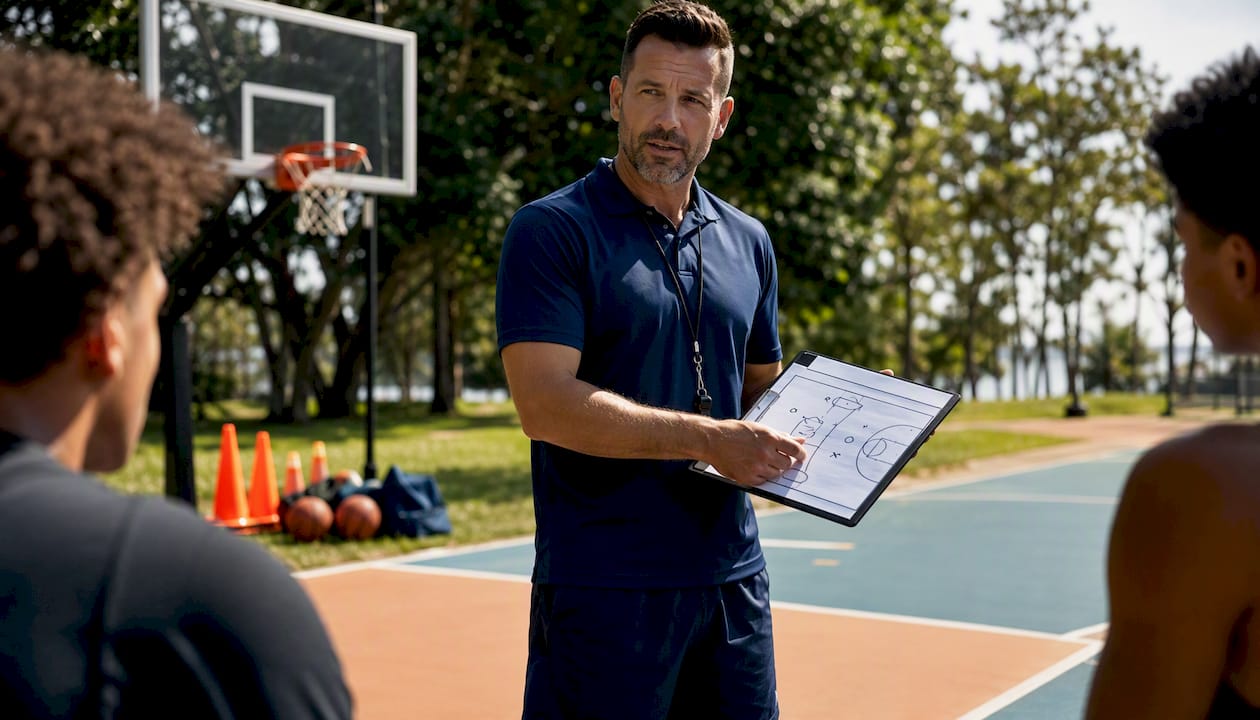
Consistency and timing. Repetition in practice produces faster reads in games. When players have run the same action 50 times, they stop thinking and start reacting. That speed is the difference between a clean catch-and-shoot and a contested pull-up.
Purpose-built design. Every set play should have a stated objective. Some are built to draw fouls by forcing a drive into a help defender. Others are designed to crash the offensive glass with two assigned rebounders while the shooter holds spacing. Knowing the purpose before the play starts changes how players move.
Matchup exploitation. When you spot a mismatch during the game, a set play lets you attack it systematically. You are not hoping the ball finds the right player. You are scripting the action so it gets there on time.
Cross-sport data supports the value of rehearsed routines. In soccer, roughly a significant proportion of goals come from set-piece situations, which shows how much value rehearsed plays add when teams treat stoppages as controlled opportunities. Basketball coaches can apply the same logic: every timeout, every inbound, every end-of-clock possession is a chance to run something you have already practiced.
Pro Tip: Design each set play around one or two specific objectives, such as drawing a foul or generating an offensive rebound. A play that tries to accomplish everything usually accomplishes nothing.
Set plays also teach. When players run the same action repeatedly, they learn the visual cues that trigger the next option. That read-building process transfers to motion offense and half-court decision-making. The play is the vehicle; the read is the lesson.
What are the real drawbacks of relying on set plays?
Set plays have trade-offs. Knowing them helps you use sets at the right moments and avoid over-relying on them.
- Predictability. Opponents scout. If you run the same play every fourth possession, a prepared defense will take away your primary option before the action even starts.
- Over-dependence. Players who only know what to do when a play is called struggle when the defense disrupts the script. Heavy set-play systems can limit creativity and game instincts, especially in younger players.
- Practice cost. Teaching a play takes time. Every rep on a set play is a rep not spent on skill work or motion principles.
- Pressure breakdowns. In tight games, players revert to habits. If the play is not deeply ingrained, it falls apart exactly when you need it most.
Mitigations:
- Run plays from the same formation with minor variations. Multiple entries from one formation make scouting harder without requiring players to learn entirely new plays.
- Keep your playbook small. Five plays run well beat twenty plays run poorly.
- Use misdirection inside the play: a dummy screen or a false ball movement before the real action starts.
- Balance set-play reps with open motion work so players stay creative.
Pro Tip: If a set play breaks down, players should have a default: kick out and reset, or attack the scramble. Build that rule into every play you teach so breakdowns become opportunities, not dead possessions.
Set plays versus motion offense: which one fits your situation?
Set plays and motion offense are not opposites. They are tools for different jobs.
Set plays are scripted sequences. Every player has an assigned action, a timing cue, and a read. The coach controls the outcome.
Motion offense runs on principles: spacing, constant movement, and reads. Players make decisions based on what the defense gives them. Motion offenses favor unpredictability and player development, especially at youth and developmental levels.
| Category | Set Plays | Motion Offense |
|---|---|---|
| Timing control | High — scripted actions | Low — player-driven |
| Personnel fit | Specific — built around your roster | Flexible — adapts to any lineup |
| In-game adaptability | Low — works as designed or not | High — reads adjust in real time |
| Practice cost | High — each play needs reps | Lower — principles transfer across situations |
| Scouting resistance | Low — predictable if overused | High — harder to prepare for |
| Best for | End-of-clock, inbounds, matchup attacks | Game flow, development, tempo control |
When to run a set play:
- End-of-shot-clock or end-of-game possession.
- You have a clear mismatch to exploit.
- Coming out of a timeout after an opponent run.
- Inbound situations after a foul or stoppage.
When to stay in motion:
- Early in the shot clock with no obvious advantage.
- Against a zone that is shifting and hard to script against.
- When your personnel reads the game better than any script.
The best approach is hybrid. Use a set entry that flows into motion principles. Call the play to create the initial action, then let players read and react from there. That structure gives you control at the start and freedom at the end.
When should you call a set play during a game?
Timing matters as much as design. A well-drawn play called at the wrong moment is wasted.
Common in-game triggers:
- Timeout after an opponent scoring run (3+ unanswered points).
- End-of-shot-clock possession with 8 seconds or fewer.
- Inbound after a foul when you need a quick score.
- Late-game isolation for your best scorer.
- After an offensive rebound with the defense scrambling.
Mini-scenarios:
- 10-second clock, down two. Call a quick-hitter BLOB (baseline out-of-bounds) or a side-out with a single screen. One read, one shot. No time for complexity.
- After an offensive rebound. The defense is out of position. A short set with a post entry or a kick-out to the corner can get a clean look before they recover.
- You need a foul. Design the play to drive baseline or attack the post. Put the ball in the hands of your best free-throw shooter in a position where contact is likely.
- Opponent overloading one side. Run a set that attacks the weak side with a skip pass and a corner catch-and-shoot.
Who calls it and how: The head coach calls the play during a timeout or signals it from the sideline. Players confirm with a verbal or hand signal before the inbound. Keep signal systems simple. One word, one gesture per play.
How do you design and teach a set play that actually works?
Good set plays start with a clear purpose and get built backward from the shot you want to create.
Step 1: Choose your emphasis. Pick one or two objectives per play: draw a foul, generate an offensive rebound, or free a shooter. Coaching guides advise choosing 1–2 emphasis points per play so the design stays aligned with your team’s current priorities.
Step 2: Apply design principles. Keep actions simple. Use the same formation for multiple plays so the defense cannot read your intent from your alignment. Build in one primary option and one fallback, and make sure both options attack the same objective.
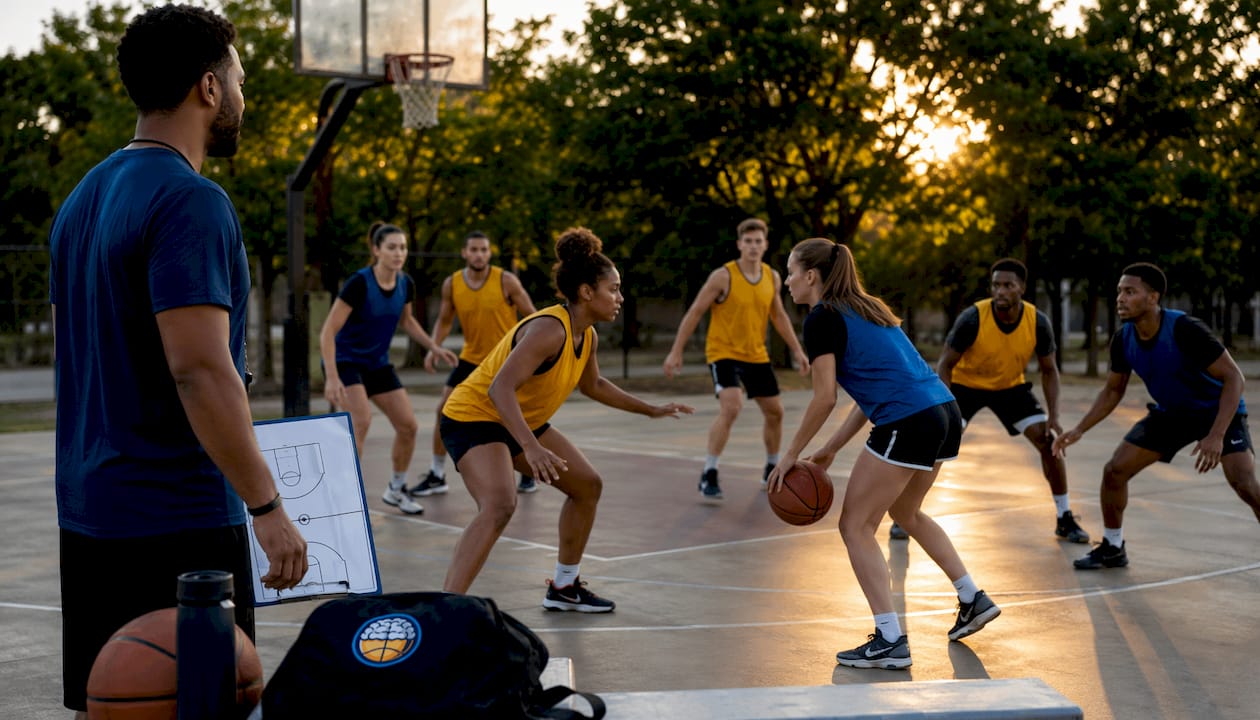
Step 3: Teach positions first. Before players move, they need to know where they start and why. Walk through starting spots without any ball movement.
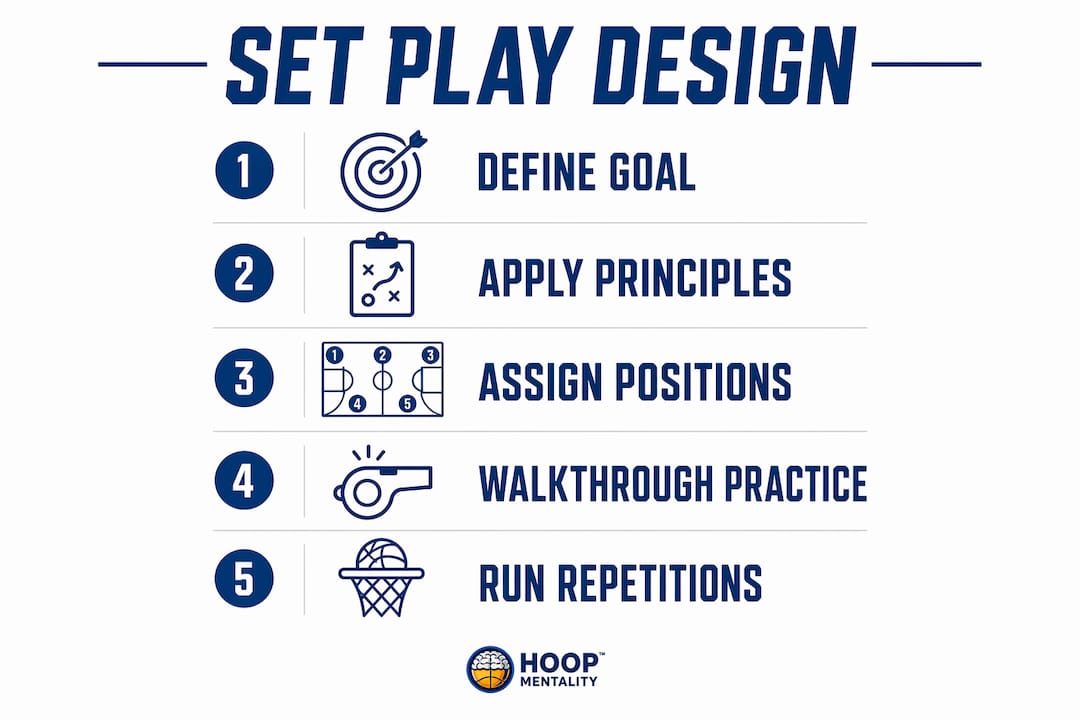
Step 4: Run walkthroughs. Full-team walkthroughs at half speed. No defense. Focus on timing and spacing.
Step 5: Add live reps. Introduce soft defense, then contested defense. Practice progression should move from low-speed walkthroughs to full-speed reps with real consequences.
Step 6: Log outcomes. Track which plays produce the target action in practice. Drop the ones that consistently break down.
“The best set plays are simple, meet the team’s current needs, and prioritize flawless execution over having many options.” — Harri Mannonen, via Winning Hoops
A reliable practice template: spend 2–3 minutes on full-team walkthroughs, run 6–8 reps at 50% speed, then 8–12 contested reps. Log outcomes to decide which sets stay in your playbook.
Pro Tip: Build hidden options into every play by designing the initial action to teach spacing and reads. A swing pass or a forced screen sequence that makes the defense rotate creates the conditions for your primary scoring action, even if the defense takes away the first look.
What execution habits separate good set plays from broken ones?
Design gets you to the gym. Execution gets you the basket.
Spacing checklist:
- All five players are in their assigned spots before the ball is inbounded.
- No two players are within 12 feet of each other unless a screen is set.
- The corner shooter is ready to catch, not still moving into position.
Timing cues:
- The screener sets before the cutter moves.
- The passer reads the cutter’s second step, not their first.
- The roller attacks the rim the moment the ball leaves the passer’s hands.
Coaching cues for players (short, repeatable):
- “Set it early.” (Screeners must be in position before the cutter breaks.)
- “Read the top foot.” (Cutters read the defender’s top foot to decide direction.)
- “Feed the roller first.” (When the pick-and-roll is run, the roller is the primary read.)
- “Seal and hold.” (Rebounders hold their lane for two full seconds after the shot.)
Timeout checklist for coaches:
- Name the play clearly.
- State the primary read in one sentence.
- Confirm the signal.
- Remind players of the fallback option.
- Send them out with one execution cue, not five.
Keep it short. Players retain one or two instructions under pressure, not a full scouting report.
What do popular set plays actually look like in practice?
Three short examples show how different purposes shape different designs.
The stack BLOB (baseline out-of-bounds)
Formation: Four offensive players stacked near the elbow. Key action: Two players screen for the two shooters simultaneously. The inbounder reads which defender cheats. Primary read: Corner three for the shooter who gets clean separation. Fallback: Lob to the cutter who slips the stack early. Why it’s run: Creates a quick, clean look from a dead-ball situation with no shot clock pressure. Practice emphasis: Timing of the double screen and the inbounder’s read. The Multiple Option Stack BLOB Play Set from Hoop Mentality is built around this exact structure, with multiple entries from the same formation.
The pick-and-pop set
Formation: Ball handler at the top, shooting big at the elbow. Key action: Ball handler drives baseline, big sets a ball screen and pops to the three-point line. Primary read: Catch-and-shoot three for the big off the pop. Fallback: Drive continuation if the defense collapses on the roller. Why it’s run: Punishes defenses that hedge hard on ball screens by leaving a shooter open at the arc. Practice emphasis: The big’s footwork on the pop and the guard’s timing on the pass. The Modern Pick And Pop Playbook from Hoop Mentality covers this action with full diagrams and practice progressions.
The 2-3 zone set
Formation: High-low with a wing entry. Key action: Ball swings from wing to corner, forcing the zone to shift. A cutter attacks the gap at the high post. Primary read: High-post catch with a direct drive or a skip to the weak-side corner.
Fallback: Offensive rebound crash from the weak-side forward.
Why it’s run: Zone defenses have predictable gaps. A scripted ball movement sequence opens those gaps on time. The Ultimate 2-3 Zone Offense Set Play from Hoop Mentality maps this action with specific player assignments and reads.
| Play | Primary Purpose | Key Practice Focus |
|---|---|---|
| Stack BLOB | Quick corner three from inbound | Double-screen timing, inbounder’s read |
| Pick-and-pop set | Shooting big off ball screen | Big’s pop footwork, guard’s pass timing |
| 2-3 zone set | Attack zone gaps with ball movement | Ball swing timing, weak-side crash |
Key Takeaways
Set plays work because they turn stoppages and pressure moments into controlled, practiced scoring actions with clear roles and reads for every player.
| Point | Details |
|---|---|
| Design around one purpose | Pick 1–2 objectives per play so every action serves the same goal. |
| Use same-formation variations | Running multiple plays from one formation makes scouting harder without adding complexity. |
| Practice progression matters | Move from walkthroughs to contested reps; log outcomes to keep only what works. |
| Balance sets with motion | Use set entries that flow into motion principles for adaptability and player development. |
| Hoop Mentality playbooks | The Stack BLOB, Pick-and-Pop, and 2-3 Zone resources give coaches ready-to-run sets with diagrams and practice plans. |
The part most coaches get wrong about set plays
Most coaches treat set plays as a collection of diagrams. Draw it up, teach it once, run it in a game. When it breaks down, they add another play. Then another. The playbook grows, execution stays thin, and the team runs nothing well.
The coaches who get real value from set plays treat them as a teaching tool first and a scoring tool second. When you design a play around a specific read, and you run that play enough times that players recognize the cue without thinking, you are not just running a set. You are building decision-making habits that carry into every other possession.
The other mistake is using set plays as a crutch for poor spacing and poor skill. A set play cannot fix a player who cannot catch under pressure or a screener who sets soft screens. The play creates the opportunity. The player still has to execute. That is why the player development process and the set-play system have to run in parallel, not in sequence.
One more thing: the teams that struggle most with set plays are the ones that run too many. Five plays, deeply practiced, with clear signals and a known fallback, will outperform a 30-play system every time. Cut the playbook. Run what you know. Win the moments that matter.
Hoop Mentality has the set plays ready to run
Coaches who want structure without spending hours drawing up plays from scratch have a direct option. Hoop Mentality’s ready-to-run playbooks cover the three most common set-play needs: attacking zone defenses, running inbound plays with multiple options, and building pick-and-pop actions into your half-court offense.
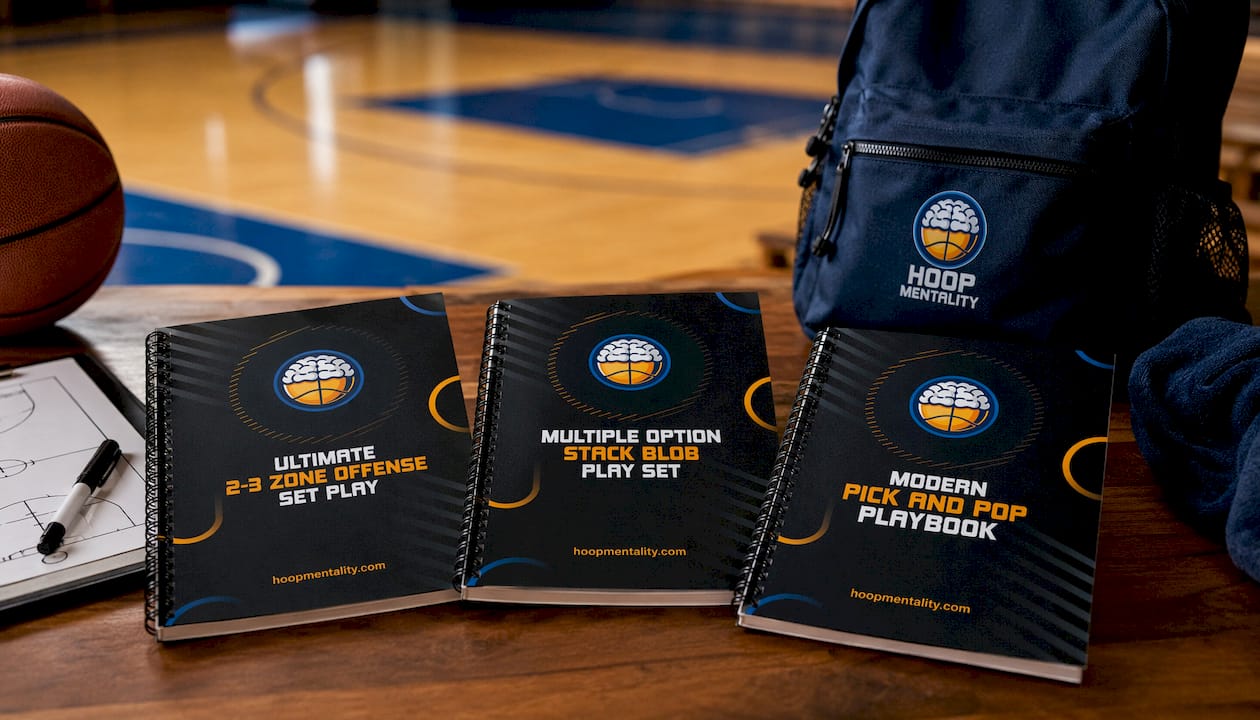
The Ultimate 2-3 Zone Offense Set Play gives you scripted ball-movement sequences that attack zone gaps with clear player assignments. The Multiple Option Stack BLOB Play Set covers baseline inbound situations with several entries from the same formation, so opponents cannot key on one look. The Modern Pick And Pop Playbook builds pick-and-pop actions into set sequences for teams with shooting bigs. Each resource includes diagrams, practice notes, and execution cues. Browse the full basketball playbook collection at Hoop Mentality and add the sets your team needs today.
Useful sources
- Considerations for designing a set play offense | Winning Hoops (CoachAD) — Coach-level guidance on play design, simplicity, and practice progression.
- The Importance of Set Plays in Team Sports Success | BallStorm — Tactical case for set plays across team sports.
- Set-piece analysis in soccer | The PSSA — Cross-sport data on the scoring value of rehearsed set pieces.
- Motion Offenses Guide | Breakthrough Basketball — Principles-based offense overview and contrast with set plays.
- The Intricate Role of Quality Set Plays in Sports | Crickky — Overview of set plays across basketball, soccer, rugby, and hockey.
- Why clubs struggle filling team sheets | FCOPS — Organizational context for team reliability under pressure and structured play systems.
- Hoop Mentality Basketball Playbook Creation Guide — Step-by-step playbook structure for coaches at every level.
- Hoop Mentality Offensive Sets Workflow — How to organize offensive sets around team objectives.
FAQ
What is the difference between set plays and motion offense?
Set plays are scripted sequences where every player has an assigned action and timing cue. Motion offense runs on principles like spacing, movement, and reads, with players making decisions based on what the defense gives them.
When should a coach call a set play?
Call a set play at the end of the shot clock, coming out of a timeout, during inbound situations, or when you have a clear mismatch to exploit. These are the moments where a scripted action gives you the most control.
Do set plays work for youth basketball?
Yes, but keep them simple. Youth coaching resources recommend universal sets that teach cutting, screening, and spacing without overloading players with a large playbook. Hoop Mentality’s youth-focused resources at Basketball Plays: Elevating Youth Team Success are built around that principle.
Can set plays make a team too predictable?
They can, if you run the same play too often from the same look. Running multiple entries from the same formation and using misdirection inside the play design reduces predictability without requiring players to learn entirely new sets.
How many set plays should a team have in their playbook?
A small, well-practiced playbook outperforms a large one. Five plays run with precision and clear signals will produce better results than twenty plays run with uncertainty.