

Most American youth basketball teams struggle to run effective plays, with over 60 percent of coaches reporting confusion about play design and execution. Knowing how basketball plays really work can make a dramatic difference in team success and practice efficiency. This guide clears up common myths and offers proven strategies so you can teach smarter, not harder, and build stronger game plans for your players.
Table of Contents
- Defining Basketball Plays And Common Myths
- Major Types Of Basketball Plays Explained
- How Basketball Plays Work In Practice
- Progressive Play Selection For Youth Teams
- Execution Challenges And Best Solutions
Key Takeaways
| Point | Details |
|---|---|
| Understanding Basketball Plays | Basketball plays are strategic sequences that enhance team performance through coordinated movements and positioning. Coaches should emphasize the principles behind plays over memorization. |
| Myths of Complexity | Many believe complex plays require extraordinary skills, but effective plays can benefit players of all skill levels by establishing clear roles and patterns. |
| Execution Challenges | Common issues like poor spacing and limited communication can hinder youth teams. Coaches should focus on simplified strategies that promote clarity and teamwork. |
| Progressive Play Selection | Youth teams should adopt a structured approach to play selection, gradually increasing complexity to match players’ development and confidence. |
Defining Basketball Plays and Common Myths
Basketball plays represent strategic sequences designed to create scoring opportunities by systematically positioning players and coordinating their movements. While many youth coaches and players misunderstand these tactical approaches, understanding their fundamental purpose can dramatically improve team performance. Basketball plays are not just random movements, but carefully constructed patterns that maximize each player’s strengths.
Contrary to popular belief, basketball plays are not solely about physical prowess. According to NBA research, successful plays depend more on skill, technique, and strategic understanding than raw athletic ability. Young players often assume that height or speed determines play effectiveness, but intelligent positioning and collective team coordination matter significantly more. The most effective plays leverage players’ collective intelligence and synchronization rather than individual physical attributes.
Some common myths about basketball plays persist among youth teams. Many coaches and players incorrectly believe that complex plays require extraordinary individual skills or that successful strategies depend exclusively on having the most talented players. In reality, well-designed plays can create opportunities for players of varying skill levels by establishing clear roles, creating spacing, and generating systematic passing and movement patterns. Understanding these strategic nuances transforms how youth teams approach game planning and skill development.
Pro tip: Focus on teaching your players the underlying principles of basketball plays rather than memorizing specific sequences, which will help them develop adaptive strategic thinking and improve their overall game intelligence.
Major Types of Basketball Plays Explained
Basketball plays are diverse strategic tools that coaches use to create scoring opportunities and optimize team performance. Basketball game variations demonstrate how plays can be adapted based on team composition, skill levels, and game context. The most fundamental types of basketball plays fall into several key categories that serve different tactical purposes on the court.
The primary categories of basketball plays include motion offense, set plays, and transition plays. Motion offense focuses on continuous player movement and creating dynamic scoring opportunities through flexible positioning. Set plays are more structured, involving predetermined player movements and specific sequence patterns designed to exploit defensive weaknesses. Transition plays, meanwhile, emphasize rapid ball movement and quick scoring opportunities during defensive shifts, allowing teams to capitalize on momentary advantages.
Screen-based plays represent another critical type of basketball strategy. These plays involve players creating physical barriers to block defenders, enabling teammates to gain open shooting or driving lanes. Basketball screens can be categorized into various types, including pick and roll, down screens, and cross screens, each serving unique strategic purposes in disrupting defensive formations and creating scoring opportunities.
Here is a comparison of core basketball play types and their main strategic features:
| Play Type | Main Focus | Flexibility | Typical Scenario |
|---|---|---|---|
| Motion Offense | Continuous movement, spacing | High | General offensive play |
| Set Plays | Predetermined patterns | Low to moderate | Specific scoring situations |
| Transition Plays | Fast breaks, quick scoring | Moderate | After a turnover or rebound |
| Screen-Based | Using screens for separation | Varies by play type | Attacking defensive setups |
Pro tip: Practice breaking down complex plays into smaller, manageable segments to help youth players understand the underlying strategic principles more effectively.
How Basketball Plays Work in Practice
Basketball plays transform theoretical strategies into dynamic, real-world actions that require precise coordination and split-second decision making. Physiological demands on players reveal that executing plays successfully involves far more than memorizing predetermined movements. Players must simultaneously process complex game situations, maintain physical readiness, and adapt to rapidly changing court conditions.
In practical implementation, basketball plays unfold through a series of interconnected steps. First, players must understand their specific roles within the play, including positioning, potential movement patterns, and expected responsibilities. Communication becomes crucial, with players using verbal and non-verbal signals to coordinate their actions. The most effective plays allow for some improvisational flexibility, enabling players to respond intelligently to defensive adjustments while maintaining the overall strategic framework.
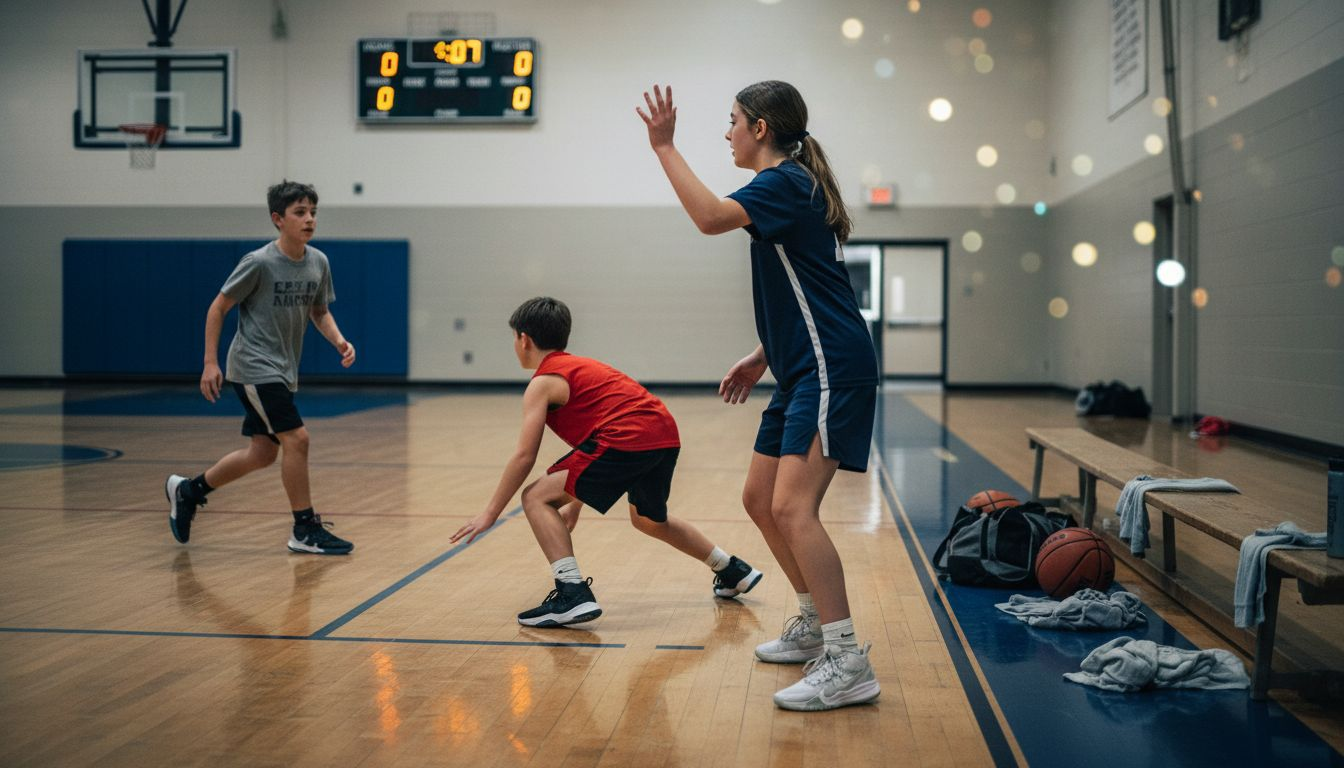
Basketball playbook creation involves designing plays that match a team’s unique strengths and individual player capabilities. Coaches must consider each player’s skill set, physical attributes, and basketball intelligence when developing plays. Successful implementation requires consistent practice, where players develop muscle memory and intuitive understanding of their collective movements. This means breaking down complex plays into smaller, manageable segments and gradually building complexity as team cohesion improves.
Pro tip: Practice plays at game speed during training sessions to help players develop the quick decision-making and muscle memory necessary for effective on-court execution.
Progressive Play Selection for Youth Teams
Tactical development in youth basketball requires a strategic, age-appropriate approach that builds skills incrementally. Developmental progression research demonstrates that coaches must carefully design play selections that match players’ cognitive and physical capabilities. Young athletes learn most effectively when tactical challenges are introduced gradually, allowing them to develop fundamental decision-making skills alongside technical basketball abilities.
Progressive play selection follows a structured framework that starts with basic movements and gradually increases complexity. In the earliest stages, youth teams should focus on simple plays that emphasize fundamental skills like spacing, passing, and basic movement patterns. Simple youth basketball offense strategies help players build confidence and understand core basketball principles before introducing more sophisticated tactical approaches.
As players develop, coaches can introduce increasingly nuanced play designs that require more sophisticated communication and coordination. This might involve transitioning from stationary plays to dynamic movement-based strategies, incorporating more complex screening techniques, and developing players’ ability to read and respond to defensive formations. The key is maintaining a balance between challenging players and avoiding overwhelming them with overly complicated tactical requirements.
Pro tip: Break down complex plays into smaller, manageable segments and practice each component individually before combining them into full tactical sequences.
Execution Challenges and Best Solutions
Youth basketball plays often encounter significant execution challenges that can derail team performance and player confidence. Simplified motion offense strategies reveal that most execution problems stem from complex play designs that overwhelm young players. Coaches must recognize that clarity and simplicity are paramount when developing offensive strategies for youth teams.
The most common execution challenges include poor spacing, inconsistent communication, limited ball movement, and players struggling to understand their specific roles. Successful teams address these issues by implementing structured yet flexible play designs that allow players to make intuitive decisions. This approach requires coaches to break down complex plays into smaller, more manageable components that young athletes can easily comprehend and execute with confidence.
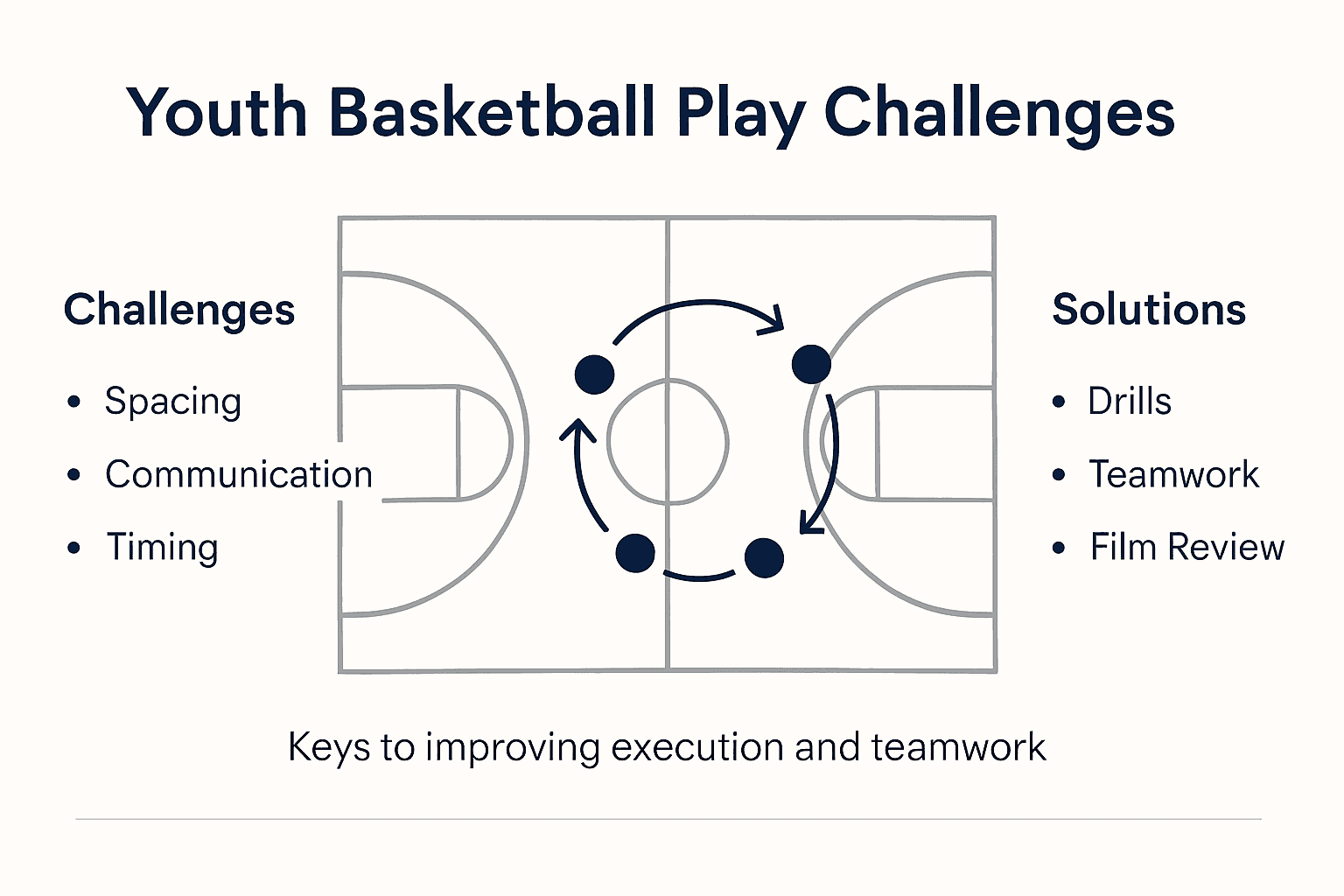
Team building activities play a crucial role in overcoming execution challenges by enhancing player communication and collective understanding. Coaches can improve play execution by dedicating practice time to specific skill development, creating drill sequences that mirror game-like scenarios, and fostering a team environment that prioritizes collective learning over individual performance. This holistic approach helps players develop the muscle memory, strategic understanding, and team chemistry necessary for seamless play execution.
Below is a summary of common execution challenges in youth basketball and practical coach strategies to address them:
| Challenge | Description | Coach’s Best Strategy |
|---|---|---|
| Poor Spacing | Players cluster together | Emphasize floor awareness drills |
| Limited Communication | Players miss signals or cues | Use team talk and signaling games |
| Role Confusion | Unclear responsibilities | Define clear tasks for each player |
| Inconsistent Ball Movement | Ball stagnates or is overdribbled | Practice quick passing drills |
Pro tip: Implement weekly film review sessions where players analyze their play execution, identifying both successful strategies and areas requiring improvement.
Master Youth Basketball Plays with Expert Resources
Youth basketball coaches face the challenge of simplifying complex play strategies while ensuring players understand their roles, maintain proper spacing, and communicate effectively on the court. If you want to elevate your team’s tactical execution and build confidence through progressive learning, focusing on clear, manageable segments of play is essential. The article highlights the importance of breaking down plays and developing adaptable strategic thinking for youth players.
Hoop Mentality offers a comprehensive solution to these challenges with our expertly crafted Basketball Playbooks and Basketball Drills designed specifically for youth teams. These resources help you incorporate fundamental principles like spacing, communication, and role clarity into your practice sessions. Our tools empower you to organize practices efficiently, build muscle memory, and improve team chemistry so your players make smarter decisions during games.

Unlock your team’s potential today by visiting Hoop Mentality and discover the coaching aids that will transform your youth basketball program. Start implementing proven, easy-to-use systems now that save you time and elevate your players’ game intelligence.
Frequently Asked Questions
What are basketball plays, and why are they important for youth teams?
Basketball plays are strategic sequences designed to create scoring opportunities by positioning players and coordinating their movements. They are crucial for youth teams as they help improve teamwork, enhance understanding of game strategies, and maximize each player’s strengths.
How can youth teams improve their execution of basketball plays?
Youth teams can improve execution by breaking down complex plays into smaller segments, practicing them at game speed, and emphasizing communication and clarity during practice sessions. Consistent drills and team-building activities can also enhance understanding and chemistry among players.
What are the major types of basketball plays that youth coaches should focus on?
The major types of basketball plays include motion offense, set plays, transition plays, and screen-based plays. Each type serves different tactical purposes, and coaches should select appropriate plays that match their team’s strengths and skill levels.
How can coaches select age-appropriate plays for youth teams?
Coaches should use a progressive play selection approach, starting with simple plays that emphasize fundamental skills, and gradually introducing more complex strategies as players develop their cognitive and physical abilities. This ensures that players are challenged appropriately without becoming overwhelmed.
Recommended
- Build a Basketball Team: Step-by-Step Guide for Coaches – Hoop Mentality
- How to Coach Youth Basketball for Team Success – Hoop Mentality
- Simple Youth Basketball Offense Guide For Coaches - Hoop Mentality
- Mastering The Basics: Best Youth Basketball Drills For Kids – Hoop Mentality
- Understanding the Social Media Playbook: A Complete Guide - Jarrod Harman