

Every coach knows the challenge of turning a group of talented players into a disciplined, high-scoring basketball team. In North American high school gyms, the difference between a good offense and a great one often comes down to how well each player’s strengths are recognized and harnessed for the team’s collective advantage. By focusing on individual strengths related to roles and team-task attraction and guiding your roster through carefully selected offensive sets, you build a more cohesive unit that communicates clearly and competes at a higher level.
Table of Contents
- Step 1: Assess Team Strengths And Personnel
- Step 2: Select Optimal Offensive Sets For Your Roster
- Step 3: Diagram And Teach Offensive Set Patterns
- Step 4: Integrate Offensive Sets Into Practice Drills
- Step 5: Test Offensive Sets Under Game-Like Conditions
- Step 6: Evaluate And Refine Offensive Set Execution
Quick Summary
| Key Insight | Explanation |
|---|---|
| 1. Assess player strengths thoroughly | Comprehensive evaluations help in understanding each player’s unique capabilities for strategic planning. |
| 2. Select tailored offensive sets | Match offensive strategies with team strengths for maximizing scoring opportunities and player contributions. |
| 3. Diagram offensive strategies clearly | Use visual diagrams to effectively communicate complex plays and ensure player understanding. |
| 4. Design drills simulating game conditions | Practicing under pressure enhances skill execution and prepares players for real game scenarios. |
| 5. Continuously refine performance metrics | Ongoing evaluation with analytics helps in improving execution and adjusting strategies effectively. |
Step 1: Assess Team Strengths and Personnel
Assessing your basketball team’s strengths and personnel is the critical foundation for developing effective offensive sets. By understanding each player’s unique capabilities and physiological profile, you can design strategies that maximize individual talents and create cohesive team dynamics.
Start by conducting comprehensive player evaluations that go beyond basic skills assessment. Elite basketball players require specific physiological attributes including strength, power, agility, and lean body composition. Break down your evaluation process into key categories:
- Physical Attributes
- Performance metrics
- Skill specializations
- Mental adaptability
- Position-specific capabilities
Utilize structured observation techniques to analyze each player’s potential. Look beyond statistical performance and consider factors like:
- Individual player biomechanics
- Court awareness
- Decision-making speed
- Energy system efficiency
- Interpersonal communication skills
Successful team-building requires understanding both individual strengths and group dynamics.
Specifically track how players interact within different offensive configurations, noting their comfort levels and natural chemistry. Some athletes excel in specific roles or offensive sets, while others might need strategic positioning to maximize their potential.
Pro tip: Conduct periodic reassessments to track player development and adjust offensive strategies accordingly.
Step 2: Select Optimal Offensive Sets for Your Roster
Selecting the right offensive sets is crucial for transforming individual player talents into a cohesive team strategy. Offensive strategies depend on team composition and playing style, making it essential to match your sets with your roster’s unique strengths.
Explore different offensive configurations that complement your players’ skills and create opportunities for scoring. Key offensive sets to consider include:
- Motion offense
- Princeton offense
- Triangle offense
- Pick and roll
- Continuity offense
- Zone offense
Analyze your team’s core strengths by examining players’ capabilities in these critical areas:
- Ball handling skills
- Shooting range
- Speed and agility
- Basketball IQ
- Position-specific talents
NBA teams achieve success by selecting offensive strategies that maximize scoring efficiency through strategic player positioning.
Prioritize offensive sets that create space, ball movement, and scoring opportunities. Some teams might excel with a fast-paced motion offense, while others might benefit from a more structured pick and roll approach. The key is finding a system that allows each player to contribute effectively.
Here is a comparison of popular basketball offensive sets and when to use them:
| Offensive Set | Best For | Key Strength |
|---|---|---|
| Motion Offense | Versatile teams | Spacing and movement |
| Princeton Offense | High-IQ, skilled players | Backdoor opportunities |
| Triangle Offense | Teams with star forwards | Post and perimeter mix |
| Pick and Roll | Quick guards and shooters | Exploiting mismatches |
| Continuity Offense | Consistent team play | Rhythm and repetition |
| Zone Offense | Facing zone defenses | Creating open shots |
Pro tip: Practice multiple offensive sets during training to ensure your team can adapt quickly and maintain offensive flexibility.
Step 3: Diagram and Teach Offensive Set Patterns
Basketball playbooks use court diagrams to communicate complex offensive strategies, making visual representation crucial for player understanding. Effective diagramming transforms abstract concepts into clear, executable game plans that players can quickly internalize.
When creating your offensive set diagrams, focus on these essential components:
- Player starting positions
- Movement patterns
- Screen locations
- Passing lanes
- Potential scoring zones
Break down your diagram creation process into systematic steps:
- Use standard basketball court template
- Mark initial player positions with numbered markers
- Draw arrows indicating movement sequences
- Highlight screen and pick locations
- Color-code different player roles
Visual communication is the fastest way to translate complex offensive strategies into player understanding.
Strategic diagramming requires translating your tactical vision into clear visual instructions. Consider using digital tools or large whiteboard displays that allow dynamic interaction and real-time adjustment. Some coaches prefer hand-drawn diagrams, while others use sophisticated basketball play design software.
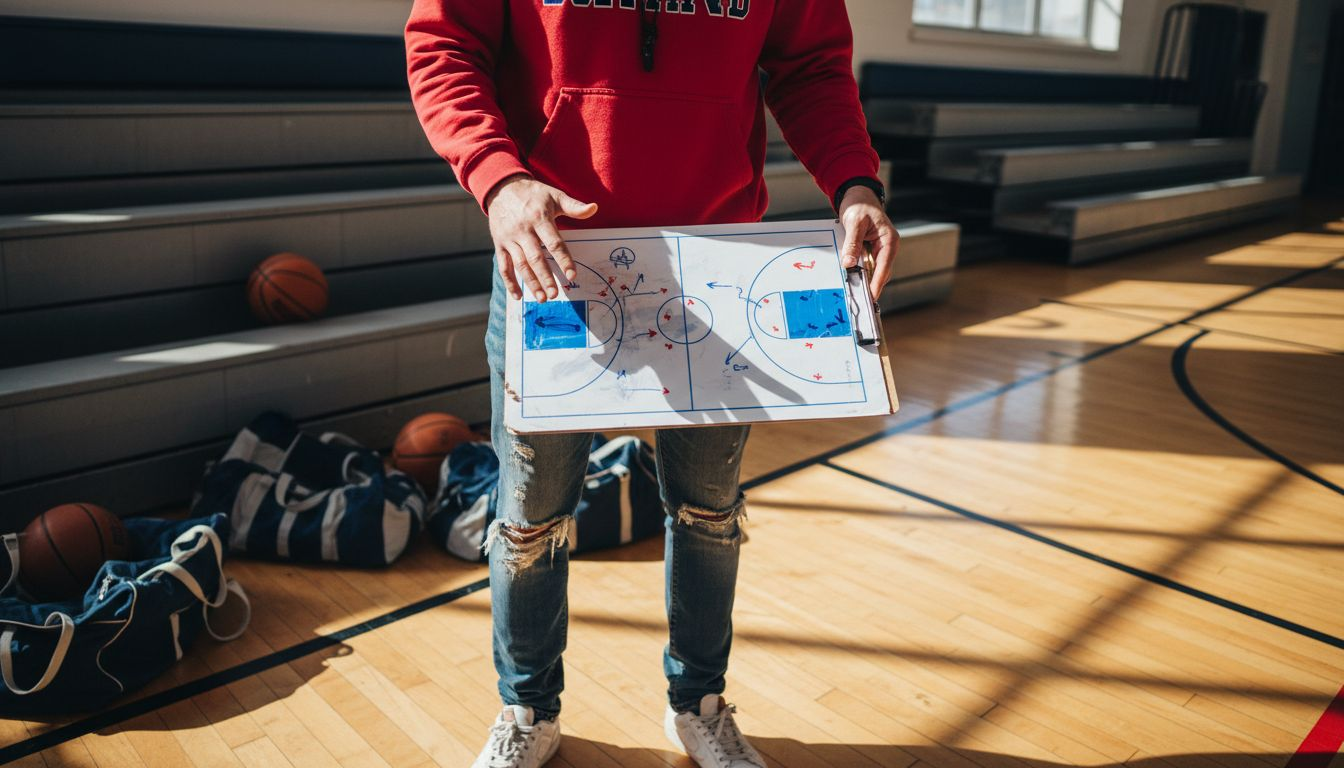
Pro tip: Develop multiple diagram variations for each offensive set to help players understand adaptable positioning and movement options.
Step 4: Integrate Offensive Sets into Practice Drills
Core training benefits skill execution under offensive pressure by developing athletic performance and dynamic movement capabilities. Transforming theoretical offensive sets into practical, repeatable drills requires a strategic and methodical approach to player development.
Design practice drills that emphasize these critical skill areas:
- Shooting accuracy within offensive formations
- Movement without the ball
- Quick decision-making
- Screen setting and navigation
- Passing under defensive pressure
Structure your drill progression through these systematic steps:
- Demonstrate the offensive set slowly
- Break down individual player movements
- Practice segments without defensive interference
- Gradually increase defensive complexity
- Execute full-speed offensive set scenarios
Practice drills should simulate game-like conditions while reinforcing specific offensive strategies.
Strategic drill design means creating scenarios that challenge players to execute offensive sets with increasing levels of difficulty. Incorporate defensive elements progressively, allowing players to build confidence and muscle memory for each offensive configuration.
Pro tip: Video record practice drills to provide players with visual feedback and help them understand their movement patterns more effectively.
Step 5: Test Offensive Sets Under Game-Like Conditions
Training programs simulating game demands test offensive set effectiveness by revealing how players adapt to dynamic competition environments. Testing offensive execution requires creating high-intensity scenarios that challenge players to perform under realistic pressure.
Design comprehensive testing scenarios that evaluate these critical performance dimensions:
- Shooting accuracy under defensive pressure
- Player adaptability to changing court conditions
- Collective team responsiveness
- Decision-making speed
- Energy management
Implement a systematic approach to testing offensive sets:
- Start with controlled defensive scenarios
- Gradually increase defensive complexity
- Introduce unexpected game-like interruptions
- Rotate player positions during testing
- Analyze individual and team performance metrics
Effective testing reveals the true potential of your offensive strategy under competitive conditions.
Strategic performance evaluation means creating scenarios that challenge players to demonstrate precise offensive execution. Focus on measuring not just statistical outcomes, but the nuanced interactions and communication that define successful team play.
Pro tip: Use video analysis and player feedback to identify subtle performance improvements and tactical adjustments during game-like testing.
Step 6: Evaluate and Refine Offensive Set Execution
Advanced basketball analytics enable precise offensive performance evaluation by tracking critical metrics that reveal team and individual strengths. Systematic evaluation transforms raw performance data into actionable insights for continuous improvement.
Identify key performance indicators for comprehensive offensive set analysis:
- Shooting efficiency
- Ball movement quality
- Player positioning accuracy
- Scoring consistency
- Defensive response adaptation
Establish a structured evaluation framework through these critical steps:
- Collect comprehensive performance data
- Compare metrics against baseline expectations
- Identify specific execution weaknesses
- Design targeted improvement strategies
- Implement focused skill development drills
Continuous refinement separates good teams from great basketball programs.
Strategic performance analysis requires deep understanding of how individual technical skills contribute to team dynamics. Focus on identifying subtle patterns that distinguish effective offensive execution from merely adequate performance.
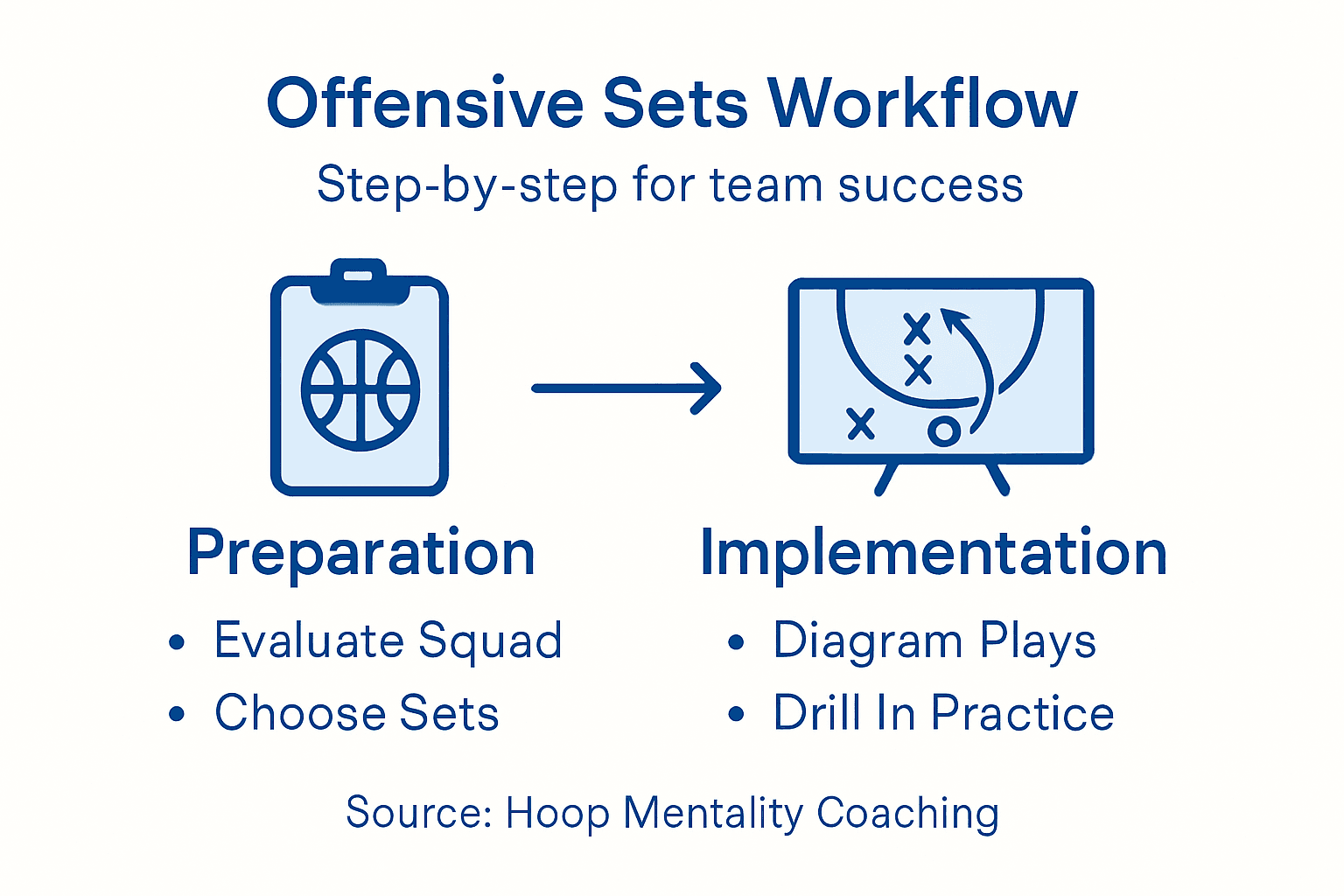
Below is a summary of key offensive set evaluation metrics and their impact:
| Metric | What It Measures | Team Benefit |
|---|---|---|
| Shooting Efficiency | Shot accuracy under pressure | Higher scoring rates |
| Ball Movement Quality | Fluidity of passes and cuts | Outwits defenses |
| Player Positioning Accuracy | Execution of intended roles | Reduces offensive errors |
| Scoring Consistency | Reliability across games | Sustains team momentum |
| Defensive Response Adaptation | Reaction to defensive shifts | Maintains offensive flow |
Pro tip: Cross-reference video analysis with statistical data to uncover nuanced performance insights that raw numbers might miss.
Master Your Team’s Offensive Sets with Proven Coaching Resources
Building effective basketball offensive sets requires more than just understanding player skills and strategies. You need practical tools to assess player strengths, visualize plays clearly, and integrate these systems into your practice drills with consistency. This article highlighted how crucial it is to select the right offensive strategies and refine them through game-like testing to maximize team success. If you struggle with organizing your playbook or ensuring your team adapts quickly during games, you are not alone.
At Hoop Mentality, we understand the challenges coaches face when trying to bring complex offensive workflows to life on the court. Our Basketball Playbooks offer detailed, easy-to-understand offensive sets tailored for teams of every level. Paired with our Basketball Drills, you can transform theory into practice and sharpen the execution of your chosen offensive schemes with confidence.
Elevate your coaching with resources designed by experienced professionals who know what works in real competitions. Visit Hoop Mentality now to access comprehensive coaching tools that help you organize practices better, communicate clearly with your players, and execute winning offensive strategies. Start turning your team’s potential into consistent success today.
Frequently Asked Questions
How can I assess my basketball team’s strengths and personnel?
To assess your basketball team’s strengths and personnel, conduct comprehensive player evaluations focusing on physical attributes, performance metrics, and mental adaptability. Use structured observation techniques to analyze each player’s biomechanics and court awareness.
What are some effective offensive sets for maximizing player talent?
Choosing effective offensive sets involves analyzing your team’s core strengths, such as ball handling skills and basketball IQ. Consider various configurations like motion offense or pick and roll based on your players’ abilities, aiming to create space and scoring opportunities.
How should I diagram and teach offensive set patterns to my team?
Diagramming offensive sets involves using a standard basketball court template to illustrate player positions and movement patterns. Focus on clarity in your diagrams by highlighting screens and passing lanes to ensure players quickly understand their roles in the offensive strategy.
What practice drills can help integrate offensive sets effectively?
Integrate offensive sets into practice by designing drills that focus on shooting accuracy, movement without the ball, and quick decision-making. Structure your drills to gradually increase defensive complexity, allowing players to build confidence in executing the offensive strategy.
How can I evaluate the execution of offensive sets during games?
To evaluate offensive set execution, collect data on shooting efficiency and player positioning accuracy during games. Use this data to identify weaknesses and design improvement strategies, focusing on enhancing specific skill areas to boost overall team performance.
What metrics should I focus on when analyzing offensive performance?
Key performance metrics for analyzing offensive performance include shooting efficiency, ball movement quality, and scoring consistency. Establish a detailed evaluation framework to track these metrics and identify tactical adjustments needed for continuous team improvement.
Recommended
- Why Run Offensive Sets: Building Structure and Success – Hoop Mentality
- 7 Basketball Playbook Must-Haves for Coaches – Hoop Mentality
- 7 Essential Man-to-Man Offense Tips for Basketball Coaches – Hoop Mentality
- How to Implement Motion Offense for Dynamic Team Play – Hoop Mentality
- Osnovna fizična priprava - GPP