

Many coaches believe free play naturally develops all essential basketball skills. Research reveals a different reality: structured drills significantly outperform unstructured practice in building shooting accuracy, ball handling precision, and physical conditioning. Studies show players trained with structured techniques achieve 24.2% better 2-point shot success and faster release times compared to those relying solely on free play. This guide explains why structured drills are critical for team development and how to implement them effectively to maximize performance, fitness, and competitive readiness.
Table of Contents
- Why Structured Drills Matter For Basketball Skill Development
- Optimizing Physical Load And Fitness With Structured Drill Planning
- The Power Of Structured Constraints And Flexible Drill Design
- Applying Structured Drills Effectively: Practical Tips For Coaches
- Enhance Your Coaching With Structured Drill Resources
- Frequently Asked Questions
Key takeaways
| Point | Details |
|---|---|
| Shooting precision | Structured drills improve shooting accuracy by 24.2% and accelerate release times through focused repetition |
| Physical load planning | Different drills impose varied biomechanical demands, requiring strategic scheduling for optimal fitness gains |
| Constraint-based training | Small-sided games with structured constraints boost aerobic and anaerobic fitness more effectively than free play |
| Flexible implementation | Structured plans adapt to team energy levels while maintaining focus on skill fundamentals and game readiness |
| Skill retention | Constrained drills develop fundamentals faster and maintain retention longer than unstructured practice sessions |
Why structured drills matter for basketball skill development
Structured drills create the foundation for mastering basketball fundamentals. Shooting, passing, and dribbling require thousands of quality repetitions to develop muscle memory and decision-making speed. Structured basic technique training improves shooting accuracy and ball handling, with higher-level players showing 24.2% better 2-point shot success and faster release times. These gains translate directly into game situations where split-second execution determines outcomes.
Repetition alone doesn’t guarantee improvement. Quality matters more than quantity. Structured drills establish specific parameters that force players to execute skills correctly under controlled conditions. This approach builds neural pathways faster than random practice. Players develop consistent form, improve reaction time, and learn to perform under pressure when drills simulate game conditions.
Differential training introduces structured variations that enhance adaptability. Differential training improves 2-point shooting more than traditional training, with retention maintained over time. Instead of repeating identical shots, players practice from varying angles, distances, and defensive pressures. This variability prepares them for unpredictable game scenarios while reinforcing fundamental mechanics.
Coaches who understand why use skill drills recognize their competitive advantage. Structured practice creates measurable progress. Players see tangible improvements in shooting percentages, assist-to-turnover ratios, and defensive positioning. These metrics build confidence and motivation, creating a positive feedback loop that accelerates development.
Pro Tip: Focus on perfect repetitions rather than high volume during skill drills. Ten quality shots with proper form outperform fifty rushed attempts with inconsistent mechanics.
Exploring types of shooting drills for basketball coaches reveals how specific exercises target different shooting situations. Spot shooting develops consistency from fixed positions. Moving shots prepare players for catch-and-shoot opportunities. Pull-up drills simulate creating space off the dribble. Each drill type serves a distinct purpose in building complete offensive players.
Optimizing physical load and fitness with structured drill planning
Different drills impose vastly different physical demands on players. Understanding these variations allows coaches to design practice sessions that maximize fitness gains while minimizing injury risk. Different drills impose varying biomechanical and physiological loads, with 5v5 full court scrimmages creating higher biomechanical load than 3v0 shooting drills. Strategic scheduling places high-intensity exercises early in practice when players are fresh and capable of peak performance.
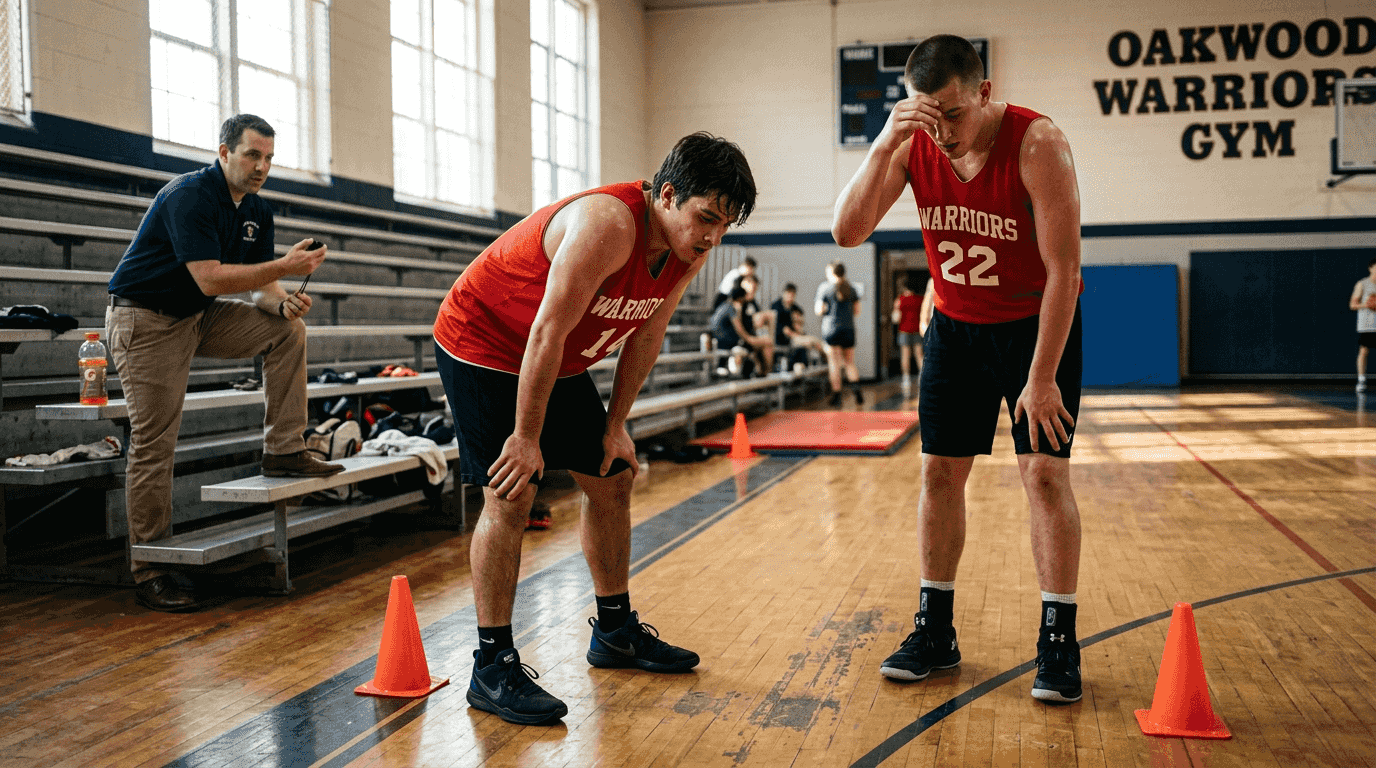
Biomechanical load refers to the physical stress placed on joints, muscles, and connective tissue during movement. High-intensity drills involving cutting, jumping, and contact create significant strain. Aerobic demand measures cardiovascular effort required to sustain activity. Full court scrimmages tax both systems simultaneously, while stationary shooting drills primarily challenge skill execution with minimal cardiovascular stress.
| Drill Type | Biomechanical Load | Aerobic Demand | Optimal Timing |
|---|---|---|---|
| 5v5 full court | Very High | Very High | Early practice |
| 3v3 half court | High | High | Early to middle |
| Shell defense | Moderate | Moderate | Middle practice |
| 3v0 shooting | Low | Low | Late practice |
Scheduling matters more than most coaches realize. Placing demanding drills early capitalizes on fresh legs and sharp focus. Players execute movements with proper form, reducing compensation patterns that lead to injury. Fatigue accumulated during intense early drills also creates training adaptations that improve game conditioning. Bodies learn to perform under stress, building resilience for fourth quarter situations.
Balancing drill intensity throughout practice prevents overtraining while ensuring adequate stimulus for improvement. Start with dynamic warmups, progress to high-load competitive drills, transition to moderate-intensity skill work, and finish with low-impact shooting or strategy sessions. This progression respects physiological recovery needs while maintaining engagement.
Pro Tip: Use small-sided games with constraints to simultaneously develop aerobic capacity and anaerobic power. Three-on-three games with limited dribbles force constant movement and quick decisions, maximizing both fitness systems.
Understanding master basketball intensity levels peak performance helps coaches calibrate effort throughout practice. Monitoring player heart rates, movement quality, and decision-making speed provides real-time feedback on whether intensity matches objectives. Adjust drill duration and rest periods based on these observations.
Implementing effective basketball practice structure guide principles ensures each session builds toward specific goals. Define clear objectives for skill development, tactical understanding, and physical conditioning. Allocate time proportionally based on team needs and upcoming competition demands. Review outcomes regularly to refine future planning.
The power of structured constraints and flexible drill design
Applying constraints transforms ordinary drills into powerful development tools. Constraints focus player attention on specific skills while increasing physical and mental demands. Structured constraints in small-sided games boost aerobic and anaerobic fitness more effectively than free play. Limiting dribbles forces better passing decisions. Restricting shooting zones develops range awareness. These modifications create purposeful practice that transfers directly to competition.
Structured drills give coaches precise control over skill and fitness outcomes. Want to improve transition defense? Design three-on-two drills with specific retreat rules. Need better spacing? Implement four-on-four games requiring minimum pass distances. Each constraint shapes player behavior toward desired outcomes. This intentionality separates effective practice from mere activity.
Flexibility within structure allows adaptation to team energy and practice goals. Some days require intense competitive drills to build mental toughness. Other sessions benefit from moderate-paced skill work emphasizing technique refinement. Reading team mood and adjusting accordingly maintains engagement while respecting recovery needs. Structure provides the framework, flexibility ensures relevance.
- Assess team energy levels at practice start through brief movement observation
- Select drill variations matching current physical and mental readiness
- Monitor engagement and adjust constraints or intensity as needed
- Maintain core skill focus while varying presentation format
- Conclude with purposeful reflection connecting practice to game situations
Coach K emphasizes combining structure with adaptability and game-like scrimmages. His approach balances fundamental skill development with creative problem-solving opportunities. Players master techniques through structured repetition, then apply them in fluid scrimmage situations requiring improvisation. This combination builds both technical competence and basketball intelligence.
| Approach | Structure Level | Creativity Level | Best Use |
|---|---|---|---|
| Pure drills | Very High | Low | Early season fundamentals |
| Constrained games | High | Moderate | Mid-season refinement |
| Open scrimmages | Moderate | High | Pre-competition preparation |
| Free play | Low | Very High | Recovery sessions |
Pro Tip: Rotate through three to five drill variations each session to maintain player engagement and improve skill retention. Familiarity breeds competence, but variety prevents boredom and challenges adaptation.
Following 7 key steps practice planning checklist ensures comprehensive preparation. Define objectives, select appropriate drills, prepare necessary equipment, brief assistant coaches, communicate expectations to players, execute with focus, and review outcomes. This systematic approach maximizes practice efficiency and player development.
Reinforcing concepts from basketball practice structure guide creates consistency across sessions. Players understand expectations and transition smoothly between activities. Coaches spend less time explaining and more time coaching. This efficiency compounds over a season, creating significant competitive advantages.
Exploring exercise snacks small efforts big fitness gains reveals how brief, intense efforts accumulate meaningful fitness improvements. Applying this principle to basketball means incorporating short, high-intensity drill bursts throughout practice. These micro-conditioning moments build game-ready fitness without requiring extended cardio sessions.
Applying structured drills effectively: practical tips for coaches
Implementation determines whether structured drills deliver promised benefits. Start practice with high biomechanical load drills to maximize effectiveness when players are fresh. Full court competitive drills, transition sequences, and defensive shell work belong early in sessions. Players execute with proper form, absorb coaching points effectively, and build positive momentum.
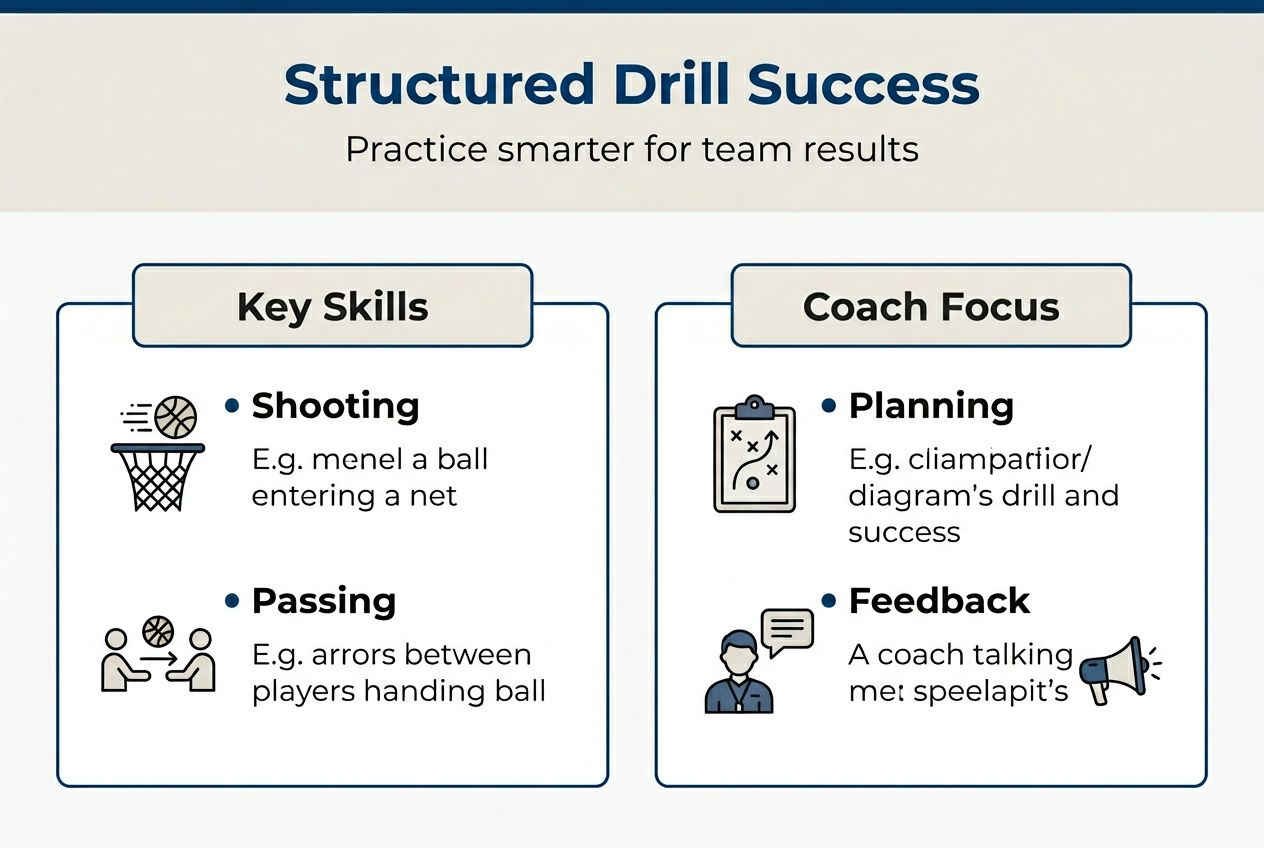
Involve assistant coaches to provide focused feedback during drills. Assign specific observation responsibilities: one coach watches footwork, another monitors hand positioning, a third evaluates decision-making. This division of labor ensures players receive immediate, specific feedback that accelerates improvement. Multiple coaching eyes catch details that escape a single observer.
Incorporate game-like scrimmages with constraints to simulate real situations. Five-on-five play with specific offensive sets, defensive schemes, or situational rules prepares teams for competition pressure. Players learn to execute fundamentals while processing complex game information. This transfer from drill to game represents the ultimate measure of practice effectiveness.
- Schedule demanding drills when players are mentally and physically fresh
- Use constraints purposefully to target specific skills or tactical concepts
- Provide immediate feedback during drill execution for faster learning
- Balance competitive intensity with skill refinement throughout practice
- Connect drill objectives explicitly to upcoming game situations
Flexibly adjust drills based on team mood and energy levels. Expert coaches advocate flexible structured practice sessions incorporating staff involvement and game-like conditions. If players arrive flat, modify intensity or introduce competitive elements to raise energy. If fatigue is evident, shift to lower-impact skill work emphasizing quality over quantity. This responsiveness maintains productive practice environments.
- Begin with dynamic warmup preparing bodies for practice demands
- Progress to high-intensity competitive drills building game fitness
- Transition to moderate-intensity skill work refining techniques
- Incorporate constrained scrimmages applying skills in game contexts
- Conclude with low-intensity shooting or strategy review
Use structured drills to build fundamentals, then layer in creativity. Master basic techniques through repetition before introducing complex variations. Players need solid foundations before tackling advanced concepts. This progression prevents overwhelming athletes while ensuring steady development toward sophisticated basketball understanding.
Revisiting why use skill drills reinforces their foundational importance. Every elite player built their game through countless structured repetitions. Drills create the muscle memory and decision-making patterns that allow instinctive play during competition. Skipping this foundation limits long-term potential regardless of natural talent.
Applying basketball skill breakdown coaching principles helps identify specific areas needing attention. Break complex skills into component parts, drill each element separately, then integrate them progressively. This analytical approach accelerates mastery by isolating and correcting specific weaknesses.
Returning to 7 key steps practice planning checklist ensures consistent preparation. Systematic planning prevents wasted practice time and ensures every session advances team development. Players appreciate organized practices that respect their time and effort.
Enhance your coaching with structured drill resources
Transforming practice sessions requires both knowledge and practical tools. Structured drills deliver measurable improvements in shooting accuracy, physical conditioning, and game readiness when implemented systematically. Coaches need efficient planning resources to execute these principles consistently throughout the season.

Access expertly designed basketball practice plan template resources to streamline your structured practice planning. These templates incorporate research-backed drill progressions, optimal timing sequences, and clear coaching points that save preparation time while maximizing player development. Each template aligns with proven training principles discussed throughout this guide.
Explore position-specific resources like the big man dual action drill to develop targeted skills efficiently. These specialized drills address unique positional demands while maintaining the structured approach that drives improvement. Players receive focused training that translates directly to their game roles.
Visit Hoop Mentality to discover comprehensive coaching resources designed by experienced coaches for practical application. Take your team’s performance to the next level with tools that make structured training accessible and effective.
Frequently asked questions
What is the importance of structured drills in basketball?
Structured drills create focused repetition that builds muscle memory and decision-making speed faster than unstructured play. They allow coaches to isolate specific skills, provide immediate feedback, and measure progress objectively. Research demonstrates structured training produces superior outcomes in shooting accuracy, ball handling, and physical conditioning compared to free play. Implementing systematic basketball practice structure guide principles ensures every practice session advances team development efficiently.
How do structured drills improve shooting accuracy compared to unstructured practice?
Structured drills create repeatable scenarios that develop consistent shooting mechanics and faster release times. Structured technique training leads to 24.2% better 2-point shot accuracy and faster release times compared to unstructured practice. Focused repetition builds neural pathways for proper form, while immediate coaching feedback corrects errors before they become habits. This targeted approach outperforms random shooting sessions that lack specific objectives or quality control.
What are the best ways to balance structured drills with creative play?
Use structured drills to establish fundamental skills, then follow with constrained scrimmages that encourage creative problem-solving within defined parameters. Expert coaches advise combining flexible structured plans with game-like scrimmages to foster creativity while ensuring fundamentals remain solid. Adjust drill intensity and constraints based on team needs and upcoming game contexts. This balance develops technically sound players who can also improvise effectively during competition.
How can coaches plan drills to maximize physical conditioning?
Schedule intense drills early in practice when players are fresh and capable of quality execution. High biomechanical load drills like 5v5 full court should be placed early in sessions to optimize fitness gains and reduce injury risk. Use small-sided games with constraints to develop aerobic and anaerobic fitness simultaneously. Balance drill intensity throughout practice by progressing from high-demand competitive drills to moderate skill work and concluding with lower-intensity activities that maintain engagement without overtaxing recovery systems.