

Many coaches push their players harder, thinking more intensity always yields better results. In reality, blindly maximizing effort without strategic control burns players out, increases injuries, and stunts development. This guide clarifies what basketball intensity levels truly mean, how to measure and manage them effectively, and why matching intensity to players and goals separates great coaches from average ones.
Table of Contents
- Introduction To Basketball Intensity Levels
- Physiological And Biomechanical Demands Across Intensity Zones
- Monitoring And Measurement Techniques For Intensity
- Classification Frameworks For Basketball Intensity Levels
- Impact Of Intensity On Player Performance And Development
- Common Misconceptions About Basketball Intensity Levels
- Practical Frameworks For Managing Intensity In Basketball Practices
- Discover Expert Coaching Resources To Master Practice Intensity
- Frequently Asked Questions About Basketball Intensity Levels
Key takeaways
| Point | Details |
|---|---|
| Intensity affects load, motivation, and outcomes | Basketball intensity influences physiological stress, psychological engagement, and performance improvements across all training sessions. |
| Monitoring tools enable tailored management | RPE scales and technology provide coaches with actionable data to adjust intensity according to player needs and practice goals. |
| Proper distribution balances development and safety | Strategic intensity variation optimizes skill growth and conditioning while minimizing injury risk and overtraining symptoms. |
| Coaching style impacts effort and engagement | Communication methods and leadership approaches significantly influence how players perceive and respond to intensity demands. |
| Common myths hinder effective training | Beliefs like ‘max intensity always wins’ or ‘one size fits all’ lead to poor outcomes and preventable setbacks. |
Introduction to basketball intensity levels
Basketball intensity describes the level of physiological effort and psychological engagement players invest during drills and practices. Rather than a simple on/off switch, intensity exists on a continuum ranging from light warm-ups to all-out competition simulations. Coaches often categorize intensity into three broad zones: low, moderate, and high.
Low intensity includes activities like static stretching, light shooting routines, or walk-throughs where heart rates stay minimal and players focus on technique refinement. Moderate intensity encompasses controlled scrimmages, half-court drills with defensive pressure, and conditioning work that elevates heart rates to 60-75% of maximum. High intensity involves full-court pressing drills, competitive 5-on-5 games, and explosive movements that push heart rates above 85% of maximum.
Understanding these distinctions matters because intensity directly influences skill acquisition, cardiovascular conditioning, and player motivation. Low intensity sessions allow players to master technical details without fatigue interference. Moderate intensity builds game-relevant endurance and decision-making under manageable stress. High intensity prepares athletes for competition demands and develops mental toughness.
Mismanaging intensity creates problems. Too much high intensity leads to fatigue, poor form, and injuries. Too little intensity fails to challenge players adequately, leaving them unprepared for game speed. Coaches who grasp this continuum can evaluate player performance effectively and design practices that optimize development.
Physiological and biomechanical demands across intensity zones
Physiological markers provide objective evidence of intensity differences across drill types. Heart rate and oxygen uptake rise progressively as drills demand more speed, defensive pressure, and spatial constraints. Open-court transition drills generate higher cardiovascular loads than congested half-court sets because players cover more ground at faster speeds.
Biomechanical workload varies dramatically based on drill characteristics. Full-court pressing drills require repeated high-speed accelerations, decelerations, and directional changes that stress muscles and joints differently than controlled shooting drills. Defensive slides and closeout movements create unique loading patterns compared to offensive cutting and screening actions.
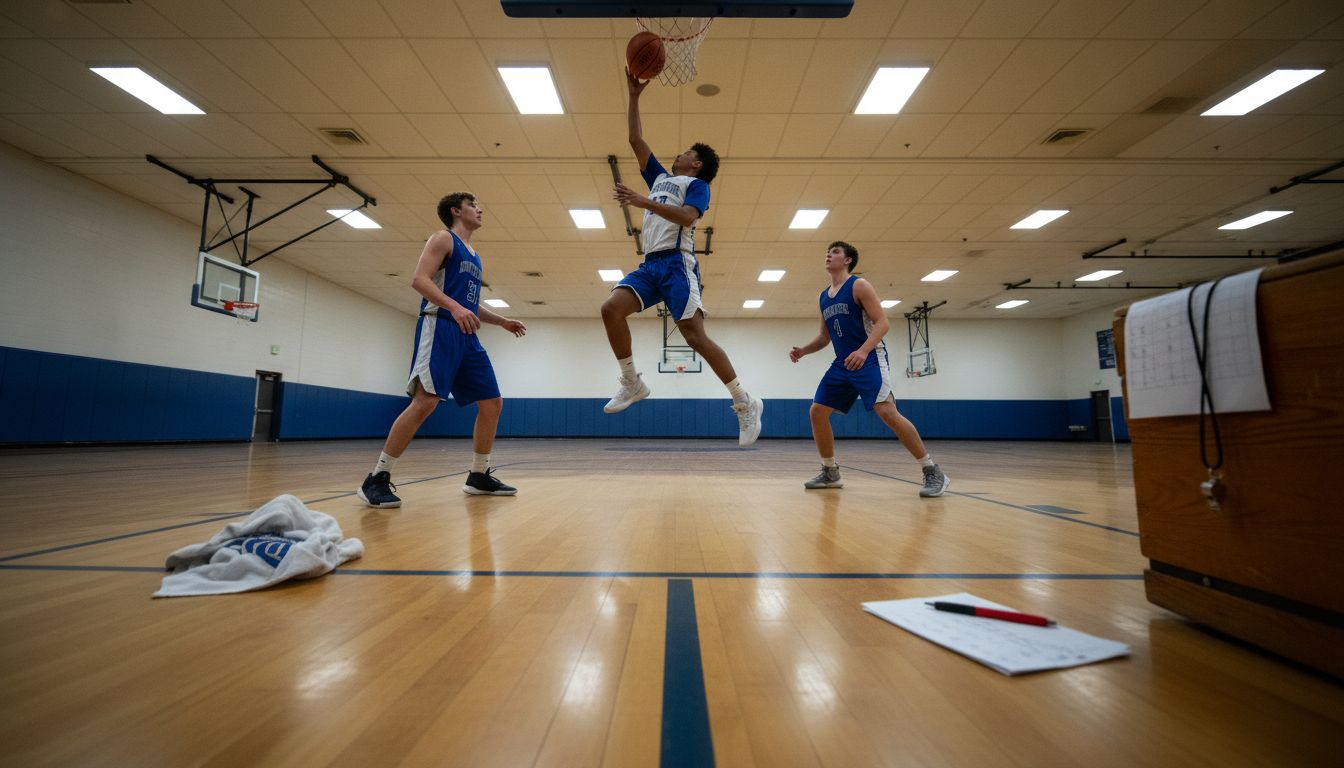
Effect size differences in physiological load measures show moderate to very large impacts depending on drill types. This research confirms that drill design directly controls intensity exposure. Coaches can manipulate court size, defensive rules, and time constraints to target specific intensity zones.
Rating of Perceived Exertion (RPE) correlates strongly with heart rate, oxygen consumption, and lactate levels, making it a practical intensity gauge. Players rate their effort on a 1-10 scale after drills, giving coaches immediate feedback without expensive equipment. This subjective measure captures both physical and mental strain, offering a holistic intensity picture.
Pro Tip: Track RPE scores for each drill over several practices to identify which activities consistently generate your target intensity zones. Adjust drill parameters like court size or time limits when RPE scores miss your goals. This simple method helps you evaluate player performance effectively and refine practice design without complex technology.
Intensity markers by zone
| Zone | Heart Rate | RPE | Example Drills |
|---|---|---|---|
| Low | <60% max | 1-3 | Form shooting, static stretching, tactical walk-throughs |
| Moderate | 60-85% max | 4-6 | Half-court scrimmages, controlled transition drills, defensive shell |
| High | >85% max | 7-10 | Full-court pressing, competitive 5-on-5, timed conditioning sprints |
Monitoring and measurement techniques for intensity
RPE stands out as the most accessible intensity monitoring tool for basketball coaches. This cost-free method requires only a standardized scale and consistent collection timing. RPE strongly correlates with metabolic equivalents, validating it as an effective intensity monitoring tool. Coaches at any level can implement RPE tracking immediately without budget constraints or technical expertise.
External load technology offers objective data through accelerometers, GPS units, and local positioning systems. These devices measure acceleration, deceleration, speed, and distance covered during practices. However, accelerometers and local positioning systems provide objective external load data but have cost and complexity challenges. Many youth and high school programs cannot afford this equipment, and even programs with access struggle to interpret the data meaningfully.
Inconsistent definitions of intensity zone thresholds complicate practical application. Research studies use varying cutoffs for low, moderate, and high intensity, making it difficult to compare findings or establish universal standards. This variability stems from differences in competition levels, positional demands, and measurement technologies.
Combining subjective and objective monitoring creates the most robust intensity management system. Use RPE as your primary tool and supplement with heart rate monitors or external load devices when available. This layered approach captures both the athlete’s internal experience and measurable physical output.
Pro Tip: Collect RPE ratings 15-30 minutes after practice ends, not immediately. This delay allows players to process the full session rather than rating only the final drill. Consistent timing improves data reliability and helps you spot concerning trends early. Simple practice planning apps can streamline this tracking process.
Classification frameworks for basketball intensity levels
Standardized intensity zones help coaches communicate clearly and design balanced practices. Research shows consistent thresholds for high-intensity movements but wide variability in low-intensity definitions, underscoring need for practical frameworks. Despite ongoing academic debate, coaches can adopt working definitions that serve practical needs.
High-intensity movements typically involve accelerations exceeding 3.5 m/s² or speeds above 18 km/h. These thresholds represent explosive actions like defensive closeouts, fast break sprints, and aggressive drives to the basket. Full-court pressing drills, competitive transition games, and timed conditioning runs consistently generate high-intensity outputs.
Moderate intensity encompasses controlled scrimmages with structured rules, half-court offensive execution against live defense, and station work combining skill and conditioning elements. These activities elevate effort without the all-out explosiveness of high-intensity work. Players maintain focus on technique while experiencing game-relevant fatigue.
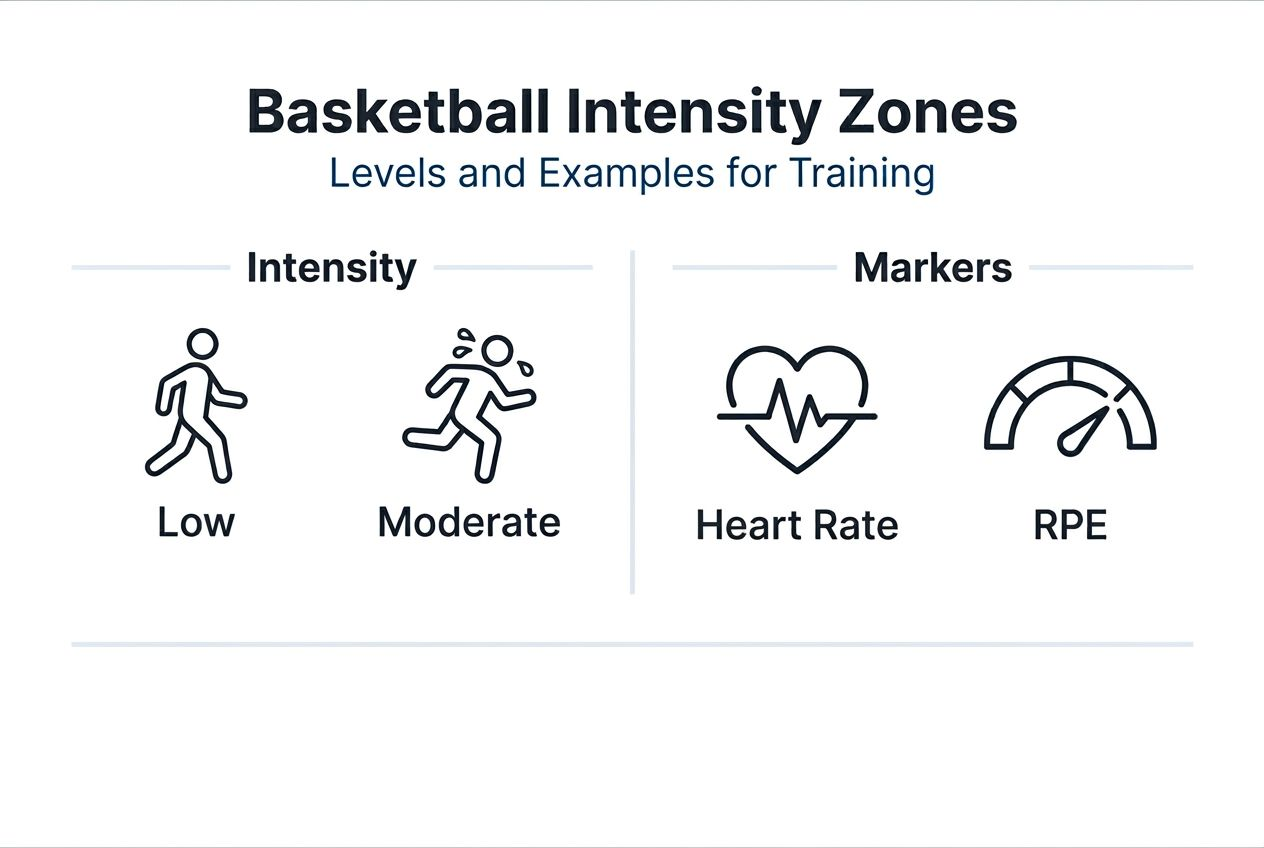
Low intensity includes individual skill work, tactical instruction with minimal movement, and recovery activities. While essential for technical development and injury prevention, these sessions contribute little to cardiovascular conditioning or competition preparation.
Drill intensity classification examples
| Drill Type | Intensity Level | Key Characteristics |
|---|---|---|
| Form shooting (stationary) | Low | Minimal movement, technical focus, low heart rate |
| 3-on-3 half-court (controlled) | Moderate | Defensive pressure, moderate speed, tactical decisions |
| Full-court 5-on-5 (competitive) | High | Game speed, max effort, high cardiovascular demand |
| Shell drill (teaching pace) | Low-Moderate | Structured rotations, moderate movement, learning emphasis |
| Timed transition sprints | High | All-out sprinting, explosive changes, competition element |
Mapping your regular drills to these categories helps you build balanced practice plans. Reference your practice structure guide to ensure appropriate intensity distribution across weekly sessions.
Impact of intensity on player performance and development
Well-managed intensity drives measurable improvements in conditioning, skill execution, and competition readiness. High-intensity interval training markedly improves basketball-specific fitness and skills across development levels. Players who regularly experience appropriate high-intensity exposure develop superior cardiovascular endurance, explosive power, and change-of-direction speed compared to those who train at consistently moderate levels.
Skill development benefits from varied intensity levels throughout training cycles. Low-intensity sessions allow players to refine technique details without fatigue-induced breakdown. As skills become more automatic, introducing moderate and high-intensity contexts tests whether players can execute under pressure. This progressive approach builds robust skills that transfer to game situations.
Balancing intensity with adequate recovery prevents overtraining and optimizes adaptation. The body improves during rest periods following training stress, not during the stress itself. Coaches who pile high-intensity sessions back-to-back without strategic recovery days see diminishing returns and increased injury rates.
Competition performance correlates directly with practice intensity management. Teams that experience game-speed intensity regularly during practice handle pressure situations better than teams that scrimmage at lower intensities. However, excessive intensity creates chronic fatigue that undermines game-day performance. Finding the sweet spot requires monitoring player responses and adjusting accordingly.
Your skills development workflow should integrate intensity progression as skills advance. Start new skills at low intensity, gradually increase as competence grows, and ultimately test skills under high-intensity conditions that mirror competition demands.
Common misconceptions about basketball intensity levels
The belief that maximum intensity always produces better results represents the most damaging coaching myth. Maximizing intensity without recovery risks injury and hinders development; intensity must be individualized. Young players especially need varied intensity to develop proper movement patterns before handling sustained high-intensity loads.
Many coaches assume intensity levels apply uniformly across all players. In reality, the same drill generates different intensity responses based on fitness levels, positions, and individual characteristics. A full-court pressing drill might reach 9/10 RPE for a deconditioned post player but only 6/10 for an elite-level guard. Effective coaches adjust expectations and modifications for individual athletes.
Some coaches dismiss RPE as too subjective or unreliable compared to technology-based measurements. Research demonstrates RPE validity when collected consistently, and its accessibility makes it superior to expensive equipment most coaches cannot afford or interpret properly. The best monitoring approach uses whatever tools you have consistently rather than waiting for perfect technology.
Another misconception treats intensity as purely physical, ignoring psychological and emotional components. Mental engagement, competitive drive, and focus quality all influence perceived intensity and training effectiveness. A technically simple drill becomes high intensity when coaches add competitive elements or meaningful consequences.
Avoiding these common coaching mistakes starts with recognizing that intensity management requires nuance and individualization. Consult evidence-based basketball training misconceptions resources to separate effective practices from popular but flawed approaches.
Practical frameworks for managing intensity in basketball practices
Implementing effective intensity management starts with assessing your players’ baseline fitness and skill levels. Test cardiovascular endurance, strength, and sport-specific conditioning at the season’s start to establish individualized benchmarks. Players entering your program with different training backgrounds will respond differently to identical drills.
Define clear intensity zones using measurable criteria that fit your available resources. If you have heart rate monitors, establish percentage ranges for each zone. If you rely on RPE, create a shared understanding of the 1-10 scale through examples and consistent reinforcement. Whatever system you choose, apply it consistently across all sessions.
Follow this framework to build balanced practices:
- Assess current player fitness and readiness levels at program start and key season checkpoints.
- Establish intensity zone definitions using RPE, heart rate, or external load metrics available to you.
- Map your regular drills to intensity categories so you can plan distribution strategically.
- Design weekly schedules that vary intensity across sessions rather than maintaining constant levels.
- Monitor player responses through RPE collection, observation, and performance tracking.
- Adjust intensity distribution based on competition schedule, player feedback, and injury patterns.
Incorporate planned recovery through active rest days, reduced-intensity sessions, and adequate sleep guidance. An optimal intensity range balances effort and recovery, improving progress while minimizing injury risk. Recovery is not wasted time but essential for adaptation and improvement.
Pro Tip: Build a practice template that includes intensity targets for each segment. Warm-up stays low, skill work progresses low to moderate, competitive drills hit high intensity, and cool-down returns to low. This structure in your practice structure guide ensures balanced sessions without constant recalculation. Your practice planning checklist should include intensity verification before finalizing each plan. Reference your fundamentals guide for coaching to ensure technical instruction receives appropriate low-intensity time.
Discover expert coaching resources to master practice intensity
Managing basketball intensity levels effectively requires structured planning, proven frameworks, and reliable resources. Hoop Mentality provides comprehensive tools designed specifically for coaches seeking to optimize practice design and player development.

Our basketball fundamentals guide delivers detailed instruction for building technical skills at appropriate intensity progressions. Explore our comparison of top practice planning apps to find technology solutions that streamline intensity monitoring and session design. Follow our step-by-step practice planning checklist to create balanced sessions that distribute intensity strategically across training cycles. These expert-developed resources save preparation time while improving practice quality and player outcomes.
Frequently asked questions about basketball intensity levels
What is the best way to measure practice intensity without expensive technology?
RPE provides the most practical intensity measurement for coaches without technology budgets. Have players rate each drill on a 1-10 scale collected 15-30 minutes post-practice for consistency. Supplement RPE with simple observation of breathing rates, movement quality, and player engagement to build a complete intensity picture.
How do I tailor intensity for players at different skill and fitness levels?
Modify drill parameters rather than creating entirely separate practices. Adjust court size, defensive pressure, time limits, or rest intervals to individualize intensity within the same drill structure. Monitor individual RPE responses to verify modifications produce appropriate intensity for each player’s current capacity.
Can too much high intensity in practice increase injury risk?
Excessive high-intensity work without adequate recovery significantly increases injury risk and leads to overtraining symptoms. Limit high-intensity training to 2-3 sessions weekly with recovery days between. Watch for warning signs like persistent soreness, declining performance, mood changes, or increased injury rates.
How often should intensity levels be adjusted during a season?
Review intensity distribution weekly based on competition schedule, player feedback, and performance trends. Reduce intensity during tournament weeks or when fatigue accumulates. Increase intensity during lighter competition periods to maintain conditioning. Monthly assessments of player fitness and readiness inform longer-term adjustments.
What role does player motivation play in maintaining proper intensity?
Motivation dramatically influences how players perceive and respond to intensity demands. Competitive drills, meaningful consequences, and engaging formats increase psychological intensity even when physical demands stay moderate. Strong coaching relationships and clear communication help players sustain appropriate effort across varied intensity zones throughout long seasons.
Recommended
- Basketball preseason priorities 2026: 15% better performance – Hoop Mentality
- How to Get Ready for a Basketball Game Mentally Effectively – Hoop Mentality
- How to Evaluate Player Performance in Basketball Effectively – Hoop Mentality
- Basketball Pregame Preparation Guide: Maximize Game Readiness – Hoop Mentality