

TL;DR:
- Basketball coaches in 2025 will blend AI tools with human connection to develop players faster and stay competitive. They will focus on niche specialization, outcome-based pricing, and emotional intelligence to build trust and maximize growth. Scalable blended coaching models and ongoing learning will define effective strategies in this evolving industry.
The most impactful 2025 coaching trends for basketball coaches combine AI-driven tools with deep human connection and specialized expertise. The professional coaching industry reached $5.34 billion in annual revenue, a 17% increase over 2023, while credentialed coaches grew 54% since 2019 to 122,974 practitioners. These numbers signal a profession in rapid transformation. Basketball coaches who understand these shifts will develop players faster, build stronger teams, and stay ahead of the competition.
1. How 2025 coaching trends are reshaping technology use on the court
Technology has moved from optional to standard in coaching delivery. 87% of coaches now deliver services via video platforms, making digital delivery the baseline expectation for any serious program. That shift means players and coaches interact across more channels than ever before, and the coaches who use those channels well gain a real edge.
AI tools now offer micro-coaching, sending in-the-moment feedback nudges during practice reviews and film sessions. This keeps players engaged between sessions and reinforces key concepts faster than weekly meetings alone. Data analytics have replaced gut-feel evaluation for many programs, with shot charts, movement tracking, and effort metrics giving coaches objective evidence for every decision.
VR and AR adoption is accelerating. VR use in coaching is projected to rise from 5% to 17%, and AR from 2% to 12%, within three years. These tools let players rehearse complex defensive rotations or late-game scenarios without the physical wear of live reps.
The caution here is real. AI tools optimized for convenience risk reducing growth by encouraging passive consumption. Players who receive instant answers stop working through problems themselves. The fix is deliberate design: use technology to prompt questions, not just deliver answers.
- Use video platforms for film review, remote sessions, and player feedback loops
- Apply data analytics to evaluate player performance with objective metrics
- Introduce VR scenarios for decision-making practice without physical fatigue
- Design AI prompts that challenge players to think, not just receive information
Pro Tip: Blend human coaching with technology by using data to start conversations, not end them. Ask players what the numbers mean before you tell them.
2. The rise of specialized niches and outcome-based coaching models
The coaching market is splitting into two distinct tiers. One tier is commodity AI-assisted coaching, affordable and scalable but generic. The other is premium high-touch coaching built on deep specialization and measurable outcomes. Basketball coaches who stay generalist will compete on price. Those who specialize will compete on results.
85% of clients prefer credentialed coaches over non-credentialed alternatives. That preference is a direct signal: credentials and niche expertise are now purchasing criteria, not just resume items. A coach who specializes in guard development, post player mechanics, or mental performance for high school athletes becomes the obvious choice for that specific problem.
Outcome-based pricing reinforces this shift. Coaches increasingly move from hourly rates to fixed-fee packages to scale income and resist commoditization. A fixed package tied to a clear outcome, such as improving a player’s three-point percentage by a defined margin over eight weeks, communicates confidence and accountability.
- Define your coaching niche around a specific player type, skill set, or age group
- Build fixed-fee packages tied to measurable player outcomes
- Pursue credentialing through recognized bodies to meet client expectations
- Position your specialty clearly in every communication with players and parents
Pro Tip: Write your coaching offer as a single sentence: “I help [player type] achieve [specific outcome] in [timeframe].” If you cannot write that sentence, your niche is not defined yet.
3. Leading with emotional intelligence and the “leader as coach” mindset
Coachability among leaders has improved significantly. Leader coachability scores rose from the 48th percentile in 2016 to the 61st percentile in 2025, according to Zenger Folkman research. That shift matters for basketball coaches because players who are more coachable respond faster to feedback and develop more consistently over a season.
Emotional intelligence is now the foundation of effective coaching, not a soft add-on. Emotional intelligence training yields a 256% ROI and a 12% productivity increase in organizations that invest in it. Translated to basketball, coaches who build trust, read emotional states accurately, and communicate with empathy get more from their players than those who rely on authority alone.
The “leader as coach” model replaces the traditional command-and-control approach. Instead of directing players on every decision, this model builds leadership strategies that teach players to think, solve problems, and hold each other accountable. The coach becomes a guide, not a dictator.
Group coaching accelerates this process. When players work through challenges together, they build communication habits and trust that carry directly into game situations. Coaches who run structured group sessions alongside individual development sessions see faster team cohesion.
- Assess your own emotional intelligence and identify one area to improve this season
- Replace directive feedback with questions that prompt player problem-solving
- Use group sessions to build team communication and shared accountability
- Track coachability indicators for each player and adjust your approach accordingly
Pro Tip: After every practice, ask one player to explain a decision they made during a drill. Their answer tells you more about their development than any stat sheet.
4. Scalable coaching delivery: Blended models and group coaching
Hybrid coaching models are the most practical way to increase your impact without burning out. These models combine one-on-one sessions with group coaching, cohort programs, and digital resources. The result is more players developed at a higher level with the same number of coaching hours.
The table below compares three delivery formats by reach, depth, and scalability.
| Format | Player reach | Depth of development | Scalability |
|---|---|---|---|
| 1:1 individual sessions | Single player | Highest | Low |
| Group coaching sessions | 4–12 players | High | Medium |
| Digital program or cohort | Unlimited | Moderate | High |
Hybrid models mixing 1:1, group, and digital programs increase scalability and client reach without sacrificing quality. The key is sequencing: use digital content to deliver foundational concepts, group sessions to apply and discuss them, and individual sessions to address specific player needs.
Group coaching also bridges generational gaps on rosters. Younger players learn from older players’ experience, and older players sharpen their communication by explaining concepts to teammates. That dynamic builds team culture faster than any team-building exercise.
Platform tools now make program management straightforward. Coaches can deliver video content, track attendance, collect feedback, and communicate with players through a single interface. The administrative burden that once made scalable delivery impractical has dropped significantly.
5. Emerging coaching methodologies and future directions
The coaching profession is moving from “what to do” toward “who to become.” That shift reflects a deeper understanding of player development: technical skills plateau without the mental and emotional foundation to sustain them. Regenerative coaching and neuro-coaching are two methodologies gaining traction in this space.
Regenerative coaching focuses on resilience, recovery, and long-term sustainability. For basketball coaches, this means building practice structures that develop mental toughness alongside physical conditioning. Neuro-coaching applies nervous system awareness to performance, helping players manage pressure, recover from mistakes quickly, and stay focused in high-stakes moments.
Coach-sulting is another emerging approach. It blends coaching inquiry with consulting frameworks, giving coaches the tools to both ask powerful questions and provide direct expertise when the situation calls for it. A coach working with a high school point guard might spend part of a session asking questions to build self-awareness, then shift to direct instruction on pick-and-roll reads.
The critical principle across all these methods is protecting what researchers call the “last human space” in coaching. AI should support, not replace, human connection and transformative coaching moments. The breakthroughs that change a player’s trajectory happen in conversation, not in an algorithm.
- Study regenerative and neuro-coaching frameworks to add depth to your practice
- Use coach-sulting to blend inquiry with direct instruction based on player readiness
- Protect space in every session for genuine human connection and reflection
- Stay current with basketball strategy trends to align methods with the game’s evolution
Pro Tip: Read one article or listen to one podcast on coaching methodology each week. Coaches who keep learning build better players than those who rely only on experience.
Key takeaways
The most effective coaching approach in 2025 combines technology for data and scale with human connection for breakthroughs and player growth.
| Point | Details |
|---|---|
| Technology is standard, not optional | 87% of coaches use video platforms; add data analytics and VR to stay competitive. |
| Specialization drives premium value | 85% of clients prefer credentialed coaches; define your niche and price by outcome. |
| Emotional intelligence outperforms authority | EQ-based coaching builds coachability and team cohesion faster than directive methods. |
| Blended models multiply your impact | Combine 1:1, group, and digital delivery to develop more players without more hours. |
| Human connection is the irreplaceable core | AI handles data and scale; coaches handle breakthroughs and transformation. |
What I’ve learned about applying these trends in basketball coaching
The trend reports are useful, but they miss something basketball coaches feel immediately: players do not respond to systems. They respond to people. Every technology tool, every niche package, every outcome-based framework only works if the coach behind it has built genuine trust with the player in front of them.
I have seen coaches adopt every new tool available and still lose their locker room. The problem is not the tool. The problem is using the tool as a substitute for presence. Data is most powerful when a coach uses it to start a conversation, not to avoid having one.
The specialization trend is real and worth acting on. But the coaches I respect most did not specialize because the market told them to. They specialized because they went deep on something they genuinely cared about, and that depth became obvious to everyone around them. Players can tell the difference between a coach who knows their craft and one who is performing expertise.
The one trend I would push back on is the assumption that more technology always means better development. The productive struggle principle is the most underused idea in coaching right now. Players grow when they work through difficulty, not when they receive instant answers. Protect that struggle. It is where development actually happens.
Pursue your credentials, build your niche, and use every tool available. But never let the tools become the coaching.
— Dejan
Hoop Mentality resources for coaches ready to act on these trends
The trends are clear. The next step is having the right tools to put them into practice. Hoop Mentality builds resources specifically for coaches who want to work with structure, clarity, and confidence.
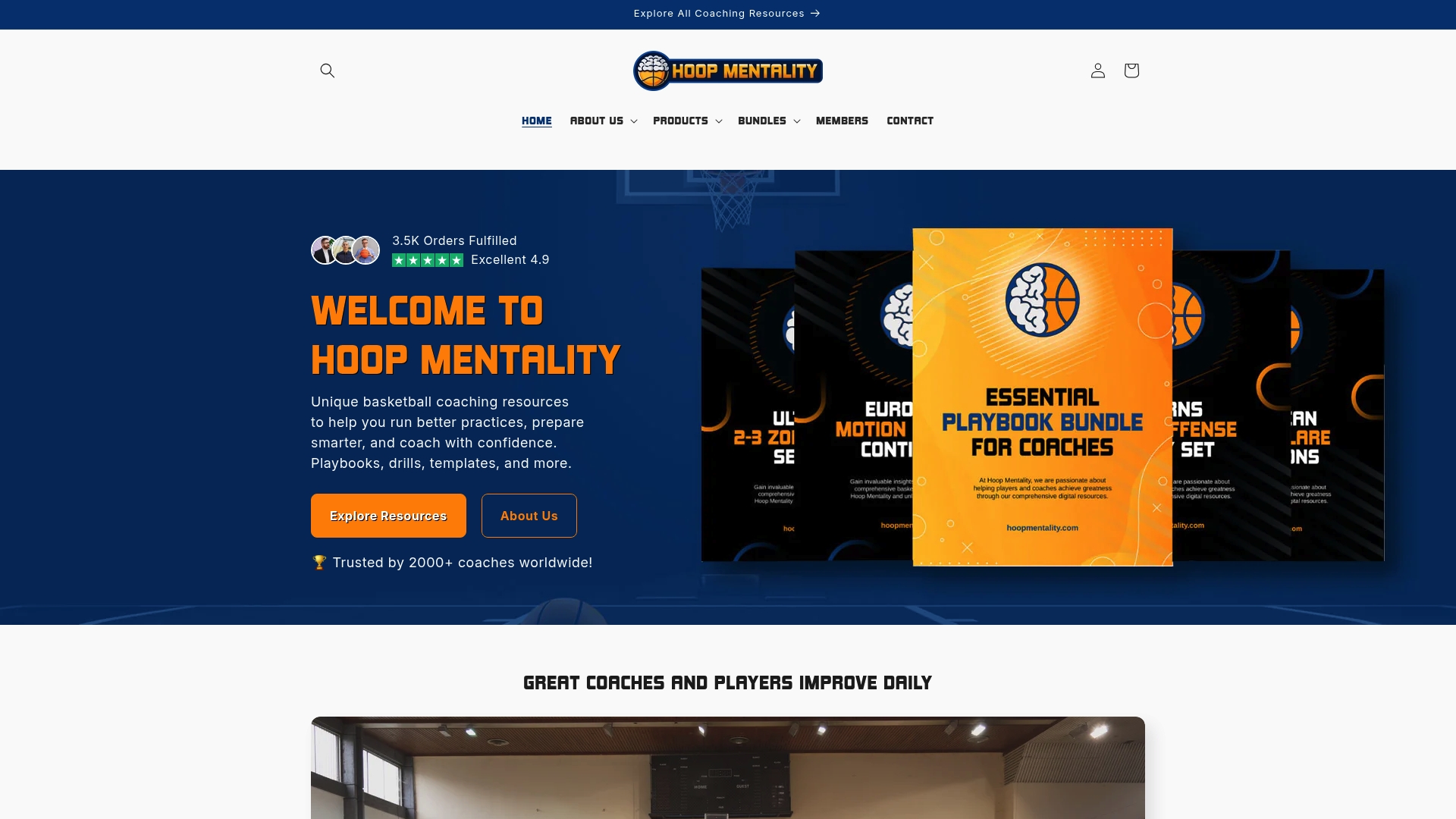
The Basketball Starter Pack gives you playbooks, practice plans, and drills built around real coaching experience. For coaches focused on data-driven preparation, the Basketball Template Bundle includes scouting reports, player tracking sheets, and practice management tools that fit directly into a blended coaching model. Both resources are ready to use from day one. No setup required.
FAQ
What are the top 2025 coaching trends for basketball coaches?
The leading trends combine AI and video technology with emotional intelligence, niche specialization, and outcome-based delivery models. The coaching industry reached $5.34 billion in revenue, signaling rapid growth and rising professional standards.
How does emotional intelligence improve player development?
Emotional intelligence training yields a 256% ROI and a 12% productivity increase in organizations that invest in it. Coaches who apply EQ principles build faster trust, improve coachability, and get more consistent performance from players.
Why should basketball coaches specialize in a niche?
85% of clients prefer credentialed, specialized coaches over generalists. Specialization lets you charge outcome-based fees, attract the right players, and build a reputation that compounds over time.
What is a blended coaching model?
A blended model combines one-on-one sessions, group coaching, and digital programs to develop more players without adding coaching hours. It increases reach while maintaining the depth players need to improve.
How should coaches use AI without reducing player growth?
AI tools should promote productive struggle by prompting players to think critically rather than delivering instant answers. Use AI for data collection and feedback prompts, then let human coaching handle the interpretation and conversation.