

TL;DR:
- Icing the ball screen is a defensive strategy that forces the ball handler toward the sideline, using the court boundary as an extra defender. It effectively limits middle drives and short-roll options, making offense more predictable and manageable for the defense. Proper execution relies on sharp communication, skilled footwork, and tailoring coverage to the opponent’s personnel and tendencies.
Icing the ball screen is defined as a defensive tactic that forces the ball handler toward the sideline, using the baseline as an extra defender to contain the offense and protect the paint. Coaches at every level use this coverage to eliminate the middle of the floor as an option, cutting off the most dangerous driving lanes before they develop. The three key roles in ice defense are the on-ball defender, the big man, and the weak-side help defenders. Each has a specific job, and when all three execute together, the offense is funneled into predictable, manageable situations. Understanding why ice the ball screen works starts with understanding what it takes away from the offense.
Why ice the ball screen: the core defensive logic
Ice defense is built on one principle: the sideline acts as an extra defender, reducing offensive geometry and the ball handler’s available options. When you force the ball handler toward the baseline, you remove the two most dangerous reads from any pick-and-roll: the middle drive and the short-roll pass to the big. Those two options account for the majority of easy baskets generated by ball screen offense at every level of the game.
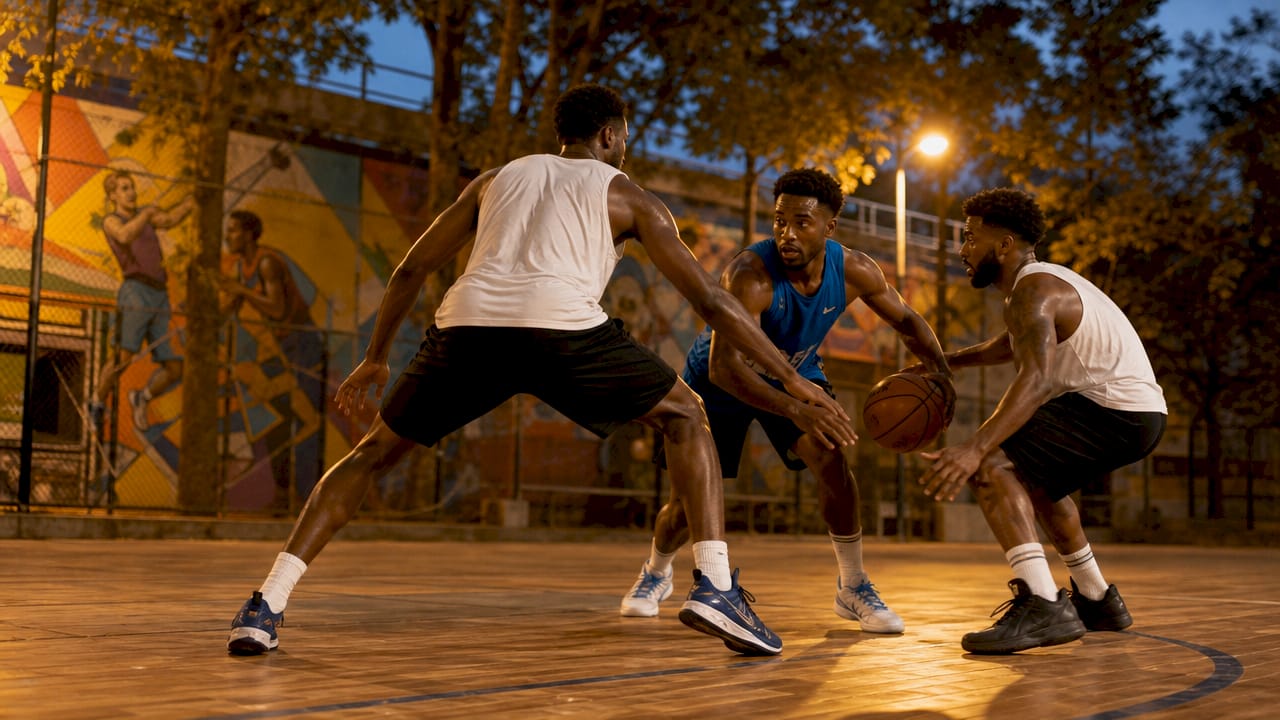
The “no-middle” mentality is the foundation of this ball screen defense strategy. Coaches who run ice coverage are not trying to stop every play. They are trying to make the offense solve a harder problem than the one they practiced. Forcing the ball handler to the sideline means longer passes, tighter angles, and fewer clean looks at the rim.
Icing is best suited for side pick-and-rolls where the sideline is already close and the ball handler’s space is naturally limited. It is less effective against middle ball screens where the floor is open on both sides and the offense has more room to operate. Knowing this distinction helps coaches decide when to call ice and when to use a different coverage.
How to execute the ice ball screen defense
Execution comes down to footwork, positioning, and communication. Every defender must know their assignment before the screen is set, not after.
On-ball defender responsibilities:
- Angle your feet and body to steer the offense toward the sideline before the screen arrives
- Use the jump to high side technique: take an explosive outside step to cut off the screen and deny the middle
- Stay low with your hips below the ball handler’s hips to maintain leverage and control direction
- Never get caught flat-footed. The moment you see the screener setting up, begin your angle adjustment
Big man responsibilities:
- Drop toward the paint and position yourself on the rim line, ready to contain any baseline drive
- Use the drop to touch technique: get close enough to challenge a drive without overcommitting and leaving a shooter open
- Avoid hedging aggressively out toward the ball handler. That leaves the paint exposed and creates foul risk
Communication:
- The on-ball defender calls “ICE!” or “SIDELINE!” the moment they read the screen coming
- Communication during ice coverage is critical. Miscommunication leads to open drives or uncontested passes to the short-roll big
- Weak-side defenders must shift toward the paint and corner to cover skip passes and kick-outs
Pro Tip: In practice, run ice coverage repetitions where the on-ball defender must call “ICE!” before the screener reaches the ball handler. If the call comes late, reset and run it again. Timing the call is as important as the footwork itself.
What are the strategic benefits of icing ball screens?
The benefits of icing ball screens go beyond just stopping one play. The coverage creates a system-wide effect on how the offense operates.
“Icing simplifies defensive reads by channeling the ball handler to predictable areas, allowing the defense to focus on team containment rather than reacting to multiple threats.”
Here is what ice coverage accomplishes at the team level:
- Paint protection. The big man stays near the rim instead of hedging out, which means the paint is never vacated. Offenses that rely on lob passes or short-roll finishes find far less space to work with.
- Reduced driving lanes. Forcing ball handlers away from the middle removes their easiest options for driving and passing, increasing the difficulty of scoring.
- Lower foul risk for the big man. Compared to switching or aggressive hedging, icing keeps the big man in a containment role rather than a chase role, which reduces the chance of reaching fouls or getting caught out of position.
- Predictable ball movement. When the ball handler is forced baseline, the defense knows where the next pass is likely to go. Weak-side defenders can pre-rotate to corner and nail positions instead of scrambling.
- Sideline as a weapon. The out-of-bounds line does the work of a sixth defender. No other coverage uses the court boundary this directly as a tactical tool.
These advantages make ice coverage especially useful against teams with a dominant ball handler who thrives in the middle of the floor. If your opponent’s best player needs space to operate downhill, ice takes that space away before the play even develops.
How do offenses counter ice coverage?
Offenses have specific answers to ice defense, and coaches need to prepare their players for each one.
-
The reject. The ball handler refuses the screen entirely and attacks the middle before the on-ball defender can angle them away. Defenders must anticipate rejects and be ready to recover quickly to guard middle lanes. The on-ball defender cannot fully commit to the baseline angle until the screen is actually set.
-
The snake dribble. The ball handler starts going baseline, then cuts back through the screen to attack the middle. This move exploits any gap between the on-ball defender and the big man. The big man must read this early and shift toward the middle to close the lane.
-
The step-up screen. The screener sets the screen higher up the floor, changing the angle and giving the ball handler more room to choose their direction. This forces the on-ball defender to make a faster decision and can create mismatches if the big man is slow to adjust.
-
Skip passes to the corner. When the ball handler is forced baseline, the corner shooter becomes the primary release valve. Weak-side defenders must understand corner and nail principles to cut off these passes before they arrive.
-
Short-roll reads. If the big man drops too deep, the screener can pop to the elbow or short-roll to the paint for a mid-range jumper or floater. The big man must read the screener’s movement and adjust their drop depth accordingly.
Pro Tip: Dedicate at least one practice segment per week to live ice coverage reps where the offense runs all five counters in sequence. Players who have seen every counter in practice make faster, more confident decisions in games.
How does ice compare to other ball screen coverages?
Ice defense is one of four primary ball screen coverages. Each has a different risk profile and suits different personnel.
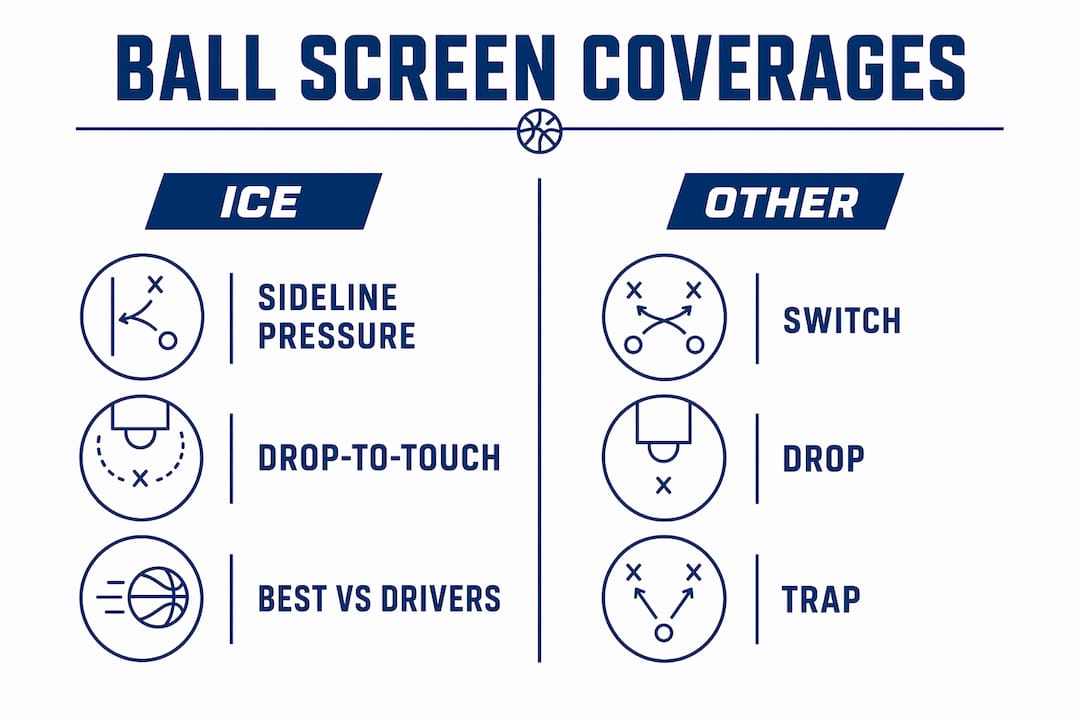
| Coverage | On-ball pressure | Big man role | Best against | Main risk |
|---|---|---|---|---|
| Ice | Forces baseline | Drop to touch, contain | Downhill ball handlers | Snake dribble, corner shooters |
| Drop | Soft, concede space | Drops deep, protects rim | Three-point shooters | Mid-range pull-up |
| Switch | High, aggressive | Switches onto ball handler | All screen types | Mismatch exploitation |
| Blitz | Maximum pressure | Hard hedge, trap | Pick-and-roll dependent teams | Roll man, skip pass |
Ice and drop coverage share the containment philosophy, but they differ in where the big man positions. In drop coverage, the big man sinks deeper toward the paint and concedes the mid-range. In ice, the big man stays closer to the ball handler’s path to cut off baseline drives more directly. Hedging techniques and blitz defense both require the big man to leave the paint, which creates more risk against teams with good roll men or shooters.
The right coverage depends on your opponent’s personnel. Ice works best when the ball handler is a strong downhill driver who prefers the middle. Switch coverage works better against teams that use mismatches deliberately. Blitz is most effective against teams that are heavily dependent on one ball handler making decisions under pressure.
Key takeaways
Ice defense forces the ball handler baseline, uses the sideline as a sixth defender, and protects the paint by keeping the big man in a containment role rather than an aggressive hedge.
| Point | Details |
|---|---|
| Sideline as a defender | The out-of-bounds line removes offensive options without requiring an extra player to cover them. |
| Communication is non-negotiable | Calling “ICE!” before the screen arrives sets every defender’s assignment and prevents breakdowns. |
| Big man containment reduces fouls | The drop-to-touch role keeps the big man near the paint and out of foul trouble compared to hedging. |
| Know the counters | Rejects, snake dribbles, and step-up screens all target ice coverage. Prepare for each one in practice. |
| Match coverage to personnel | Ice is most effective against downhill ball handlers on side pick-and-rolls, not middle screens. |
What I’ve learned from coaching ice coverage over the years
The biggest mistake I see coaches make with ice defense is treating it as a set-and-forget scheme. They teach the footwork once, run a few walk-through reps, and assume players will execute it under game pressure. They won’t. Ice coverage breaks down at the communication level first, not the footwork level. When the on-ball defender fails to call “ICE!” early enough, the big man has no time to position, and the whole scheme collapses.
The second mistake is running ice on every ball screen regardless of where it is set. Ice is a side pick-and-roll tool. Using it on middle screens gives the ball handler too much room to reject and attack. Coaches who understand this distinction use ice selectively and switch to drop or switch coverage when the screen location changes.
What actually works in practice is building ice coverage through progressive drills. Start with the on-ball defender alone, working the angle and jump-to-high-side footwork without a screener. Add the screener next. Then add the big man’s drop. Finally, add the full offense running counters. Players who build the skill layer by layer execute it far more reliably than those who learn it all at once in a team setting.
Ice coverage also rewards aggressive, decisive players. A defender who hesitates on the angle loses the play. Coaches should reward the right decision made quickly, even if the execution is imperfect, rather than punishing mistakes that come from hesitation. That mindset builds the confidence players need to run the scheme at full speed.
— Dejan
Build your ice defense with Hoopmentality resources
Hoopmentality has the tools to help you install and refine ice coverage at any level.

The Big Man Dual Action Drill trains the drop-to-touch technique and containment footwork your big man needs to execute ice coverage correctly. The Game Preparation Guide with Weekly Practice Plan gives you structured practice sessions that include ball screen defense progressions, so you can build ice coverage into your weekly preparation without starting from scratch. Both resources are built from real coaching experience and designed to save you time while giving your players clear, repeatable systems to follow.
FAQ
What does it mean to ice the ball screen?
Icing the ball screen means the on-ball defender angles their body to force the ball handler toward the sideline, preventing them from using the screen to attack the middle of the floor. The sideline acts as an extra defender, limiting the offense’s available options.
When should a coach use ice defense?
Ice defense is most effective against side pick-and-rolls where the ball handler is a strong downhill driver who prefers attacking the middle. It is less effective against middle ball screens where the offense has more space to operate on both sides.
What is the big man’s role in ice coverage?
The big man uses the drop-to-touch technique, positioning near the paint to contain baseline drives without overcommitting. This keeps them close to the rim, reduces foul risk, and prevents the screener from getting easy short-roll opportunities.
How do offenses beat ice coverage?
The most common counters are the reject (attacking middle before the screen), the snake dribble (cutting back through the screen), and skip passes to corner shooters. Defenders must anticipate these reads and prepare for them through live practice reps.
How is ice defense different from drop coverage?
Both coverages use containment rather than aggressive hedging, but ice forces the ball handler to the sideline while drop allows more space and focuses on protecting the rim. Ice requires more precise on-ball footwork and earlier communication from the defending team.