

Every coach knows that even a single missed assignment on a ball screen can decide the outcome of a game. As youth and high school teams worldwide face increasingly sophisticated offenses, mastering ball screen defense fundamentals has become a defining test of teamwork and preparation. This guide breaks down the specific techniques, strategic decisions, and player roles you need to help your players shut down pick and roll actions with confidence and consistency on any court.
Table of Contents
- Ball Screen Defense Fundamentals Explained
- Major Types of Ball Screen Coverage
- Key Techniques and Player Roles
- Risks, Adjustments, and Troubleshooting
- Common Mistakes to Avoid in Practice
Key Takeaways
| Point | Details |
|---|---|
| Effective Communication is Crucial | Success in ball screen defense relies on clear communication among players to anticipate and react to screens effectively. |
| Understand Coverage Types | Coaches should systematically teach coverage types to avoid confusion and ensure players know which to use in different situations. |
| Focus on Key Techniques | Define player roles precisely to enhance execution during ball screen scenarios, fostering trust between guards and bigs. |
| Address Common Mistakes Promptly | Regularly correct positioning errors and prioritize live-game-speed drills to build instincts that translate into effective defense. |
Ball Screen Defense Fundamentals Explained
Ball screen defense separates good basketball teams from championship teams. A ball screen, also called a pick, occurs when an offensive player sets their body to block a defender, creating space for their teammate to attack. Understanding how to defend this simple yet effective offensive action requires your team to execute a coordinated, multi-player response rather than relying on individual talent alone.
The core principle behind effective ball screen defense centers on communication and positioning. When a ball screen occurs, two primary defenders become involved immediately: the guard defending the ball handler and the big defender whose player set the screen. Your team has several strategic options to choose from, and each has distinct advantages and disadvantages depending on your personnel and opponent tendencies.
Switching remains the most straightforward approach. The two defenders exchange assignments, with the guard taking the screener and the big defending the ball handler. This prevents the ball handler from getting a clean attack downhill, but it often results in size mismatches that skilled offensive players exploit. Hedging offers an alternative where the screener’s defender steps out aggressively to slow the ball handler while the original guard defender fights back over the top to recover. This creates momentary coverage gaps but disrupts the offense’s timing. Going under the screen means your guard defender slides beneath the screen without the screener’s defender stepping out, trusting your guard to recover quickly on the perimeter. Teams with elite perimeter defenders often employ this tactic against three point shooters they want to keep off the glass.
Basketball defensive concepts provide the foundation for understanding these options more deeply, but the practical execution demands constant practice. Your players must understand when to apply each technique based on game situations, opponent positioning, and your defensive philosophy.
Pro tip: Film review your opponents’ ball screen tendencies before games, identifying whether they use screens to attack downhill, kick out to shooters, or create rolling action, then assign specific defensive counters to each tendency during your game plan installation.
Major Types of Ball Screen Coverage
Your defensive approach to ball screens must be systematic and clearly defined. Coaches who try to improvise their coverage from game to game waste valuable practice time and confuse their players about expectations. The three primary ball screen coverage types each serve specific tactical purposes, and your choice depends on your personnel strengths, opponent tendencies, and overall defensive philosophy.
On-Ball Switching is the most aggressive coverage option. When the screen is set, your two defenders simply exchange assignments without hesitation. The guard takes the screener while the big defender moves onto the ball handler. This approach eliminates hesitation and coverage gaps, making it nearly impossible for the offense to create confusion through the screen. The trade-off comes when smaller, quicker guards end up defending post players, or larger centers must defend perimeter shooters on the wing. Watch your bench and notice which opponents exploit size mismatches most effectively. For example, if your point guard struggles defending bigger forwards, switching might create opportunities for the opposing team to target that mismatch repeatedly.
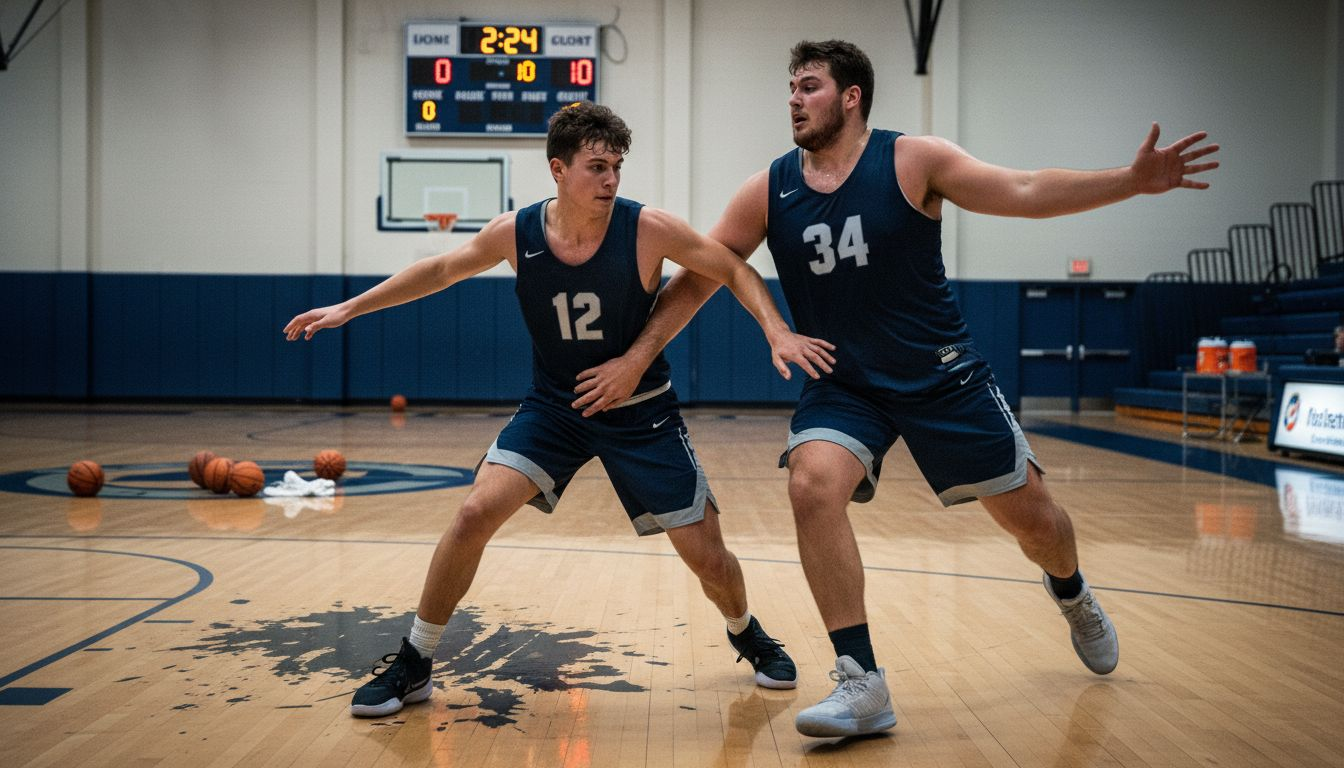
Hedge and Recover gives defenders more time to react while maintaining your original assignments. The screener’s defender steps out aggressively to slow the ball handler’s progress, then the original guard defender fights back over the top of the screen to regain their assignment. This coverage style demands excellent communication and lateral speed from your guards. When executed properly, hedging disrupts offensive timing and forces the ball handler into difficult decisions. The vulnerability appears when the ball handler attacks the recovering defender’s hip, creating splitting opportunities that lead to open scoring chances.
Going Under the Screen represents the conservative approach, used primarily against poor three point shooters or when defending pick and roll actions far from the basket. Your guard simply slides underneath the screen’s level without the big defender stepping out to meet them. This keeps your interior defender inside the paint, but it requires your perimeter defender to recover quickly enough to challenge the ball handler’s shot. This coverage works best during late-game situations where you can afford to give up mid-range shots but cannot allow layups.
Understanding seven key types of basketball screens helps you recognize when each coverage applies most effectively during game situations.
Here is a concise comparison of the three primary ball screen coverages:
| Coverage Type | Best Used Against | Main Risk | Key Defender Skill |
|---|---|---|---|
| On-Ball Switching | Teams seeking mismatches | Size mismatches | Versatility |
| Hedge and Recover | Aggressive ball handlers | Open roller | Communication, footwork |
| Going Under the Screen | Weak perimeter shooters | Open three-point shots | Recovery speed |
Pro tip: Assign each coverage type to specific offensive actions during your game plan so your players know exactly which approach to use against pick and rolls, side screens, and down screens without having to think mid-game.
Key Techniques and Player Roles
Ball screen defense succeeds only when every player on your roster understands their specific responsibilities. Your guards and big men operate in fundamentally different ways, and those distinctions determine whether your coverage schemes work or collapse under offensive pressure. Assigning clear roles prevents the confusion that kills defensive execution in critical moments.
Your point guard’s primary responsibility centers on communication and initial decision-making. The moment the opposing point guard catches the ball, your point guard must call out the incoming screen, verbally alert the big defender about the pick’s location, and execute the chosen coverage option without hesitation. Guards who fail to communicate early force their teammates to react rather than anticipate. During these exchanges, your guard must also read whether the ball handler will attack off the dribble or kick out to the perimeter shooter. If switching is the call, your guard takes the screener and must have the ability to recover laterally if that player steps out for a jump shot. The best defensive point guards maintain their positioning on the ball handler’s hip, making it physically impossible for the offense to create clean space without using excessive screeners.
Your big defender’s role demands different technical skills. When the screen is set, the big must react quickly to either step out and hedge the ball handler or drop back to maintain interior spacing. Many coaches overlook a critical detail: the screener’s defender cannot fully commit to stepping out until they confirm your point guard will fight over or under the screen. Premature hedging leaves the rolling screener completely undefended. The big defender must also recognize when switching is called and be willing to move onto the perimeter, understanding that defending a guard on the wing requires different footwork than defending in the paint. Interior defenders who resist guarding outside often create hesitation that offensive players exploit ruthlessly. Understanding basketball player positions and their responsibilities provides deeper context for how these roles fit into your overall defensive structure.
The most effective ball screen defense requires both guards and bigs to trust the system completely. Your guards must trust that their big will step out if needed, and your bigs must trust that their guards will recover on time. This interdependence means one player’s hesitation directly sabotages the other player’s execution. Invest practice time specifically on these two-player combinations so they develop rhythm and timing.
Pro tip: Record video of your guards and bigs during controlled drills, then show them exactly what happens when one player fails to execute their role so they see how their individual mistakes cascade into defensive breakdowns.
Risks, Adjustments, and Troubleshooting
Every ball screen defense system creates vulnerabilities, and understanding them allows you to anticipate offensive counters before they happen. The most common problems emerge from poor communication, incorrect positioning, or players reverting to individual defense instead of trusting the team concept. Recognizing these issues during practice prevents them from costing you games when it matters most.
Size mismatches represent the primary risk when switching on ball screens. Your smaller guards defending post players in the paint face serious challenges finishing plays around the rim, while your big men defending perimeter shooters often struggle with lateral mobility and three point range. If you notice opponents repeatedly targeting these matchups, you have two practical adjustments. First, switch only on ball screens occurring above the free throw line where the ball handler has less chance to attack the paint. Second, implement a soft switch where the guard takes the screener but immediately hands them off back to the original big defender once the ball handler’s direction becomes clear. This requires precision timing but eliminates the size mismatch problem entirely.
Hedge and recover failures occur when your big defender steps out too aggressively, losing visual contact with the roller. When the ball handler drives past your recovering guard, the open roller catches an easy pass for a layup. The adjustment here demands better communication about how far the big should commit. Use film to show your big defender exactly when they should step out versus when they should drop. Many coaches find success implementing a show and recover approach where the big defender simply shows their body to the ball handler without fully committing to the screen, giving the guard enough time to recover while keeping the roller contained.
Going under the screen problems manifest when your guard cannot recover to contest perimeter shooters quickly enough. If opponents are consistently shooting over your guard from three point range, you need either faster guards or different personnel assignments. However, before changing personnel, try adjusting your recovery angle. Rather than fighting directly over the screen’s top, have your guard slip to the wing area where the shooter typically catches the ball, allowing them to recover faster with less distance to cover. This small positional tweak often solves recovery timing issues without requiring roster changes.
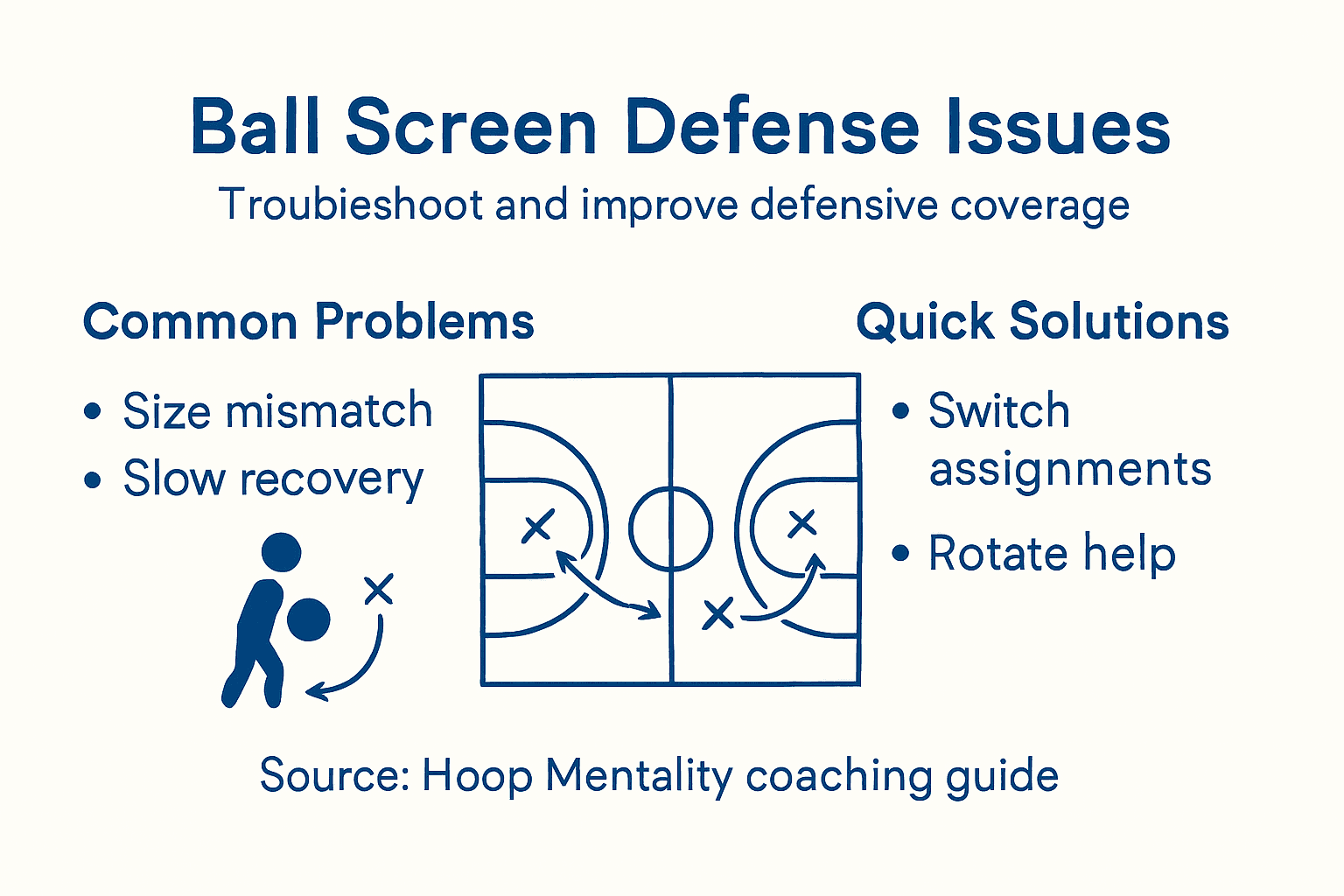
The most critical troubleshooting step involves identifying patterns during practice. Watch which offensive actions consistently beat your defense, then assign specific drills to address those breakdowns. Use how to teach players good defense principles when installing corrective measures so your instruction lands clearly with players who struggle with execution.
Pro tip: Create a simple troubleshooting chart listing your three coverage types with the most common offensive counters, then assign specific defensive drills to address each counter so your players know exactly what to practice when problems emerge.
Common Mistakes to Avoid in Practice
Coaches who teach ball screen defense poorly often create problems that take weeks to fix. The mistakes usually stem from rushing through instruction, allowing sloppy repetitions, or failing to correct positioning errors immediately when they occur. Bad habits develop quickly in practice and become nearly impossible to break during games when players operate at game speed under pressure.
The first major mistake involves teaching all three coverage types simultaneously. Young coaches assume players will intuitively understand when to switch versus hedge versus go under the screen. This creates confusion where players second-guess their assignments instead of executing with confidence. Start with one coverage type exclusively during your first week of ball screen drills. Have your guards and bigs execute the same coverage repeatedly until they execute it perfectly ten consecutive times. Only then introduce the second coverage type, and only after complete mastery add the third option. This sequential approach builds confidence and prevents the mental overload that causes defensive breakdowns during games.
The second critical error involves insufficient communication drills. Many coaches assume communication happens naturally during game situations, but it does not. Your guards must verbally call out every screen before it occurs, identifying both the screen’s location and which coverage applies. Start your ball screen practice by having guards call out screens without defenders present, simply walking through their assignments while communicating. Progress to adding defenders, then defenders at game speed. Players who practice communication in controlled settings execute it automatically when games become chaotic.
The third widespread mistake is allowing poor positioning throughout repetitions. When a guard fails to fight properly over a screen or a big defender steps out too far, many coaches let it continue without stopping the drill. This teaches players that sloppy effort is acceptable. Stop every single repetition where positioning breaks down, reset the players to their starting spots, and have them repeat correctly. This takes longer initially but creates neural pathways that produce correct movement automatically. Coaches avoiding this immediate correction approach are essentially teaching their players to defend incorrectly. Understanding seven common coaching mistakes helps you recognize these patterns in your own instruction before they compound into bigger problems.
The fourth mistake involves insufficient live game-speed repetitions. Walking through ball screen coverage in slow motion teaches positioning but not decision-making. By the final week of installation, at least 50 percent of your ball screen work should happen at full game speed with offensive players attacking aggressively. Slow-motion drill work establishes mechanics, but game-speed reps build the timing and instincts that matter when opponents actually attack.
This summary highlights critical mistakes to avoid when teaching ball screen defense:
| Common Mistake | Why It Hurts Performance | Corrective Focus |
|---|---|---|
| Teaching all coverages at once | Causes confusion among players | Drill one method at a time |
| Poor communication in drills | Leads to missed assignments | Practice verbal cues early |
| Ignoring positioning errors | Reinforces bad habits | Stop and reset immediately |
| Too few live speed repetitions | Slow reactions in real games | Increase full-speed drills |
Pro tip: Film your ball screen drills for the first three days, then review the tape with your team to show exact positioning errors that players miss in real-time, creating a visual reference they can internalize quickly.
Master Ball Screen Defense With Proven Coaching Resources
Defending ball screens effectively is a major challenge for many basketball teams because it demands precise communication, quick decision-making, and coordinated effort between guards and bigs. If you want your team to stop giving up easy scoring chances due to hesitation or confusion on defense, focusing on mastering coverage techniques such as switching, hedging, and going under the screen is essential. This article highlights common pitfalls and the importance of clear player roles, but putting theory into practice is where many coaches struggle.

That is where Hoop Mentality can help you save time and build your team’s defensive confidence fast. Our Basketball Guides and Basketball Playbooks include step-by-step instructions, detailed drills, and communication strategies tailored specifically for complex defensive situations like ball screen coverage. With these practical resources developed by experienced coaches you can focus on perfecting your system and improving your players’ execution without second guessing. Don’t wait until your toughest opponents expose your defensive gaps. Visit Hoop Mentality now to access tools that help you teach your team how to defend ball screens smartly and win games.
Frequently Asked Questions
What is ball screen defense?
Ball screen defense is a strategic approach used by basketball teams to defend against offensive players setting ball screens, also known as picks, to create space for their teammates.
What are the main types of ball screen coverage?
The three primary types of ball screen coverage are On-Ball Switching, Hedge and Recover, and Going Under the Screen. Each coverage serves unique tactical purposes depending on the defensive strategy and opposing players’ tendencies.
How can I improve my team’s ball screen defense?
Improving ball screen defense requires consistent communication, understanding player roles, practicing specific coverage types, and analyzing film to identify tendencies and areas for improvement.
What should I avoid when teaching ball screen defense?
Avoid teaching all three coverage types simultaneously, allow poor communication, ignore positioning errors, and limit live-speed repetitions. Focus on one coverage type at a time, ensure players communicate effectively, make immediate corrections, and include game-speed practice in your drills.
Recommended
- Ball Screen Offense: Boosting Youth Team Success – Hoop Mentality
- 7 Essential Man-to-Man Offense Tips for Basketball Coaches – Hoop Mentality
- 7 Key Types of Basketball Screens Every Coach Should Know – Hoop Mentality
- 7 Essential Defensive Adjustment Tips for Basketball Coaches – Hoop Mentality
- Four Big Takeaways From The Atlanta Hawks’ Concerning Loss Against The Miami Heat / Naijatipsland