

Most american youth basketball teams struggle to score efficiently against well-organized defenses. Coaches know that every possession counts, yet predictable offenses limit both team success and individual growth. Mastering the ball screen offense offers a proven path to better shot selection and smarter decision-making. Learn how strategic screening methods give young players the confidence to break down defenders and create over 50 percent more high-percentage shots according to recent basketball research.
Table of Contents
- Ball Screen Offense Explained Clearly
- Types of Ball Screens and Key Differences
- How Ball Screen Actions Generate Offense
- Teaching Progressions for Youth Players
- Common Mistakes and How to Prevent Them
Key Takeaways
| Point | Details |
|---|---|
| Ball Screen Offense | A strategic approach that creates scoring opportunities by employing player screens to exploit defensive weaknesses. |
| Types of Ball Screens | Variations like stationary screens and Pick & Roll actions enhance offensive tactics and adaptability. |
| Generating Offense | Ball screens create numerical advantages, forcing defensive rotations to open scoring lanes and mismatches. |
| Teaching Progressions | Systematic instruction develops players’ understanding of screening techniques and decision-making for effective execution. |
Ball Screen Offense Explained Clearly
A ball screen offense represents a strategic basketball approach where an offensive player sets a screen for the ball handler, creating multiple scoring opportunities. Basketball performance research demonstrates that these tactical maneuvers enable teams to break defensive coverage and generate high-percentage shooting chances.
In practice, ball screens involve complex player movements designed to exploit defensive weaknesses. Players can execute different screening techniques like stationary screens, moving screens, Pick & Roll, and Pick & Pop actions. These variations allow teams to adapt quickly based on defensive positioning and create unpredictable offensive sequences that challenge opponents’ defensive strategies.
Youth basketball coaches can implement ball screen offenses by teaching players fundamental screening techniques and spatial awareness. The key is developing players’ understanding of timing, angles, and communication. Successful ball screen execution requires both the screener and ball handler to read defensive responses instantly and make split-second decisions that create scoring opportunities.
Pro tip: Practice ball screen scenarios using video breakdown and live drill repetitions to help young players understand complex movement patterns and decision-making strategies.
Types of Ball Screens and Key Differences
Basketball coaches have several ball screen variations they can implement to create strategic offensive opportunities. Understanding the key types of basketball screens enables youth teams to develop more complex and effective offensive strategies that keep opponents guessing.
The main ball screen types include stationary screens, where a player establishes a fixed position to block a defender, and moving screens, which involve the screener shifting position dynamically. Pick & Roll actions represent a classic technique where the screener rolls toward the basket after setting the screen, creating multiple scoring options. Pick & Pop variations differ by having the screener step back for a potential jump shot instead of rolling, adding another layer of unpredictability to the offensive approach.
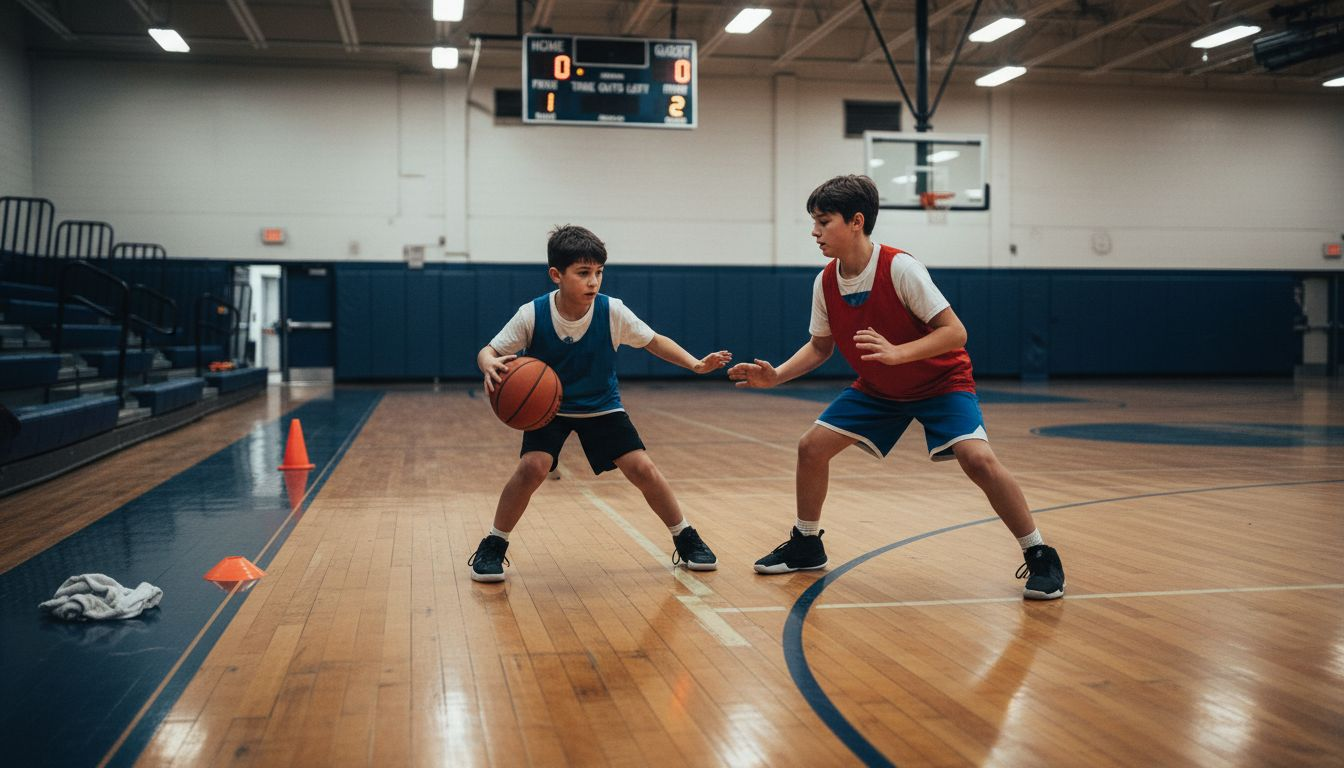
Each ball screen type requires specific player skills and court awareness. Stationary screens demand precise positioning and timing, while moving screens need coordination and quick decision-making. Youth players must learn to read defensive reactions, communicate effectively, and understand when to execute each screen type based on the defensive formation and individual player strengths.
Here is a summary comparing the main types of ball screens:
| Ball Screen Type | Primary Goal | Key Player Action | Typical Outcome |
|---|---|---|---|
| Stationary Screen | Block defender’s path | Hold position firmly | Create room for ball handler |
| Moving Screen | Disrupt defensive coverage | Shift into defender’s path | Force defensive breakdown |
| Pick & Roll | Create scoring chances | Roll to basket after screen | Open layup or mismatch |
| Pick & Pop | Stretch defense | Step back for a jump shot | Open perimeter look |
Pro tip: Practice each ball screen variation with multiple player combinations to develop versatility and help young athletes understand the nuanced differences between screening techniques.
How Ball Screen Actions Generate Offense
Ball screen actions are fundamental to creating offensive opportunities by exploiting defensive vulnerabilities. Basketball offensive concepts reveal that these strategic maneuvers can transform a predictable offense into a dynamic scoring machine by creating multiple potential scoring scenarios.
The primary mechanism for generating offense through ball screens involves creating numerical advantages and forcing defensive rotations. When a ball screen occurs, the defending team must make split-second decisions: switch defenders, hedge, or fight through the screen. Each defensive response opens different offensive possibilities. A well-executed screen can create driving lanes for the ball handler, open jump shot opportunities, or generate mismatches that skilled players can exploit for high-percentage scoring chances.
Successful ball screen offense requires precise timing and communication between players. The screener must establish a solid, legal position, while the ball handler must read the defensive reaction quickly and make the right decision. Youth players can learn to generate offense by understanding how different screen actions create space, disrupt defensive positioning, and create scoring opportunities through smart player movement and basketball intelligence.
Pro tip: Teach young players to practice reading defensive reactions during ball screen scenarios, focusing on making quick, instinctive decisions that maximize scoring potential.
Teaching Progressions for Youth Players
Designing effective ball screen teaching progressions requires a systematic approach tailored to youth players’ developmental stages. Instructional strategies for continuity ball screen offenses emphasize breaking down complex movements into simple, digestible components that young athletes can gradually master.
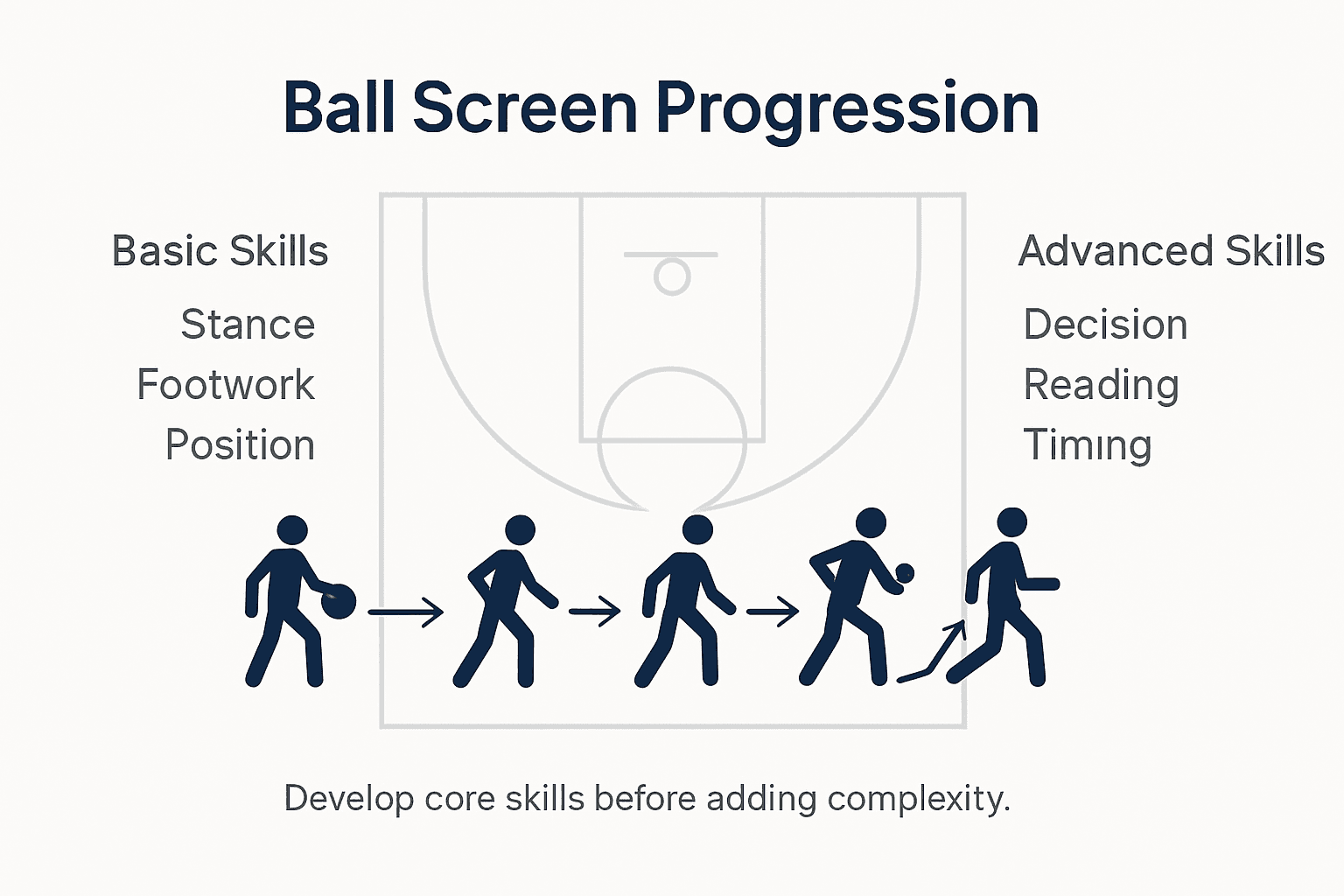
The recommended progression begins with fundamental screening techniques. Youth coaches should first teach players proper screen positioning, body angles, and legal screening methods. Initial drills focus on stationary screens, teaching players how to establish solid positions without drawing illegal contact. As players become comfortable with basic mechanics, coaches can introduce dynamic screening scenarios that require more complex footwork and timing.
Advanced progressions involve integrating decision-making skills with screening actions. Players learn to read defensive responses, understand spacing principles, and communicate effectively during screen actions. This approach transforms ball screens from mechanical movements into strategic offensive weapons. By systematically building player understanding through repetitive practice and gradual complexity, coaches can help young athletes develop intuitive basketball intelligence that extends beyond simple screening techniques.
Pro tip: Create practice scenarios that simulate game-like defensive pressures, allowing players to develop instinctive responses during ball screen situations.
Common Mistakes and How to Prevent Them
Ball screen offense execution involves several critical pitfalls that youth coaches must recognize and address. The most common mistakes often stem from fundamental misunderstandings about player positioning, screening techniques, and team communication.
Improper screening techniques represent a significant challenge for youth teams. Players frequently make errors like setting illegal screens, failing to establish proper body angles, or not maintaining adequate spacing between teammates. Coaches should focus on teaching precise screen mechanics, emphasizing shoulder positioning, legal contact points, and the importance of creating clear passing and driving lanes. Young players must understand that an effective screen is not about physical force, but strategic positioning and timing.
Decision-making during ball screen actions also presents substantial learning opportunities. Many youth players struggle with reading defensive responses, leading to rushed or predictable offensive plays. Developing players’ basketball intelligence requires consistent practice in recognizing different defensive strategies and understanding when to attack, pass, or reset the offensive sequence. Communication becomes crucial in these moments, with teammates needing to signal and respond to emerging opportunities quickly and instinctively.
The following table outlines common mistakes in ball screen offense and prevention strategies:
| Common Mistake | Why It Happens | Prevention Strategy |
|---|---|---|
| Illegal screen movement | Poor footwork or awareness | Emphasize proper mechanics |
| Miscommunication | Lack of signaling or clarity | Practice verbal/nonverbal cues |
| Rushed decision making | Not reading defense | Repetition and scenario drills |
| Poor spacing | Clustering near the ball | Teach floor balance and spacing |
Pro tip: Implement weekly video review sessions where players analyze their own ball screen performances, helping them develop critical self-assessment and tactical awareness skills.
Elevate Your Youth Team’s Ball Screen Offense Today
Mastering ball screen offense means overcoming challenges like perfecting screening techniques, improving communication, and making quick smart decisions under pressure. These are key to breaking down defenses and creating high-quality scoring chances. If your team is struggling to execute effective screens or read defensive reactions, you are not alone. Developing these skills takes structured practice and clear guidance.
Discover how our expertly designed Basketball Playbooks - Hoop Mentality and dynamic Basketball Drills - Hoop Mentality can transform your coaching approach.

Take the first step towards building a confident, well-prepared youth team that thrives on ball screen offense strategies. Visit Hoop Mentality now to access proven coaching resources that save you time while sharpening your players’ skills. Act now to bring clarity and success to your practices and win more games.
Frequently Asked Questions
What is a ball screen offense in basketball?
A ball screen offense is a strategic approach where an offensive player sets a screen for the ball handler, aiming to create scoring opportunities by disrupting defensive coverage.
What are the different types of ball screens?
The main types of ball screens include stationary screens, moving screens, Pick & Roll, and Pick & Pop actions, each with distinct mechanics and offensive goals.
How can I teach ball screen techniques to youth basketball players?
Start with fundamental screening techniques focusing on positioning and legal methods. Gradually introduce dynamic scenarios and decision-making elements as players become more comfortable.
What common mistakes should I watch out for when executing ball screens?
Common mistakes include illegal screen movement, poor communication, rushed decision-making, and inadequate spacing. Emphasizing proper mechanics and consistent practice can help prevent these issues.