

Most youth basketball teams struggle when american offensive systems are treated as rigid playbooks instead of adaptable strategies. Basketball is more than just memorizing plays, especially in urban environments where players bring diverse skills and personalities to the court. Understanding what truly sets effective offensive systems apart helps coaches connect with young athletes, build smarter teams, and sidestep common myths that hold players back.
Table of Contents
- Defining Basketball Offensive Systems And Myths
- Major System Types And Key Distinctions
- Core Principles Of Effective Offense
- Implementing Systems With Youth Players
- Role Assignments And Team Responsibilities
- Common Mistakes And How To Avoid Them
Key Takeaways
| Point | Details |
|---|---|
| Dynamic Offensive Systems | Basketball offensive systems are tailored strategies that require flexibility, player empowerment, and understanding rather than rigid play memorization. |
| Role Assignments | Effective role assignments go beyond traditional positions, focusing on player strengths and collaborative dynamics to maximize team performance. |
| Incremental Learning for Youth | Coaches should introduce complex concepts gradually, ensuring that young players can master fundamental principles before advancing. |
| Avoiding Common Pitfalls | Implementing overly complex systems or rigid strategies that do not match player skills can undermine team effectiveness and morale. |
Defining Basketball Offensive Systems and Myths
Basketball offensive systems are strategic frameworks that define how teams coordinate player movements, spacing, and scoring opportunities on the court. Recent research from Frontiers in Psychology reveals that these systems are far more complex than simple play sequences, representing intricate patterns of player interactions and role specializations that significantly impact team performance.
Contrary to popular myths, offensive systems are not one-size-fits-all solutions but dynamic strategies tailored to a team’s unique strengths. Young basketball players often misunderstand these systems as rigid scripts, when in reality they are adaptive frameworks allowing players creative expression within structured principles. Offensive flow depends on players understanding core concepts like spacing, ball movement, and player positioning rather than memorizing exact predetermined routes.
The most effective offensive systems share common characteristics: flexibility, player empowerment, and strategic complexity. They require players to read defensive setups, make quick decisions, and seamlessly transition between different scoring options. Coaches must recognize that developing these systems involves teaching decision-making skills, basketball intelligence, and collaborative team dynamics - not just running repetitive drills.
Pro tip: Focus on teaching basketball principles and decision-making frameworks instead of rigid play memorization, empowering young players to understand offensive concepts strategically.
Major System Types and Key Distinctions
Basketball offensive systems can be categorized into several fundamental types, each with unique strategic approaches and implementation techniques. Comprehensive playbook research identifies four primary system categories: continuity offenses, motion offenses, set plays, and spread offenses. Understanding these distinctions allows coaches to design more intentional and adaptive strategies tailored to their team’s specific strengths and skill sets.
Continuity offenses like the Flex and Swing systems feature repeating patterns that create consistent scoring opportunities through structured player movements. Motion offenses, by contrast, emphasize player freedom and reading defensive configurations, allowing athletes to make real-time decisions based on spatial relationships. Set plays provide predetermined sequences designed to generate specific scoring chances, while spread offenses maximize floor spacing to create driving lanes and perimeter shooting opportunities.
The key to successful offensive system implementation lies in recognizing that no single approach works universally. Coaches must assess their team’s collective skills, individual player capabilities, and competitive context to select the most appropriate system. Young teams might benefit from more structured continuity approaches, while more experienced squads can leverage complex motion or spread offensive strategies that require advanced basketball intelligence and collaborative decision-making.
Pro tip: Evaluate your team’s collective skill level and basketball IQ before selecting an offensive system, and be prepared to adjust your approach as players develop and improve.
Here’s a comparison of the four major basketball offensive system types:
| Offensive System Type | Core Strategy | Best For | Key Challenges |
|---|---|---|---|
| Continuity Offense | Repeating structured patterns | Young, beginner teams | Can be predictable |
| Motion Offense | Player freedom, real-time reads | Experienced teams | Requires high basketball IQ |
| Set Plays | Predefined scoring sequences | Situational advantage | Less adaptability |
| Spread Offense | Maximized spacing and driving lanes | Athletic, shooting-focused teams | Defensive countermeasures |
Core Principles of Effective Offense
Effective offensive basketball strategies are built upon fundamental principles that transform individual player skills into coordinated team performance. Basketball offensive flow research reveals that successful offenses depend on synchronized player coordination, intelligent timing, and adaptive decision-making. These principles go beyond simple skill execution, requiring players to develop a sophisticated understanding of court dynamics and strategic interactions.
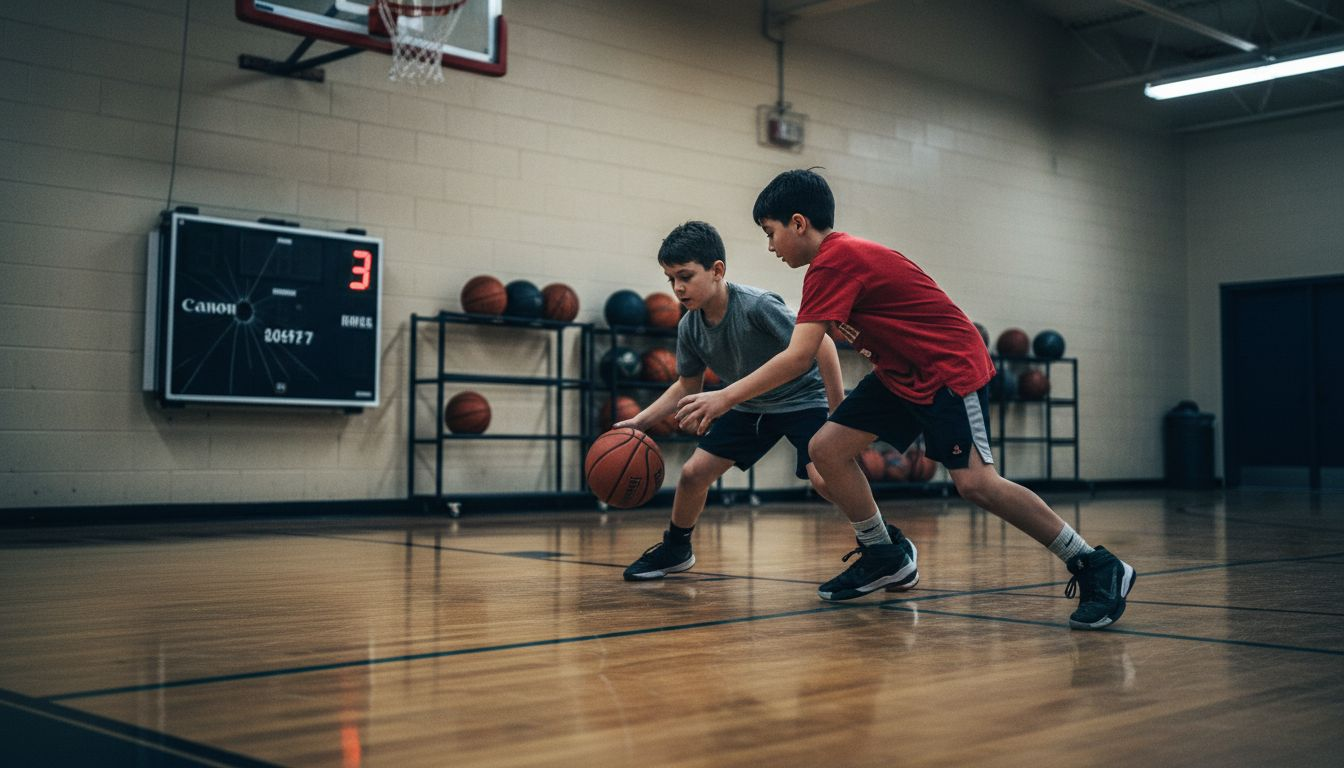
The core principles of effective offense can be distilled into four critical components: court spacing, quick ball movement, reading defenses, and intelligent cutting. Court spacing ensures that players create and maintain strategic distances that prevent defensive congestion and generate scoring opportunities. Quick ball movement disrupts defensive formations, forcing opponents to constantly adjust and creating momentary vulnerabilities. Reading defenses involves players developing the basketball intelligence to recognize and exploit defensive configurations in real-time, while intelligent cutting allows players to create additional scoring chances through strategic movement without the ball.
Successful offensive systems require players to integrate these principles seamlessly, transforming them from individual techniques into a cohesive team strategy. Coaches must therefore focus on developing players’ basketball IQ, teaching them to recognize patterns, anticipate defensive reactions, and make split-second decisions that maximize offensive potential. This approach demands more than traditional drill-based training - it requires cultivating players’ spatial awareness, communication skills, and collective understanding of offensive dynamics.
Pro tip: Train players to understand offensive principles as a collective language, not just individual skills, encouraging constant communication and shared strategic awareness.
Implementing Systems With Youth Players
Implementing offensive basketball systems with youth players requires a nuanced approach that balances structured learning with player engagement and enjoyment. Recent research on youth basketball dynamics demonstrates that adapting offensive-reward rules can significantly impact players’ physical performance, motivation, and overall participation. Coaches must design training environments that transform complex strategic concepts into accessible, enjoyable learning experiences.
Successful implementation involves breaking down offensive systems into digestible components that young players can gradually understand and execute. This means starting with fundamental movement principles, teaching players to recognize spatial relationships, and developing their basketball intelligence through progressive challenges. Incremental learning is key - introducing one concept at a time and allowing players to master each element before integrating more complex strategies. Young athletes learn best when they can see immediate relevance and experience small victories that build confidence and understanding.
The most effective coaches recognize that implementing offensive systems is about more than teaching technical skills. It requires creating a positive learning environment that encourages experimentation, communication, and collective problem-solving. Players must feel safe making mistakes, understand the purpose behind each movement, and develop a sense of collective responsibility. This approach transforms offensive systems from abstract concepts into lived experiences that players can intuitively understand and execute during game situations.
Pro tip: Design practice scenarios that make offensive system principles feel like engaging games, not rigid drills, allowing players to discover strategic insights through playful exploration.
Role Assignments and Team Responsibilities
Groundbreaking research on basketball performance reveals that strategic role assignments are critical for maximizing team potential, transforming individual player skills into a cohesive offensive machine. Understanding and implementing precise player roles goes far beyond traditional position-based thinking, requiring coaches to analyze each athlete’s unique strengths, decision-making capabilities, and potential contributions to team dynamics.
Effective role assignments involve categorizing players into strategic archetypes that extend beyond traditional positional definitions. Core offensive roles typically include ball handlers who initiate plays, perimeter scorers who create spacing, interior players who establish screens and execute post movements, and utility players capable of multiple offensive functions. The most successful teams develop flexible role definitions that allow players to adapt and interchange responsibilities based on game situations, preventing predictability and maintaining defensive complexity.
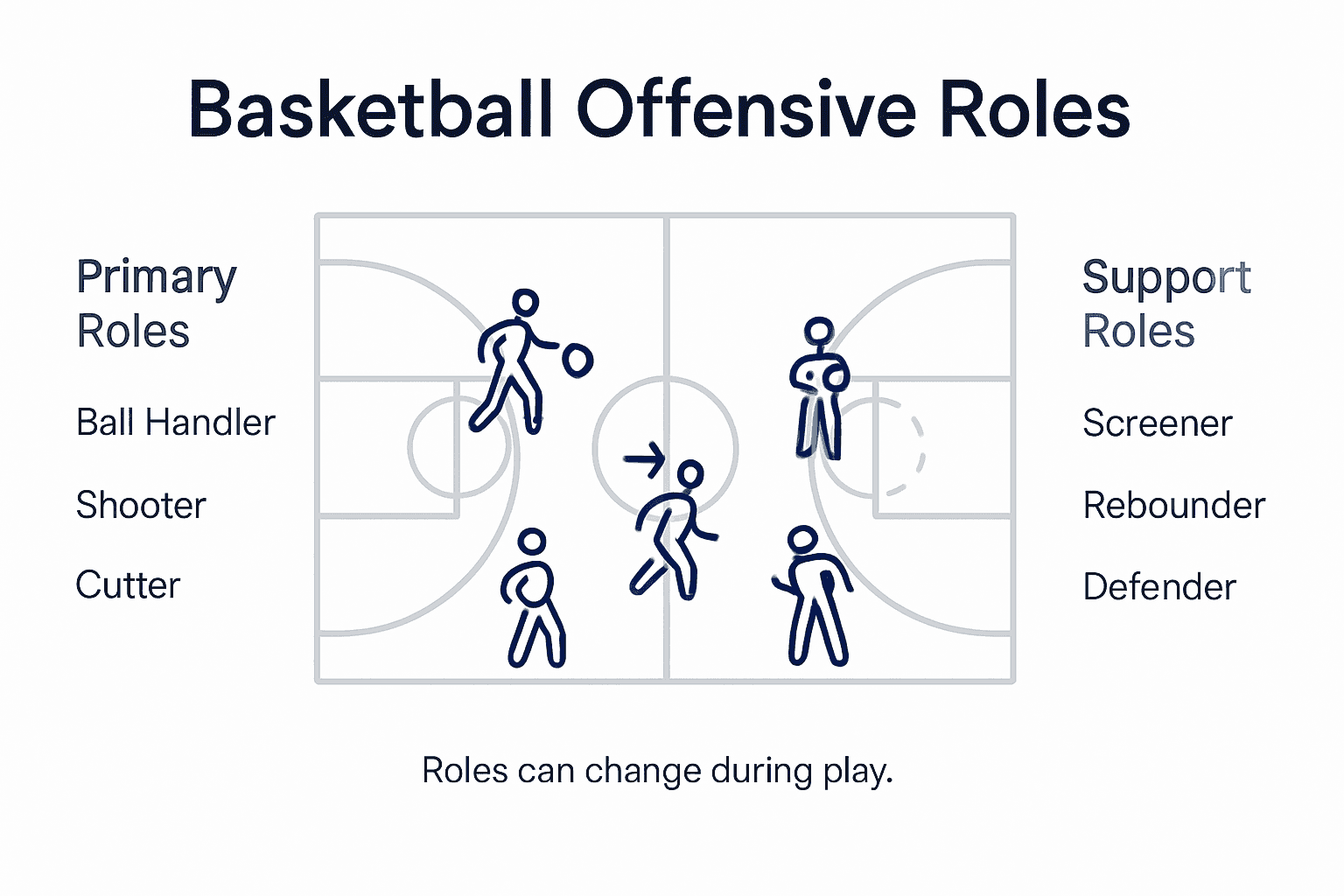
Youth basketball coaches must approach role assignments as developmental opportunities, recognizing that players are not static entities but evolving athletes with expanding capabilities. This approach requires continuous assessment of player skills, communication about role expectations, and creating environments where players understand their responsibilities while maintaining the flexibility to explore different offensive capabilities. The goal is not rigid categorization but creating a dynamic system where players comprehend team objectives and can contribute meaningfully across multiple offensive scenarios.
Pro tip: Design role assignments as adaptable frameworks that empower players to understand their strengths while encouraging skill expansion and collaborative team performance.
Below is a summary of key offensive roles and their main responsibilities:
| Offensive Role | Main Responsibility | Desired Skill Set |
|---|---|---|
| Ball Handler | Initiate plays, distribute | Dribbling, decision-making |
| Perimeter Scorer | Create space, score outside | Shooting, off-ball movement |
| Interior Player | Screen, post moves, rebound | Strength, footwork |
| Utility Player | Adapt to multiple roles | Versatility, tactical awareness |
Common Mistakes and How to Avoid Them
Comprehensive offensive strategy research highlights several critical mistakes youth basketball coaches frequently make when implementing offensive systems. These errors can significantly undermine team performance, turning potentially dynamic strategies into ineffective and frustrating experiences for young players. Understanding and proactively addressing these common pitfalls is essential for developing a robust and adaptive offensive approach.
One of the most prevalent mistakes is creating overly complex offensive systems that players cannot comprehend or execute. Offensive complexity should be introduced gradually, with coaches focusing on fundamental principles rather than intricate play sequences. Young athletes often become overwhelmed when confronted with multiple simultaneous instructions, leading to hesitation, confusion, and reduced confidence. Successful offensive systems must balance strategic sophistication with age-appropriate learning techniques, ensuring players can understand and internalize core concepts before advancing to more nuanced tactical approaches.
Another critical error involves failing to adapt offensive strategies to the specific strengths and limitations of the team’s personnel. Coaches sometimes implement rigid systems that do not account for individual player skills, creating situations where athletes feel uncomfortable or unable to contribute effectively. The most successful offensive approaches are inherently flexible, allowing players to leverage their unique talents while maintaining a cohesive team structure. This requires continuous assessment of player capabilities, willingness to modify strategies, and creating an environment that encourages player input and creative problem-solving during gameplay.
Pro tip: Design offensive systems as adaptable frameworks that prioritize player understanding and engagement over rigid technical perfection.
Elevate Your Youth Basketball Offense with Proven Systems and Tools
Building a successful basketball offensive system for youth teams starts with understanding adaptable strategies and fostering player basketball IQ. The article highlights challenges such as overly complex playbooks, player role confusion, and the need for clear decision-making frameworks. Coaches aiming to create flexible, player-focused offenses that emphasize spacing, quick ball movement, and teamwork can find practical solutions at Hoop Mentality.
Experience the power of structured coaching resources tailored to your team’s development needs. Our Basketball Playbooks - Hoop Mentality offer step-by-step offensive systems designed to improve flow and empower young athletes. Combine those with targeted Basketball Drills - Hoop Mentality that teach core principles like spacing and cutting.

Don’t let complexity hold your team back. Take control of your practice plans and boost your players’ confidence with resources built from real coaching experience. Visit Hoop Mentality now to start implementing winning offensive strategies that unlock your team’s full potential.
Frequently Asked Questions
What are basketball offensive systems?
Basketball offensive systems are strategic frameworks that define how teams coordinate player movements, spacing, and scoring opportunities on the court, aiming to enhance team performance through structured principles and creative player expression.
How do I choose the right offensive system for my youth basketball team?
Selecting the right offensive system involves assessing your team’s skills, player capabilities, and overall basketball intelligence. Consider starting with structured systems for younger teams and progressing to more complex strategies as players gain experience.
What are the core principles of an effective basketball offense?
The core principles of an effective basketball offense include court spacing, quick ball movement, reading defenses, and intelligent cutting. These principles work together to transform individual skills into a cohesive team strategy.
How can I implement offensive systems effectively with young players?
Implementing offensive systems with youth players should involve breaking down concepts into manageable components, focusing on fundamental movement principles, and creating a positive learning environment that encourages communication and experimentation.