

Many coaches run transition drills without understanding what makes them truly effective. The difference between a mediocre fast break and a dominant one lies not in effort, but in tactical design and strategic execution. This guide explains the coaching concepts, statistical advantages, and proven drills you need to transform your team’s transition offense from chaotic to calculated, turning defensive rebounds into high-percentage scoring opportunities.
Table of Contents
- Why Transition Offense Matters For Basketball Coaches
- Core Principles Behind Effective Transition Drills
- The 2-Sided Break System: A Tactical Model For Transition Drills
- Implementing Transition Drills For Game-Ready Teams
- Elevate Your Practice With Hoop Mentality Drills And Templates
- Frequently Asked Questions About Transition Drills
Key takeaways
| Point | Details |
|---|---|
| Fast breaks leverage defensive vulnerabilities | Transition offense exploits defenses before they organize, creating 1.2 points per possession compared to 0.9 in half-court sets. |
| Proper spacing increases conversion rates | Teams maintaining proper lane spacing experience a 15% increase in successful fast break conversions. |
| The 2-Sided Break creates systematic advantages | This tactical model uses spacing and the Diagonal Advance Pass to manipulate defenses and generate FREE (fouls), THREE (open threes), and KEY (paint touches) scoring options. |
| Quick decisions ignite transition success | Outlet passes serve as the ignition switch, requiring speed and accuracy to initiate effective fast breaks. |
| Structured drills translate to game performance | Progressive training with tagging culture, competitive scenarios, and clear role assignments builds game-ready transition execution. |
Why transition offense matters for basketball coaches
Transition offense represents one of basketball’s most efficient scoring opportunities because it attacks before defenses can establish position and communication. The numbers tell a compelling story: teams score 1.2 points per transition possession versus just 0.9 points in half-court situations. That 33% scoring advantage compounds over a full game, potentially adding 15-20 points through superior transition execution alone.
Beyond raw scoring efficiency, fast breaks energize your team and demoralize opponents. When you consistently punish defensive misses or turnovers with quick scores, you create psychological momentum that carries through entire quarters. Modern basketball tactical trends increasingly emphasize pace and space, making transition prowess essential for competitive programs.
“The best transition teams don’t just run fast; they run smart, with predetermined lanes and instant decision-making protocols that turn chaos into coordination.”
Several elements enable transition success:
- Speed in advancing the ball up court before defenses retreat
- Spacing that stretches defenders and opens driving and passing lanes
- Quick decision-making that identifies and exploits the best scoring option
- Role clarity so every player knows their lane assignment and responsibility
- Conditioning that sustains sprint capability throughout games
Coaches who neglect transition training leave points on the table. Your practice design should allocate significant time to fast break execution, not as an afterthought but as a core offensive weapon that generates easy baskets and controls tempo.
Core principles behind effective transition drills
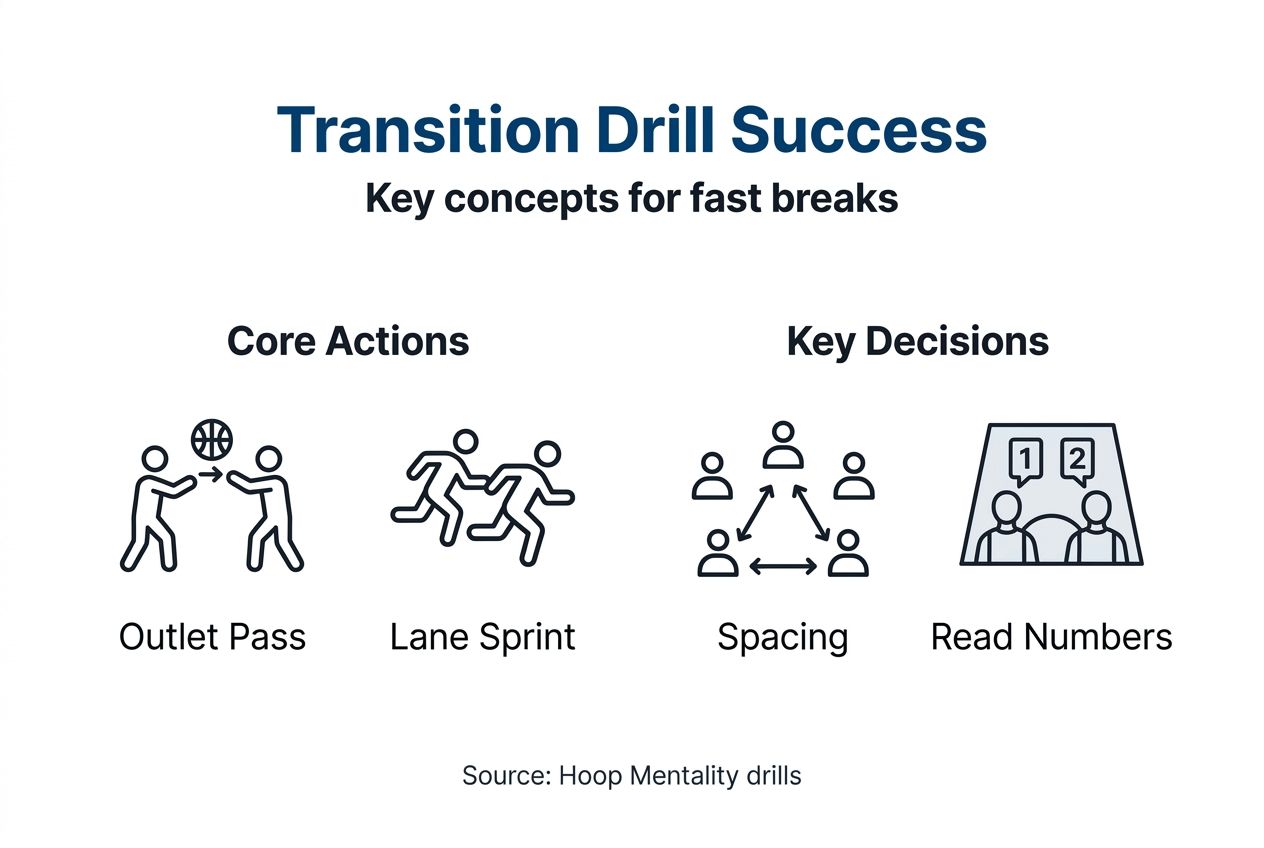
Successful transition offense relies on fundamental principles that you must drill until they become automatic. Lane assignments form the foundation: wings sprint wide to the corners, the ball handler pushes up the middle, and a trailer follows for second-wave opportunities. This structure prevents congestion and forces defenses to make difficult coverage decisions across maximum court width.
Outlet passes initiate everything. After defensive rebounds, your players need crisp, accurate outlets to guards positioned strategically on the perimeter. Hesitation kills fast breaks, so emphasize immediate reads and decisive passes that trigger your break before opponents recover.
Spacing determines whether defenses can contain your break or must surrender advantages. Proper lane spacing creates a 15% conversion boost because defenders cannot protect both paint and perimeter simultaneously. When your wings stretch wide and your ball handler attacks the middle, defenses face impossible geometry.
Decision-making separates good transition teams from great ones. Your players must instantly recognize numerical advantages (3-on-2, 2-on-1), identify which defender commits first, and deliver the ball to the open teammate. Basketball decision-making under pressure requires repetition against live defense, not static walk-throughs.
Pro Tip: Teach your players to “read the numbers” by counting offensive versus defensive players as they cross half court, then attack accordingly based on advantage situations.
Role learning must happen rapidly because transition windows close quickly. Players need mental models for where to be, when to fill lanes, and how to recognize their scoring opportunities within your system. Consistent positioning builds chemistry and reduces turnovers caused by confusion or collisions.
The 2-Sided Break system: A tactical model for transition drills
The 2-Sided Break system offers a modern framework that counters how defenses protect transition in 2026. Rather than hoping for chaotic advantages, this system creates structure around three scoring priorities: FREE (drawing fouls), THREE (open three-pointers), and KEY (paint touches). This approach generates shots within the first 6-8 seconds by manipulating defensive positioning through spacing and passing angles.
The Diagonal Advance Pass (DAP) serves as the system’s tactical centerpiece. When your wing receives an outlet and the ball handler fills the opposite side, the diagonal pass across the court forces defenses to rotate and scramble. This cross-court action creates natural defensive breakdowns because help defenders must decide between stopping penetration and covering shooters.
| Traditional Fast Break | 2-Sided Break System |
|---|---|
| Relies on outnumbering defense | Creates advantages through spacing even when numbers are even |
| Ball handler attacks middle exclusively | Uses both sides of court with diagonal passes |
| Focuses primarily on layups | Emphasizes FREE, THREE, KEY priorities |
| Often stalls when defense recovers | Flows seamlessly into early offense concepts |
Common defensive strategies protect the paint and stop ball-side penetration. The 2-Sided Break counters both by:
- Stretching defenses horizontally with wide wing positioning
- Using diagonal passes to shift defensive weight and create gaps
- Attacking from multiple angles rather than straight-line drives
- Incorporating trailer actions for second-wave scoring
When initial transition options close, the system flows naturally into early offense rather than forcing contested shots. This progression maintains offensive pressure and prevents wasted possessions. Your drills should teach players to recognize when to finish the break versus when to organize into half-court actions.
Pro Tip: Install the 2-Sided Break progressively, starting with 3-on-0 to learn spacing, advancing to 3-on-2 for decision work, then 5-on-5 live to integrate defensive reads and early offense flow.
The full court press break principles align well with 2-Sided Break concepts, as both emphasize spacing, multiple passing options, and attacking defensive pressure with structure rather than panic.
Implementing transition drills for game-ready teams
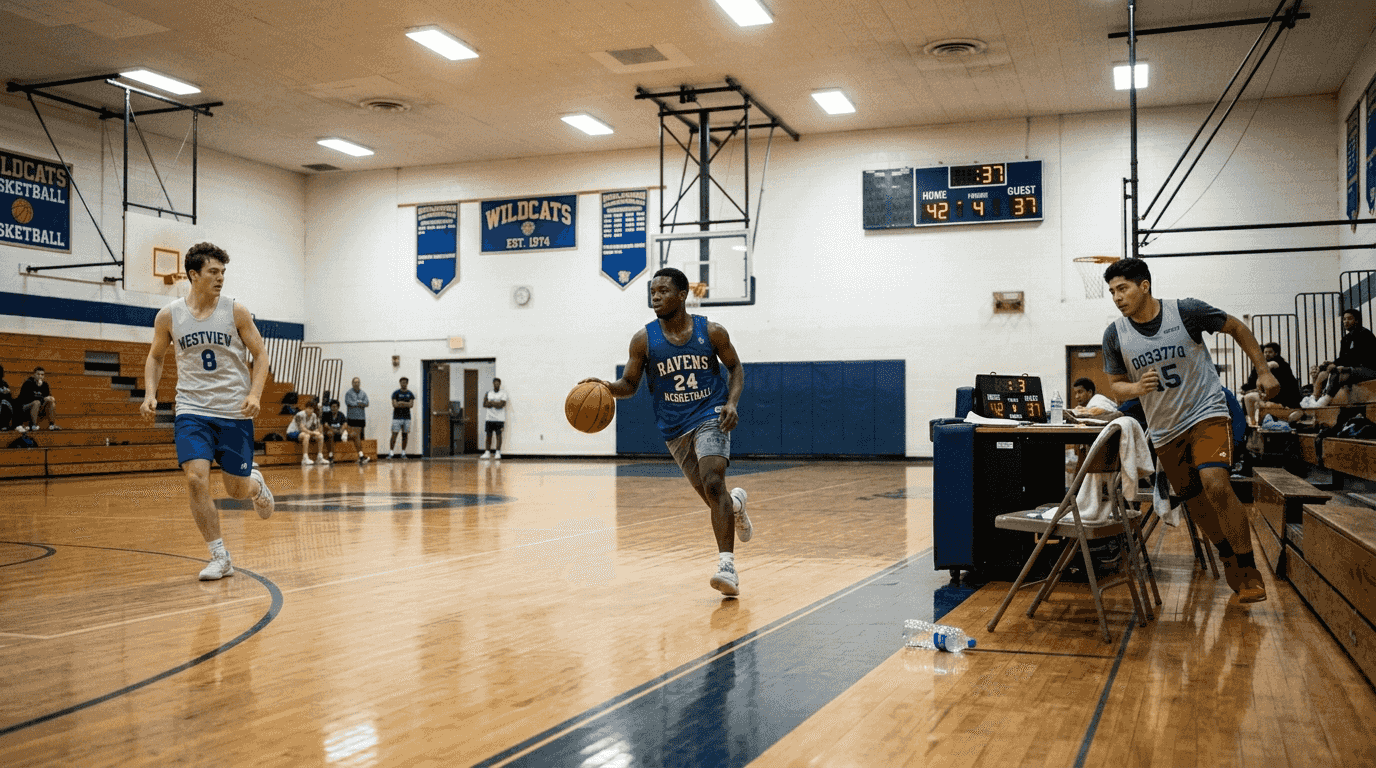
Putting transition concepts into practice requires deliberate drill design that builds from fundamentals to game-speed execution. Start your practice sessions with outlet and advance passing drills that emphasize quick decision-making. Players form lines on both sidelines and practice rebounding, outleting, and filling lanes without defense, focusing on speed and precision.
Tagging up drills maintain relentless pressure by requiring players to sprint back and touch the baseline after every defensive stop before sprinting into transition offense. This culture-building approach eliminates the pause between defense and offense, creating second-possession opportunities through immediate pressure. Francesco Tabellini’s system demonstrates how eliminating rest moments keeps defenses off balance.
Structure your progression as follows:
- Three-player weave with no defense to establish timing and spacing fundamentals
- Three-on-two situations where offense learns to attack numerical advantages decisively
- Four-on-three scenarios incorporating trailer actions and secondary options
- Five-on-four with defensive recovery to simulate realistic game pressure
- Full five-on-five live transition with immediate outlet after defensive rebounds
Competitive scenarios accelerate learning. Create small-sided games where teams earn bonus points for transition baskets within 8 seconds. Competitive drills force players to execute under pressure while maintaining spacing and role discipline. Losers run sprints, creating consequences that mirror game stakes.
Key coaching emphasis points during drills:
- Speed without sacrificing control or spacing integrity
- Communication, especially calling out numbers and defensive matchups
- Role discipline so players fill assigned lanes consistently
- Unselfish decisions that find the best shot rather than forcing individual plays
- Finishing through contact to convert FREE opportunities into three-point plays
Your basketball practice plan should allocate 15-20 minutes specifically to transition work at the beginning of practice when players are fresh. Fatigue training comes later, but skill development requires energy and focus. Film review reinforces concepts by showing players exactly where spacing broke down or which decisions created scoring opportunities.
Elevate your practice with Hoop Mentality drills and templates
Translating transition concepts into practice results requires organization and proven drill structures. The Big Man Dual Action Drill sharpens your post players’ ability to trail fast breaks effectively, finish around the rim, and create inside-out opportunities that complement perimeter transition actions. Big men who sprint the floor and finish efficiently transform your break from perimeter-dependent to multidimensional.

Streamline your entire practice planning process with the Basketball Practice Plan Template, designed to help you organize transition drills, allocate time efficiently, and track player development across sessions. Clear structure ensures you hit every teaching point without wasting precious court time. These resources complement the tactical frameworks discussed here, giving you ready-to-use tools that enhance team performance and simplify coaching preparation.
Frequently asked questions about transition drills
What are the key roles players must learn for effective transition?
Wings must sprint wide to the corners, creating maximum court width. The ball handler pushes the middle lane with controlled speed, reading defensive positioning. The trailer follows for second-wave opportunities and offensive rebounding position if the initial break doesn’t produce a shot.
How do tagging drills improve team effort during fast breaks?
Tagging drills eliminate the natural pause between defense and offense by requiring players to touch the baseline immediately after defensive stops before sprinting into transition. This builds a relentless mentality and conditions players to attack before defenses organize. The constant pressure creates additional possessions and second-chance opportunities through sheer hustle.
What makes the 2-Sided Break different from traditional fast break systems?
Traditional systems rely primarily on outnumbering defenses and attacking straight down the middle. The 2-Sided Break uses diagonal passes and both sides of the court to create spacing advantages even when numbers are equal, focusing on FREE, THREE, and KEY priorities. It flows seamlessly into early offense when primary transition options close, preventing wasted possessions.
How can I train my players to improve quick decision-making under pressure?
Use competitive drills with time constraints and consequences for poor choices. Start with advantage situations (3-on-2) to build confidence, then progress to even-number scenarios (4-on-4) that require reading defensive reactions. Film review accelerates learning by showing players exactly which reads were correct and which led to turnovers or contested shots.
Should transition drills vary by player position or favor positionless concepts?
Modern basketball favors positionless principles in transition, with every player capable of handling, passing, and finishing. However, role clarity still matters: guards typically outlet and handle, wings fill wide lanes, and bigs trail. Train all players in multiple roles to create flexibility, but assign primary responsibilities based on speed, ball skills, and court awareness.
Recommended
- Basketball Drill Types Explained: Complete Guide – Hoop Mentality
- Why Use Basketball Drills: The Essential Guide – Hoop Mentality
- Master Scoring Off the Dribble for Basketball Success – Hoop Mentality
- Why Drills Boost Basketball Development by 30% Faster – Hoop Mentality
- Master balance in table hockey: 10% faster shots – Table Hockey Global