

Talent gets you to the game. Motivation wins it. Coaches at every level have watched less skilled teams outperform rosters full of athletic ability, and the difference is almost always mental and cultural. Research consistently shows that motivated teams outperform more talented but disengaged groups. This guide breaks down the specific, field-tested techniques you can apply right now, from goal setting and communication to autonomy and motivational climate, so your players show up ready to compete every single practice and every single game.
Table of Contents
- Goal setting: Creating a roadmap for engagement
- Building a positive team environment
- The power of encouragement and communication
- Motivational climate: Task-involving versus ego-involving coaching
- Autonomy and leadership: Empowering players for long-term motivation
- Why true motivation takes more than pep talks
- Take your coaching impact to the next level
- Frequently asked questions
Key Takeaways
| Point | Details |
|---|---|
| Goal clarity matters | Setting clear, shared goals motivates players and prevents frustration. |
| Environment shapes engagement | A positive, team-first climate enhances commitment and performance. |
| Communication boosts results | Verbal encouragement and open communication significantly improve retention and skill. |
| Empowerment outperforms control | Supporting autonomy and leadership leads to deeper, longer-lasting motivation. |
| Consistency beats hype | Daily habits and genuine relationships drive sustainable motivation more than brief speeches. |
Goal setting: Creating a roadmap for engagement
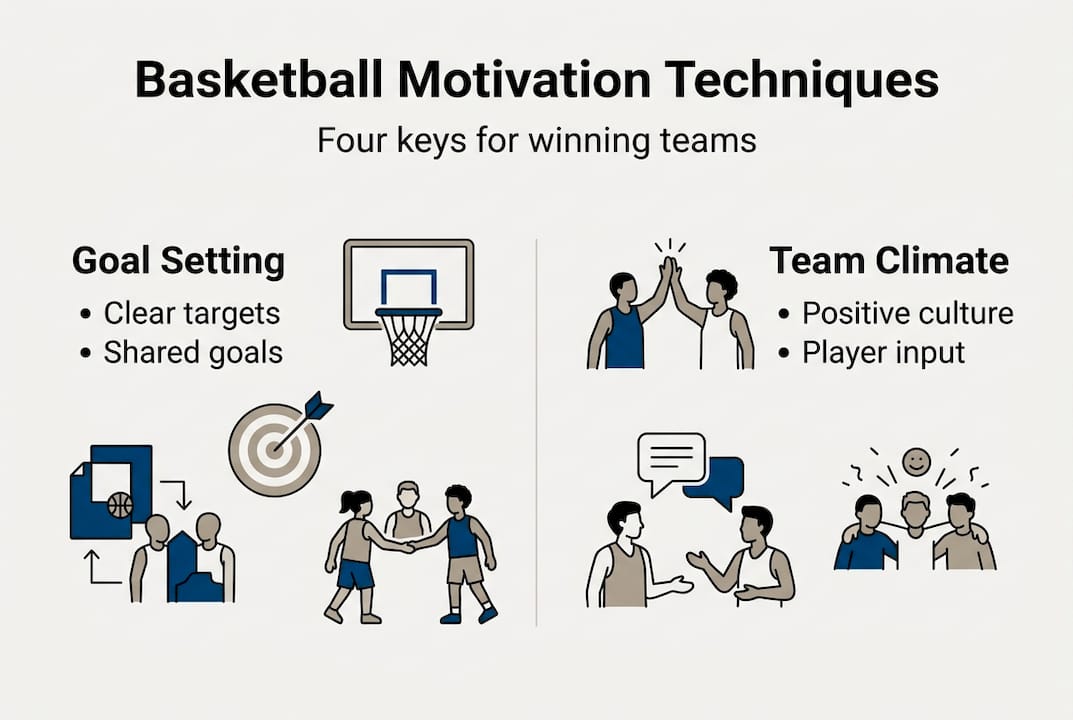
Effective motivation starts with direction. Without clear goals, players drift. They practice without purpose and compete without urgency. The fix is structured goal setting that covers three levels: team-wide goals, individual goals, and process goals.
Team goals align collective effort. Individual goals give each player a personal stake. Process goals focus on the behaviors that produce results, like defensive intensity or assist-to-turnover ratio, rather than just outcomes like wins. Set clear, realistic short- and medium-term goals for both team and individuals to prevent frustration and build commitment.
The key is co-creation. When players help set the goals, they own them. Ask your team what they want to achieve. Use that input to shape the final targets. This is also a natural entry point for developing player leadership within your program.
| Goal type | Example | Expected outcome |
|---|---|---|
| Short-term team | Win 3 of next 4 games | Immediate focus and urgency |
| Medium-term team | Top 3 in conference by midseason | Sustained effort over weeks |
| Individual | Improve free throw % by 10 points | Personal accountability |
| Process | 5 charges taken per week | Behavior-based consistency |
Here is how to set and review goals effectively during the season:
- Hold a goal-setting session in week one with full team input.
- Write goals down and post them somewhere visible in the locker room or gym.
- Review progress weekly, briefly, in under five minutes.
- Adjust goals if circumstances change, injury, schedule shifts, roster moves.
- Celebrate milestones publicly to reinforce the habit.
Pro Tip: Visible, tracked goals outperform private ones every time. When players see progress on a board or chart, it creates social accountability. Use goal alignment strategies to connect individual targets to team outcomes.
Building a positive team environment
With shared goals in place, the next crucial step is shaping a team climate where every player feels supported. Culture is not a poster on the wall. It is what happens when a player makes a mistake and looks to the bench.
Foster a positive team environment through team building, mutual respect, and a “we before me” culture. Teams that operate this way retain players longer, attract better effort, and hold together under pressure. The teamwork advantages of a healthy climate show up in both practice quality and game performance.
| Climate type | Behaviors | Outcomes | Warning signs |
|---|---|---|---|
| Healthy | Encouragement, accountability, shared credit | High retention, consistent effort | Rare |
| Toxic | Blame, cliques, public criticism | Dropout, low effort, conflict | Frequent complaints, disengagement |
Here are actionable ways to reinforce “we before me” daily:
- Start every practice with a team huddle that highlights a teammate’s contribution from the last session.
- Rotate who leads warmups so leadership feels shared.
- Address conflicts privately and quickly before they spread.
- Use inclusive language. Say “we” and “our” instead of “you” and “your” when discussing problems.
- Recognize effort publicly, not just results.
“Culture is the foundation of every competitive advantage a team has. Talent can be matched. Culture cannot be copied.” This is why investing in team chemistry strategies pays off far beyond a single season.
The power of encouragement and communication
A strong culture must be lived every day, but how coaches talk and respond is where motivation becomes real. Words matter more than most coaches realize.
Research on small-sided games (SSGs) confirms that verbal encouragement boosts heart rate, perceived exertion, enjoyment, and technical performance metrics. Players work harder, enjoy it more, and execute better when they hear genuine, specific encouragement during training. That is not a soft finding. It is a measurable performance lever.
Effective communication strategies also connect directly to retention. Coaches who build relationships and communicate effectively see up to 20% higher player retention rates across seasons. Here is how to blend encouragement and feedback without overwhelming your players:
- Lead with what the player did right before addressing the correction.
- Keep corrections short. One point at a time.
- Use the player’s name. It signals you are paying attention.
- Follow up after games with individual check-ins, even brief ones.
- Ask questions instead of only giving directives. “What did you see on that play?” builds thinking players.
Pro Tip: Specific praise beats generic praise every time. “Great job” fades fast. “You stayed low on that closeout and forced the miss” sticks. Apply youth feedback techniques to make every interaction count, regardless of age level.
Check the coach communication guide for a full breakdown of how to structure your communication system across a season.
Motivational climate: Task-involving versus ego-involving coaching
The tone you set as a coach affects how players see themselves and each other. Two distinct climates shape player motivation in very different ways.
A caring task-involving (CTI) climate focuses on effort, learning, and improvement. Players are measured against their own progress. A CTI climate builds resilience and long-term skill development. An ego-involving (EI) climate ranks players against each other, rewards only outcomes, and punishes mistakes. It creates anxiety and kills creativity.
CTI climates outperform ego-involving ones for both motivation and skill development. The climate effects research supports this across multiple sports and age groups.
| Feature | CTI climate | EI climate |
|---|---|---|
| Focus | Effort and growth | Winning and comparison |
| Mistake response | Learning opportunity | Punishment or embarrassment |
| Player response | Engagement, risk-taking | Anxiety, safe play |
| Long-term outcome | Sustained development | Burnout and dropout |
To shift toward a CTI environment, start with these specific behaviors:
- Praise effort and process, not just results.
- Avoid public rankings or comparisons between players.
- Frame mistakes as information, not failures.
- Celebrate improvement, even small gains.
- Involve players in player development tips discussions so they understand the “why” behind each drill.
Transitioning away from an ego-based style takes time. Start with one practice per week where you explicitly focus on growth language and watch how your players respond.
Autonomy and leadership: Empowering players for long-term motivation
Pushing even further, the most lasting motivation comes when players own the process and see themselves as leaders. Control kills engagement. This is not a theory. It is a documented pattern.
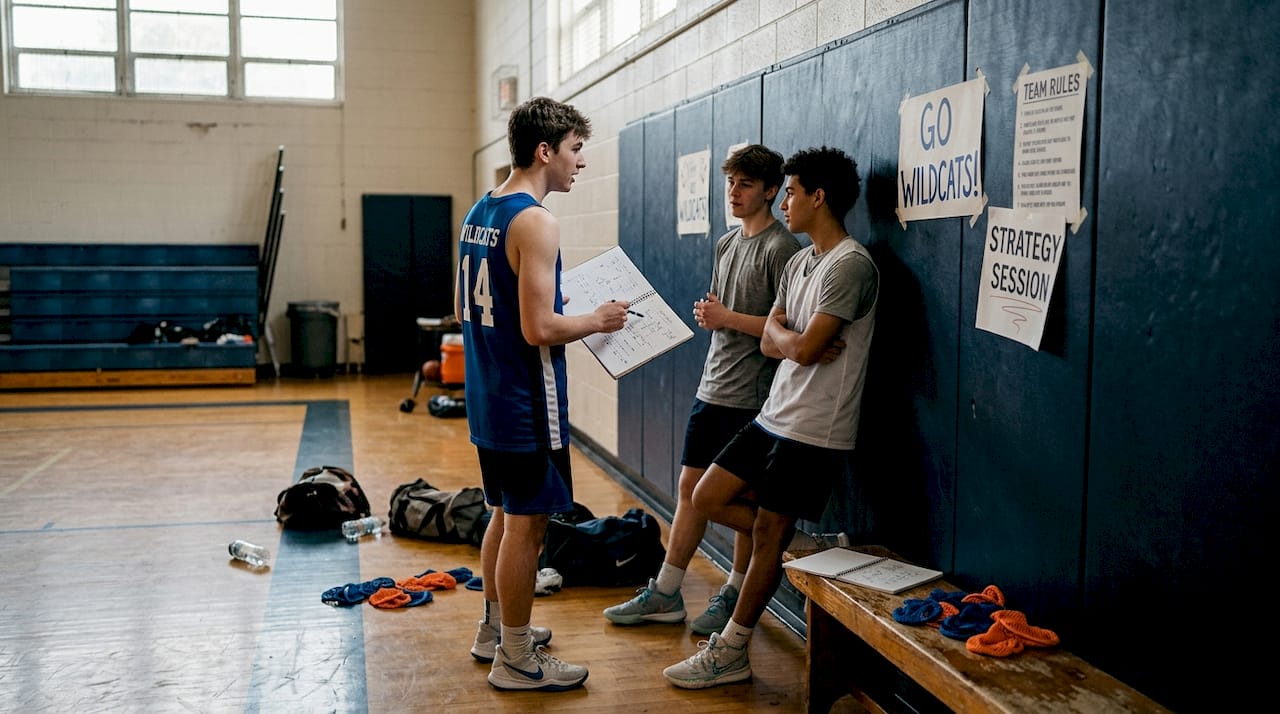
Controlling coaching behaviors drive up resistance to training and block the internalization of motivation. When players feel micromanaged, they stop thinking and start just complying. Compliance is not commitment.
At the NBA level, coaches build partnerships with players and emphasize habits over occasional bursts of effort. The same principle applies at every level, from youth leagues to college programs.
Here are practical ways to increase player autonomy step by step:
- Let players choose between two drill variations during practice.
- Assign captains to run warmups or cooldowns without your input.
- Create a player-led film session once per week.
- Ask players to identify one area they want to improve each month.
- Give players a voice in timeout decisions during low-stakes scrimmages.
Pro Tip: You do not have to give up control to give players ownership. Small shifts, like asking “what do you think we should run here?” before calling a play, signal trust without losing structure. This approach connects directly to coaching youth teams at every stage of development.
Why true motivation takes more than pep talks
Here is the uncomfortable truth most coaching guides skip. Motivation is not a speech. It is not a playlist or a hype video before the game. Those things have a half-life of about twenty minutes.
Real motivation is structural. It lives in your daily habits, your feedback patterns, your practice design, and the trust players have that you see them as people, not just performers. We have seen coaches deliver the most passionate halftime speech imaginable and still lose their team by the third quarter, because the daily environment told a different story.
Players send signals constantly. Quiet players, players who stop asking questions, players who stop making mistakes because they are afraid to try, these are not attitude problems. They are climate problems. And the coach created the climate.
The long-term communication systems you build matter far more than any single motivational moment. The real player leadership you develop inside your roster creates a self-sustaining culture that does not depend on your energy level on a given Tuesday.
Sustainable motivation requires shared ownership and a willingness to sit in discomfort together. That is what most guides miss.
Take your coaching impact to the next level
Ready to transform your team’s motivation into consistent results? The strategies above work best when they are built into a structured system, not applied randomly.
At Hoop Mentality, we build tools that make implementation straightforward. Use our practice plan template to organize goal reviews, encouragement checkpoints, and autonomy-building drills directly into your weekly schedule. Add the big man dual action drill to keep your post players engaged and challenged. Every resource is built from real coaching experience so you can apply it immediately without guesswork.
Frequently asked questions
What is the most effective motivation technique for basketball teams?
The most effective approach is a caring, task-involving climate combined with clear goals and genuine player input. CTI climates outperform ego-involving ones for both motivation and skill development.
How can coaches avoid demotivating their players?
Avoid controlling behaviors and prioritize positive communication, autonomy support, and consistent constructive feedback. Controlling coaching drives up resistance and blocks motivation from becoming internalized.
Why does setting goals improve team motivation?
Goal setting builds engagement, aligns effort, and prevents frustration by clarifying expectations. Clear, realistic goals give players a reason to push through difficult stretches of the season.
What role does player autonomy play in motivation?
Greater autonomy leads to better internalization, stronger engagement, and less resistance to training demands. Autonomy support is one of the most underused tools in a coach’s toolkit.
Does verbal encouragement really impact performance and motivation?
Yes. Studies confirm that verbal encouragement boosts intensity, enjoyment, and technical skill execution during training sessions.
Recommended
- How to Develop Team Chemistry for Basketball Success – Hoop Mentality
- 7 Effective Basketball Team Bonding Ideas for Coaches – Hoop Mentality
- 7 Essential Basketball Teamwork Tips for Youth Coaches – Hoop Mentality
- 7 Basketball Goal Setting Tips for Coaching Success – Hoop Mentality
- Workflow for Team Motivation: Boost Productivity and Engagement – Optio Station: Best Project Management App for Prioritization