

High school basketball coaches across the United States and Canada know that inspiring real effort goes far beyond talent alone. When motivation wanes, even the most skilled players struggle to meet their potential or stay committed through tough stretches. Grounded in psychological research, this guide uncovers how understanding and developing player motivation creates stronger, more engaged teams prepared to compete at their highest level.
Table of Contents
- Defining Player Motivation In Basketball
- Intrinsic Vs. Extrinsic Motivation Dynamics
- Core Psychological Drivers For Athletes
- Effective Motivation Strategies For Teams
- Common Mistakes And How To Avoid Them
Key Takeaways
| Point | Details |
|---|---|
| Nurturing Player Motivation | Coaches should create environments that foster intrinsic motivation through recognition and support, enhancing player performance and commitment. |
| Balancing Motivation Types | Effective motivation strategies integrate both intrinsic and extrinsic factors, ensuring athletes remain engaged and driven throughout the season. |
| Understanding Psychological Drivers | Developing core psychological attributes like self-confidence and emotional intelligence is essential for players to succeed under pressure. |
| Avoiding Common Coaching Mistakes | Coaches must recognize and address errors in communication and motivation techniques to prevent undermining team morale and player development. |
Defining Player Motivation in Basketball
Player motivation represents the psychological driving force behind an athlete’s commitment, effort, and performance in basketball. Unlike innate talent, motivation is a dynamic process that coaches can actively nurture and develop. Psychological factors influencing basketball performance demonstrate that motivation emerges from complex interactions between personal characteristics and environmental influences.
Motivation in basketball involves several critical dimensions:
- Internal Drive: Personal desire to improve and excel
- External Support: Positive reinforcement from coaches and teammates
- Goal Orientation: Clear, achievable performance targets
- Emotional Investment: Psychological commitment to team success
Successful coaches understand that player motivation isn’t about forcing performance, but creating an environment where athletes want to push their boundaries. The relationship between a coach and player becomes instrumental in cultivating intrinsic motivation. By recognizing effort, providing constructive feedback, and establishing a supportive team culture, coaches can transform individual potential into collective achievement.
Psychological research reveals that motivation operates as a multifaceted phenomenon. It determines not just the intensity of an athlete’s effort, but also the direction and persistence of that effort. Players who feel genuinely motivated are more likely to embrace challenges, learn from setbacks, and maintain consistent performance levels throughout challenging basketball seasons.
Pro tip: Design individualized motivation strategies that recognize each player’s unique psychological triggers and personal basketball goals.
Intrinsic vs. Extrinsic Motivation Dynamics
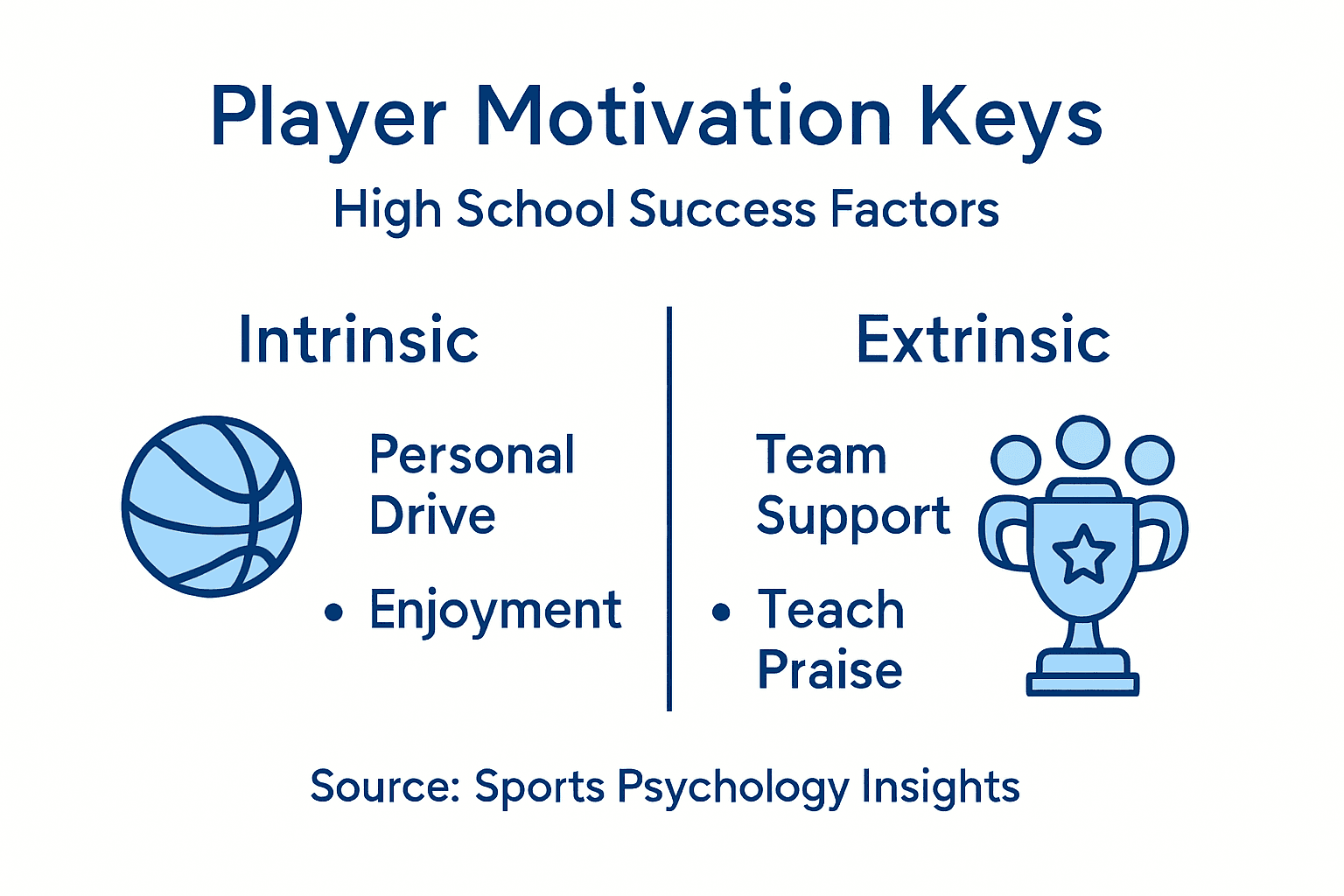
In basketball, motivation emerges through two primary psychological channels: intrinsic and extrinsic drivers. Psychological dynamics of athlete motivation reveal complex interactions between internal desires and external rewards that shape player performance and commitment.
Intrinsic motivation fundamentally differs from extrinsic motivation across several key dimensions:
-
Intrinsic Motivation
- Driven by personal enjoyment and satisfaction
- Rooted in self-improvement goals
- Generates long-term commitment
- Emerges from internal psychological needs
-
Extrinsic Motivation
- Powered by external rewards and recognition
- Focuses on tangible outcomes
- Produces short-term performance boosts
- Dependent on continuous external validation
Coaches play a critical role in balancing these motivational types. Psychological research indicates that athletes perform most consistently when internal and external motivational strategies complement each other. By creating environments that satisfy psychological needs like autonomy, competence, and relatedness, coaches can transform external motivators into internalized drive.
Here’s a summary of how intrinsic and extrinsic motivation impact basketball players:
| Motivation Type | Impact on Commitment | Effect on Performance | Longevity of Motivation |
|---|---|---|---|
| Intrinsic | Builds sustained effort | Encourages skill mastery | Long-lasting, stable drive |
| Extrinsic | Boosts quick engagement | Enhances immediate results | Short-term, may require renewal |
The most effective motivation combines personal passion with strategic external encouragement, creating a holistic approach to athlete development.
Understanding motivation’s nuanced landscape allows coaches to design targeted strategies that resonate with individual player psychology. Some athletes respond more strongly to intrinsic approaches, while others require more structured external incentives to maintain peak performance levels.
Pro tip: Develop personalized motivation strategies that blend intrinsic encouragement with carefully calibrated external recognition to maximize player potential.
Core Psychological Drivers for Athletes
Psychological factors driving athletic performance reveal a complex landscape of mental skills that distinguish exceptional basketball players from average performers. Beyond physical training, psychological attributes play a critical role in determining an athlete’s ability to excel under pressure and maintain consistent performance levels.
The core psychological drivers for basketball athletes include:
-
Self-Confidence
- Belief in personal capabilities
- Resilience during challenging moments
- Ability to recover from setbacks
- Positive self-perception
-
Motivation
- Internal drive for improvement
- Goal-oriented mindset
- Sustained commitment to excellence
- Willingness to push personal boundaries
-
Emotional Intelligence
- Managing performance anxiety
- Effective team communication
- Reading and responding to team dynamics
- Controlling emotional reactions
Psychological research demonstrates that these mental skills are not fixed traits but capabilities that can be systematically developed through targeted training. Coaches who understand and nurture these psychological drivers can transform average players into high-performing athletes capable of making strategic decisions under intense competitive pressure.
Mental strength determines an athlete’s capacity to transform potential into extraordinary performance.
Different players will exhibit varying levels of psychological readiness, making individualized mental conditioning crucial. Some athletes naturally possess higher emotional resilience, while others require more structured support to develop advanced psychological skills.
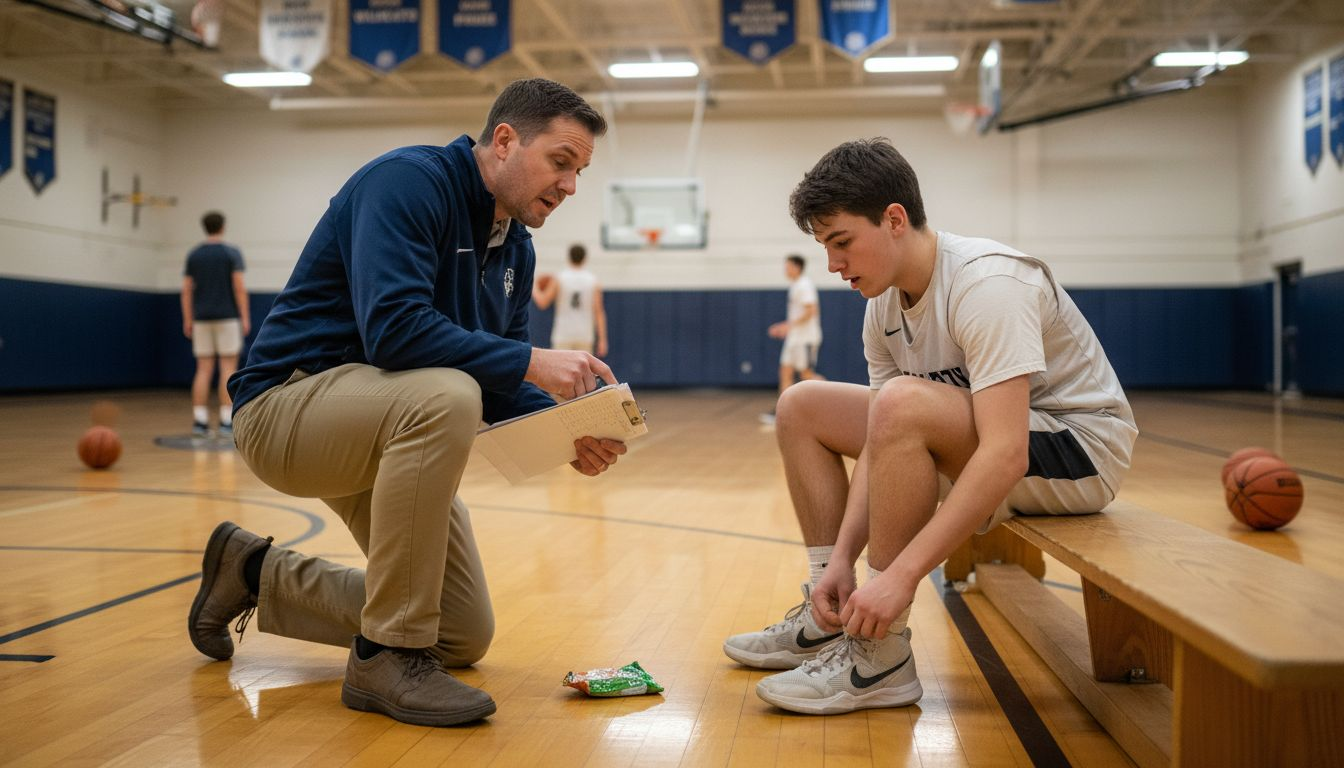
Pro tip: Implement weekly mental skills training that focuses on building self-confidence, emotional regulation, and goal-setting strategies alongside physical basketball practice.
Effective Motivation Strategies for Teams
Coaching strategies for athlete motivation reveal a nuanced approach to building team performance that goes far beyond traditional motivational techniques. Successful coaches understand that motivation is a dynamic, personalized process requiring strategic and adaptive leadership.
Effective team motivation strategies include:
-
Communication Techniques
- Regular one-on-one player conversations
- Transparent performance feedback
- Active listening to player concerns
- Individualized communication styles
-
Goal Setting Approaches
- Collaborative goal development
- Short-term and long-term objective planning
- Measurable performance milestones
- Flexible goal adjustment mechanisms
-
Recognition Methods
- Public and private performance acknowledgment
- Highlighting individual and team achievements
- Meaningful non-monetary rewards
- Consistent positive reinforcement
Team dynamics represent a critical component of motivation, with coaches serving as primary architects of psychological environment. Positive reinforcement and personalized motivation strategies can transform a group of individual players into a cohesive, high-performing unit.
Effective motivation transcends simple reward systems - it requires deep understanding of each athlete’s unique psychological landscape.
Successful coaches recognize that motivation is not a one-size-fits-all approach. Different players respond to different motivational triggers, making adaptability and emotional intelligence crucial leadership skills in basketball team development.
Pro tip: Develop a personalized motivation profile for each player, identifying their specific psychological triggers and tailoring your coaching approach accordingly.
Common Mistakes and How to Avoid Them
Coaching behaviors impacting athlete motivation reveal critical pitfalls that can dramatically undermine team performance and player engagement. Understanding these common mistakes becomes essential for high school basketball coaches seeking to develop resilient, motivated athletes.
Major motivational mistakes coaches frequently make include:
-
Communication Errors
- Inconsistent feedback delivery
- Lack of individual player attention
- Overly critical communication style
- Failure to explain performance expectations
-
Psychological Missteps
- Ignoring individual player differences
- Applying uniform motivation techniques
- Disregarding emotional intelligence
- Minimizing player psychological needs
-
Performance Management Mistakes
- Overemphasizing win-loss records
- Neglecting player personal development
- Comparing players inappropriately
- Failing to recognize incremental improvements
Motivational psychology demonstrates that coaches who consistently make these errors risk creating a toxic team environment. Players become disengaged, lose confidence, and ultimately underperform when their psychological needs are not understood or respected.
The following table highlights common coaching mistakes and their potential consequences for athlete development:
| Mistake Type | Example Behavior | Consequence for Players |
|---|---|---|
| Poor Communication | Unclear performance feedback | Decreased trust and engagement |
| Ignoring Psychology | Uniform motivation approach | Reduced motivation and morale |
| Over-Focus on Winning | Neglecting personal growth | Increased pressure, burnout |
Effective coaching transcends technical skills - it requires emotional intelligence and personalized understanding of each athlete.
Successful coaches adapt their approach, recognizing that motivation is a nuanced, individual experience. By understanding and avoiding these common mistakes, coaches can create a supportive environment that nurtures player potential and team cohesion.
Pro tip: Conduct monthly individual player check-ins to understand their unique motivational needs and adjust your coaching strategy accordingly.
Unlock Your Team’s Full Potential with Proven Motivation Strategies
Building lasting player motivation is key to high school basketball success. This article highlights how intrinsic drive, emotional investment, and personalized coaching shape athlete performance and team cohesion. If you are looking to overcome challenges such as inconsistent effort, lack of engagement, or communication gaps, leveraging structured tools can transform your coaching impact.
Boost your ability to cultivate motivated athletes by exploring our collection of Basketball Workouts - Hoop Mentality designed to integrate psychological principles into skill development. 
Take control of your team’s performance today with practical and easy-to-use coaching resources that support motivation and mental readiness. Visit Hoop Mentality now and access expert playbooks, drills, and templates crafted to help you nurture motivated players and lead your team to victory.
Frequently Asked Questions
What are the main factors that influence basketball player motivation?
Player motivation in basketball is influenced by internal drive, external support, goal orientation, and emotional investment. These elements interact to impact commitment, effort, and overall performance.
How can coaches balance intrinsic and extrinsic motivation in players?
Coaches can balance intrinsic and extrinsic motivation by recognizing the individual psychological needs of players and creating environments that satisfy those needs. This includes providing internal encouragement while also offering meaningful external rewards.
What are some effective strategies for motivating high school basketball players?
Effective strategies include personalized communication, collaborative goal setting, regular recognition of achievements, and fostering a positive team culture that supports player development.
What common mistakes should coaches avoid to maintain player motivation?
Coaches should avoid poor communication, ignoring individual player differences, and over-focusing on win-loss records. These mistakes can lead to decreased motivation, disengagement, and negative team dynamics.
Recommended
- 7 Essential Basketball Leadership Tips for Coaches – Hoop Mentality
- Player Development: Transforming High School Teams – Hoop Mentality
- Build a Basketball Team: Step-by-Step Guide for Coaches – Hoop Mentality
- Basketball Player Mindset: Complete Coach’s Guide – Hoop Mentality
- The Essential Guide to Nutrition for Athletes - Dietium