

TL;DR:
- Effective communication transforms a coach’s technical knowledge into athlete behavior and enhances performance. Clear, inquiry-based dialogue and defined roles foster team cohesion, confidence, and long-term growth. Structured feedback and questioning techniques build trust, decision-making skills, and sustained athlete engagement.
Effective communication is the primary mechanism that transforms a coach’s technical knowledge into athlete behavior and measurable performance. In basketball and team sports broadly, the role of communication in coaching determines whether athletes feel confident or confused, whether teams pull together or fracture under pressure. Tone and clarity directly shape athlete self-efficacy during training. This guide breaks down the research-backed communication techniques that separate good coaches from great ones, covering everything from autonomy-supportive language to dialogical coaching models and practical feedback tools.
How does communication directly impact athlete performance?
Communication becomes an athlete’s internal dialogue, influencing focus and resilience during both training and competition. That means your words, tone, and timing do not just instruct. They shape the mental environment an athlete operates in when the game is on the line.
Tone and clarity are the two variables coaches most often underestimate. A sharp, dismissive correction after a turnover may deliver accurate information but it also injects mental noise. The athlete stops processing the play and starts managing their emotional response. Precision without psychological safety produces hesitation, not improvement.
Self-Determination Theory offers a clear framework here. Autonomy-supportive coaching language increases athlete effort, lowers dropout rates, and improves overall wellbeing compared to controlling language. Controlling language sounds like “You need to do it this way.” Autonomy-supportive language sounds like “What do you think went wrong on that cut?” The second version puts the athlete in the driver’s seat of their own development.
Timing matters just as much as content. Feedback delivered mid-drill interrupts motor learning. Feedback delivered immediately after a rep, while the physical memory is fresh, accelerates correction. The best coaches develop a feel for when to speak and when to let the athlete process.
Pro Tip: After delivering corrective feedback, pause for three to five seconds before adding anything else. That silence signals confidence in the athlete’s ability to absorb and apply what you just said.
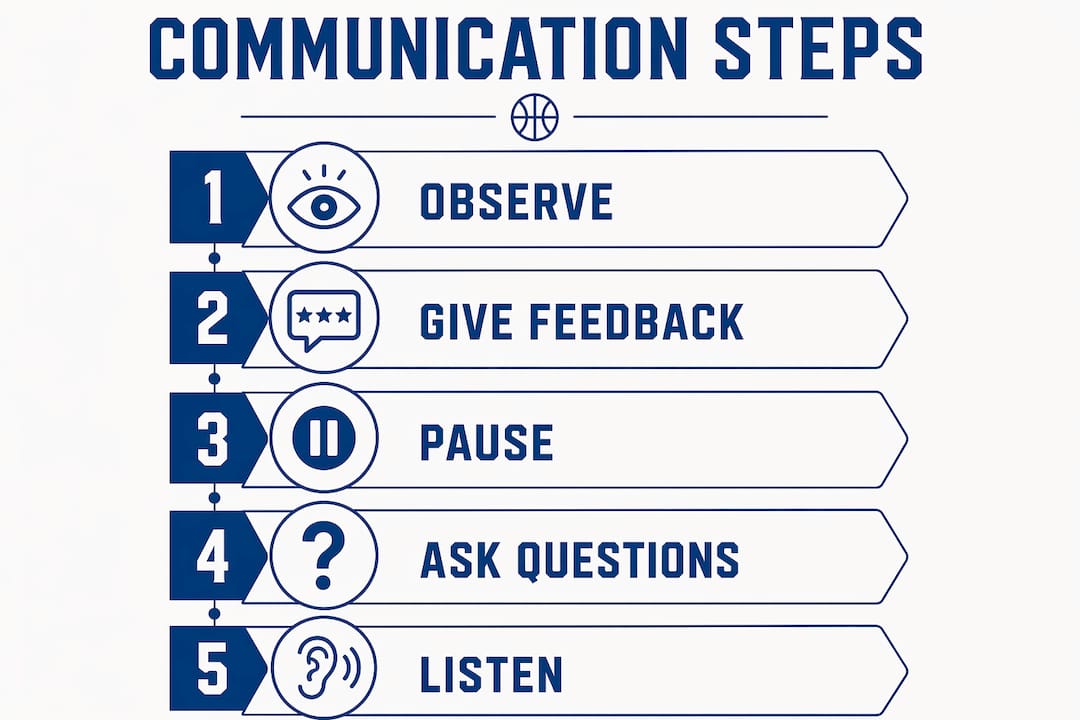
Controlling vs. autonomy-supportive language
The practical difference between these two styles shows up in daily practice:
- Controlling: “Stop doing it that way. Do exactly what I showed you.”
- Autonomy-supportive: “Walk me through what you were trying to do on that screen.”
- Controlling: “You’re not listening. Pay attention.”
- Autonomy-supportive: “What’s one thing you can focus on during the next rep?”
The shift is not about being soft. It is about getting better information from your athletes and building the decision-making capacity they need when you are not on the floor with them.
What communication strategies improve team cohesion?
Role clarity is the single most underused communication tool in team sports. Explicitly defining and revisiting individual roles consistently improves both task cohesion and social cohesion. When athletes know exactly what is expected of them, they stop wasting mental energy on uncertainty and start investing it in execution.
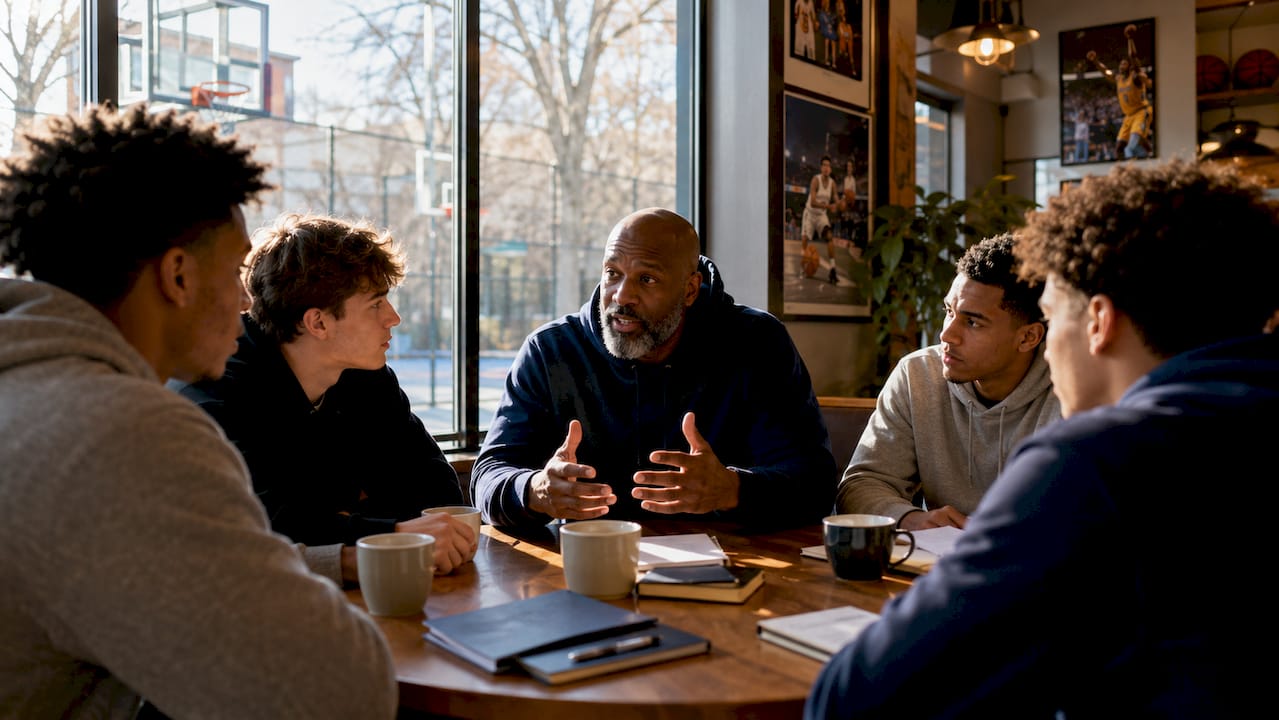
Unclear roles create ambient anxiety. An athlete who is unsure whether they are the primary ball-handler or a secondary option will hesitate at decision points. That hesitation is not a skill gap. It is a communication gap. And it gets worse when rosters change or when a player’s role shifts mid-season without a direct conversation.
Leadership communication strategies that address role definition explicitly produce measurable improvements in group dynamics. The research is clear: role clarity is a statistically significant predictor of a better team environment.
Pro Tip: After any roster change or positional adjustment, schedule a one-on-one conversation with the affected player within 48 hours. Do not assume they understand the new expectation. State it directly and invite their response.
Cohesion factors influenced by communication clarity
| Communication Factor | Impact on Team Cohesion |
|---|---|
| Explicit role definition | Reduces ambient anxiety; improves task cohesion |
| Consistent feedback delivery | Builds trust and social cohesion across the roster |
| Open two-way dialogue | Increases athlete buy-in and reduces dropout |
| Role revisiting after changes | Prevents misalignment during roster or lineup shifts |
| Psychological safety in feedback | Encourages honest communication from athletes to coaches |
The table above reflects what happens when coaches treat communication as a system rather than a reactive tool. Each factor compounds. A team with explicit roles, consistent feedback, and psychological safety does not just perform better. It stays together longer.
How do coaching communication techniques shift to dialogue?
Directive coaching is the default for most coaches. You see a problem, you name it, you prescribe the fix. That model works for teaching basic skills. It breaks down when athletes need to develop independent judgment under pressure.
Dialogical coaching replaces prescription with inquiry. Instead of telling an athlete what to do, you ask questions that guide them to their own conclusions. Transitioning from directive instruction to a dialogical model encourages self-reflection and builds the decision-making capacity athletes need in competition.
The 2026 framework from Keedia recommends a structured approach: calibration conversations every six weeks to identify misalignment early and keep athletes engaged. Six weeks is the optimal cadence because it is long enough for patterns to emerge but short enough to course-correct before problems compound.
Four steps to a dialogical coaching conversation
- Open with a neutral observation. “I noticed you hesitated on the pick-and-roll twice in the second half.” This is factual, not judgmental.
- Ask a single, focused question. “What were you reading on those possessions?” One question. Not three.
- Wait for a full answer. Strategic silence after a powerful question signals trust in the athlete’s thinking process. Resist the urge to fill the pause.
- Reflect and agree on a next action. “So the plan for Thursday is to call out the screen earlier. Does that feel right to you?”
One critical pitfall to avoid is question stacking. Asking several questions at once disrupts athlete processing and signals coach anxiety rather than coach confidence. “What happened there? Were you tired? Did you forget the play? What were you thinking?” is not a coaching conversation. It is an interrogation. Ask one question, then stop.
Coaches who acknowledge their own uncertainty and invite athlete feedback build trust faster than those who project constant authority. This does not mean admitting you do not know the game. It means saying “I want to understand what you were seeing from your angle” and meaning it.
What practical communication tools can coaches use today?
The most effective coaches treat communication as a skill set with specific techniques, not a personality trait you either have or do not. Active listening is a high-energy cognitive skill that requires deliberate technique. It is not passive. It involves reflecting patterns back to the athlete and asking precise follow-up questions that open new thinking rather than confirm what you already believe.
The “Next Action Question” is one of the most practical tools in a coach’s communication kit. After any feedback exchange, close with: “What is one thing you will do differently in the next rep?” This forces specificity and creates immediate accountability without pressure.
Here is a breakdown of core techniques and their practical impact:
| Technique | What It Looks Like | Primary Benefit |
|---|---|---|
| Reflective listening | “So what you’re saying is…” | Confirms understanding; builds trust |
| Next Action Question | “What will you do differently next rep?” | Creates immediate accountability |
| Strategic silence | Pause 3–5 seconds after a question | Signals trust; deepens athlete reflection |
| Single-question rule | One question per exchange | Prevents confusion; supports processing |
| Role revisit check-in | Scheduled 6-week conversation | Maintains alignment; reduces dropout |
Beyond technique, structure matters. The Basketball Practice Plan Template from Hoopmentality builds communication checkpoints directly into practice design. When feedback moments are planned rather than improvised, coaches deliver more consistent and effective communication across the full session.
- Use pre-practice verbal cues to set the focus for the day. One sentence. One theme.
- Build in a two-minute debrief after every major drill block.
- End practice with a team reflection question, not a monologue.
Effective feedback strategies also depend on the coach’s ability to read the room. A player who just made a costly error in a scrimmage is not in the optimal state to receive detailed technical correction. Read the emotional temperature first, then deliver the message.
Key takeaways
Effective coaching communication is a structured skill set that directly determines athlete confidence, team cohesion, and long-term retention.
| Point | Details |
|---|---|
| Communication shapes athlete mindset | Tone and clarity determine whether athletes feel confident or confused during training. |
| Role clarity drives cohesion | Explicitly defining roles reduces ambient anxiety and improves both task and social cohesion. |
| Dialogical beats directive | Shifting from instruction to inquiry builds athlete decision-making and long-term buy-in. |
| One question at a time | Avoiding question stacking keeps athletes processing clearly and prevents communication breakdown. |
| Structure reinforces consistency | Planned feedback moments and six-week check-ins produce more reliable communication outcomes than improvised conversations. |
What i have learned about communication after years on the sideline
Most coaches I have worked with and observed treat communication as something that happens between drills. They focus on the X’s and O’s, the spacing, the defensive rotations, and then they talk to their players as an afterthought. That is the wrong order of operations.
The coaches who get the most out of their rosters treat every verbal interaction as a coaching decision. They think about what they are going to say before a timeout, not during it. They plan the question they will ask after a tough loss, not just the adjustments they will make.
The hardest shift I have seen coaches make is from telling to asking. It feels slower. It feels like you are giving up control. But expert coaches who balance questioning, reflection, and agreement language get faster behavioral change from athletes than coaches who simply prescribe. The athlete who arrives at the answer themselves owns it. The athlete who is told the answer forgets it by the next possession.
The other thing I will say plainly: silence is a tool. Most coaches are uncomfortable with it. They fill every pause with more instruction. But when you ask a good question and then wait, you are telling the athlete “I trust you to think.” That message is worth more than most technical corrections.
Refine your communication the same way you refine your offense. Watch film on your own conversations. Ask a trusted assistant coach to observe how you deliver feedback. Treat it as a system that can always be improved.
— Dejan
Build your communication system with Hoopmentality
Clear communication starts with clear structure. Hoopmentality’s resources are built to help coaches put both in place.
The Basketball Practice Plan Template integrates communication checkpoints directly into your session design, so feedback moments are planned, consistent, and purposeful. The Big Man Dual Action Drill gives you a practical environment to apply verbal cueing and real-time feedback techniques with your post players. Both resources are built from real coaching experience and designed to save you time while improving how you connect with your athletes. Explore the full Hoopmentality catalog to find tools that match where your team is right now.
FAQ
What is the role of communication in coaching?
Communication in coaching is the mechanism that converts a coach’s technical knowledge into athlete behavior and performance. It shapes athlete focus, confidence, and decision-making through tone, clarity, and timing.
How does autonomy-supportive language improve athlete performance?
Autonomy-supportive language, grounded in Self-Determination Theory, increases athlete effort and reduces dropout by giving athletes ownership over their development rather than prescribing every action.
What is question stacking and why should coaches avoid it?
Question stacking means asking multiple questions at once, which disrupts athlete processing and signals coach anxiety. Ask one focused question, then wait for a complete answer before continuing.
How often should coaches hold calibration conversations with athletes?
A six-week cadence is the recommended interval for structured coach-athlete alignment check-ins. This frequency identifies misalignment early and maintains trust and engagement throughout the season.
How does role clarity affect team cohesion?
Explicitly defining and regularly revisiting individual roles reduces ambient anxiety and is a statistically significant predictor of improved task and social cohesion within athletic teams.