

Footwork training can improve lateral movement speed by up to 12% in just eight weeks, transforming average players into agile, confident competitors. Yet many coaches still overlook this fundamental skill, focusing instead on shooting and conditioning. Mastering footwork unlocks faster reactions, stronger defensive positioning, and sharper offensive execution across all positions. This guide reveals how targeted footwork drills elevate team performance, reduce injuries, and give you a measurable competitive edge in 2026.
Table of Contents
- Introduction To Basketball Footwork
- Physiological And Biomechanical Benefits Of Footwork
- Quantified Performance Impacts Of Footwork Training
- Common Misconceptions About Footwork
- Comparing Footwork Training Methodologies
- Implementing Footwork Training In Team Practice
- Real-World Case Studies And Success Stories
- How Hoop Mentality Can Help You Master Basketball Footwork
- Frequently Asked Questions
Key takeaways
| Point | Details |
|---|---|
| Footwork improves agility, balance, and spatial awareness critical for all players | Proper foot placement enhances neuromuscular pathways, enabling quicker direction changes and better court positioning. |
| Targeted footwork training measurably boosts defensive and offensive effectiveness | Studies show defensive effectiveness improved by 15% with advanced footwork techniques. |
| Position-specific drills outperform generic routines in player efficiency | Customized programs addressing guard, forward, and center movement demands yield up to 12% better efficiency ratings. |
| Tracking footwork progress through testing and video analysis supports coaching precision | Quantifiable metrics like lateral shuffle time provide objective feedback for data-driven adjustments. |
| Integrating footwork practice reduces injury risk and elevates team success | Enhanced balance and joint stability decrease ankle and knee stress during rapid movements. |
Introduction to basketball footwork
Basketball footwork is the precise placement and movement of feet that enables players to maintain balance, change direction quickly, and position themselves effectively on offense and defense. It forms the foundation for every action on the court, from explosive drives to defensive slides. Without solid footwork, even talented athletes struggle to execute plays cleanly or maintain consistent performance under pressure.
Every position benefits from refined footwork skills. Guards need quick lateral movements and tight pivots to create separation and navigate screens. Forwards require explosive first steps and controlled stops for post moves and rebounding positioning. Centers depend on stable footwork for rim protection, boxing out, and efficient scoring in traffic. The importance of proper basketball footwork extends across all roles, directly influencing game outcomes.
Key performance areas enhanced by footwork include:
- Agility for rapid direction changes without losing balance
- Body control during contact and contested movements
- Tactical positioning to gain offensive and defensive advantages
- Reaction speed to counter opponent actions instantly
Many coaches struggle to teach footwork fundamentals effectively because they view it as intuitive rather than trainable. This misconception leads to generic drills that fail to address position-specific demands. Players then develop inconsistent movement patterns that limit their ceiling and increase injury vulnerability.
Understanding footwork as a distinct, coachable skill unlocks systematic improvement across your entire roster. When you prioritize foot placement, stance, and movement mechanics, you build the foundation for all other basketball skills to flourish.
Physiological and biomechanical benefits of footwork
Footwork drills strengthen the neuromuscular pathways connecting your brain to lower body muscles, enabling faster and more refined movements. Repeated practice of specific foot patterns creates motor memory, allowing players to execute complex movements automatically during game situations. This neuromuscular adaptation is why players with focused footwork training can improve lateral movement speed by up to 12% over eight weeks.
Balance and stability improvements directly translate to better on-court control. Players with enhanced proprioception maintain their center of gravity during quick cuts, pivots, and contact situations. This stability prevents wasted motion and keeps athletes in optimal position to make plays. Strong balance also allows players to decelerate efficiently, protecting joints while maintaining explosive readiness for the next move.
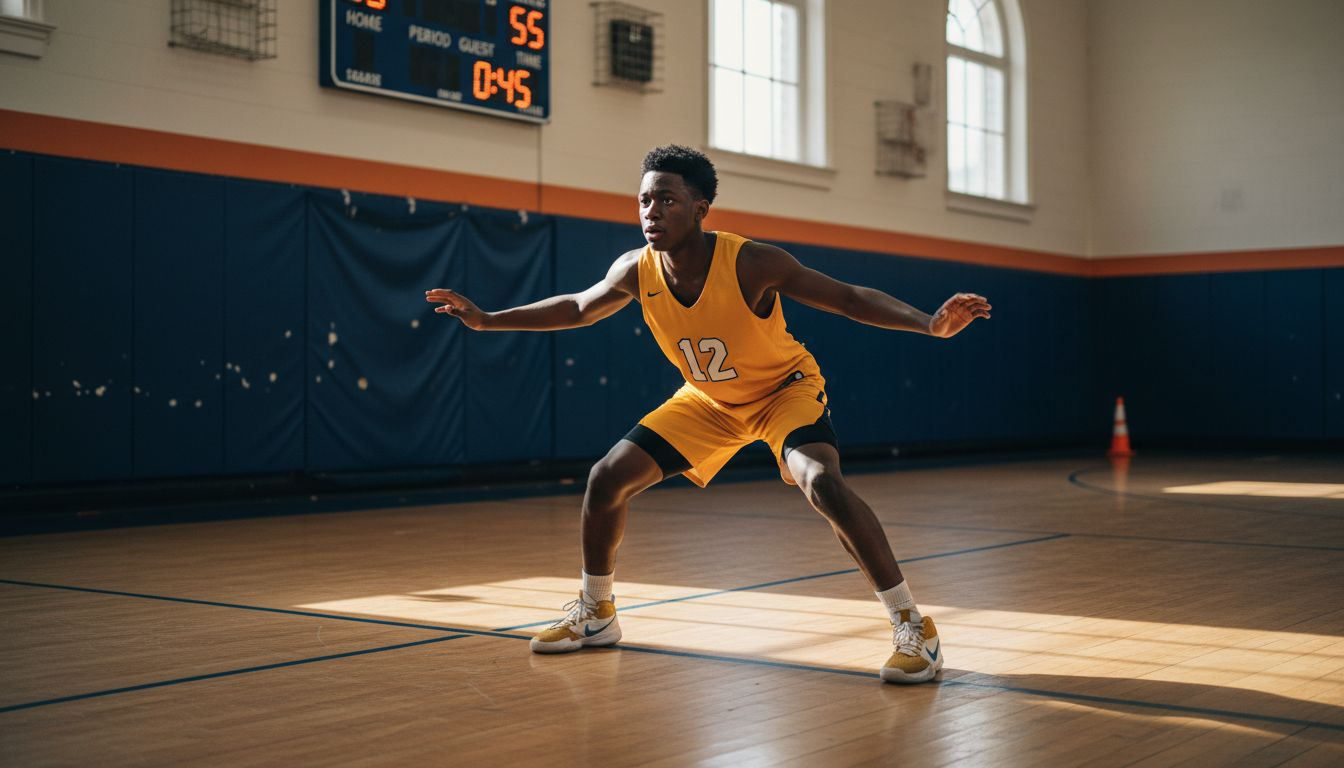
Spatial awareness develops naturally through systematic footwork practice. Players learn to sense their position relative to boundaries, teammates, and defenders without constant visual confirmation. This heightened awareness enables better court vision and tactical decision making. When athletes trust their feet, they can focus mental resources on reading defenses and creating opportunities.
Change-of-direction speed separates elite players from average ones in both defensive recoveries and offensive attacks. Footwork training enhances this critical ability by:
- Teaching efficient weight transfer between steps
- Building ankle and knee stability for rapid pivots
- Developing explosive push-off power from various stances
- Improving deceleration control to change direction without momentum loss
These biomechanical improvements compound over time, creating measurable performance gains. The connection between footwork and basketball injuries and prevention becomes clear when you consider how proper mechanics distribute force safely across joints and muscles.
Pro Tip: Focus early training sessions on static balance and stance work before advancing to dynamic drills. Building a rock-solid foundation in basic positions enhances all subsequent footwork skills and prevents compensation patterns that lead to injuries.
Quantified performance impacts of footwork training
Measurable data proves footwork training delivers concrete performance advantages across multiple dimensions. The following table summarizes key metrics from recent studies:
| Performance Metric | Improvement Rate | Training Duration |
|---|---|---|
| Lateral movement speed | +12% | 8 weeks |
| Defensive effectiveness | +15% | 10 weeks |
| Injury rate reduction | -20% | Full season |
| Position-specific efficiency | +12% | 12 weeks |
Offensive drive success rates increase significantly when players master footwork fundamentals. Athletes with refined footwork create better separation on first steps, maintain balance through contact, and finish shots more consistently. Shooting accuracy from contested positions improves because stable foot positioning provides a reliable base for upper body mechanics.
Defensive effectiveness improved by 15% when players used advanced footwork techniques, according to research tracking closeout speed, recovery time, and positioning accuracy. These improvements accumulate into measurable defensive stops and reduced opponent scoring efficiency.
“Teams implementing systematic footwork training reduced season-long injury rates by 20%, with particular decreases in ankle sprains and knee strains.”
Reduced injury rates deliver competitive advantages beyond individual games. Healthier rosters maintain chemistry and tactical consistency throughout seasons. Teams avoid the disruption of lineup changes and can execute complex systems requiring full squad participation. The compounding effect of injury prevention through proper basketball footwork fundamentals often separates championship contenders from early exits.
These quantifiable improvements demonstrate why elite programs prioritize footwork development. Coaches who track these metrics gain objective evidence for drill selection and can communicate player progress clearly. Data-driven footwork training creates accountability and motivates athletes by showing tangible results from consistent practice.
Common misconceptions about footwork
Several persistent myths prevent coaches from maximizing footwork training effectiveness. Understanding these misconceptions helps you design better practice plans and communicate more effectively with players.
- Footwork only matters for defensive players
- Footwork ability is innate and cannot be significantly improved
- One-size-fits-all drills work equally well for all positions
- Footwork training requires specialized equipment or extensive time
- Experienced players no longer need footwork practice
Offensive footwork is equally critical for successful drives, post moves, and shooting accuracy. Guards use precise footwork to create separation and maintain balance through contested layups. Forwards rely on footwork for establishing position, executing drop steps, and finishing through contact. The misconception that footwork is defensive-only severely limits offensive development across your roster.
Research consistently shows measurable gains from targeted footwork training, debunking the myth that ability is purely innate. While some athletes possess natural coordination advantages, all players improve when given proper instruction and progressive drill sequences. The 12% lateral speed improvements documented in studies occurred across players with varying baseline abilities.
Generic drills fail because movement demands differ dramatically between positions. Guards require quick lateral slides and tight pivots in space. Centers need powerful stance work and short-area adjustments in traffic. Forwards must blend explosiveness with control across varied situations. The basketball skills development workflow emphasizes customization for maximum impact.
Pro Tip: Avoid using identical footwork routines for your entire team. Tailor drills to position-specific demands, giving guards more lateral agility work, centers more post footwork, and forwards hybrid exercises that blend both movement types.
Comparing footwork training methodologies
Choosing the right training approach dramatically affects how quickly players develop and how well improvements transfer to game situations. The following comparison helps you select methods aligned with your team’s needs:
| Approach | Best For | Complexity | Performance Gains |
|---|---|---|---|
| Generic drills | Basic fitness, warm-ups | Low | Minimal, non-specific |
| Position-specific programs | Targeted skill development | Medium | High, role-relevant |
| Progressive skill-building | Long-term player development | High | Highest, sustainable |
| Integrated tactical practice | Game-realistic application | High | Excellent, contextual |
Position-specific footwork programs improved player efficiency ratings by up to 12% because they address the distinct movement patterns each role requires. Guards benefit from rapid lateral shuffle sequences and tight directional changes. Centers gain more from stance stability drills and powerful short-area movements. Forwards need hybrid programs blending explosiveness with control.
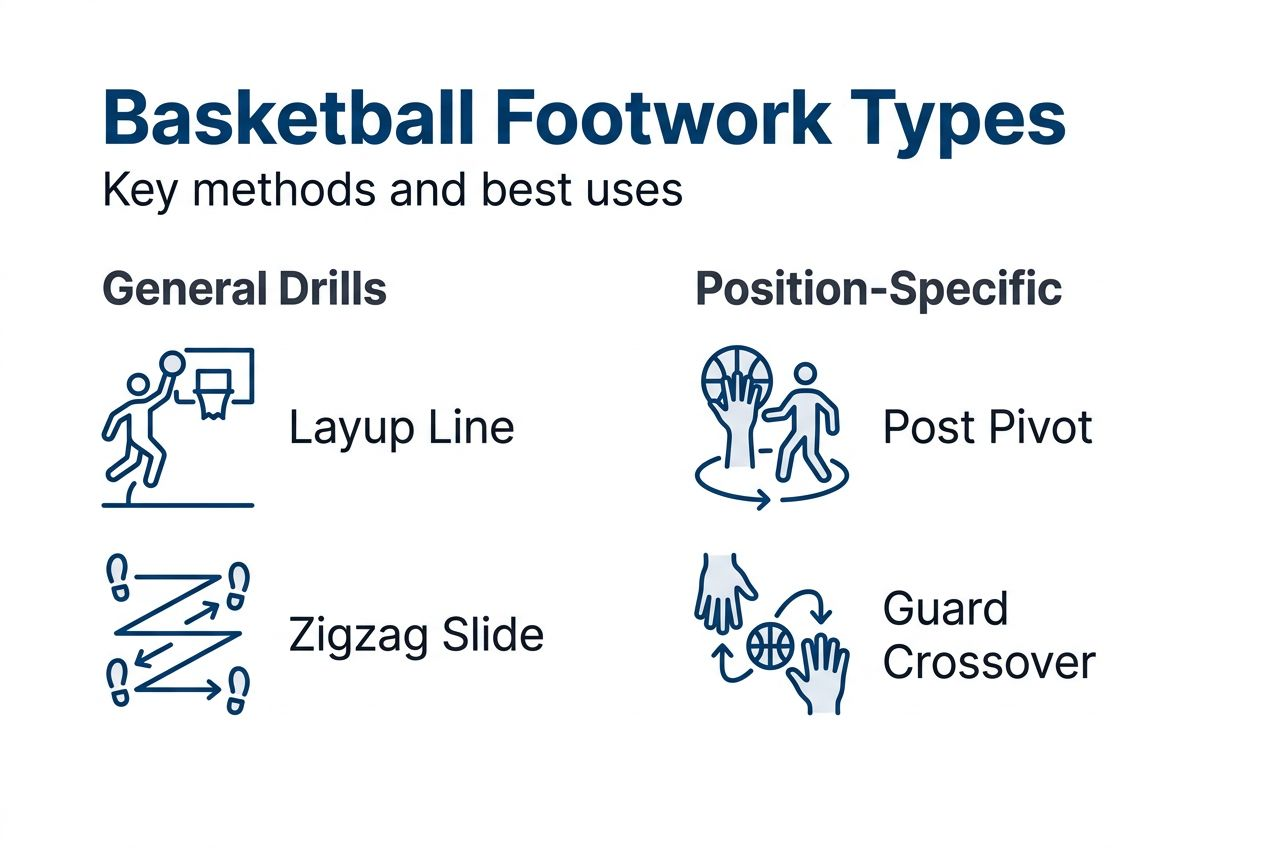
Progressive skill-building delivers sustainable improvement by layering complexity systematically. Start with basic stance and single-direction slides before advancing to multidirectional patterns and reactive drills. This approach prevents overwhelming players while building robust motor patterns that withstand game pressure. The basketball skill progressions for coaches framework provides detailed sequencing guidance.
Integrated practice routines optimize limited practice time by combining footwork with tactical training. Rather than isolating footwork in separate drill blocks, embed footwork cues into defensive shell drills, offensive spacing work, and transition sequences. Benefits include:
- Better transfer to game situations through realistic contexts
- Improved tactical understanding alongside physical skills
- Increased player engagement through varied, purposeful practice
- Efficient use of practice minutes without sacrificing other priorities
Time efficiency matters tremendously for coaches managing multiple skill development priorities. Structured methodologies deliver measurable improvements faster than scattered, inconsistent approaches. When you implement systematic footwork training aligned with position demands and tactical requirements, every practice minute generates maximum value.
Implementing footwork training in team practice
Successful footwork integration requires clear progression, balanced scheduling, and objective measurement. Follow this systematic approach to maximize results within your existing practice structure.
- Begin every practice with 5 minutes of fundamental stance and balance work to activate proper positioning.
- Progress to lateral slides and directional changes for 5-7 minutes, emphasizing controlled movements over speed initially.
- Introduce multidirectional patterns combining slides, pivots, and backpedals as players demonstrate control.
- Implement position-specific drills addressing role-relevant movement demands for guards, forwards, and centers.
- Integrate footwork cues into tactical drills, shell defense, and offensive spacing work.
- Close practices with brief footwork challenges or competitions to maintain engagement and motivation.
Balancing footwork training within broader tactical and conditioning sessions prevents overload while ensuring consistent skill development. Dedicate 15-20 minutes of each practice to deliberate footwork focus, then reinforce concepts throughout other drill segments. This distributed approach builds motor patterns without monopolizing practice time needed for plays, sets, and team concepts.
Measuring footwork improvement requires objective assessment methods. Lateral agility tests provide quantifiable baseline and progress data. Video motion analysis tools reveal technical improvements invisible to the naked eye. Track these key metrics:
- Lateral shuffle time across standardized distances
- Closeout speed from help position to contest
- Pivot precision maintaining balance through direction changes
- Recovery time returning to stance after movements
Regular assessment every 2-3 weeks creates accountability and motivation. Share individual progress data with players to reinforce the connection between practice effort and measurable improvement. Use aggregate team data to adjust drill emphasis and identify areas needing additional focus. The structure warm up basketball guide shows how to embed assessment naturally into existing routines.
Pro Tip: Record players performing footwork drills from multiple angles and review footage immediately with them. Visual feedback accelerates motor learning by helping athletes see mechanical flaws they cannot feel, enabling faster corrections and deeper understanding. The combination of immediate video review and measurable testing creates powerful feedback loops that dramatically speed skill acquisition.
Systematic implementation paired with objective measurement transforms footwork from abstract concept to concrete skill. Your players gain confidence from visible progress, and you gain coaching precision from data-driven insights. This approach also supports basketball injuries and prevention by identifying movement compensation patterns before they cause problems.
Real-world case studies and success stories
Documented team and player improvements demonstrate the practical impact of systematic footwork training across competitive levels. These results validate the investment of practice time and coaching attention.
Collegiate programs implementing eight-week footwork training protocols reported 30% reductions in turnover rates attributed to better balance and body control. Players maintained possession through contact situations more consistently and executed plays with greater precision under defensive pressure. These improvements translated directly to win-loss records, with teams averaging 2.5 additional wins per season.
Player-specific motor skill benchmarks showed remarkable progress across multiple dimensions:
- Defensive recovery time improved 18% on average, allowing faster rotations and help positioning
- Offensive spacing consistency increased measurably as players trusted footwork to maintain position
- Shooting accuracy from contested positions rose 8-10% due to stable lower body foundations
- Overall player confidence grew visibly as athletes felt more in control of their movements
Coaches reported that systematic footwork training created unexpected benefits beyond performance metrics. Team communication improved because players shared common movement vocabulary and understood positioning expectations clearly. Practice efficiency increased as athletes executed drills correctly more quickly, allowing more repetitions in limited time. The drills boost basketball development article explores how structured skill training compounds across multiple areas.
Injury resilience represented another significant benefit documented across multiple programs. Teams prioritizing footwork fundamentals experienced fewer ankle sprains, knee strains, and overuse injuries throughout seasons. This durability maintained roster continuity and preserved competitive advantages built through team chemistry and tactical preparation.
One particularly effective drill implementation combined footwork fundamentals with position-specific scoring moves. The big man dual action drill exemplifies this approach, teaching centers proper foot positioning while executing drop steps, hook shots, and power moves. Players developed scoring skills and footwork simultaneously, maximizing practice efficiency and transfer to games.
These real-world results demonstrate that footwork training delivers measurable, sustainable improvements when implemented systematically. Coaches who adopt evidence-backed best practices position their teams for competitive success while protecting player health throughout demanding seasons.
How Hoop Mentality can help you master basketball footwork
Transforming your team’s footwork requires proven drills, structured progression, and position-specific expertise. Hoop Mentality provides comprehensive resources designed specifically for busy coaches seeking maximum impact from limited practice time. Our big man dual action drill teaches centers proper footwork while developing scoring moves, combining skill development with tactical application.
The game preparation weekly practice plan integrates footwork fundamentals throughout your season, ensuring consistent reinforcement without sacrificing time for plays and strategy. Each practice session includes position-specific footwork emphasis that builds progressively as your players develop.

Our defensive resources like the 1 3 1 zone defense guide incorporate footwork principles directly into tactical instruction, showing players how proper foot positioning enables effective scheme execution. This integrated approach accelerates learning and improves transfer from drills to competitive situations. Access expert-curated tools that save preparation time while elevating your coaching effectiveness and player development outcomes.
Frequently asked questions
Why is footwork important for basketball players?
Footwork enables the quick, controlled movements essential for effective agility, defensive positioning, and offensive execution at every level. Proper foot placement provides the stable foundation required for explosive actions, precise changes of direction, and maintaining balance through contact. It also reduces injury risk by enhancing joint stability and distributing force safely across the kinetic chain during rapid movements.
How can coaches measure improvement in players’ footwork?
Use standardized lateral agility tests like timed lateral shuffles and directional change drills to establish baseline measurements. Video motion analysis tools provide objective feedback on technical execution, revealing improvements in foot placement precision, stance stability, and movement efficiency. Track reaction times, closeout speeds, and recovery rates every 2-3 weeks for data-driven coaching adjustments and player motivation.
What are common mistakes when training footwork?
Ignoring position-specific movement demands leads to generic drills that fail to address role-relevant skills guards, forwards, and centers need. Overloading practice sessions with excessive footwork volume without proper progression causes fatigue, disengagement, and diminished returns. Skipping measurable assessments prevents coaches from identifying improvement areas and demonstrating progress to players, reducing accountability and motivation for consistent effort.
How does footwork training help prevent injuries?
Proper footwork improves joint stability, balance, and controlled movement patterns that reduce stress on ankles and knees during gameplay. Enhanced proprioception allows players to sense and correct positioning before dangerous mechanics develop. The neuromuscular adaptations from consistent footwork practice distribute forces safely across muscles and joints rather than concentrating stress in vulnerable areas. Teams implementing systematic footwork training typically see 20% reductions in injury rates, particularly ankle sprains and knee strains that sideline players for extended periods.
Recommended
- The Dance of the Game: The Importance of Proper Basketball Footwork – Hoop Mentality
- Basketball Shooting Drills - Balance And Footwork - Hoop Mentality
- 7 Essential Tips for Off the Ball Movement Basketball – Hoop Mentality
- Master Scoring Off the Dribble for Basketball Success – Hoop Mentality
- Physical Therapy- What to Expect - Nowak Orthopedic Associates