

Did you know that basketball injuries can range in prevalence from as low as 0.38 percent to as high as 92 percent among players? This striking variance shows just how unpredictable and widespread the risks are, affecting everyone from beginners to pros. Understanding which injuries are most likely and why they occur gives players, coaches, and parents the power to protect health, prevent setbacks, and support long-term development in the sport.
Table of Contents
- Defining Basketball Injuries And Risks
- Common Injury Types In Basketball
- Key Causes And Risk Factors
- Effective Prevention And Conditioning Strategies
- Best Practices For Recovery And Return
Key Takeaways
| Point | Details |
|---|---|
| Injury Risk Variability | Basketball injuries can range from 0.38% to 92.0%, indicating varying levels of risk at different competitive levels. |
| Common Injuries | Ankle sprains and ACL tears are prevalent, caused by jumping, cutting, and other high-impact movements. |
| Holistic Prevention Approach | Effective injury prevention requires strength training, proper warm-ups, and a focus on biomechanics to mitigate risks. |
| Comprehensive Recovery Strategy | Recovery from injuries should integrate physical rehabilitation and psychological support to ensure safe return to play. |
Defining Basketball Injuries and Risks
Basketball is an intense sport with significant physical demands that expose players to a complex landscape of potential injuries. According to a comprehensive overview of research, basketball-related injuries demonstrate a remarkably wide prevalence range between 0.38% and 92.0%, signaling substantial risk potential for athletes at every competitive level.
The most common basketball injuries typically involve the lower extremities, with ankle sprains, knee ligament tears, and muscle strains representing primary concerns. Repetitive jumping, sudden directional changes, and high-impact movements characteristic of basketball create tremendous stress on joints and soft tissues. Basketball Fundamentals Guide for Confident Coaching can help coaches understand how proper technique might mitigate some injury risks.
Research from clinical studies emphasizes that injury prevention requires a multifaceted approach. This includes comprehensive strength training, flexibility work, proper warm-up protocols, and understanding individual biomechanical limitations. Coaches and athletes must recognize that injuries are not merely random events but often result from cumulative physical stress, improper technique, and insufficient recovery strategies.
Beyond physical risks, basketball injuries can have significant psychological and career implications. A single serious injury might interrupt an athlete’s development trajectory, potentially affecting long-term performance and competitive opportunities. Understanding these risks becomes crucial for developing proactive injury management and prevention strategies that protect players’ immediate and future athletic potential.
Common Injury Types in Basketball
Basketball’s dynamic nature creates a complex landscape of potential injuries that players must understand and anticipate. According to research, the sport’s high-intensity movements involving jumping and rapid directional changes significantly elevate injury risks across multiple body regions.
Ankle Sprains represent the most frequent injury type in basketball. These occur when the foot twists unexpectedly, stretching or tearing ligaments beyond their normal range.
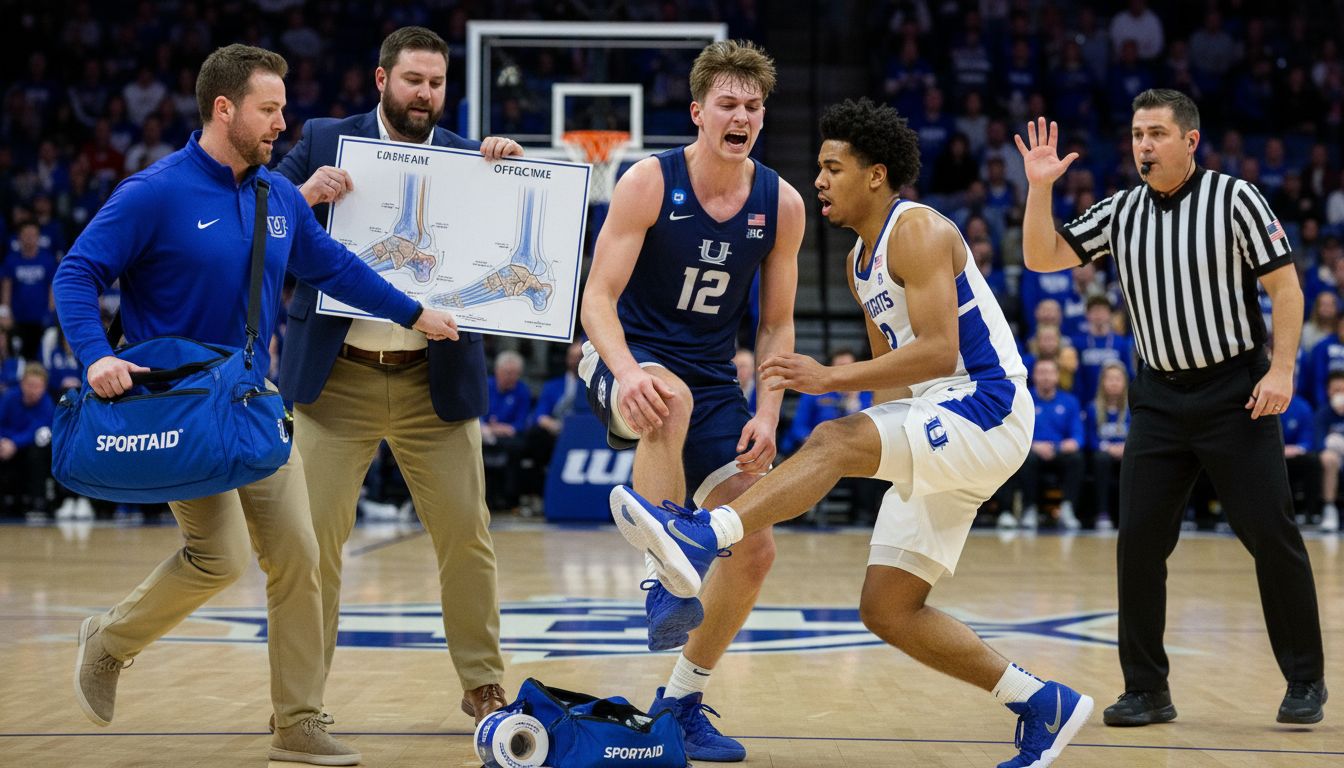 10 Essential Basketball Offense Techniques Every Player Should Master can help players understand movement mechanics that might reduce sprain probability.
Another critical injury category involves knee injuries, particularly anterior cruciate ligament (ACL) tears. These devastating injuries often result from sudden stops, sharp cutting movements, or awkward landings. Professional athletes and weekend players alike remain vulnerable, with ACL tears potentially ending competitive seasons and requiring extensive rehabilitation.
Upper body injuries also pose significant risks. Shoulder dislocations, wrist sprains, and finger fractures frequently occur during defensive plays, blocking shots, or aggressive ball handling. Understanding proper techniques, maintaining physical conditioning, and implementing strategic preventative training can dramatically reduce an athlete’s injury likelihood across all these potential damage zones.
Here’s a summary of common basketball injuries and their typical causes:
| Injury Type | Main Cause | Body Region |
|---|---|---|
| Ankle Sprain | Sudden twists Landings |
Lower Extremity |
| ACL Tear | Sharp cuts Awkward landings |
Knee |
| Muscle Strain | Overuse Repetitive jumping |
Lower Extremity |
| Shoulder Dislocation | Defensive play Contact Blocking |
Upper Body |
| Wrist Sprain | Ball handling Falls |
Upper Body |
| Finger Fracture | Impact Ball deflection |
Upper Body |
Key Causes and Risk Factors
Basketball injury risks stem from a complex interplay of physiological, technical, and environmental factors that create unique challenges for athletes. Biomechanical vulnerabilities play a critical role in predisposing players to potential injuries, with individual movement patterns and structural differences significantly influencing injury potential.
According to research, fatigue emerges as a primary risk factor in basketball injuries. High-intensity actions like repeated jumping and rapid directional changes progressively compromise muscular control and joint stability. The Evolution of Basketball: From Peach Baskets to Slam Dunks highlights how the sport’s increasing intensity has amplified physical demands, making understanding these risks more crucial than ever.
Physiological predispositions contribute significantly to injury risks. Factors such as muscle imbalances, previous injury history, age, physical conditioning, and anatomical alignment can dramatically increase an athlete’s susceptibility to basketball-related injuries. Young athletes and those with limited strength training often face higher vulnerability due to underdeveloped muscular support systems.
External risk factors also play a substantial role.
Effective Prevention and Conditioning Strategies
Injury prevention in basketball requires a comprehensive, multi-dimensional approach that addresses physical preparedness, technical skill, and strategic conditioning. Research consistently demonstrates that targeted training methods can significantly reduce the likelihood of sports-related injuries for athletes at all competitive levels.
Strength and neuromuscular training emerge as critical components of effective injury prevention. Coaches should focus on developing core stability, lower body strength, and proprioceptive awareness through specialized exercises. Basketball Roster Management: Complete Coach Guide emphasizes the importance of individualized conditioning programs that account for each player’s unique physical characteristics and injury history.
Key prevention strategies include:
- Implementing dynamic warm-up routines
- Developing balanced muscle groups
- Practicing proper landing and cutting techniques
- Incorporating flexibility and mobility work
- Utilizing sport-specific resistance training
- Maintaining consistent recovery and rest protocols
Mental conditioning plays an equally crucial role in injury prevention. Understanding biomechanical limits, maintaining proper technique under fatigue, and developing athlete awareness about body mechanics can dramatically reduce injury risks. Coaches must create training environments that prioritize technique, controlled movement, and progressive skill development over aggressive, high-risk performance strategies.
Best Practices for Recovery and Return
Comprehensive rehabilitation represents a critical pathway for basketball players returning from injury, requiring a strategic and carefully managed approach. Successful recovery demands more than simply waiting for physical healing - it requires a holistic methodology that addresses physiological, psychological, and performance-related dimensions.
The initial recovery phase demands a structured, progressive approach. 10 Essential Basketball Offense Techniques Every Player Should Master highlights the importance of maintaining technical skills during rehabilitation. Athletes should focus on:
- Gradual range of motion exercises
- Low-impact conditioning
- Maintaining cardiovascular fitness
- Targeted strength rehabilitation
- Psychological recovery techniques
- Continuous medical monitoring
Professional medical guidance is paramount in determining return-to-play protocols. Staged rehabilitation involves multiple assessment checkpoints where medical professionals evaluate an athlete’s physical readiness through comprehensive tests measuring strength, flexibility, balance, and sport-specific movement patterns. Coaches and medical teams must collaborate closely, ensuring that psychological readiness matches physical recovery, preventing premature return that could risk re-injury or long-term complications.
Mental recovery is equally crucial as physical rehabilitation. Players must develop resilience, rebuild confidence, and manage potential fear or anxiety associated with returning to competitive play. This involves working with sports psychologists, maintaining positive visualization techniques, and creating a supportive environment that acknowledges the emotional challenges of injury recovery.
Protect Your Team with Proven Basketball Workouts
Preventing injuries requires more than just knowing the risks. Coaches need targeted strategies that build strength, improve technique, and prepare athletes for the game’s demands. If you want to reduce ankle sprains, ACL tears, and muscle strains while boosting your players’ confidence and control, it all starts with a well-designed conditioning program.

Explore our Basketball Workouts - Hoop Mentality to find tailored training routines focused on core stability, neuromuscular control, and injury prevention. Pair these workouts with precision drills found in our Basketball Drills - Hoop Mentality collection to reinforce proper landing and cutting techniques. Visit Hoop Mentality now to access the resources that help you keep your players healthy, prepared, and confidently on the court.
Frequently Asked Questions
What are the most common basketball injuries?
The most common basketball injuries include ankle sprains, knee ligament tears (especially ACL tears), muscle strains, shoulder dislocations, wrist sprains, and finger fractures. These injuries often arise from sudden movements, awkward landings, or contact during play.
How can basketball injuries be prevented?
Injury prevention in basketball can be achieved through a multifaceted approach that includes implementing dynamic warm-up routines, practicing proper landing and cutting techniques, developing core stability and lower body strength, incorporating flexibility exercises, and maintaining consistent recovery protocols.
What role does fatigue play in basketball injuries?
Fatigue is a significant risk factor for basketball injuries. High-intensity actions like repeated jumping and rapid directional changes can compromise muscular control and joint stability, increasing the likelihood of injury as players become exhausted.
What should athletes focus on during recovery from a basketball injury?
During recovery, athletes should focus on a structured rehabilitation plan that includes gradual range of motion exercises, low-impact conditioning, targeted strength rehabilitation, psychological recovery techniques, and continuous medical monitoring to ensure they are physically and mentally ready to return to play.