

TL;DR:
- Defense is the most reliable way to win basketball games because it controls game tempo and limits scoring. Emphasizing defense builds a culture of effort and accountability, improving team resilience and decision-making. Teaching various defensive schemes and drills fosters habits that lead to higher winning percentages at all competition levels.
Defense is the single most reliable path to winning basketball games because it controls tempo, limits opponent scoring, and creates easy offensive opportunities for your team. Coaches who prioritize defense build teams that compete harder, communicate better, and hold leads under pressure. The defensive mindset, known in coaching circles as “defensive intensity,” separates good teams from great ones at every level. This guide explains why emphasize defense matters, how it shapes player development, and what specific tactics and drills you can use to build a defense-first culture starting today.
Why emphasize defense in basketball?
Defense controls game tempo and forces opponents into poor shot selections, which directly increases your chances for turnovers and fast breaks. Every possession your defense wins is a possession your offense did not have to earn through half-court execution. That math compounds over 32 or 40 minutes.
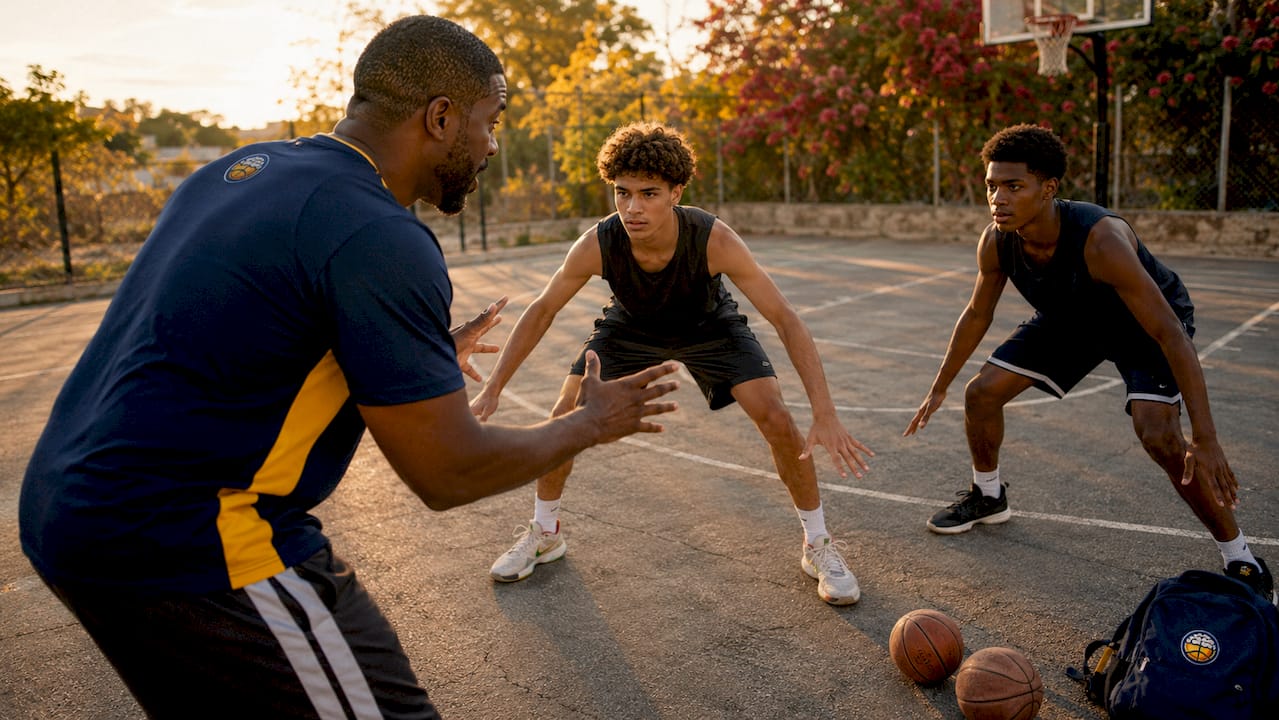
Strong defense also reduces the pressure on your offense. When players know their team can stop the other side, they play with more confidence and take smarter shots. That confidence loop is real. Coaches who emphasize defense consistently report higher team cohesion and player accountability compared to offense-first systems.
The benefits of strong defense extend beyond the scoreboard. Defense is the one part of basketball that requires zero talent to execute at a basic level. Every player on your roster can sprint back, set their feet, and contest a shot. That accessibility makes defense the great equalizer, especially when your team faces more talented opponents.
- Defense limits scoring opportunities and generates fast-break points.
- Defensive pressure forces turnovers that convert directly into easy baskets.
- Consistent defense builds team identity and shared accountability.
- A defensive stop gives your offense the ball in transition, the most efficient scoring situation in basketball.
Pro Tip: Track your team’s points allowed per possession in practice scrimmages. When that number drops, your offense will naturally produce more, because your players start each possession with better field position and higher confidence.
How does emphasizing defense develop players and team culture?
A defensive mindset builds resilience and mental toughness that carries over into every competitive situation. Players who practice hard defense learn to stay disciplined when they are tired, frustrated, or outmatched physically. That discipline does not stay on the defensive end. It shows up in late-game execution, free-throw situations, and how players respond to adversity.
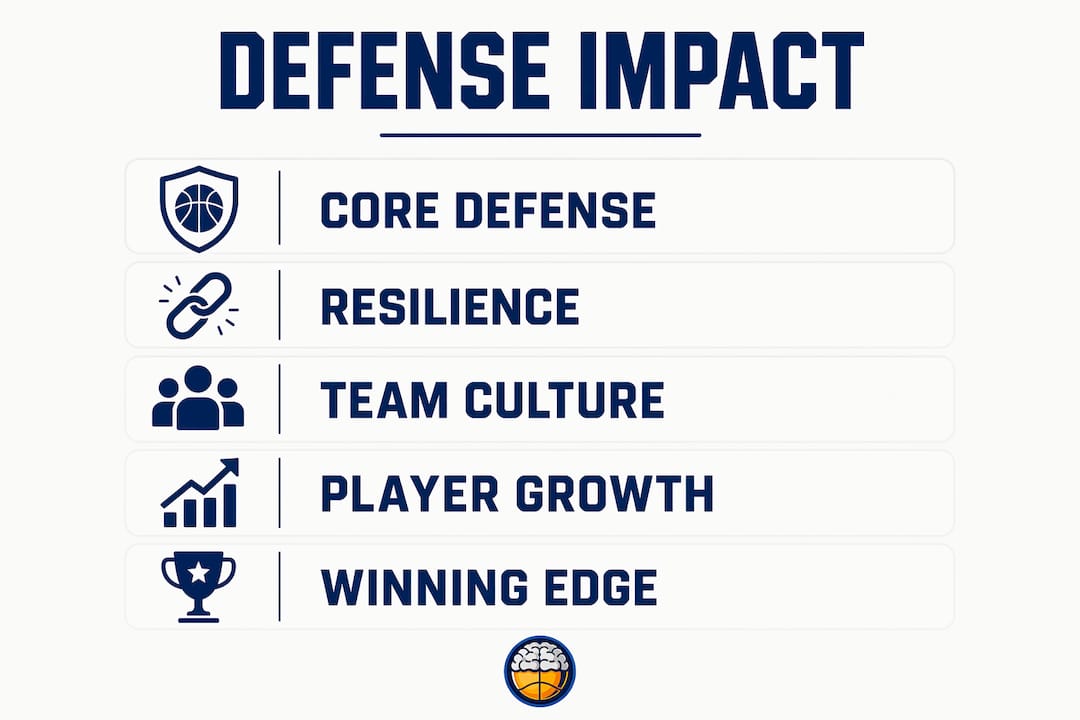
Defensive drills develop decision-making under pressure faster than most offensive drills do. When a player guards a live ball handler, they must read body language, anticipate cuts, and communicate with teammates in real time. Defensive practice sharpens basketball IQ in ways that half-court offensive sets simply cannot replicate.
Here is a four-step progression coaches use to build a defensive culture from the ground up:
- Establish the stance. Teach the defensive stance before any live drill. Feet shoulder-width apart, knees bent, weight on the balls of the feet. Every defensive rep starts here.
- Drill on-ball defense daily. Spend at least 10 minutes per practice on one-on-one containment. Players must learn to stay in front without fouling.
- Add team communication requirements. No silent defensive possessions. Players must call out screens, switches, and ball location on every rep.
- Review film on defense first. When you watch game film with your team, start with defensive breakdowns before offensive sets. This signals what you value.
“Defense drives a mental toughness culture that differentiates elite teams from good teams. The teams that compete hardest defensively are the ones that find ways to win close games, because they trust each other and refuse to give up easy baskets.”
Consistent defensive emphasis establishes a culture that leads to sustained success and better player development across an entire season. Players who buy into defense early in the year become your most trusted players in high-pressure moments.
What defensive strategies and drills should coaches prioritize?
Man-to-man and zone defenses each carry distinct strategic advantages, and coaches must teach players when and how to deploy each one. The choice depends on your personnel, the opponent’s offensive tendencies, and the game situation.
| Defensive scheme | Best used when | Primary benefit |
|---|---|---|
| Man-to-man | Your team has athletic, disciplined defenders | Forces individual matchups and limits ball movement |
| Zone (2-3 or 3-2) | Opponent relies on dribble penetration | Clogs the paint and forces perimeter shots |
| Switching man | Opponent uses heavy screen action | Eliminates open looks off screens without help rotations |
| Match-up zone | Opponent has one dominant scorer | Combines man principles with zone coverage to limit star players |
Effective defense requires team communication and rotations to close gaps quickly. No scheme works without players talking and rotating on time. Coaches who drill rotations separately from live play see faster improvement than those who only run full-court scrimmages.
Three drills that produce measurable results:
Shell drill. Four defenders, four offensive players, no live dribble. Focus entirely on positioning, help-side stance, and communication. Run this drill for 10 minutes before any live defensive work.
Closeout drill. A coach or passer throws the ball to a corner shooter. The nearest defender must sprint, chop their feet, and contest without fouling. This drill directly reduces opponent three-point percentage.
Deny and recover. One defender guards a wing player who cuts and relocates. The defender must deny the catch, recover when beaten, and communicate with the help defender. This builds the habits that prevent easy catch-and-shoot opportunities.
Defensive drills increase defensive effectiveness by up to 30%, improving player reaction times and positioning. That improvement comes from repetition building automatic habits, so players react correctly without thinking.
Pro Tip: Run your toughest defensive drill at the start of practice, not the end. Players learn faster when they are fresh, and it signals to your team that defense is the priority, not an afterthought.
How does defense influence winning across competition levels?
Teams that emphasize defense win more games across youth, high school, and collegiate levels. Defensive efficiency correlates strongly with winning records at every stage of competition. This is not a coincidence. Defense is the one skill set that transfers directly from practice to games without requiring the same physical gifts that elite offense demands.
At the youth level, defense wins games because most young players cannot consistently make contested shots. A team that contests every shot and boxes out on every miss will outscore a more talented team that plays passive defense. Coaches who teach defensive principles early give their players a foundation that compounds over years of development.
| Competition level | Key defensive focus | Winning impact |
|---|---|---|
| Youth (ages 8–14) | Stance, positioning, and effort | Limits easy baskets from uncontested layups |
| High school | On-ball pressure and help rotations | Reduces opponent field goal percentage |
| Collegiate | Scheme execution and scouting adjustments | Disrupts opponent rhythm and game plans |
At the high school level, effective defense disrupts opponent rhythm and maximizes scoring chances for your team. Teams that hold opponents below their scoring average win at a significantly higher rate than teams that rely on out-scoring opponents.
- Defense creates transition opportunities that are the highest-percentage scoring situations in basketball.
- Defensive stops in the fourth quarter protect leads and force opponents into rushed shot attempts.
- Consistent defensive effort signals to officials, opponents, and your own players that your team competes for 32 minutes.
Defense builds the foundation for team success by creating the confidence that fuels effective offense. When players trust their defense, they take better offensive shots because they know a miss will not automatically result in an easy basket at the other end.
Key Takeaways
Defense is the most consistent predictor of team success in basketball because it controls tempo, builds culture, and creates scoring opportunities that offense alone cannot generate.
| Point | Details |
|---|---|
| Defense controls tempo | Forcing poor shot selections limits opponent scoring and generates fast-break opportunities. |
| Defensive drills build habits | Structured drills improve reaction time and positioning, making correct decisions automatic in games. |
| Culture starts with defense | Teams that prioritize defense develop accountability and mental toughness that carries into every game situation. |
| Scheme selection matters | Man-to-man, zone, and switching defenses each serve specific situations; coaches must teach all three. |
| Defense wins at every level | From youth to collegiate play, defensive efficiency correlates directly with higher winning percentages. |
Defense first: what 10 years on the sideline taught me
I have coached teams with more talent than their opponents and still lost games. I have also coached teams that had no business winning a playoff game and watched them grind out a victory because they refused to give up an easy basket. The difference was never the offense. It was always the defense.
The hardest part of building a defensive team is not the drills. It is convincing players that defense is worth their full effort every single possession. Offense feels rewarding because you can see the ball go in. Defense feels invisible until the moment it wins you a game. My job as a coach is to make that invisible work visible, through film, through stats, and through celebrating defensive stops the same way we celebrate made shots.
The biggest mistake I see coaches make is treating defense as a corrective measure. They run defensive drills when the team gives up too many points. That approach never sticks. Defense has to be the first thing you teach, the first thing you drill, and the first thing you review on film. When players see you prioritize it, they prioritize it.
If you are building a program from scratch or trying to change your team’s identity, start with teaching defense principles before you install a single offensive play. Your offense will be better for it. Your players will compete harder. And you will win more games than your talent level suggests you should.
— Dejan
Coaching resources to build your team’s defense
Knowing what to teach is one thing. Having the tools to teach it consistently is another.

Hoop Mentality offers a full range of coaching resources built specifically for coaches who want to implement defense-first systems. The Basketball Template Bundle includes practice plan templates, defensive drill progressions, and scouting frameworks that make it easy to structure every session around defensive priorities. The Editable Scouting Report Template helps you prepare your team to defend specific opponents with clear, organized breakdowns. Each resource is built from real coaching experience and designed to save you time while improving how your team competes on the defensive end.
FAQ
Why is defense more important than offense in basketball?
Defense is more reliable than offense because it does not depend on shooting percentages or hot streaks. A team that competes defensively every possession controls the game regardless of whether shots are falling.
What are the key benefits of strong defense for a team?
Strong defense limits opponent scoring, forces turnovers, and creates fast-break opportunities. It also builds team cohesion and accountability, which improves overall performance across a full season.
How do defensive drills improve player performance?
Defensive drills improve effectiveness by up to 30% by building automatic habits in positioning and reaction time. Players who drill defense consistently make correct decisions faster during live game situations.
What defensive strategy works best for youth teams?
Man-to-man defense works best for youth teams because it teaches individual accountability and proper positioning before players learn to hide in zone schemes. Every player learns to guard their opponent directly.
How does defense affect team culture?
Emphasizing defense builds a culture of effort and accountability that extends beyond the court. Players who commit to defense together develop trust and resilience that shows up in close games and high-pressure moments.